House of Commons Hansard #112 of the 45th Parliament, 1st session. (The original version is on Parliament's site.) The word of the day was satellites.

Topics

line drawing of robot

This summary is computer-generated. Usually it’s accurate, but every now and then it’ll contain inaccuracies or total fabrications.

Criminal Code First reading of Bill C-275. The bill, introduced by Conservative MP Blaine Calkins, amends the Criminal Code to define sexual assault material and establishes criminal offences for its creation, distribution, or possession to protect and support sexual assault victims. 300 words.

Petitions

Canadian Space Launch Act Second reading of Bill C-28. The bill establishes a regulatory framework for commercial space launches in Canada to acquire sovereign launch capabilities and support economic growth. While supporting the goal of space development, Conservatives argue the legislation lacks national security safeguards and relies on excessive ministerial discretion, creating opportunities for patronage. Opposition members also express fiscal concerns, specifically questioning the cost and transparency of a government-funded launch facility lease in Nova Scotia. 36600 words, 5 hours in 2 segments: 1 2.

Statements by Members

Question Period

The Conservatives condemn the government's costly credit card budgeting and inflationary spending, demanding the deficit be capped at $31 billion. They highlight grocery inflation and record food bank use. The party also criticizes the Prime Minister’s Brookfield conflict of interest and questions the Humboldt Broncos deportation stay.
The Liberals highlight Canada's strong economic growth and enviable fiscal position. They emphasize affordability through dental care, child care savings, and grocery benefits. The party champions economic nationalism to counter trade challenges and previews the spring economic update. They also defend their record on housing and supports for seniors.
The Bloc opposes public funding for pipelines, instead advocating for green transition investments. They demand the government revert recruitment timelines for temporary foreign workers and condemn the Driver Inc. model in trucking.
The NDP demands a ban on surveillance pricing and criticizes patchwork pharmacare implementation that excludes certain provinces.

Spring Economic Update 2026 Members debate the Liberal government's spring economic update, highlighting a new sovereign wealth fund, housing initiatives, and defense spending. Liberals argue their plan maintains fiscal discipline while addressing affordability. Conversely, Conservative leader Pierre Poilievre characterizes the update as an irresponsible borrowing and spending agenda worsening inflation. Simultaneously, Bloc Québécois and NDP MPs criticize the lack of specific support for provinces and insufficient affordability measures, questioning the government’s overall fiscal direction. 24400 words, 3 hours.

Was this summary helpful and accurate?

FinanceOral Questions

April 28th, 2026 / 2:20 p.m.

Ahuntsic-Cartierville Québec

Liberal

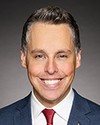
Mélanie Joly LiberalMinister of Industry and Minister responsible for Canada Economic Development for Quebec Regions

Mr. Speaker, we are building a strong economy while protecting our social safety net and getting our house in order. What are we really doing? We are spending less so we can invest more. In concrete terms, the results speak for themselves. We have the second-highest growth in the G7, and we also have the most enviable fiscal position and fiscal reality in the G7. At the same time, we are bringing down the cost of groceries. At the same time, we are also lowering gas prices at the pumps.

Basically, we are here for Canadians, and this is what a competent government looks like.
FinanceOral Questions

2:25 p.m.

Conservative

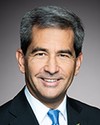
Pierre Paul-Hus Conservative Charlesbourg—Haute-Saint-Charles, QC

Mr. Speaker, the minister says that her government is getting the house in order. Who has been creating the mess for the past 10 years then? They did that. They want to clean up the mess they created, but let us be real. Nobody thought it was possible to spend more than Justin Trudeau. Still, as we can see, the Prime Minister has succeeded in achieving this unenviable feat. Meanwhile, the Liberal government has abandoned seniors, who now have to choose between paying rent and buying groceries.

Will the Prime Minister commit to not spending more than the $31‑billion deficit promised by Justin Trudeau?

FinanceOral Questions

2:25 p.m.

Beauséjour New Brunswick

Liberal

Dominic LeBlanc LiberalPresident of the King’s Privy Council for Canada and Minister responsible for Canada-U.S. Trade

Mr. Speaker, I was very enthusiastic a few moments ago and I said that the Minister of Finance and National Revenue would be here in under an hour. I misspoke. It is in less than two hours that my colleague will have all the facts. He will not need to make up numbers. He will not need to repeat things that he knows very well are not solid.

There will be good news for the Canadian economy, for workers and for seniors, instead of the baseless accusations the Conservatives make in the House all the time.

Natural ResourcesOral Questions

2:25 p.m.

Bloc

Christine Normandin Bloc Saint-Jean, QC

Mr. Speaker, yesterday, the Prime Minister explained that he wants new pipelines because he is a nationalist. Canadian nationalism means dirty oil. Quebeckers do not identify with that and should not have to pay for it either. Last week, Ottawa confirmed that it wants to allocate $10 billion in public funds for a new pipeline. Yesterday, the Prime Minister put $25 billion into a sovereign wealth fund that looks more like a gimmick designed to finance oil companies.

Does he realize that no matter how many maple leaves he slaps on the pipelines, Quebeckers simply will not want them?

Natural ResourcesOral Questions

2:25 p.m.

Ahuntsic-Cartierville Québec

Liberal

Mélanie Joly LiberalMinister of Industry and Minister responsible for Canada Economic Development for Quebec Regions

Mr. Speaker, indeed, in an interview with La Presse, the Prime Minister said that he was a nationalist and that he advocates economic nationalism. What does that mean? Essentially, it means being in control of our own destiny, being able to use the levers of our economy to help our own people while managing a trade war.

It is under those circumstances that we announced a sovereign wealth fund. It is also under these circumstances that we are investing in our natural resources, as well as in renewable energy. That is why our investments will have an impact across Quebec and across the country.

Natural ResourcesOral Questions

2:25 p.m.

Bloc

Christine Normandin Bloc Saint-Jean, QC

Mr. Speaker, there is a lot of buzz in Ottawa about building a new pipeline in western Canada, but no one in the private sector is interested because demand for oil is going to peak in 2029. It is not profitable.

What is profitable is investing in the transition, funding clean technologies, and funding climate change adaptation, yet the Prime Minister of Canada tells us that, in the name of Canadian nationalism, we should add $10 billion in public funds to build a new pipeline, even though it is not profitable.

If the private sector does not think it is profitable, then why would the government invest Quebeckers' money in it?

Natural ResourcesOral Questions

2:25 p.m.

Gatineau Québec

Liberal

Steven MacKinnon LiberalMinister of Transport and Leader of the Government in the House of Commons

Mr. Speaker, it is because Canada is investing in Quebec and we will also be undertaking major projects in the mining sector in Quebec. There is Nouveau Monde Graphite, which represents thousands of jobs, the designation of the Port of Québec as a first port of arrival for our country, and the expansion of the Port of Montreal, which will increase capacity in Contrecœur by 60%.

These are megaprojects that represent tens of thousands of jobs and economic opportunities for Quebeckers. We are investing. That is what economic nationalism is all about, and that is good for Quebec.

TransportationOral Questions

2:25 p.m.

Bloc

Xavier Barsalou-Duval Bloc Pierre-Boucher—Les Patriotes—Verchères, QC

Mr. Speaker, my question is for the Liberal chair of the Standing Committee on Transport, Infrastructure and Communities, the member for Vaudreuil.

Two days ago, he posted on social media that he was the guest of honour at an event organized by a group that promotes Driver Inc., namely the CTOA.

The committee just completed a study on the loss of life. It just heard testimony from victims. It just heard the entire trucking industry denounce this public danger, and yet the committee chair still shows up at this group's events.

Why are the Liberals and that committee chair promoting Driver Inc. instead of banning them?

TransportationOral Questions

2:25 p.m.

Liberal

Peter Schiefke Liberal Vaudreuil, QC

Mr. Speaker, when I receive invitations from truckers who are organizing meetings aimed at figuring out how to make Canada's roads safer and more accessible, of course I am going to accept.

If someone calls me again to invite me, I will accept and I will be there. We will work together to make roads safer across the country.

FinanceOral Questions

2:30 p.m.

Conservative

Stephanie Kusie Conservative Calgary Midnapore, AB

Mr. Speaker, a year after the federal election, the Prime Minister has shown that he is just another high-spending Liberal. His costly credit card budgeting is forcing Canadians to use their credit cards. We have $90 billion in new spending and spending is up 9% this year alone.

When the finance minister presents his spring economic statement this afternoon, will he commit to no credit card budgeting so that Canadians can finally afford to live again?

FinanceOral Questions

2:30 p.m.

Thunder Bay—Superior North Ontario

Liberal

Patty Hajdu LiberalMinister of Jobs and Families and Minister responsible for the Federal Economic Development Agency for Northern Ontario

Mr. Speaker, I want to take a moment to acknowledge that it is a national day of mourning for workers who have lost their lives or become injured at work. I know all of the members in this House are thinking about their families, communities and colleagues today.

I also want to speak about the investment that we have been making in skilled trades, major projects and community infrastructure across the country, in fact, so much so that we are getting the support of people who I think the members opposite know. We hear from people like Joe Mancinelli from LiUNA, who says that the true economic strength begins with those who build it, and Marc Arsenault from the Provincial Building and Construction Trades Council of Ontario, who says that they are pleased to see the federal government's—

FinanceOral Questions

2:30 p.m.

The Speaker Francis Scarpaleggia

The hon. member for Calgary Midnapore.

FinanceOral Questions

2:30 p.m.

Conservative

Stephanie Kusie Conservative Calgary Midnapore, AB

Mr. Speaker, as a former governor of the Bank of Canada, the Prime Minister should know that fiscal discipline is non-negotiable and that deficits undermine investor confidence and harm Canadian workers.

Conservatives are asking the Liberals to stop their credit card budgeting and to show some fiscal restraint.

When the Prime Minister presents his spring economic statement this afternoon, will he commit to a deficit of no greater than $31 billion for the sake of Canadians?

FinanceOral Questions

2:30 p.m.

Thunder Bay—Superior North Ontario

Liberal

Patty Hajdu LiberalMinister of Jobs and Families and Minister responsible for the Federal Economic Development Agency for Northern Ontario

Mr. Speaker, I speak with workers across this country, as all members of this House do, and what I hear them say is that they want us to invest in their success. They want us to invest in the great jobs of today and tomorrow.

We want to make sure that they can access skills training through things like the union training investment that we have been providing to unions, ensuring that we can attract and retain skilled trades workers to build the major projects and local infrastructure all across this country.

The Conservatives voted against these measures time and again. They keep voting against workers. Is this a pattern? Are we going to see them continue to vote against the very people out there building up our country?

FinanceOral Questions

2:30 p.m.

Conservative

Sandra Cobena Conservative Newmarket—Aurora, ON

Mr. Speaker, we are seeing more debt, more spending, more taxes and more of the same. That is what the Liberals are toasting champagne to today.

While Canadians are tightening their belts, the Liberals are celebrating massive deficits. This is the inflationary spending that will force Canadians to take on more debt and make real sacrifices just to get by.

Will the Liberal Prime Minister end his costly credit card budgeting so Canadians can afford to live?

FinanceOral Questions

2:30 p.m.

Mississauga—Streetsville Ontario

Liberal

Rechie Valdez LiberalMinister of Women and Gender Equality and Secretary of State (Small Business and Tourism)

Mr. Speaker, when it comes to affordability, that member voted against every measure we have put forward for Ontarians.

Here are the facts. Parents are saving $10,000 per child for affordable child care; kids have received 99.8 million meals through a national school food program, and by the way, we are making it permanent; and we have delivered income support for over 300,000 Ontarians.

These are the types of support that member opposite always votes against. I do not know why she does, because we build Canada strong by making sure we are making it in a way that is also affordable for Canadians.

FinanceOral Questions

2:30 p.m.

Conservative

Sandra Cobena Conservative Newmarket—Aurora, ON

Mr. Speaker, we have quite the contradiction. We have a Liberal government celebrating bigger deficits and an entire country struggling under them. Canada now faces the worst grocery inflation in the G7, the worst household debt and the highest housing costs, and lineups at the food banks are surging. There is nothing to celebrate about that.

When will the Liberal Prime Minister commit to capping the deficit at no more than the already reckless $31 billion that the last guy left behind?

FinanceOral Questions

2:30 p.m.

Mississauga—Streetsville Ontario

Liberal

Rechie Valdez LiberalMinister of Women and Gender Equality and Secretary of State (Small Business and Tourism)

Mr. Speaker, we recognize that families are still having challenges. Families are now going to the pumps. They are saving 10¢ per litre thanks to our government. We are also ensuring that when they are buying groceries and essentials, through the Canada groceries and essentials benefit they are receiving an average of $1,900 per year to ensure that we can help Canadians. They are also going to save up to $10,000 on child care.

We are doing everything we can to make life more affordable while also investing in Canadians, providing more jobs and, of course, building our strong country.

FinanceOral Questions

2:35 p.m.

Conservative

Shannon Stubbs Conservative Lakeland, AB

Mr. Speaker, the Prime Minister promised to spend less, but a year in, he spent $90 billion more. Who thought Trudeau could be outspent? Well, his former adviser, the PM, said “watch me” and doubled his deficit. Deficits drive inflation and higher credit card, grocery and mortgage bills here at home. Deficits, taxes and red tape cause the worst food inflation in the G7.

With high housing costs, high food bank use and a jobs crisis for young Canadians, when will the self-identified European PM stop his high-spending, high-flying lifestyle that everyone else pays for so Canadians can have a high quality of life?

FinanceOral Questions

2:35 p.m.

Markham—Thornhill Ontario

Liberal

Tim Hodgson LiberalMinister of Energy and Natural Resources

Mr. Speaker, the opposition members claim they care about affordability, but they voted against a tax cut for 22 million people. They voted against the groceries and essentials benefit. They voted against $10-a-day day care. I could keep going. We have nothing to learn from them about affordability.

FinanceOral Questions

2:35 p.m.

Conservative

Shannon Stubbs Conservative Lakeland, AB

Mr. Speaker, the government has made it so Canadians cannot afford essentials, and experts say Liberal red tape is worse for Canada than Trump's tariffs. Businesses say Liberals must cut their own red tape for investor confidence so proponents can build. The PM says Canada is in a crisis but will not match U.S. emergency timelines, put two-year reviews in the law or even define Canada's national interest. Here at home, it takes over two years to approve a domestic natural gas line expansion and 20 years to do a mine, and the Liberals say we are not grateful enough.

If the PM says Canada is in a crisis, when will he scrap his costly credit card budgets so Canadians can compete?

FinanceOral Questions

2:35 p.m.

Saint John—Kennebecasis New Brunswick

Liberal

Wayne Long LiberalSecretary of State (Canada Revenue Agency and Financial Institutions)

Mr. Speaker, on this side of the House, we are going to build the strongest economy in the G7. We have the best fiscal position in the G7 and second-fastest growing economy in the G7, ahead of Italy and Germany.

Just yesterday, our Prime Minister announced the sovereign wealth fund, which will spark massive investment by Canadians in Canada. In an hour and a half, our finance minister is going to table the spring economic update to continue our historic growth. It is time for that side to get off the sidelines and help us build Canada strong.

FinanceOral Questions

2:35 p.m.

Conservative

Connie Cody Conservative Cambridge, ON

Mr. Speaker, Canadians were promised restraint. Instead, they got more Liberal overspending, more debt, higher costs and more of the same. The Prime Minister did not change course from Justin Trudeau. He doubled down, doubling the deficit and, according to the independent budget watchdog, sending nearly two-thirds of new spending into day-to-day operations and a growing bureaucracy, not real investment. Those choices are hurting Canadians' daily lives. The cost of living has skyrocketed, food bank use is rising, and more households are maxing out credit cards just to afford groceries.

After blowing past Trudeau-era spending and deficits, who does the Prime Minister think pays the bill?

FinanceOral Questions

2:35 p.m.

Burlington North—Milton West Ontario

Liberal

Adam van Koeverden LiberalSecretary of State (Sport)

Mr. Speaker, why will the member not be honest with her constituents and tell them exactly what she is willing to cut in order to achieve her very irresponsible plans?

We can start with dental care. In Cambridge, we have 11,355 members of that community accessing the Canadian dental care plan. That is 11,355 people who visited a dentist and had an opportunity to get their teeth fixed last year. What about the Canada child benefit? In Cambridge alone, 19,621 kids are having a better life and a better start because of the Canada child benefit. Those are programs she is willing to cut for her reckless agenda.

LabourOral Questions

2:35 p.m.

Bloc

Alexis Deschênes Bloc Gaspésie—Les Îles-de-la-Madeleine—Listuguj, QC

Mr. Speaker, since April 1, the federal government has been unnecessarily delaying the hiring of temporary foreign workers. Businesses are now required to advertise a job for eight straight weeks without finding a candidate, rather than four, as was previously the case, before they can begin the process of hiring a temporary foreign worker or renewing their permit.

Businesses outside the major urban centres do not recruit abroad by choice, but by necessity. Eight weeks is four weeks too many for no reason.

Will the government change the requirement back to four weeks?