
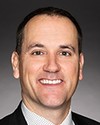
Mr. Speaker, I rise today to note the departure of the hon. member for North Vancouver—Capilano, who will be leaving this place to serve Canada abroad in a new capacity.
The member and I have spent a good deal of time on opposite sides of some very important debates, such as on net-zero legislation, the 2 billion trees initiative and broader Conservative concerns about the government's environmental approach. Those disagreements were real. I stand by them, just as I am sure the hon. member does. While most of those exchanges were during his time as the minister of the environment and minister of natural resources, I also want to thank him for his service as the minister of fisheries. I know he cared very much in that role about salmon policy, and it is always welcome, as I have said many times, to have another British Columbian voice in Ottawa, particularly one in a position of authority.
In fact, when it comes to the debates we had, I suspect we may both continue to believe we were on the right side of those debates. Perhaps the only fair way we can resolve that is to compare notes in the years ahead, say, in 2030, and maybe again in 2050, when the results of those policies are clear.
What is worth noting is that even through those disagreements, we never lost the ability to have a conversation. Whether it was in the House, at committee, at the parliamentary gym or even when we found ourselves seated next to each other on a long flight, there was always professionalism and mutual respect.
As a fellow British Columbian, I can attest to the travel demands that come with representing a riding on the west coast. It is not always an easy schedule. I recall mentioning to the member at the gym that perhaps in his new role, he might finally find himself ahead of events happening in Ottawa rather than living life feeling three hours behind.
I recall one moment during COVID at committee when I yielded my time, and of course, members would know that the opposition never has tricks for ministers when they show up at committee. When I yielded my time to the member for Saanich—Gulf Islands to question the minister on his net-zero bill, in that instant, a minister's staffer sprung, or I should say flung, into action, diving onto the desk, pulling one book out and somehow switching it with a completely different book. It was a small moment, but it allowed the minister to switch the answers fitting the perspective of a Conservative to that of a Green member of Parliament.
It may have been a small moment, but it reflected not only the preparation but also the strength of the people we count on. Moments like this remind us that none of us do this work alone. We often rely on dedicated staff who work behind the scenes, often under pressure, to help us perform our duties as elected officials as ably as possible. They may not often be recognized, but they should be, and we should thank them not just today but, I believe, every day.
There comes a time when many who serve here look for new ways to continue contributing. Canadians have been well served by former parliamentarians at the federal and provincial levels who have stepped into roles abroad. It was Prime Minister Harper who began appointing experienced political leaders such as Gary Doer, followed by Gordon Campbell. Prime Minister Trudeau continued this practice, with Stéphane Dion and John Horgan of British Columbia.
These individuals said yes to continuing to serve and to putting their years of insight and experience to work for Canada in a new way. I suspect having a prime minister make that personal call helps in one's decision-making. I would just point out before I finish that there are many experienced parliamentarians who have since left active political life whose insight and perspective could likewise be drawn upon.
On that basis, I wish the hon. member for North Vancouver—Capilano well. While I have said we have disagreed, I respect his willingness to serve and have no doubt he will continue to do so in his next role.