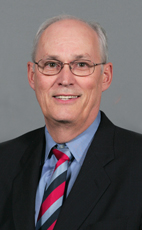
House of Commons photo

Crucial Fact

  • His favourite word was lot.

Last in Parliament September 2008, as Conservative MP for Prince Albert (Saskatchewan)

Won his last election, in 2006, with 54% of the vote.

Statements in the House

International Transfer of Offenders Act April 26th, 2004

Mr. Speaker, I have a concern about the bill, and I would certainly like to be assured on this point.

We have a very liberal parole system in Canada. People can get three or four year sentences, get time off for their weekends and generally get an automatic one-third off their sentences just for being there. The three year sentence turns into a one year sentence and then they are back on the streets.

Canadians know this. We are not fooling anybody about our parole system. People know that three years does not mean three years; it means one year or a year and a half.

In a lot of other countries, when three or five year jail sentences are imposed, they will serve that time and they have to earn their parole. They do not have revolving door policies. A concern I would have is that there would be a big flood of people back to Canada so they could access the liberal parole system.

Tlicho Land Claims and Self-Government Act April 21st, 2004

Madam Speaker, I was going to maybe raise a comment about the speech in terms of a suggestion of intolerance toward certain parts of our society, but I do not think the member intended to say that. I do not know to what he was referring when he said that there was a certain religious group in our society that was intolerant and promoted hate against other people. I am not sure what group that is, but I am will leave that issue aside.

Something just recently developed in the province of Saskatchewan. A band has announced that it will build an MRI clinic, for profit, on its reserve. How would a Liberal government approach that concept in terms of the Canada Health Act and payment of a for profit private facility in the health care system? What would the stand of the member and his government on supporting that initiative or attacking it?

Softwood Lumber April 1st, 2004

Mr. Speaker, I am pleased to speak to Motion No. 397. The object of the motion is to replace the American dumping and countervailing regime on the lumber issue with a net subsidy approach. On the fact of it, this motion looks like a good initiative.

If it could be accomplished, we could quantify all industry specific subsidies and if both sides were roughly equal, there would be no countervailing duties. We would have a better regime if we could accomplish it. However, there are a number of roadblocks in getting to the destination outlined in the bill, and I think they are fairly major hurdles and roadblocks. I would like to go over those roadblocks and perhaps get a response from the person who is promoting this motion.

The first roadblock is we have attempted this net subsidy method before. Under the free trade agreement and the Uruguay round of world trade negotiations, we attempted to establish this approach. It failed because many countries, including the United States, were opposed to this method of dealing with subsidies and distortions. That opposition is stronger today than it has been probably for a long time.

The approach would not affect U.S. internal trade law, things like the Byrd amendment. These things would stay in place. The trade law still remains a major burden in getting full free access and open trade with the United States. These tools and internal trade laws that exist in the United States will not disappear if we can accomplish what the member suggests.

The other concern is the U.S. department of commerce would still be there. It would have the power under this suggestion to quantify the subsidies, not only in the United States but in Canada as well. It would be a rather naive assumption to expect the U.S. department of commerce to use the same measuring stick for both economies in coming to that determination.

I guess another difficulty with this approach is has its problems too. I can visualize trade lawyers in Washington and the various lobbyists and protectionists, who want to frustrate this sort of thing, killing the deal with a thousand needles. They could study every fine detail, every little aspect of this into the ground, and we would have a never ending process. It would go on and on, and we would never get any resolution.

Many trade experts would say, if we do not like the way trade is working with the United States today, that the best solution would be to reopen the North American Free Trade Agreement and renegotiate the agreement with the Americans. I think in all honesty the difficulty with that approach is the Liberal government has too many sectors in this economy that it wants to favour and protect. A lot of the problems we have in the airline industry is the policy by the Liberal government to create a sheltered, protected monopolistic air system in the country, and we are paying the price for it today.

We have it in the guise of culture and arts too, that we need to have our own regime in place. Basically, what we are really doing is protecting certain friendly industries in that sector which the government wants to protect. Generally, it is a monopolistic type arrangement again.

In the banking sector more often than not Liberals are more in favour of protectionism, giving a small group of people concentrated power rather than truly opening up the sector to the full advantages of a free enterprise, free market system and the benefits of real competition.

The grain industry would be another example, and the supply sector. If we were to reopen NAFTA, we would have to seriously put these things on the table to get any progress in dealing with the other issues where there is a concern.

I do not see the Liberal Party being the party that would want to really encourage free trade. It has not been supporters of it. I remember John Turner in 1988 saying that if we signed on to a free trade agreement with the United States, we would lose our border and sovereignty. Liberals sound like the NDP when they talk on trade issues generally and they generally take the same positions. They are trying to suck and blow at the same time. That is a hard thing to do but they try to do that.

They fought free trade, and everything they said about it in 1988 has basically backfired on them. We have a $50 billion to $60 billion merchandise trade surplus with the United States on an ongoing basis. We probably have the biggest trade surplus with the United States of all its trading partners, and the Liberal Party fought it tooth and nail saying that it would not be good for Canada.

However, I agree that the way to try to address a lot of these issues would to approach some reopening of NAFTA.

In conclusion and speaking to the motion itself, the best course of action from where we are right now, is to stay the course. We went a long way down the pipe with both NAFTA applications and World Trade applications, and I think we are getting very close to the end of the pipe where these things will come to a determination.

Any attempt at this time to try some other way to resolve this only plays into the hands of the special interests that are behind these countervailing and dumping charges in the United States. We realized that it would take a long time to work our way through these things and get to the end of the pipe, and get final determinations on these issues. We can see this coming. It just seems to me it would be a detour to abandon that process. To go to something else at this stage that probably would not work.

I wanted to deal with some collateral issues that pertain to this matter. My Prince Albert riding in Saskatchewan has some softwood lumber plants and a pulp and paper plant that are experiencing a lot of difficulty. The province does not have the fiscal capacity to deal with the problems, and a lot of that has been created by the equalization policy of the Liberal government. There really have been no measures taken by the government to help the industry through this stage of negotiations and trade disputes, and it is starting to show. A number of plants have closed down.

The largest player, Weyerhaeuser is now starting to put some of its plants on the market. It looks like the industry is basically downsizing in Saskatchewan and we are going to be looking at closed capacity and a lot of unemployment arising out of this matter. It is not a good situation.

I have never it seen it so bad in just about every sector of the Saskatchewan economy, in the farming sector, softwood lumber sector and livestock sector. It just is not good times. There are lots of problems in the province and unfortunately the federal government has been of very little assistance in addressing these matters.

Budget Implementation Act, 2004 April 1st, 2004

Mr. Speaker, I want to address an issue that is very near and dear to me. It is the equalization formula in the budget.

The province of Saskatchewan is receiving something in the order of $7 million in equalization this year. Its sister province, Manitoba, is getting over $1 billion. Statistics Canada indicates that the net average earning of a Saskatchewanian is $1,000 less than a Manitoban. We are faced with a fiscal crisis in Saskatchewan that I have never seen in my home province. The formula absolutely shafts Saskatchewan. I have talked to folks in Nova Scotia and Newfoundland and they have the same view.

The formula has to be changed in a drastic way to a national formula, not a five province formula. Non-renewable resources have to be shifted or downsized in that formula. In all honesty, things like Manitoba Hydro and Quebec Hydro have to be brought into line on this thing as well to make that formula fair and equitable.

Saskatchewan does not have the fiscal capacity to meet its needs. The waiting list in Saskatchewan for MRIs is 22 months. The waiting list for surgery in that province is 29 weeks. There are problems all over the place.

The finance minister is from Saskatchewan. I thought that the finance minister would address this issue in the budget and we would get some real fairness in the formula. All we got in that formula was some tinkering and an answer from the Minister of Finance that it is too complicated.

It is a disastrous formula for the province of Saskatchewan. I ask the member, why did the Liberal government not address the serious inequities in that formula?

Petitions April 1st, 2004

Mr. Speaker, the other two petitions relate to the issue of child pornography, and, again, it is a fairly extensive list.

The petitioners call upon Parliament to protect children by taking all necessary steps to ensure that all materials which promote or glorify pedophilia or sadistic activities involving children are outlawed.

Petitions April 1st, 2004

Mr. Speaker, I am proud to present four petitions from my constituents in the riding of Prince Albert. The first two petitions deal with Junior A hockey, and there are close to 1,000 signatures.

The petitioners request that Parliament ensure that Junior A hockey league players and teams be treated like other amateur athletics and Olympic sports programs, and that billeting costs and modest reasonable expenses and allowances not be treated as taxable income under the provisions of the applicable federal tax legislation.

Sponsorship Program March 26th, 2004

Mr. Speaker, they have not gone through this enough. Trusting a Liberal government to control and audit its own spending is like trusting the arsonist to come back and put out the fires. This is a sad commentary on the state of our democracy. It is the clearest sign that we have a democratic deficit not only with this old, tired Liberal government, but also with its leader and Prime Minister.

I ask the government again, other than the defence of ignorance, how can the Prime Minister escape responsibility for this government's corruption?

Sponsorship Program March 26th, 2004

Mr. Speaker, because of serious financial irregularities, Nortel Networks has suspended its chief financial officer. This is the standard and the norm for Canadian corporate governance.

In our parliamentary system, the finance minister is our chief financial officer. When internal government audits revealed the extent of Liberal corruption with the sponsorship program, why was the finance minister at the time not held accountable?

The Budget March 25th, 2004

Mr. Speaker, the issue I am concerned about is the old promise of the extra $2 billion for health care that was regurgitated in the budget. A lot of the budget was old promises from the previous prime minister.

I live in Saskatchewan, the province which receives a billion dollars less in equalization payments than the province of Manitoba, notwithstanding the fact that both provinces have roughly the same standard of living. We have serious problems in Saskatchewan. The waiting period for an MRI is 22 months and for health services it is 29 months. The province badly needs roads and bridges. It is in tough shape.

I noticed that the equalization fund was approximately $2 billion less under this budget. The health funding was this old promise of $2 billion more. One seems to set off the other.

From Saskatchewan's standpoint, we probably would have been a lot happier with some adjustments in the equalization formula to take out some of the really brutal effects it has on the province of Saskatchewan. Rather than frigging away with this health funding, we need to have decent equalization in place so we can provide equivalent levels of service as the rich provinces, such as Ontario, can.

Could the member explain how equalization is down $2 billion and how Saskatchewan, which has roughly the same standard of living as New Brunswick, Nova Scotia and Manitoba, is receiving substantially less on a per capita basis on equalization than those three provinces do?

The Budget March 25th, 2004

Mr. Speaker, I took particular note of the member's argument that we have to compare ourselves to other countries.

I came across a study a couple of months ago from the International Monetary Fund that looked at the OECD countries, at the demographic problems regarding our countries and at the unfunded liabilities that exist in societies, and they quantified the debts. Can anyone guess what country was in the worst shape out of all the OECD countries in the world? Canada was dead last.

When we take in unfunded liabilities and our demographic problems in Canada added to our existing debt level, the debt to GDP ratio goes from 42% to 400%, an unsustainable level.

I have heard nothing from the government about this report. The Liberals seem to have selective memory syndrome. They want to take a slice of something and look at it, and they do not want to look at something like that. That is a pretty credible report and it is frightening.

I look at what our young people may be facing because of the government's mismanagement, of its head in the sand attitude and of its platitudes. Somebody will pay for this mess later on. The train is coming down the tracks and the sound is not very good.

I would like the member's response to that international monetary report. Does he think it is an incredibly poor report or what?