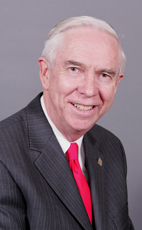
House of Commons photo

Crucial Fact

  • His favourite word was terms.

Last in Parliament September 2008, as Liberal MP for Miramichi (New Brunswick)

Lost his last election, in 2008, with 37% of the vote.

Statements in the House

Antipoverty Act February 4th, 2003

Madam Speaker, we would like to admit that we in the department are aware of the problems in terms of moneys being paid to local and provincial school systems.

I want to say to the House tonight that we have never had an Indian band yet that did not meet its financial obligations. I know we do have certain situations where there are problem in terms of management and control. However we do have before the House Bill C-7, which talks about governance. It talks about assisting and working with first nations peoples to see that they meet their obligations.

I can assure the hon. member that certainly in the long run our Indian bands have not only met their obligations, but in terms of the province of British Columbia, interest is being added to those bills. In most cases, when satisfactory arrangements are completed, the obligations to our first nations peoples are met with the various people with whom they do business.

I hope all this will improve and we will see better education and more first nations people being well educated in their own schools and in the schools of our nation.

Antipoverty Act February 4th, 2003

Madam Speaker, it is important tonight to point out to the hon. member and to all members of the House that education is a very important part of the relationship that we have with first nations peoples.

In fact, over the last 20 year or more years we have worked with first nations groups to make sure that schools are available often on reserve but, above all, if schools are not available on reserves for the particular grades or groups, that arrangements are made between the first nations and the public school system of the province concerned through a local education agreement. With that, we are able to have good relationships between our Indian bands and the people in the public school systems.

I am a little bit concerned here. The hon. member has brought this twice to the House, last fall and again in January, and with it he seems to use a tone which says that the minister should force somebody to do something.

I would say that is very important, in terms of my own relationships with first nations peoples, that if there is a problem back in his riding, the hon. member should probably speak to the chief and council to see if some arrangements can be made to meet the obligations on both sides.

With regard to the problem in Prince Rupert, we must recognized that there is a difficulty in terms of the understanding of the gentlemen's agreement that was reached when that school was constructed in 1997. In terms of the band and council, they do not necessarily agree with the amount of money that was assessed to the band on the basis of those pupils attending that school.

I know we want to foster and promote good relationships and make sure that good arrangements are made, but the hon. member has already said that progress has been made in Prince Rupert with the district school board. With that I am hoping the hon. member will see progress being made in the weeks ahead and will be able to come back to the House and say to the minister that a successful arrangement was made in terms of the amount which was in dispute, hopefully, with both parties agreeing to an amount, and that an arrangement was being made to make those obligations to the district school board.

We are hoping for an arrangement. I hope the hon. member will give time to both groups and that the arrangement will be satisfactory to both parties.

Aboriginal Affairs January 30th, 2003

Mr. Speaker, I am amazed again. Chiefs are important people on their reservations. They are elected by their people, by a process. I would hope the party opposite would give them due process and give them respect. They deserve the same respect that we deserve in this House as members of the House of Commons.

Aboriginal Affairs January 30th, 2003

Mr. Speaker, the member opposites sits on our committee. The committee is hearing witnesses. The committee will come back to the House with a report on the bill. I would hope that he would be patient with us in having an answer for the House of Commons.

Petitions December 9th, 2002

Mr. Speaker, my second petitions deals with embryonic stem cells. The petitioners ask that the concentration of study on stem cells should be on the basis of adult stem cells.

Petitions December 9th, 2002

Mr. Speaker, pursuant to Standing Order 36, I have two petitions which are very similar to the ones already tabled in the House today.

The first deals with child pornography. The petitioners have a great concern that the government must take every action possible to preserve and prevent our children from being abused.

Nuclear Safety and Control Act December 3rd, 2002

Mr. Speaker, I rise on a point of order. I fail to recognize the significance of what the hon. member is saying to the House because Bill C-4 deals with the financial aspect of the nuclear energy program. She should relate her speech to Bill C-4.

Nuclear Safety and Control Act October 29th, 2002

Madam Speaker, I would vote against second reading.

The Royal Visit October 11th, 2002

Mr. Speaker, it is with pride that I rise before the House today as Her Majesty tours New Brunswick.

I am proud to share with the House that during her Majesty's visit she will pay tribute to some exemplary Canadians who perform extraordinary tasks as she meets with the first 10 recipients of the newly created Order of New Brunswick.

On her second day in our province, Her Majesty will visit Sussex and pay tribute to the past while highlighting the promise of the future as it relates to youth, identity and enhanced prosperity. Indeed, she will begin her day by touring a new wing of an elementary school, the same school that Her Majesty opened during her visit some 40 years ago. She will meet with students who are engaged in high tech learning as well as creative programs such as music and drama.

The remainder of the royal couple's day in our province will emphasize the importance of small town Canada and how it has evolved and continues to foster a sense of belonging during an autumn family celebration in Sussex. It will also highlight our creativity in ensuring economic prosperity--

Nuclear Safety and Control Act October 10th, 2002

Madam Speaker, I have a few comments to make. It is rather ironical that such a short bill is generating so much discussion. It is important that we discuss the issues because in the present century energy is probably one of the greatest concerns of Canadians and most people in the western world.

Last June when the bill was first introduced I also made a few brief comments. Today members have talked about energy, the environment, Kyoto and finances. Bill C-4 is basically about finances and financial responsibilities. Those who invest in an energy source, whatever it is, must take responsibility for what may happen as a result of that investment and that activity.

The hon. member mentioned what happened in the province of Ontario with regard to electricity. It is probably the same situation in Quebec and across the United States. Energy has become a very difficult financial situation for many people.

One morning this week one of our bus drivers who lives across the river mentioned how his household would be faced with additional costs this winter. Those of us who have homes in Ontario know that the bills we get now have about 10 different parts. We are paying for debt, transmission, generation and other types of expenses that various investment companies are putting toward energy uses.

In terms of energy used in Canada we go back to water power or hydroelectricity which had some dangers associated with it. For those who lived along rivers with dams there was always a concern that a dam may wash out. In Germany during the war the Mohesee reservoir on the Mohne River was bombed and thousands of people lost their lives as a result of rushing waters.

We have to recognize that our own government has paid considerable attention to wind energy. Our last budget talked about special considerations for people who invest in wind energy. The Royal Bank of Canada has taken certain concerns with that and has offered special considerations for companies that may want to develop wind turbines. Then there is solar energy which is used for specific purposes to a lesser extent by people with homes.

In the last 30 to 40 years nuclear energy has been a great concern to people around the world in terms of Chernobyl and Three Mile Island. No new nuclear plant has been built in the United States of America since the 1970s. We have to take notice of that important issue.

The member alluded to the province of New Brunswick and the Point Lepreau plant which requires considerable upgrading at a cost of nearly $1 billion. In terms of nuclear energy and in terms of the liability of companies that may become involved with it, the liability never ends. He also mentioned that nuclear rods used in those plants have a never-ending life cycle.

I would agree with many of the comments made today. As a Liberal member I too have great concerns with the bill. Will it only give special consideration to companies outside our country that are coming here to buy our energy generating plants? Or, does it have other purposes we may want to consider?

I hope we will hear further information so that all of us in the House could vote in a wise manner to know what is in the best interest of various companies, provinces, and especially the users of electricity.