Mr. Speaker, pursuant to Standing Order 36, I have two petitions from my area. The petitioners are concerned about child pornography and they call upon our courts and justice system to be more aggressive in addressing this issue.

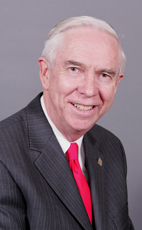 House of Commons photo
Lost his last election, in 2008, with 37% of the vote.
Petitions June 19th, 2002
Mr. Speaker, pursuant to Standing Order 36, I have two petitions from my area. The petitioners are concerned about child pornography and they call upon our courts and justice system to be more aggressive in addressing this issue.
Committees of the House June 11th, 2002
Mr. Speaker, I have the honour to present, in both official languages, the fifth report of the Standing Committee on Agriculture and Agri-Food entitled “The Future Role of the Government in Agriculture”. Pursuant to Standing Order 109, your committee requests that the government provide a comprehensive response within 150 days of the tabling of this report in the House of Commons.
I would like to point out that this is a unanimous report except for one minor provision. It was worked on by all political parties in the House. The committee met in 15 places across Canada and produced a report some eight chapters in length with 33 recommendations.
I would like to thank the members of the committee, the clerk, Suzanne Verville and the researchers, Jean-Denis Fréchette and Frédéric Forge.
In the report we advocate a significant amount of money toward the agriculture community, some $1.3 billion. We worked closely with the other two committees that also studied the agricultural community. It is a matter of national security that we have a sufficient and successful food supply for people.
The agricultural community is in great stress across our country. The farmers are of great significance. They are well trained and have excellent programs but they need the support of our government. In working closely with nature of course, we have to recognize today that the rains we have in Canada will help our community.
We look forward to action in the agriculture area.
Committees of the House June 5th, 2002
Mr. Speaker, I have the honour to present, in both official languages, the fourth report of the Standing Committee on Agriculture and Agri-Food entitled “Labelling of Genetically Modified Food and its Impacts on Farmers”. Our committee has studied this issue quite extensively and hopefully the report will be of great assistance not only to our own minister, but also to other departments.
Nuclear Safety and Control Act June 4th, 2002
Mr. Speaker, I listened with interest to the previous speaker. He has a good grasp of a broad topic, probably much better than my own.
The bill before the House is a very brief amendment. I am not sure we are here today to discuss the entire nuclear energy program or what might be a nuclear energy program across the country. However I am concerned that the bill before the House is being introduced at a late time in terms of our summer recess.
Bill C-57 should be studied by committee of the House, especially the environment committee. I am greatly concerned that the liability for an industry with sites in only three provinces across the country would be taken away, whether in Quebec with Hydro Quebec, in Ontario with Ontario Hydro, or in my own province of New Brunswick with the New Brunswick Power Corporation. New Brunswick also has Point Lepreau which is considering renovations, improvements and a revisiting of the strength of the facility.
I urge members of the House not to pass the bill through the House too quickly. It should be well studied. We have had problems before in terms of who is liable. The entire situation concerning the tar ponds in my neighbouring province of Nova Scotia seems to fall on the provincial government which argues that the major liability rests with our federal institutions.
I commend the hon. member for his knowledge of the industry. In considering the importance of the decision to the people of Canada and the future liabilities of the federal government, it is my strong recommendation that Bill C-57 go to the environment committee for study and come back to the House at a later time.
Committees of the House May 8th, 2002
Mr. Speaker, I have the honour to present , in both official languages, the third report of the Standing Committee on Agriculture and Agri-Food, entitled “Registration of Pesticides and the Competitiveness of Canadian Farmers”.
This is an unanimous report from the committee. All parties are concerned with the operation of the Pest Management Regulatory Agency, the regulations it has and how they affect Canadian agriculture. I would urge the minister to reply to the report as soon as possible so that Canadian farmers can use that agency in an effective way during this crop year.
Organ Donation April 23rd, 2002
Mr. Speaker, this week has been declared National Organ and Tissue Awareness Week. We are told that more than 4,000 Canadians are currently awaiting transplants hoping for a call that a match has been made for their medical need.
In January George Marcello, whose own life was spared with a liver transplant, visited the Miramichi area on a 769 day walk across Canada to acknowledge his gift and raise awareness of the need for all of us to consider the importance of signing a donor card.
Last December two young Miramichi men, Jeff Matchett and Yannick DeGrace, were involved in an auto accident on the highway between Edmunston and Rivière-du-Loup. Mr. Matchett died at the scene and Mr. DeGrace the following day of his serious head injuries.
Yannick's family made the courageous decision to donate his organs, and to date six people have benefited. The DeGrace family who lost their son, a competitive athlete who played in the professional hockey league of the Philadelphia Flyers organization, can take solace in the fact that six Canadians have received a new lease on life because they signed an organ donor card.
Canada has highly skilled surgeons and some of the finest transplant technology in the world. Yet we have one of the lowest donation rates in the western world.
I urge all Canadians to consider the significance of signing an organ donor card.
Farm Credit Corporation April 10th, 2002
Mr. Speaker, the Farm Credit Corporation has provided loans to more than 44,000 Canadian farmers. It has a portfolio of more than $7 billion. The auditor general, in reviewing crown corporations this past winter, has made an assessment of its annual report. I know that our minister is in Washington on some very important business, but would the parliamentary secretary please indicate to parliament the assessment that the auditor general made of the crown corporation's report?
Agriculture November 20th, 2001
Mr. Speaker, agriculture was one of the major issues faced at the World Trade Organization meeting in Qatar by some 142 countries last week. Yesterday our Minister for International Trade congratulated the Minister of Agriculture and Agri-Food for his help at that meeting.
Would the minister please indicate to Canadians and to the House how Canadian farmers will benefit from the agreements reached in Qatar?
Softwood Lumber November 6th, 2001
Mr. Speaker, I will share my time tonight with the member for Etobicoke North who is in the Chamber with us. I have listened with significant interest to the debate in the last few hours. I will change the tone of the debate and look at a bit of the history and background of the lumber industry, both in Canada and in my riding of Miramichi in New Brunswick.
In the 1780s the first Hubbard, George Hubbard, came to the Miramichi. He came to be involved in the masting industry. At the time they were providing masts and lumber for the British navy which was involved in a war in Europe with France.
For a number of years the Miramichi was famous for its pine masts. We were also involved later with selling lumber to the American states. The point is that in the 1780s my family came from the New England states and moved to the Miramichi to be involved in the lumber industry.
In the 19th century people from the Miramichi travelled all across North America and worked as lumberjacks in Michigan, Wisconsin, Minnesota and, later in the 20th century, in the woods of northern Ontario in places like Thunder Bay, the old Port Arthur and Fort William.
In moving across North America the names of the Miramichi can be found. I am not sure if they were involved with the famous lumberjack Paul Bunyan and his great blue ox Babe, but they certainly were involved in opening up the American west.
My people in the Miramichi have been historically involved in the lumber industry. In the 1870s my great-grandfather died in a lumber camp in northern Michigan, so we have a long history.
If we go back in that history we find that our connection with our American neighbours has involved sharing not only a common continent but a common industry. The industries of Canada included the fur trade which opened our nation to white settlers, farming and lumbering. Primary industries have always been very important to our country.
I was doing a bit of research today. I was reading a book by a former professor of mine, Stewart MacNutt, which reviews one of the famous treaties written in the 1850s, the reciprocity treaty of 1854.
In the context of that treaty it took about three or four years for the British colonial office and our local so-called colonies in North America to negotiate trade with the Americans in lumber, fish and other products.
It is interesting to note the similarity to the problems we have today with our American friends who are trying to make us pay heavy duties. In 1853-54 two states held up the treaty for a significant period of time. The treaty dealt with coal from Nova Scotia, something the states of Maryland and Pennsylvania felt should not enter into the United States duty free.
There is a long history of our relationships with Americans. Of course we are concerned today. I hear members from British Columbia being critical of what our government is doing.
The forests today, as members know, are shared by federal and provincial trade regulation. When Americans look at our forestry practices they spend a lot of time looking at the forestry practices of British Columbia which apparently supplies about 60% of the lumber that goes to the American states.
Last summer in a place called Blue River, British Columbia, I met with an American group of senators and members of the house of representatives. We discussed the issue of lumber and what they call forestry practices and stumpage.
They were from lowland states where lumber is cut by people who walk on level land. As we looked up into the hills of British Columbia I asked them what stumpage would be worth in British Columbia if they had to go up the side of a hill with a power saw or a machine to bring the lumber out. They then realized that the stumpage business was different in different areas.
British Columbia has a definite responsibility to look at the stumpage practices the previous provincial government placed on the industry. It was concerned about jobs and was able to modify its stumpage to make sure the jobs continued.
Tonight we are talking about tariffs and trade but the real people we need to talk about are those who work in the forests and sawmills. There has been a tremendous change in our forestry practices.
About a year ago the Senate wrote a report on forestry. For that study the senators not only visited Canadian forest centres but went to the United States and travelled throughout Europe. One senator said to me recently that in the forest industry, and the Canadian forestry industry in particular, the tremendous mechanization which has occurred has meant that one forestry worker today does the same amount of production that 20 to 25 people did 20 years ago.
Although we want to mention the importance of jobs, sometimes in the House we fail to recognize these tremendous changes and the displacement of workers that has occurred in the forest industry in the last generation.
There are machines today which can cut 100 cords of wood in an eight hour period. They have put a great number of people out of work in my province, in Ontario and across the country. Mechanization has changed the whole principle of how our mills operate. With new techniques such as the use of laser beams to make cuts, the production of lumber is being done with an ever smaller workforce. As a country we must somehow make up for the loss of jobs in the industry.
All of us are perplexed with the way the Americans have treated us in terms of trade. What is most perplexing to me is that the Americans seem to want to centre on a specific product. Last year as chairman of the Standing Committee on Agriculture and Agri-Food I was perplexed by the attitude the Americans had toward people in Prince Edward Island and their potatoes.
We hear that mussels today in Prince Edward Island are being looked at. We hear about the tomatoes that are produced in the greenhouses of the country. As a House and as a government we must deal more effectively with Americans and get better attitudes from them in terms of trade practices.
I was in Kennebunkport, Maine, in 1992 when the then president of the United States was there visiting. It is unfortunate that the current president perhaps does not have such a good attitude toward us in this part of the northern hemisphere. His study and his stay in Texas probably mean that he does not pay enough attention to his northern neighbours.
I hope that in our relationship on the governmental level our Prime Minister can impress on the president and the American people that it is they who are suffering as a result of these trade embargoes and duties, and that as householders and builders it is they who are paying the extra costs.
I know the people using our lumber want Canadian lumber products. They are some of the best in North America. I hope they will get them.
Health October 19th, 2001
Mr. Speaker, it has been said that sometimes our greatest fear is fear itself. Recently we have heard members of the opposition and some members of the media talking about bioterrorism.
Could the Parliamentary Secretary to the Minister of Health give us a statement on behalf of Health Canada on what it is doing to make sure Canadians are ready for any possible attack on bioterrorists?