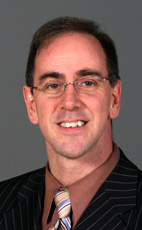
House of Commons photo

Crucial Fact

  • His favourite word was quebec.

Last in Parliament November 2009, as Bloc MP for Hochelaga (Québec)

Won his last election, in 2008, with 50% of the vote.

Statements in the House

Resumption of Debate on Address in Reply October 20th, 2004

Madam Speaker, I want to thank the hon. member for Honoré-Mercier for his question. As he was referring to two unsuccessful referendums, I thought, at first, that he was talking about Newfoundland. I now understand that he was referring to Quebec.

Democracy is not a process of slow combustion. In a democracy, when politicians are elected on the basis of their political agenda, the people expect them to do what they were elected for. I know that some people may be against sovereignty. However, the Parti Québécois has never hid its true intentions. Every time it held a referendum, it had a clear mandate to do so.

On the issue of asymmetrical federalism, I want to point out that we do not want a piecemeal approach where we would be granted one, two or three powers. We want all the powers, and I do not think this is possible under the current federal system.

I would like the hon. member for Honoré-Mercier to think about this: does he know of a nation which achieved sovereignty and then gave it up? Once Quebeckers come face to face with their destiny and opt for sovereignty, I believe they will never give it up. However, since we have some values in common with English Canada, we will share some of the powers with them, where it is useful to do so. We have always talked, of course, about a common currency and a common economic market, and that is part of our project.

Resumption of Debate on Address in Reply October 20th, 2004

Madam Speaker, I agree that we must continue the process of building Canada so that two nations can speak to each other as full equals, and this is the sovereignty association project.

I believe we must recognize that there is not room for two nations in the same political system. Quebec is not a province. This does not take anything away from Saskatchewan, from Prince Edward Island, from the rest of English Canada. Quebec is a nation and nations must achieve self-determination. The right to self-determination is recognized internationally.

The best thing that could happen to Quebec and to Canada would be for these two nations destined to become distinct countries to participate in the community of nations as complete equals, without borders, with a common market, and a tradition of generosity that will be a credit to our two peoples. This is the project that is very dear to the heart of the Bloc Québécois.

Resumption of Debate on Address in Reply October 20th, 2004

It will be done in a highly democratic manner, which should reassure the hon. member for Papineau.

I cannot help but recall that in the history of the sovereignist movement, there have been three extremely charismatic leaders who have founded political parties to ensure that sovereignty would be democratically voted on from time to time. Of course I am talking about Pierre Bourgault, René Lévesque and Lucien Bouchard. They have been among the most charismatic and knowledgeable leaders in Quebec.

That said, with the permission of the Minister of Foreign Affairs, I will not commit to a precise schedule, but we in both the Bloc and the Parti Québécois will not stop being optimistic about one day achieving sovereignty.

Our optimism is strengthened by the profoundly unfair policies and actions of the federal government. The potential for destabilizing public finances by cutting into transfer payments as was done in 1994, 1995 and 1996 helps Quebeckers understand why sovereignty is necessary.

I would also like to say something about health and about the agreement that was reached on September 15. Along with the member for Verchères—Les Patriotes and the member for Saint-Hyacinthe—Bagot, I attended the conference of first ministers. We followed their work closely. The agreement of September 15 poses a number of problems, that is certain. We will have an opportunity to look at it again, perhaps in more depth. I made a motion in committee and it received support; we are inviting the Minister of Health to appear and explain the agreement to us.

There are problems of accountability, among others. The former health minister, who is now the Minister of Foreign Affairs, was very fond of suggesting that there was no procedure for accountability in health care in Quebec. The minister does suffer from selective amnesia. We could quote the text to him, if he wished.

I would like to tell the Minister of Foreign Affairs, whose serenity honours us, that in the National Assembly there are accountability mechanisms, such as the social affairs commission, the health commissioner and question period every day when the Assembly is in session.

I would now like to speak about a very sad matter, and I shall do so with all the solemnity it deserves. I was very sorry to hear some news yesterday. I hope that we can count on the hon. member for Glengarry—Prescott—Russell, the hon. member for Honoré-Mercier, and on all members of Parliament.

We will recall that, in 1997, Allan Rock proposed a federal-provincial-territorial agreement on the hepatitis C issue. We are well aware that some of our fellow citizens have been infected through tainted blood or blood products. The number one recommendation of the Krever commission was that hepatitis C victims not be compensated on the basis of any kind of chronology.

As we speak, there is $1.1 billion available for compensation, of which $200 million has been used. In all good faith, the federal government expected to reach 20,000 hepatitis C victims, but has only reached some 7,000 to date.

That is why we have to achieve a consensus on improving the compensation package, so that individuals infected before 1986 and after 1990 can be eligible. I am sure that all parliamentarians in this House will agree to give in to this demand dictated by common sense, and, fundamentally, by compassion.

So, this is a very troubling issue. I cannot imagine the status quo being maintained any longer. That would not make sense. We are working hard at committee.

Madam Speaker, would you ask for the unanimous consent of the House to allow me to carry on for five minutes?

Resumption of Debate on Address in Reply October 20th, 2004

I cannot give the Minister of Foreign Affairs a specific date at this time.

Resumption of Debate on Address in Reply October 20th, 2004

Through you, Madam Speaker, I would rather not get involved in partisanship. However, I cannot help but notice something.

The Liberals had been elected in October. The Prime Minister refused to summon Parliament before January because he had to attend NATO meetings. When the current Prime Minister, who was finance minister at the time, brought down his first budget at the end of February, something was done with no warning whatsoever. Without conducting any type of negotiation with its partners in the federation, the federal government cut transfer payments to such an extent that the public finances of the various provinces became destabilized.

When Quebec achieves sovereignty, we will have just one Parliament. Quebeckers—

Resumption of Debate on Address in Reply October 20th, 2004

I did not get what the voluble Minister for External Affairs said. We will get back to the issue of the wall dividing Israel and Palestine and the way his government voted on it. I will mention it towards the end of my remarks and establish a link with the throne speech.

That said, through you Madam Speaker, I would like to address my remarks to the former health minister as I remember that the Foreign Affairs minister held that portfolio for a brief few months. It took ads in major newspapers across Canada to take the federal government to task for not paying its fair share.

By the way, I will add that the September conference did not solve the problem. The Romanow commission as well as the Clair and Kirby reports—eight provinces out of ten had their own working group on health care—demands a 25% share of health care expenses be borne by the federal government. With the new investment by the federal government, it will reach 23% to 24% in a good year.

If ever we needed another reason to hold a debate on sovereignty, the fact that the federal government can destabilize provincial public finance is certainly a good one. Do not think for a minute that when the current Prime Minister was minister—

Resumption of Debate on Address in Reply October 20th, 2004

Nevertheless, we did present an amendment to the motion inviting the government to make a reference to the Standing Committee on Human Resources, Skills Development, Social Development and the Status of Persons with Disabilities to ensure that the workers contributing to this program would be the main ones to benefit from it.

There is one other very important matter. We know that everyone who has taken an even slightly enlightened look at the key trends in Canadian federalism realizes that there is what is termed a fiscal imbalance. This imbalance is a situation in which the federal government collects far more revenue of various kinds, income and other taxes and so forth, than what it needs to use these funds for.

The issue was not examined by a partisan body. We are talking about the Conference Board, the equivalent of the Canadian Chamber of Commerce, if you will. It estimated that, over the next ten years, the federal government's situation could result in an accumulated surplus of $160 billion. We are not talking about fifty years, we are talking about a decade, a timeframe within which economic forecasting can be credible and accurate.

This brings me to another issue I care a lot about, health care. It takes the cake. If we were to grade the federal government on its handling of the health file, it would get an F . It took the mobilization of all the provincial premiers. I would remind the member for Glengarry--Prescott--Russell that an F means failure.

You will recall that last year at this time every single premier, not just a Quebec sovereignist premier, were mobilizing. Every single provincial premier of Canada, Conservative, Liberal and New Democrat alike, got into the act. They bought ads in newspapers to alert public opinion to the fact that the federal government had been particularly irresponsible.

Why irresponsible? We will recall—

Resumption of Debate on Address in Reply October 20th, 2004

I know that the hon. member for Glengarry—Prescott—Russell would like to join me in congratulating all the opposition members who worked at making the Speech from the Throne fairer and more respectful of the expectations of our fellow citizens in Quebec.

Resumption of Debate on Address in Reply October 20th, 2004

Madam Speaker, the member for Glengarry—Prescott—Russell, who, as we know, is very knowledgeable of parliamentary business, is telling me, through you, that an amendment to the Speech from the Throne cannot exist. He is telling us that we have taken a slightly comatose and fictitious action when we rose in the House to vote on the amendment and the amendment to the amendment.

Resumption of Debate on Address in Reply October 20th, 2004

Madam Speaker, like the hon. member for Glengarry—Prescott—Russell, I also want, and I do so with great pleasure, to congratulate all the new parliamentarians who have made their maiden speeches at this important stage of the parliamentary process: the Speech from the Throne. Under British tradition, to which the hon. member for Glengarry—Prescott—Russell is strongly attached, the Speech from the Throne is a time when the government sets the course, so to speak, for the next few years.

Let us note this historical moment, which the hon. member for Glengarry—Prescott—Russell will remember with emotion a few years from now, when, in hindsight, he will be able to appreciate the very important role played by the opposition parties in improving on the throne speech, which, let it be said in all modesty, was not very substantial.

Some may want to tell me about the role of the opposition in the British tradition. I know that the hon. member for Glengarry—Prescott—Russell normally refers to the opposition as Her Majesty's loyal opposition, and that is no doubt the proper designation. We are, of course, more or less comfortable with such slightly exaggerated references to Her Majesty.

My point is that, naturally, the role of the opposition is to improve government. This is such hard work that, at the end of each day, all the members of this House go home exasperated.

I take this opportunity to thank the voters of my riding who have allowed me to come and represent them here, in the House of Commons, for a fourth term.

The hon. member for Glengarry—Prescott—Russell, who is to some extent the father of the fight against Internet pharmacies, knows that we will have an opportunity to work on that issue in committee.

I also want to wish good luck in particular to a certain young member who has not been known in the past for being totally non-partisan since, in a previous life, he was the president of the Liberal Party. Because of the passion and desire to serve that he is showing, I do extend to him my very best wishes. I am thinking of my neighbour to the north, the hon. member for Honoré-Mercier.

That having been said, I want to come back to the substance of the throne speech. I must say that, for the first time since I came to this House, we have before us a Speech from the Throne that has been substantially improved through amendments put forward by the opposition.

The hon. member for Glengarry—Prescott—Russell and the Minister of Foreign Affairs, my good friend the member for Papineau, will remember that shortly before the adjournment, just before the election campaign, the degree of Liberal self-confidence was particularly inappropriate. They said we would suffer losses in Quebec. I remember the members for Bourassa and Papineau saying solemnly and with unbelievable confidence that only 15 Bloc Québécois members would be elected in Quebec. Incidentally, I would like to thank Quebeckers for electing 54 Bloc Québécois members, all of whom are very keen to work to protect Quebec's interests.

Of course, when the opportunity arises, we will cooperate with the government, since there are times in a Parliament when partisanship must be set aside.

When the Bloc Québécois assumed leadership on seven occasions in building a coalition on very important issues, it stayed away from any partisan behaviour.

My first example is an important issue, namely the reform of the employment insurance fund. A few years ago, when employment insurance was called unemployment insurance, two thirds of our fellow citizens who were active members of the labour force qualified for benefits. All this changed when the Liberals took office in 1993 and implemented a reform that had initially been proposed by the minister at the time, Lloyd Axworthy, and then the minister from New Brunswick, who was not re-elected in 1997. Thanks to Lloyd Axworthy's work, we had a reform whereby, today, slightly more than 30% of our fellow citizens who are active members of the labour force can collect benefits when they are looking for work. Of course, we have to contribute to this insurance program. It is funded equally by employers and workers. We all understand that employment insurance is for that transition period during which people who have lost their job are looking for a new one.

How could we end up with such a reform so unfair that it was condemned by just about everyone in Quebec? It is not only sovereignists who expressed their discontent with the employment insurance reform.

You know that eligibility criteria are extremely unfair. I think that the member for Glengarry—Prescott—Russell, who is from the progressive wing of his party, will remember how this requirement of 910 hours is unfair to young people. How can you explain that someone without experience, who often has had training, but who has not had the chance to have a first job, should have to meet such a requirement? The result is, of course, that new entrants in the program cannot qualify.

However, as concerns the extreme injustice and unfairness, can you imagine that the government was able to collect surpluses in a program that should provide workers with an income when they are looking for employment. The member for Kamouraska—Rivière-du-Loup—Témiscouata—Les Basques fought hard in this regard.

All this to say that there was an amendment to the Speech from the Throne, with the vigilance—