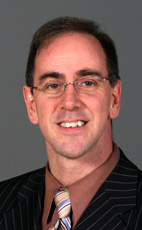
House of Commons photo

Crucial Fact

  • His favourite word was quebec.

Last in Parliament November 2009, as Bloc MP for Hochelaga (Québec)

Won his last election, in 2008, with 50% of the vote.

Statements in the House

Health April 21st, 2004

Mr. Speaker, there was one man who was unhappy with the health minister's actions and that was Jean Charest. He said, “Health is the Quebec government's responsibility. It makes good sense, and for that reason, there is no question about making compromises”.

Does the government realize that the blackmail it is perpetrating with respect to Quebec and the provinces is done at the expense of the ill, and that they are the ones who will pay the price for the federal government's obsession with sticking its nose into other people's business?

Health April 21st, 2004

Mr. Speaker, Quebec's Minister of Health, Philippe Couillard, stated yesterday that accepting Canadian standards or being accountable to Ottawa in matters of health was out of the question.

Faced with such clear words, how can the Minister of Health still imagine that it is right to demand accountability from the Government of Quebec in the matter of health care, when it is not the federal government's responsibility to provide health care and when all its interventions only complicate the situation?

The Armenian People April 20th, 2004

The former prime minister and right hon. member for Calgary was too young, of course, to have been a member of the delegation, but that does not detract at all from his great international credibility.

I want to say that, in 1945, when we adopted the Charter of the United Nations, the San Francisco bylaws included the idea of an international court of justice.

Closer to home, there is this idea of an international criminal court. How important is this and what does it mean to have such instruments if, as parliamentarians, on a more national scale, we are not able to recall the facts that must be recalled for what they are, without any complacency, but to be constructive?

I do not believe that, when the member for Laval Centre introduced her motion, she intended once again to make accusations, stigmatize communities and make people bear a historic weight that is not theirs to bear.

We are well aware that all the conditions are in place for the current Turkish government to distance itself from the events that occurred at the time of the Ottoman empire and when, as was mentioned, modern Turkey, later founded by Mustafa Kemal Pacha Atatürk in 1923, did not even exist yet.

Once again, it is in the name of this ideal for peace. It is because we believe it is possible to build dialogues that the facts must be recalled.

Yesterday, I attended the book launch for the member for Charlesbourg—Jacques-Cartier, who stressed the importance of remembering the Holocaust of 1945.

Does this mean that, by remembering the Holocaust, we think that the Germans are warmongers? Of course not. Does this mean that, when Brian Mulroney apologizes for the undeserved internment of certain members of the Japanese community, that Canadians are warmongers? Of course not.

We refuse, as parliamentarians, to cross that line. Some people are saying that, if we recognize the 1915 genocide, we will stigmatize groups. That is not our intention. That is not the intention of the member for Laval Centre. So, for all these reasons, tomorrow we must support the motion by the member for Laval Centre.

The Armenian People April 20th, 2004

Mr. Speaker, I will start by thanking my colleague, the member for Laval Centre, for her initiative. There is something about this motion and the nature of the debate we are hearing that pleases me. I stayed for the first hour of debate in order to listen to my colleagues. I think our colleague is right to address the importance of historical rehabilitation. The motion we will be called to vote upon tomorrow is not in fact intended as any sort of accusation against anyone.

I have met with a number of members of the Turkish community, and I hope that the next time I travel it will be to Turkey. I know that the Turkish community includes some people who are just as peace-loving as the Armenians, the Quebeckers, the French, in fact anyone else living on this planet Earth.

It would, however, be a mistake not to want to recognize what happened during the years leading up to 1915 and in 1915 itself. This was a time for which the Turks of today have no need to feel responsible. We are well aware of their desire to engage in constructive and positive dialogue with the Armenians.

It was with the purpose of rehabilitating historical memory that Brian Mulroney apologized to the Japanese community. It was with the purpose of historic rehabilitation that the member for Charlesbourg—Jacques-Cartier and a senator from the other place, wrote a book on the commemoration of the Holocaust. It was in the name of this historical commemoration that the hon. member for Verchères—Les-Patriotes put forward a motion concerning the deportation of the Acadians. This does not mean that we want to rewrite history. It means that we want to take the time to remember that there was suffering and historical conditions that led to what we call a genocide.

The word “genocide” has a particular meaning in international law. It does not have the same meaning as “tragedy.” It certainly does not have the same meaning as “calamity,” the word the parliamentary secretary proposed. In this process of historical rehabilitation, we must remember and we must call things by their proper names.

Because we love peace, because we believe in a productive dialogue, because we value the Turkish community, I believe that tomorrow, all members of this House should do what Argentina, Belgium, Cyprus, France, Greece, Italy, Libya, Russia, Sweden, Switzerland, Uruguay, the Vatican and the European Parliament have done, which is to call for remembrance of the fact that 1.5 million Armenians lost their lives during a time of historical tension—the tension that prevailed at the beginning of the last century. We must remember that so as to avoid a similar event happening, and to make such an event impossible in the future.

I believe that the hon. member for Mercier, the Bloc Quebecois critic for foreign affairs, referred to this. It is even more important now, when the values of international solidarity and the concept of international justice have never been clearer. The United Nations was founded in San Francisco in 1945. In the Canadian delegation at San Francisco were two parliamentarians who served as Prime Minister of Canada, William Lyon Mackenzie King and Louis Stephen Saint Laurent.

Tlicho Land Claims and Self-Government Act April 20th, 2004

Mr. Speaker, I want to congratulate my colleague, the hon. member for Drummond, on her speech, and for her interest in issues affecting the indigenous peoples, the first nations.

I know she has been following this issue for a number of years and so I would like to ask her if she agrees with me that we, as Quebeckers, have good reason to be proud of the new partnership we have established with the first nations. It goes as far back as the early 1980s, when René Lévesque's government obtained unanimous approval by the National Assembly—it was not a partisan issue—to recognize 11 indigenous nations.

For the Bloc Quebecois, the native people are not just communities, they are not just distinct people; they are nations, with all that means for their rights to develop and to determine their own future.

Does the hon. member not agree, then, that the time has come to abolish the Department of Indian Affairs and Northern Development and treat the first nations as true equals?

In addition, could she tell us about the role René Lévesque played in shaping her political philosophy?

Health April 20th, 2004

Mr. Speaker, the Prime Minister and the Minister of Health represent Montreal ridings. It seems to me that they should be better able to understand the health problems of this population.

How can the Prime Minister blackmail the Quebec government by making his share of health care funding conditional on Quebec agreeing to allow the federal government to dictate how care is delivered from now on? Is it not disgraceful for Quebec to have to put up with this sort of blackmail in order to obtain funding for health?

Health April 20th, 2004

Mr. Speaker, in support of their report on the introduction of mega-hospitals in Montreal, former Prime Minister Brian Mulroney and former Premier Daniel Johnson reiterated yesterday that what the health care system needed was money from Ottawa, with no strings attached.

How can the Prime Minister make his share of funding for health care conditional on doing what Ottawa wants? Even former Prime Minister Mulroney admits that what the health care system needs is money, nothing else.

Budget Implementation Act, 2004 April 19th, 2004

Mr. Speaker, that is a very good question. It takes me a little by surprise, but it is a very good question.

My colleague, who has served on the Standing Committee on Transport, knows that the CPR, to give only one example, acts like it was above the law.

For example, in Hochelaga—Maisonneuve, in the centre of my riding, a rail line begins at Sherbrooke Street and goes right to the Port of Montreal, which is, of course, included in my riding. To meet the economic imperatives of just-in-time delivery of merchandise, and thus support economic development, the quality of life of our citizens has been given short shrift, so that that goods can be shipped around the clock.

That means that my constituents who live near the railway on Wurtele, Dézéry and Frontenac streets—even if it is 2 a.m. and they have to get up at 6—are exposed to noise, vibration, and noise pollution, not to mention the material damage that may occur. Dust and soot drift down all over. It is impossible to open the windows. I have heard some horror stories.

The railroad will not be expropriated, naturally, but Bill C-26 would have helped the parties learn to coexist. Houses will not be moved either. However, there has to be an agreement to end earlier.

I want to give an example. Trains are stopping in residential neighbourhoods and can be stationary for five or six minutes. They get turned off, with all the vibrations this means for the public. This is unacceptable. This harks back to the 19th century of Émile Zola. It is no longer acceptable in 2004 for such things to happen.

I know that, along with the member for Argenteuil—Papineau—Mirabel, we will make this an issue in the next federal election. We will not stop until the government takes appropriate action. At one time, the Liberals had a real government House leader. I know that the hon. member for Glengarry—Prescott—Russell would have made Bill C-26 a priority. How is it that this bill has not been reinstated? It should have been. It would have been possible to come to an agreement rapidly, at least on this aspect of the bill.

If the government committed to introducing a bill in the next few days, I am certain that all the opposition parties would cooperate with all diligence to ensure its adoption, because this is a matter of quality of life and respect for individuals. Economic development cannot mean disrespect for individual quality of life.

Consequently, there is no word grand enough or powerful enough to express just how incensed the member for Argenteuil—Papineau—Mirabel and I are to see that the government has abandoned people living along the railroad.

Budget Implementation Act, 2004 April 19th, 2004

Mr. Speaker, the situation is misunderstood and misconstrued, causing people to think that the federal government will be the one to protect health and social services.

Even the Canada Health Act, which as we all know includes the five principles of health care: comprehensiveness, universality, portability, transparency and a publicly funded system, has not stopped the federal government from drastically cutting its share of funding for health.

We must face the fact that, no matter what province we come from and no matter how the provinces provide public health services, not one province, from Newfoundland to British Colombia, has not suffered from the federal government's withdrawal from health.

Its withdrawal was not subject to negotiations. The provinces learned shortly before the budgets were tabled, if not when the budgets of successive finance ministers were read, that funding would be cut, with the resulting potential destabilization of provincial public funding. That is the first point.

Second, with regard to pharmacare, the national forum chaired by Prime Minister Chrétien tabled its report in 1997. It asked the federal government to consider helping to implement a national pharmacare program.

Quebec's health minister, Jean Rochon, was responsible for implementing such a program under the Parizeau and Bouchard governments. Our public pharmacare program is funded by users and the Quebec government. If this model can serve as an inspiration for English Canada, we would certainly support this, and all the better. However, in our opinion, it is not honourable, proper or truthful to say that the Parliament of Canada will protect health care because there is a Canada Health Act. The existence of this legislation has failed to stop the Liberals from drastically cutting health transfer payments since 1994.

Budget Implementation Act, 2004 April 19th, 2004

As my colleague from Argenteuil—Papineau—Mirabel has said, the federal government is multiplying its intrusions into health but not putting the corresponding funding into it.

There is something even more serious. On a number of occasions I have spoken with the Minister of Health, the member for Papineau—Saint-Denis, a Montreal riding. The health minister is behaving as if the provinces, the main stakeholders as far as health is concerned, were not accountable themselves to our fellow citizens. It is as if there were no mechanisms for accountability.

The logic the federal government has been using since the Romanow report was tabled is to say that, even if it does not provide health funding, the provinces are accountable to it. Even if, with the exception of National Defence, veterans affairs, aboriginal affairs, and epidemics, the federal government has no valid jurisdiction for intervening in health, it would like to hold the provinces accountable.

Even Mr. Couillard, MNA for Mont-Royal and health minister in Jean Charest's government, who is not—as everyone knows—a Bloc Quebecois activist, had harsh words for the federal government. I would like to quote him. I remind the House that he is a minister in Jean Charest's government, one of the most spineless governments the National Assembly has ever known. Addressing the federal Minister of Health, he declared in the National Assembly:

It is not right for an organization that is somewhat of a minority shareholder at 16% to assume the right to oversee and audit health care systems in Canada when it does not make a firm financial commitment.

Ottawa provides 16% of health care funding.

Mr. Philippe Couillard, Quebec's health minister and MNA for Mont-Royal, has finally acknowledged that the Bloc Quebecois is right in the battle we are waging.

We agree that the health care system needs to be reviewed. So true is it that it needs to be looked at in a whole new light and changes taking place in the health care system accepted, that seven of the ten provinces have formed working groups to rethink the health care system.

In Quebec, this exercise was directed by the former PQ health minister, Mr. Clair. This resulted in the Clair report in 2001, which made a number of suggestions to regionalize the health care systems and establish family medicine groups that would group doctors together in some communities in order to provide services seven days a week, 24 hours a day. This is a reminder that in the health care system, family doctors were once closer to the communities than they may be at present.

Nevertheless, we do not need the federal government to come in and tell us how to reorganize our health care system. We do not need the federal government to come in and evaluate in real time how long it takes to get access to certain health care systems. The contribution the federal government should make is a massive reinvestment in the health care system.

As for the way each province organizes its health care system, the choice is up to each one. In Quebec—I do not know the other province's situations as well—it must be realized that there are four areas of accountability by which our fellow citizens can determine how the available health resources are being spent.

First, there is a patient advocate in the Quebec health care system. When people are in a health care institution, they can make official complaints if things are not as they would wish. My friend, the hon. member for Abitibi—Baie-James—Nunavik, knows that in the Quebec health system there is a patient advocate who listens to citizens' complaints. It is not up to the federal government to intervene in this sector.

Second, the regional boards, which have become the health and social service agencies, submit annual reports in which they explain what resources have been used, what goals were pursued and what objectives were attained and implemented.

Third—and this is an accountability measure as real as any in Ottawa—there is the National Assembly's parliamentary committee on health, social services and social affairs.

The fourth area of accountability is, of course, question period in the National Assembly, where the opposition parties—the Parti Quebecois and the ADQ—can ask the government questions about the way in which the money allocated to health care is used.

Moreover, in 1995, the then prime minister, Jean Chrétien, set up and chaired a National Forum on Health. Its report was presented in 1997. One of the recommendations made by this forum was to establish a $300 million fund to sustain and improve the health care system. When the provinces' use of this money was evaluated, it was found that the province of excellence, the province that best used the health funding, was Quebec, of course. We can see how dark the future will be if the federal government does not live up to its responsibilities in the field of health.

Since I have two minutes left and the hon. member for Argenteuil—Papineau—Mirabel is with me here in the House, I would like to take a moment to say how disappointed we are that the federal government did not choose to reinstate Bill C-26.

I represent the riding of Hochelaga—Maisonneuve. There is a rail line that runs right through a residential area. Can you imagine my fellow citizens, the residents of Déséry, Darling, Wurtele and Bercy streets, having to put up with CN's round the clock operations? Trains pass three times daily, including at night. For years now, we have been calling upon the government to give more powers to the Canadian Transportation Agency to mediate community complaints.

Former Bill C-26, which was not welcomed by the railways, could have given our fellow citizens some real clout when it came to seeking quality of life for their community. Despite the study carried out by the Standing Committee on Transport, the government was vile, irresponsible and unfeeling enough not to make sure the bill got passed.

But it will not go unnoticed, because in Montreal, as in other parts of Quebec, the opportunity of the coming election campaign will be used to make an issue of the increased power that must be given to the Canadian Transportation Agency. Because federally regulated transportation companies are behaving like barons of industry, and not respecting people's quality of life, we will be sure of the support of our fellow citizens.

I am not angry, merely passionate about this. I have learned there is a difference. But rest assured, former Bill C-26 will be an issue in the coming election campaign.