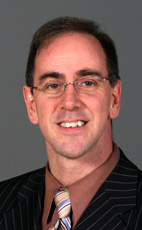
House of Commons photo

Crucial Fact

  • His favourite word was quebec.

Last in Parliament November 2009, as Bloc MP for Hochelaga (Québec)

Won his last election, in 2008, with 50% of the vote.

Statements in the House

Health March 24th, 2004

Mr. Speaker, the Minister of Finance learns quickly. True to his predecessor's old habits, he is hiding the surplus at the beginning of the year so that he can surprise us with it later, in the fall.

Does the government not find it repugnant to hide surpluses when the needs for health care are so great, and to transfer nothing to Quebec and the provinces for them to invest in direct patient care? That is where the need is.

Epilepsy Awareness Month March 23rd, 2004

Mr. Speaker, “Lavender. Think Epilepsy”. This initiative was officially launched in March to mark Epilepsy Awareness Month.

The lavender flower is traditionally associated with solitude—symbolizing the feelings of isolation and seclusion that people living with epilepsy often face. That is why the lavender ribbon, representing this flower, was chosen to increase public awareness of epilepsy.

Nearly 120,000 Quebeckers suffer from epilepsy, according to the Association québécoise de l'épilepsie. Most of them lead an active and productive life thanks to the progress of medical science. The greatest challenge for epileptics is being accepted by a wary public with outdated misconceptions about epilepsy.

I invite all my colleagues in the House and the public to proudly wear this ribbon, which represents hope and awareness.

Health March 22nd, 2004

Mr. Speaker, the current problem in the health care system is the result of the terrible budget cuts that the current Prime Minister forced on Quebec and the provinces over the past ten years, when he was finance minister.

Does he not understand that he needs to start investing funds now, and make them recurring, to repair the damage he inflicted on the health care system throughout Canada?

Health March 22nd, 2004

Mr. Speaker, last Wednesday, the Prime Minister rejected out of hand a unanimous motion by the National Assembly calling on the federal government to recognize the fiscal imbalance and demanding that it transfer funds for health in particular. He explained that there would not be any new money for health before this summer's first ministers conference.

How can the prime minister reject this unanimous motion and refuse to invest new funds in health care, when health is the top priority for all governments and the public?

Supply March 11th, 2004

Mr. Speaker, let me ask a question to my colleague; after all, she is the critic for social housing and there is obviously a link between health and social housing.

These days, we look at health with its various determinants. We take a more holistic approach. We do not consider sickness in isolation; we also want to see where people live. In fact, we want to take into account physical activity and a whole set of factors.

I was wondering if my colleague could tell us about the dismal, gloomy, dark, and extremely negative record of this government in the area of social housing.

As an inspiration for her, I will take 30 seconds to describe the situation in the Montreal area. As the member knows, Montreal has the largest rental housing stock, but it also has the lowest vacancy rate. I see the member for Rosemont—Petite-Patrie nodding. With a 1% vacancy rate, it is extremely difficult, if not downright impossible, to find a place to live.

I would therefore like to ask my colleague this question. How has the federal government handled the social housing file in recent years and, when she thinks about that totally intolerable situation, does she not sometimes feel sick to her stomach?

Supply March 11th, 2004

Mr. Speaker, with your permission, I will split my time with the hon. member for Terrebonne—Blainville.

It is of course with great pleasure that I am taking part in the debate on the motion tabled by the Bloc Quebecois. This motion is based on facts that I will present and that can be objectively verified.

In the sixties and seventies, when the public health care program was being established, there was a set of cost-shared programs designed to allow the implementation of the hospitalization insurance program and various health care insurance initiatives which, over the years, were put in place by the various provinces. At the time, the federal government was paying 50% of the costs of these health care and hospitalization insurance programs.

Over the years, and particularly since the Liberals came to office in 1993, the federal government has been withdrawing its support, so much so that, as we are speaking, it is only contributing 16¢ for each dollar spent on health. The former solicitor general is himself a former union leader and it was said that he represents the left wing of the Liberal Party. Well, if his speech is a reflection of the Liberal Party's left wing, we are surely going to miss the hon. member for Hamilton West.

In any case, the important thing here is that we are asking the government to ensure, in the budget that it will table on March 23, that half of the surpluses, which will total between $7 billion and $8 billion, are allocated to health care. That money will of course have to be given to the provinces through transfer payments. This is the purpose of our motion.

The announcement made by the former Prime Minister and member for Saint-Maurice is not good enough. The additional amount of $2 billion is not enough.

There is something that the hon. member who spoke before me did not mention. All the provinces across Canada, regardless of their political allegiance, whether they are run by Conservatives, Liberals or New Democrats, are so disappointed and saddened by the irresponsible attitude of the federal government regarding health that they felt compelled to run a national advertising campaign in the newspapers.

One just has to take a look at the major dailies, both in English Canada and in Quebec, to see that the provincial governments have formed a council. Following some decisions made after federal-provincial conferences, they are running ads in the newspapers to urge the federal government to raise its contribution. This is not an initiative taken by the Bloc Quebecois or a campaign led by Quebec's separatists.

When you think that it is Bernard Lord, in New Brunswick, the New Democratic government in Manitoba, the Conservatives in Prince Edward Island and the Liberals in Ontario, this is quite significant. The Liberals, in Ontario, did not say they would not join this campaign because they were satisfied with the federal government's contribution. Since the Liberals have been in office, at least $25 billion was cut in heath care alone.

I hope government members will agree that, historically, when the various health insurance and hospital insurance programs were put in place in 1957, 1962 and 1966, the federal government was supposed to contribute on a 50-50 basis. These are objectively verifiable data. They are in accordance with the historical truth.

The reality is that the federal government, with an almost unprecedented sense of irresponsibility, has chosen to eliminate its own deficit by causing problems for the provinces.

In the Bloc Quebecois, there is a task force chaired by the former minister Jacques Léonard, a former president of the Treasury Board, thus someone who has a good knowledge of the public accounting system. He has a good knowledge of the public health system.

The Léonard committee assessed the federal government's operating expenditures. Imagine that, while the federal government was asking the provinces to make efforts to balance their own budget, its operating expenditures increased by 39% over five years. Is that not terrible? Does it not make you sick to the stomach to see how this government has mismanaged public finances?

Members should know that all the provincial capitals are having to cope with the same reality, the same scenario. Today, we are not talking about the elderly; we are talking about the old elderly. Most people in this room, if they do not eat too much or smoke too much, and if they take care of their health, will live an average of 78 to 82 years. This is the reality.

As well as referring to the elderly, we refer to the old elderly. Since people live longer, more Canadians now live to be 100. It is not uncommon to meet constituents 100 years old or over. But because they live longer, they live with disabilities and debilitating illnesses for a longer time.

This puts pressure on the health system. Not only do people live longer, but they also rely more heavily on drugs.

When we look at the budget items for health, we realize that there is indeed a 7 or 8% increase on average in the provincial health budgets each year. This means that a province that allocated $15 billion, for example, to its operating budget for health care last year would not only have to maintain that level this year, but also to increase it by 7 or 8%.

Let us look at the figures for each province. Take British Columbia for instance; 40% of its budget goes to health care. In Alberta, it is 34%; in Saskatchewan, 41%; in Manitoba, 43%; in Ontario, 46%; and in Quebec, 39%.

Obviously, if nothing is done to correct the fiscal imbalance, no government regardless of its ideological affiliation will be able to maintain a viable health care system. There is good reason to be concerned.

Public health systems, provincial health systems, are threatened. Provinces have trouble with their public health systems. Need I remind the House that the provinces have to provide front line services, hospital and home care services, as well as surgery-related services. On the other hand, the only direct health care the federal government is providing is to native Canadians and, of course, the Canadian armed forces. That is all it is doing besides raking in surpluses.

If we look at the figures, we see that, since 1997-98, the government has accumulated $50 billion in surpluses. I think all members of Parliament would agree to say that the upcoming budget should provide for some kind of reinvestment. Regardless of how much the surplus is, we believe that half of it should be used to reduce the debt and the other half to restore transfer payments and achieve the 25% federal contribution even the Romanow Commission called for.

It is unfortunate that the Liberals have chosen to turn a deaf ear to such a non-partisan demand. The Bloc Quebecois is not the only one making such a request. Health ministers from all across Canada, from Newfoundland to British Columbia, have urged the federal government to do the right thing.

I do hope the Bloc motion and the call for more funding it entails will be heeded.

Haiti March 10th, 2004

Mr. Chair, I agree with the minister that in order for intervention to be effective in this conflict it had to be multilateral. No one thinks Canada should have acted alone.

I respectfully submit that it would not have been unreasonable for us to have expected the minister to act more quickly, especially since in other forums he firmly stated that Canada was ready. However, and he will correct me if I am wrong, the fact remains that chronologically, from the time President Aristide left on February 29 to the time it was determined we would send 450 soldiers and 6 CH-146 helicopters, a week went by.

Given the urgency of the situation, the minister should not take this personally, but in view of public policy and Canada's foreign policy, the timeframe was not reasonable and was too long. That does not mean Canada's contribution is not significant. It is a matter of humanitarian consideration. I know that a delegation, including the minister responsible for the Francophonie, went to Haiti. They had hoped for peace up to the last minute. I completely understand that situation.

However, leadership requires a certain degree of swiftness. Without being partisan—something that is quite beyond me—a week is too long given the urgency of the situation and the seed of hope the minister planted with some of the statements he made in a number of forums.

Haiti March 10th, 2004

Mr. Chair, I am pleased to take part in this take-note debate. It is always a good idea to have members of Parliament address issues like our missions abroad, treaty ratification and other such things that the Bloc feels are not only the prerogative of the executive but also need to be debated by the legislative power and Parliament.

Like most of our constituents, as was pointed out by my hon. colleagues from Mercier and Saint-Jean, we were all extremely saddened, appalled and worried by the tragedies we have witnessed on a daily basis in the last three months.

I have been watching the situation in Haiti quite closely, since I live with someone who is from Haiti and who still has relatives in Les Cayes, a small city, albeit not so small compared to others.

I always keep in mind that the people of Haiti, just like the people of Quebec and of Canada, hope that the Haitian leaders and the international community can find a way to work together in order to restore conditions conducive to peace, prosperity and development to that country.

This is certainly an appropriate time to talk about this issue, since we all listened with great interest to the speech given by His Excellency, United Nations Secretary-General, Mr. Kofi Annan. For the first time in the history of the United Nations, this is a man who reached the highest ranks in the United Nations by being himself a product of the United Nations, since he was at the World Health Organization, in Geneva, for a long time.

While following this horror story that Haitians lived daily in the last few months, I was, as were many Quebeckers and Canadians, somewhat disappointed with Canada's position. I know that values of peace are part of our values as Canadians and Quebeckers. I also know that, in 1945, when 49 delegations met in San Francisco, there was in the Canadian delegation, of course, prime minister William Lyon Mackenzie King, but also two future prime ministers.

The Minister of Heritage will remember—not because she was present, because she is young, but because she knows history—that Louis St-Laurent was a member of the delegation. There was William Lyon Mackenzie King and also Mr. Pearson, two prime ministers who were going to play an extremely important role in this peacekeeper concept.

Kofi Annan's speech to parliamentarians reminded us how much hope is being pinned on Quebec and Canada to help maintain peace. Unfortunately, Haiti has been a dictatorship for far too long, since a dictator ruled the country from 1971 to 1990.

In 1991, President Aristide was elected for the first time. He was later overthrown. He returned to power in 1994-95. However, this is food for thought. We must think about how fragile democracy is in certain parts of the world, not that Haiti does not want democracy. It is important to make that distinction.

The question we can ask and reflect on concerns the fact that President Aristide left on February 29. One week later, the extent of Canada's participation in the peacekeeping mission was still unknown.

The Security Council is considered the executive branch of the United Nations. I hope that there will be a take-note debate—I am certain that my colleague from Mercier is calling wholeheartedly for one—on UN reform.

There is much to say. It is important to reflect. We believe in the UN but reform is needed.

I study part-time at the University of Ottawa. I am taking international public law. Half of the course focuses on international public law and the role of the UN. It is extremely important that, as parliamentarians, we can reflect on these issues.

Later, I will ask the Minister of Foreign Affairs, who is here, to talk a bit about why there was a one-week gap between the resignation of President Aristide and the decision about the extent of Canada's participation in this first interim force. The Security Council made its decision late Saturday night. There are 450 Canadians now assigned to this force, as well as logistical support of six helicopters. I understand that this interim international force, in accordance with chapter VII of the UN Charter, will be followed by a stabilization force that should, we hope, lay a solid foundation for peace.

We should also remember that official development aid, about which the Bloc Quebecois has asked many questions, definitely does not reflect our abilities, aspirations and generosity, and also does not reflect existing needs. Unless I am mistaken, the figures that I read suggest that Canada's contribution is diminishing somewhat. We are giving less in 2004 than we did 10 years ago. In the case of Haiti specifically, I read that, in 2002-03, Canada gave $28.85 million to Haiti. This is of course a significant contribution, but is it not our duty, as parliamentarians, to do more?

I was reading a letter sent by an organization in the riding of Hochelaga—Maisonneuve, which I represent here. It is the Development and Peace organization, which was founded in 1967 by the Conference of Catholic Bishops. This organization is located next to the Marguerite-De Lajemmerais school. It sent a letter to the Prime Minister, the minister responsible for the Francophonie and the Minister of Foreign Affairs, who certainly had a chance to read it.

This letter is important because it reminds us that the primary responsibility of the interim force currently in Haiti is the disarmament process. There can be no peace and no plans for the future if the various factions do not lay down their arms. Of course, we know the expertise of Development and Peace, which was founded in 1967 and which is present in some 40 countries.

This organization told us about all the groups involved. There are of course the chimères, the former militias that unfortunately remained faithful to the ousted president; there are also the dissenting chimères, which regrouped in an army called the cannibal army and which were mostly present in the Gonaïves region, and there are of course the factions of Guy Philippe and Louis-Jodel Champlain.

I think it must be very clear that the mandate given to the interim force, as well as the mandate that will be given, at the end of the three months, to the peace stabilization force, must of course be focussed on disarmament. This is the first goal to achieve. Following disarmament, there will be, of course, the whole issue of rebuilding in association with civil society. There will also be the whole issue of education, food, supplies, public health. These issues will be part of the various goals of those who want to become involved in international development assistance, in public development aid. These are missions that will be very important for all those who believe in a future for Haiti.

I think that, as Quebeckers and Canadians, we must say clearly that this is not the end of our involvement, this is the beginning. This is not the end financially, since we will have to do more, and this is not the end logistically either.

I saw that, in the second stage of the proposed operation, there will be 5,000 peacekeepers. I see that Brazil is seeking command leadership. If I am not mistaken, we do not know exactly what the Canadian government involvement will be in this second stage.

My time is up. Mr. Chair, you have been so quiet that I thought you would let me continue. We will proceed with questions.

Health March 8th, 2004

Mr. Speaker, there are only three weeks left in this fiscal year.

Will the Prime Minister admit that there will be an approximately $7 billion surplus—an amount much greater than his government announced—and that the entire surplus will go to paying down the federal debt on March 31, when health should be the top priority?

Health March 8th, 2004

Mr. Speaker, Quebec and the provinces have just launched an ad campaign explaining that, in 1976 and 1977, the federal government was paying 50% of all health care expenditures but now pays no more than 16% of these same expenditures.

Will the federal government admit that, over the past 30 years, it has gradually withdrawn from health care funding, forcing Quebec and the provinces to shoulder this increasingly heavy burden? It is disgraceful.