
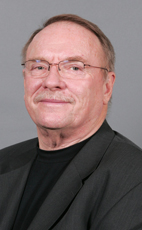
House of Commons photo

Crucial Fact

  • His favourite word was kyoto.

Last in Parliament September 2008, as Conservative MP for Red Deer (Alberta)

Won his last election, in 2006, with 76% of the vote.

Statements in the House

Kosovo March 24th, 1999

Mr. Speaker, the Minister of Foreign Affairs has given a detailed overview of the situation in Kosovo. We have been provided with an explanation of Canadian policy toward the conflict.

We have seen much evidence over the last few weeks and months about the issue. I do not believe I need to repeat most of that. Indeed we agree that there is an international crisis in Kosovo. As I said earlier today, we support our involvement in that crisis.

As well, the tragedy of Yugoslavia and Kosovo as it has unfolded lends itself to our stopping a moment and looking at the crisis that war creates. The many comments that have been made and the reasons for intervention allow us to support this, but I do not think it should be a blind support. I want to state very clearly that I believe I am as patriotic as anyone in this country. I am here because I believe in this country. I think, though, that we need to stop for a moment and ask a few other questions about our intervention in Kosovo and what it might mean.

Let me very briefly address those points. As the days and the bombings unfold, we will probably have to evaluate just how long this sort of action can be sustained. The first question is what if Mr. Milosevic does not give in to this bombing. Obviously the reason for the bombing is that he will see the light and say he will come to the table and stop what he has been doing in Kosovo. That will be good for us and for the Serbian people, and that will certainly be good for the Kosovars.

We should remember, however, that the Serbs have a long history of war and of fighting anything they disagree with. They are not Iraqis. They are quite different in how they might respond. History tells us that. We have to ask what will happen if, at the week's end, bombings have not brought the reaction we want. What will happen next?

My second question concerns the degree to which Canada will be involved in further NATO missions in Kosovo. The House has never freely debated what would happen if we had to send in ground troops in an escalation of this event. We have already made a commitment to provide 700 or more troops to a NATO led peace monitoring mission in Kosovo should that become necessary, and we hope of course that it does.

Will this engagement go further than that? If it does go further than that and we are asked to send combat forces on a ground invasion, will we come back to this House to discuss that issue? I believe it is our job here to ask that question and to receive assurances that it will happen. I am concerned for the safety of our men and women in the Canadian forces, as all of us are. We need to ask ourselves if the armed forces are equipped to handle a sustained attack in a situation like that. No one doubts the courage of our men and women in uniform, but we do have to question whether they are prepared for what they might face in that invasion.

We also have to ask about the role of parliament in this whole issue. This is the House of Commons. This is the place where elected representatives should take this issue very seriously. We are talking about the sons and daughters of many of our constituents. The Commons must be consulted before this country undertakes any further serious foreign affairs action in this event.

I do not believe that the debates on Kosovo that took place in November and February dealt with a future escalation. It is not satisfactory to simply have a statement and to have the sort of debate that we have had.

As we and our NATO allies attack Yugoslavia, we are now at war. Some might call it peace enforcement. Others assert that it is simply forceful diplomacy. Let us not mince words. We are at war, and while we find that word distasteful, I believe that is the word we need to use. This is the reality of the international system. Military force is required to deter and punish aggression or to alleviate human suffering. The rhetoric of soft power cannot hide these simple facts.

I want to express my hope for a speedy resolution to this crisis and to extend all of our prayers to the men and women of the Canadian forces. May they all return safely.

Kosovo March 24th, 1999

Mr. Speaker, as we go about our business here today, conflict continues to escalate in the lands of the former Yugoslavia.

Four years ago it was civil war in Bosnia. Today it is civil war in Kosovo. In both cases Canada and its NATO allies have determined that these conflicts are incompatible with our shared desire for European stability. The concern that the war in Kosovo might spread beyond the borders is very real. The fear of yet another humanitarian disaster in the Balkans is pressing upon us.

Under these conditions NATO interventions are necessary. We all know that efforts to resolve the war in Kosovo through peaceful means have so far failed. We cannot turn aside from the task that is before us, lest the flickering of this small war becomes a firestorm that engulfs the entire region.

I know the House will join me in telling the members of the Canadian forces that the hopes and prayers of all Canadians go with them as they once again are called on to serve our country.

Rocky Mountain House March 22nd, 1999

Mr. Speaker, it gives me great pleasure to announce the bicentenary of Rocky Mountain House, a community in my riding. Its 6,000 people are commemorating the important role this town played in the development of western Canada. It was the base from which David Thompson explored the mountains to the west. By 1840, 2,000 people lived there when Fort Edmonton had only 12 permanent inhabitants.

As we celebrate the 125th anniversary of what is today the RCMP, we should recall the role the town played in this important event. Its lobbying helped convince the Government of Canada of the need to create a permanent police force in western Canada. That presence is an important part of western Canadian identity. Rocky Mountain House is also the site of Alberta's only national historic park, a generous gift from the late Mabel Brierley.

I know members of the House will want to join me in saluting its history and extending our best wishes to the people of Rocky Mountain House, Alberta.

Cuba March 16th, 1999

Mr. Speaker, that is too little too late.

How can the government deny that its 20 years of soft power policy toward Cuba has been anything but a total failure?

Cuba March 16th, 1999

Mr. Speaker, yesterday we saw the effectiveness of this government's soft power foreign policy. Four Cuban dissidents were sentenced to prison after a kangaroo court in Havana found them guilty of subversion.

Given his warm relations with Mr. Castro, why was the foreign affairs minister not able to ensure their right to a fair trial?

The Budget March 2nd, 1999

Mr. Speaker, the real point is that Canadians are getting extremely discouraged because taxes are so high. There is no incentive to let businesses grow and provide more jobs. There is no incentive for our young people to stay here. That is what we have to turn around.

People are discouraged. They are starting to ask what the government can do to fix that. That is the big question.

The Budget March 2nd, 1999

Mr. Speaker, the government has played a shell game. There is not a lot of honesty. It is a pretty deceitful thing to brag about.

EI payments have been overcollected. They have taken close to $15 billion and thrown them into general revenues. They have kept their bureaucracy as large as ever. They continue to shuffle money from one portfolio to another. Money moves back and forth under one shell, then under another and back to the other. Basically they have bragged about this and said “Look at the wonderful job we are doing”.

Business knows and the average taxpayer knows that they are not better off today. Balancing the budget had to happen, but let us talk about the $580 billion debt. That debt has not gone away. The servicing of that debt is $42 billion to $43 billion a year. Let us think of what we could have if we were able to deal with that debt effectively. Putting maybe $3 billion a year on that will take forever.

It is like the OECD said. There is no plan. There is nothing here to brag about. Until we get that we will not have a productive country that does not have the figures I talked about.

It is wonderful to get rid of the deficit, but let us talk about the debt. That is the real issue.

The Budget March 2nd, 1999

Mr. Speaker, I come from central Alberta which has seven world scale petrochemical developments. There are 11 quarter sections of land being developed in housing. There has been a huge increase in what is happening.

I meet with the executives of those companies. I welcome them and ask them why they are there. The reasons are low feedstock costs, less government, and the efficiency and productivity opportunities in that community. The advantages are obvious.

They could go to the gulf coast. They could go to Saudi Arabia. However they have chosen Alberta because it is a place where taxes are low, government interference is much less, and people have an incentive to do much better. The entrepreneurial spirit is alive and well in Alberta. I am afraid that what we have here does nothing but kill it. That is the big problem.

The Budget March 2nd, 1999

Mr. Speaker, I will be sharing my time with the hon. member for Langley—Abbotsford.

It is certainly a pleasure to talk about the pay-more, get-less budget of this year. I really want to touch on three things. First, I would like to talk about what I found out from my constituents this past week, having a week to talk to so many of them.

Second, I would like to talk about some young people who took out their paycheques, looked at the reductions on them and started to ask some pretty serious questions.

Third, I would like to talk about where Canada really sits in the world and what is happening to our country.

I had the opportunity to talk to four different service clubs, to a high school, to a senior citizens' home, to a couple of town hall meetings and to a chamber of commerce. Pretty well everywhere I went I found a major concern about taxes, about health care and a real disappointment that here it is again: we are paying more, we are getting less, our health care system is in crisis and yet we are being asked to pay more and more taxes year after year.

They also talked about the dollar and how the dollar was not worth what it used to be. They talked about how concerned they were about their jobs, about their initiative and the destruction of that initiative by a budget such as this.

Canadian productivity is suffering and has been on the decline now for some 30 years. That is a message to which certainly the government has failed to react.

There is the loss of brain power. Young people are saying “If it does not get better I will have to leave this country”. I can identify with that, having had three of our family leave this country for that reason.

I have a son who teaches at Princeton. He was a Rhodes scholar who could not get a job in Canada. I have a daughter who is an architect in Norway. She could not get a job in Canada. I have a young daughter who was recruited to Holland. She was offered a scholarship because she could not get one in Canada.

That is what we are finding. That is the kind of thing we heard from the young people in high schools and colleges as we travelled the country.

We talked about paycheques. What are we getting from the deductions on the paycheques? Again it is pay more, get less. We have less health care. We have an EI system that is just not working.

Young people are saying that they cannot even make a claim. They are asking what the EI deduction is for. The average employee is paying $350 per year more than what this system needs. The employer is paying $500. There is a huge surplus which is thrown into general revenue and 40% or less can actually collect EI payments. They know that and they are upset by it.

Canada pension, 9.9%: It has gone up in the last two years and will go up for the next three. That was socialism of the 1960s and the state centred system that was to provide everything to everyone. Young people are saying they do not trust that system will be there for them and that the costs are just too high.

As far as income tax is concerned, it is pay more and get less. With bracket creep 2.5 million more Canadians will be in a higher tax bracket. This mainly affects low and middle income people, and that is most Canadians.

The result is that young people see no hope in the country. Small businesses see no reason why they should grow and provide jobs. There is no incentive because of a budget like the one we have just seen.

I would like to concentrate on our position in the world. Where are we in the world? I have been fortunate to have been travelling for close to 40 years. I have travelled to just about every country in the world. This past year I have been in countries like China, India, Pakistan, Paris, London and and Norway. Everywhere I go I get the feeling that Canada is falling behind. Canada's influence is not what it used to be. We are in trouble, no matter how we look at it from an international perspective.

Last summer I spent two days at the OECD in Paris asking what was wrong with Canada, what was happening to the country we are so proud of and want to see prosper? They said, if they had to summarize it, that there were three issues. One was the debt. No country can have a debt to GDP ratio like Canada has and expect to succeed.

Second, we cannot have taxes like we have. We cannot have corporate and personal taxes at the level we have in Canada and expect people to have initiative and expect productivity to increase.

Third, and most important of all, we do not have a plan. Our government does not know where it is going in three months, in three years, in thirty years. There is no plan. The government goes from pillar to post and we get a budget like the one we are talking about here.

As a result our dollar is dropping. As a result our percentage of the world GDP is now 2.3%. Twenty years ago it was 5% of the world GDP. That is a dramatic decline in Canada's influence in the world.

The Canadian government is in a state of denial. The Liberals love to brag. They want to keep their spirits high. They allege that we are the top country in the world based on the UN human development index, which most experts say is an economic hoax. By dreaming we are number one, they fail to realize the kind of economic decline the country is in.

The World Bank says that our standard of living and prosperity has dropped from third to twelfth place in the past 10 years. We are the only country in the top 13 industrialized countries that has undergone such a decline. That hits home and that hits home hard. Those are hard, cold facts.

Canada has been displaced by nine countries in the last 10 years: Kuwait, Hong Kong, Singapore, Japan, Norway, Belgium, Austria, Denmark and the United Arab Emirates.

Let us look at the real indicators of what is happening to us. We can look at unemployment. Let us compare our unemployment at 8% to 9% to that of our neighbours with whom we compete. They are at 4.3%. This shows a decline in our economic performance. We all know that the level of unemployment is higher if we consider the discouraged unemployed workers who are no longer searching for jobs and the many involuntary part time workers. In a healthy economy there is virtually full employment. There are jobs for everyone and certainly they are full time jobs.

I have mentioned the Canadian dollar. Those who do not realize what has happened can travel anywhere in the world and see what they can buy with the Canadian dollar. On taxes, pay more and get less; $2,020 more in taxes in the last six years. Taxes kill jobs. Taxes kill incentive.

I could talk about the debt and the size of government, but in conclusion basically our productivity is falling. Our standard of living is falling. Our unemployment rate is double that of our U.S. cousins. As well, we have the highest taxes in the industrialized world.

The government has nothing to be proud of in the budget. It is a budget of pay more and get less, and the Canadian public will suffer from it.

Peacekeeping February 17th, 1999

Mr. Speaker, basically the government wants the best of both worlds. It wants to continue to cut the forces, not provide any money for new equipment and not provide a better standard of living for the troops. The government wants to go everywhere, to be everywhere.

We deplore what is happening in Kosovo. As a NATO ally we should be equipped to go there and do our part. The problem is because of government negligence we are not able to do our job. That is the bottom line.

Do we want to go? Do we support going? Yes, but not the way we are and the way we are equipped today. We are asking our men and women to go into an impossible situation.