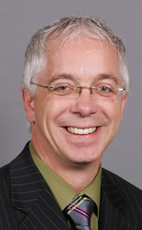
House of Commons photo

Crucial Fact

  • His favourite word was quebec.

Last in Parliament November 2006, as Bloc MP for Repentigny (Québec)

Won his last election, in 2006, with 62% of the vote.

Statements in the House

Sponsorship Program April 5th, 2005

Mr. Speaker, the real victims of the sponsorship scandal are not the Liberals but the taxpayers.

On behalf of the taxpayers, victims of the sponsorships, I ask the Liberal government why it does not immediately set up a trust fund for the dirty money the Liberals received as part of the sponsorship scandal?

Question No. 83 April 4th, 2005

What amounts, if any, were allocated to the “Internationaux du sport de Montréal” by the government, for each department and agency, in the fiscal years from 1998-1999 to 2004-2005, and what amounts, if any, are planned in the years to come?

(Return tabled)

Member for Verchères—Les Patriotes March 23rd, 2005

Mr. Speaker, it is with great pleasure that I pay tribute today to my colleague and friend from the riding of Verchères—Les Patriotes, who received the title of Chevalier de l'Ordre de la Pléiade on March 22.

This honour is bestowed in recognition of the tireless efforts of my colleague over the past several years to promote the French language throughout the world, but especially of his continuing efforts to have the Acadian tragedy recognized and to obtain an official apology.

Through his dedication he has also reminded us that 2 million Quebeckers are of Acadian descent and that it is vitally important to strengthen the ties between the Quebec nation and the Acadian nation.

Like the star on the Acadian flag, I hope you will continue to illuminate the French fact in Quebec, Acadia and elsewhere in the world for years to come. Congratulations, chevalier and thank you.

Auditor General Act March 21st, 2005

Mr. Speaker, it is with some emotion that I exercise my five minute right of reply before we conclude this debate. In the life of a parliamentarian, personally developing a bill and introducing it in the House for first reading and then consideration in second reading is a rather long, arduous and at times painstaking process. It is therefore with some emotion that I now see this bill reach the end of a stage. Moreover, throughout the debate on Bill C-277, I have been able to count on the cooperation, open-mindedness and professionalism of my hon. colleagues from all parties.

Some may say there are bad sides to a minority government, but there are good ones too. For instance, in the past little while, motions and bills from all parties have been receiving greater attention and consideration than before.

The week before the latest recess, my friend and colleague from Charlesbourg—Haute-Saint-Charles moved a motion on reversing the burden of proof. I had the privilege of speaking on this motion, saying that we have to take our blinders off and stop thinking that whatever comes from the Bloc or from Quebec is no good because they are all separatists. Our colleagues from all parties really considered the motion on its merits and content, and not just the messenger. That bodes very well.

As my hon. colleague from Hochelaga said, without presupposing how the House will decide, things are looking very good for Bill C-277 today. It may well be referred to committee and eventually be considered at third reading stage. It could enjoy a longer life, and perhaps even be passed. The process Bill C-277 is going through seems to be moving along very nicely.

At first, some colleagues had concerns about the scope of the bill with respect to private foundations or smaller foundations in their ridings or provinces. As the debate progressed, this irritant was eliminated.

As we had an opportunity to discuss the bill, other hon. members sitting on the Standing Committee on Public Accounts raised certain questions but they have not opposed it. These questions were completely legitimate and proper and caused us to work harder on how this bill was to be interpreted.

The final and most serious question was about the kind of audit done by the Auditor General. For the benefit of the House and Treasury Board officials, I shall quote from part of a reply I received from the Auditor General on these questions:

The new subsection 5(3) stipulates that the Auditor General may make such examinations and inquiries as he or she considers necessary in order to enable a report to be made in accordance with this act. This provision leads me to conclude that my office would conduct management audits only for all bodies other than crown corporations. This conclusion is based on the words “enable a report to be made in accordance with this Act”. The requirement to report under the Auditor General Act concerns management audits exclusively. The opinion expressed under section 6 of the Auditor General Act on the financial statements included in the public accounts is submitted to Parliament by the government.

The Auditor General concludes with this:

I hope that these comments will help you in your deliberations—

It was signed by Sheila Fraser.

I believe that all during the deliberations on this bill, my colleagues have offered concrete and constructive arguments to improve the bill and its interpretation.

I would be very pleased today if the House were to give its unanimous consent to send this bill to committee, for that would enable us to hear witnesses representing foundations, crown corporations and the Auditor General's office. In that way, we would be able to see what practical impact this bill would have on the management of the $7 billion in terms of the foundations.

I hope that everyone will agree that members of Parliament ought to have greater oversight over these foundations and public monies, and that the Auditor General will have the opportunity to audit and review these foundations and crown corporations.

I also want to thank all the hon. members who have spoken on Bill C-277.

Supply March 10th, 2005

Mr. Speaker, my colleague is right and that is what I was saying at the beginning of my statement. This is why I called for open-mindedness on the part of those watching at home and of our colleagues in this House. Let us put aside the sovereignty issue that divides us and look at what the Bloc Québécois is suggesting. Very seldom do we see a proposal aimed at improving the living conditions of communities in Quebec that would not improve the conditions of communities outside Quebec.

My colleague from Rosemont—Petite-Patrie was saying that when we protect the environment or the unemployed in Quebec, particularly when there are these kinds of proposals to improve the conditions in our communities, there are benefits for all Canadians. This is why I am asking for more open-mindedness. These bills, motions and proposals introduced by the Bloc Québécois often benefit all our communities.

Supply March 10th, 2005

Mr. Speaker, it is true that we should act quickly. I would quote the Prime Minister, who said that we had to eliminate the democratic deficit or, at the very least, reduce it, to make sure we expand the role of the members of Parliament in the House of Commons. This could be a very clear example of talk becoming reality. Thus, when this House votes in favour of a motion or a bill, the government should act quickly to adopt it.

I will return my colleague's serve and say that private members' bills very often impact our communities and Canadians directly. In the current parliamentary process, each member can introduce, for all intents and purposes, only one bill during a given parliament. I know that there is currently a lobby to allow members to introduce two bills, which would effectively double their chance of being adopted.

To address the democratic deficit, I also believe that the government should consider this suggestion, made by several members, very carefully. Private members' bills often get things moving immediately and directly for the respective communities. With all due respect for the departments, when ministers introduce a bill for the government, our concerns are often on a different level.

In conclusion, I believe that, in order to reduce the democratic deficit, we should increase the number of private members' bills. This would give the members a greater role in this House and our communities a greater level of representation.

Supply March 10th, 2005

Madam Speaker, today it is my great pleasure to speak to the motion put forward by my friend, the hon. member for Charlesbourg—Haute-Saint-Charles. Before I begin, however, I too would like to pay tribute—unusual in this House, but hon. members from all parties have done so—to the hon. member for Charlesbourg—Haute-Saint-Charles.

This motion appears to have the approval of all parties. That too is unusual in the House of Commons, although not a first, since it happened earlier when there was a motion on the Holocaust. We should also remember that the hon. member who is proposing this bill is the same one who proposed a bill to eliminate $1,000 bills, also intended to thwart the activities of organized crime and prevent money laundering. Moreover, this is the same hon. member who proposed a bill or a motion concerning the appointment of judges. That issue was studied in committee. We can also point out that it was the Bloc Québécois that introduced the forerunner to today's topic, which was Bill C-24, to specifically recognize organized crime in the Criminal Code, through the work of my former colleague, the former member for Berthier, Michel Bellehumeur. Today we have this motion before us.

I would like to digress for a moment to go over the three or four points I have just mentioned. People listening to us, and our colleagues here in the House, if they have a somewhat open mind, can see that even if an idea comes from the Bloc Québécois, it may be quite sensible. Too often, the Canadian public and our Liberal and Conservative colleagues cover their ears and say that if it comes from the Bloc it is no good.

Today, happily, there is none of that attitude. And so I hope that this will get our colleagues thinking about other topics we might bring forward, and how even if the sovereignists introduce these topics and they are not related to sovereignty, but to society, they may be of interest to the entire community. That is another reason I want to pay tribute to my friend and colleague from Charlesbourg—Haute-Saint-Charles.

The motion he proposed to the House this morning reads as follows, since I believe it is important to refer to the wording of the motion before debating and discussing it:

That, in the opinion of the House, in order to betterfight crime, the government should introduce a bill by May 31, 2005, to amend the Criminal Code by reversing the burden ofproof as regards the proceeds of crime, requiring the accused,once found guilty of a serious offence, to demonstrate on the balance ofprobabilities that their assets were not obtained using theproceeds of their criminal activities.

The Bloc Québécois has been pressuring the federal government for a number of years to bring in effective legislative measures against organized crime. As I have already said, Bill C-24, which was passed in 2001 with the support of the Bloc, and came into force in February 2002, is one of the bills we supported in the battle against organized crime. Thanks to Bill C-24, the provisions relating to the proceeds of crime set out in part XII.2 of the Criminal Code are applicable to virtually all criminal acts.

That was one step in the right direction in the battle against organized crime. But during the election campaign the Bloc Québécois continued to reflect on ways to move further in the battle against organized crime and on behalf of safer communities. It therefore felt that another amendment was required to specifically target organized crime in Quebec and Canada. As a result, on October 28, 2004 our colleague from Charlesbourg—Haute-Saint-Charles introduced Bill C-242, to reverse the burden of proof, requiring a person found guilty of an offence related to organized crime—and that point is important—to prove on the balance of probabilities that his assets were lawfully and legitimately acquired.

Following this reflection process and the introduction of this private members' bill, Le Devoir wrote the following about the Bloc Québécois and its position:

—the Bloc Québécois, the first political party to propose reversing the burden of proof, with its Bill C-242 introduced in the Commons last fall, has adopted the idea.

At the federal-provincial-territorial ministers' meeting, other stakeholders got behind the idea. The other parties eventually came around.

“This is a proposal that the Bloc likes,” confirmed the member for Charlesbourg—Haute-Saint-Charles.

The Bloc was recognized as the first political party to have put this idea forward in the House of Commons. The idea was discussed at a federal-provincial-territorial meeting at which the justice ministers agreed in principle with the idea presented to them.

When we take a closer look at the motion from the point of view of organization and procedures—the idea has been put out there—we can see that it is relatively detailed. Nevertheless, it will be refined in committee to eliminate any concerns or irritants with respect to protecting the presumption of innocence as well as the safety of the accused. The idea is definitely not to have everybody go before a court and tell the judges and defence lawyers how their assets were acquired. So, in committee, we will refine the proposal and make sure that it will be respectful of the rights and freedoms of the individuals to whom this bill does not apply.

Let us get into a little more detail. Since it is important to respect the presumption of innocence of the accused under the Charter, it is essential that, before any reversal of onus take place, the Crown first prove beyond reasonable doubt that the accused is guilty. This means that the accused has to be found guilty beyond reasonable doubt.

Here are the main points that the Bloc Québécois would like to see in a future government bill on the reversal of the burden of proof. The Crown must prove beyond a reasonable doubt that, first, the accused is guilty of an indictable offence and, second, that he benefited directly or indirectly from an asset, benefit or advantage because he committed the offence for which he is found guilty. We could add that, with a few exceptions, the accused must belong to a criminal organization. Once these three conditions have been proven beyond a reasonable doubt, the accused would have to demonstrate on the balance of probabilities that the assets which the Crown wants to forfeit were obtained in a legitimate fashion.

Currently, here is how things work: an accused—as the hon. member for Argenteuil—Papineau—Mirabel so aptly showed—can file a tax return which indicates that his annual income is around $19,000, but he can still own a lavish property along a lake, a condominium in Florida and another one in the West Indies, a Corvette and a boat, and everything is just fine.

If the accused is found guilty, the courts must prove that he got his assets illegally. Under the motion now before us, which reverses the burden of proof, the contrary would happen, in that once the accused is found guilty beyond a reasonable doubt of committing a crime and, with a few exceptions, of being a member of a criminal organization, he will be the one who has to prove that his assets were obtained legally and legitimately.

This suggestion by the Bloc Québécois which, as I said, seems to enjoy the support of the House, is a precedent in Canada, but not in the world. A number of countries, including Australia, Austria, France, New Zealand, Germany and the United Kingdom have already legislated in that sense, to various degrees, and included in their legislation the reversal of the burden of proof as regards the proceeds of crime. The financial action task force on money laundering, which is an international organization, proposed a similar measure in 2003.

In conclusion, this is a motion on which there is a consensus and one which would benefit Canadian society by making our communities safer and by impeding even more the activities of criminal organizations.

The hon. member for Charlesbourg—Haute-Saint-Charles deserves to be praised for his motion and so does the House which, I hope, will support this initiative and act quickly, so that it can be implemented without delay.

Supply March 10th, 2005

Except when the hand is in someone else's pocket.

The Budget March 8th, 2005

Mr. Speaker, to reassure my colleague who just spoke, I can tell him that the interpretation was interrupted for about 40 seconds. Since we were listening attentively to his speech, we were able to point this out right away. So he did not have to begin all over again. We clearly heard him and, above all, we listened attentively.

I want to thank my colleague for one part of his speech that I particularly enjoyed. I am talking about the part on accountability and when he asks the Auditor General to look at how the funds are administered by, for example, the Canada Health Infoway and the other foundations.

I am happy to learn from his speech that the Standing Committee on Health introduced a motion on this, which was carried by a majority vote. I also want to remind him that his party devoted an opposition day to this subject. That motion won by a majority vote in the House. However, since he has shared this with me, I will gladly share with him that, on March 21, we will be discussing Bill C-277 in the House, to allow the Auditor General to audit all the foundations. His party, through the chair of the Standing Committee on Public Accounts, has already shown support.

So, I would like to hear his comments on this part, whether he agrees with giving the Auditor General oversight with regard to the Canada Health Infoway and all the other foundations too? Also, once he has read the bill, does he intend to support all legislation seeking to achieve that objective?

The Budget March 8th, 2005

Mr. Speaker, this morning, I listened closely to the remarks on the budget made by both Conservatives and Liberals. As I indicated to his colleague from the Conservative Party who spoke previously, I find it quite odd that the hon. member would oppose the budget and, at the same time, arrange to have the budget passed while also opposing the Bloc Québécois' subamendment designed to improve this budget, which we feel needs improving.

This less than obvious position of the Conservatives is surprising to us. We are trying to understand the rationale, but we are having a little difficulty.

I would like to ask the following question of my colleague who just spoke on the budget. He talked about military spending. He described this budget as almost a Conservative one, and so on.

He was, however, as quiet about the environmental aspect of the budget as the budget is about Kyoto. I would like to hear him on the environmental aspect of the budget, on the funding that should be allocated to the Kyoto protocol and the plan to be implemented in connection with the billions in spending for the environment.