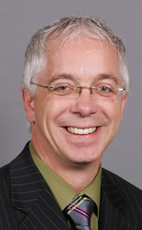
House of Commons photo

Crucial Fact

  • His favourite word was quebec.

Last in Parliament November 2006, as Bloc MP for Repentigny (Québec)

Won his last election, in 2006, with 62% of the vote.

Statements in the House

Parliament of Canada Act March 12th, 2004

Mr. Speaker, it is a fairly rare event, but today you will see a harmony of spirit for humanitarian reasons, as the government House leader has indicated, on the subject of Bill C-24, amending the Parliament of Canada Act.

I am happy to see the broad consensus that exists in the House today, although I am somewhat sad to have to make such an amendment to the health insurance plan for retired parliamentarians.

The bill is simply intended to recognize a situation. Sometimes, when a bill or regulation is established, certain situations may fall through the cracks.

The bill we are agreeing to adopt is intended precisely to correct this kind of situation where a member of Parliament who is eligible for pension but is under 55, that is, between 50 and 55 years of age, would be denied entitlement to benefit from a health insurance and dental insurance, even if he paid his share of premiums. Therefore, we are not asking for the moon, but simply the recognition of a situation that can sometimes be a problem.

That is why, as my Conservative and Liberal colleagues have said, it appears completely normal to us in the Bloc Quebecois to make the plan similar to that which applies to public servants between the ages of 50 and 55, who are retired and decide to pay their premiums for health insurance and, thus, receive its benefits.

I will not speak longer, except to express my approval, as previous speakers have, for Bill C-24. I believe this is a way to improve to some extent the situation and condition of some members of this House. On behalf of the Bloc Quebecois, I am pleased to give my support to the amendment and to Bill C-24.

Sponsorship Program March 12th, 2004

Mr. Speaker, for the information of the Minister of Finance, I would like to point out that the Prime Minister was finance minister for nine years.

In budget after budget for those nine years, that is in nine budgets, the Prime Minister transferred considerable amounts to slush funds, thus becoming an accomplice to his predecessor, Jean Chrétien.

How can the Minister of Finance claim that the arrival of his government and a new Prime Minister represents a change from the way things were during the Chrétien years, when his actions while in Finance prove he was in it up to his neck?

Sponsorship Program March 12th, 2004

Mr. Speaker, what we want to know is how much has been spent since 1993. The secret national unity fund did indeed exist and benefited from a hidden budget of $40 million. It is impossible that, as finance minister with responsibility for budgets, he could not have been aware of this.

So can the Prime Minister confirm to us that, from the time of his first budget, he authorized a secret fund, the existence of which was deliberately concealed from the public?

Supply March 11th, 2004

Mr. Speaker, I had an idea while listening to my colleague, the member for Argenteuil—Papineau—Mirabel, and I would like to know what he thinks about it.

The ads published by the Premiers' Council on Canadian Health Awareness cover all the provinces. I would like the Liberal member who gave a speech earlier and who wanted to be the first member of my fan club to listen carefully to what is going on.

She said that Mike Harris told lies during the election campaign. I am not a sharp political analyst, but I think that in February 2004, last month, Mike Harris was no longer the Premier of Ontario. I think that the Premier of Ontario is now a Liberal. If I remember well, the Premier of Quebec is no longer Bernard Landry. The Premier is not a péquiste any more. As far as I know, and for your information, the Premier of Quebec is also a Liberal.

In the two most populated provinces, it was Liberals who signed the press release saying that more money was needed to reach 25%. It was not Mike Harris or Bernard Landry.

Now that I have confirmed that reality for the member who spoke earlier, could my colleague, the member for Argenteuil—Papineau—Mirabel, tell us if that idea is only a creation of the minds of separatists and Tories in Canada or if it is shared by almost everybody except one political party?

Supply March 11th, 2004

Mr. Speaker, I thank my colleague for her question. I was looking for the table with the federal government's five points for health.

My colleague is perfectly correct. The federal government is saying, “Health care is our priority”. However, what are its health care responsibilities? It administers veterans' hospitals. There are perhaps a dozen of them in Canada; I do not know the number by heart. It also administers hospitals on reserves and that is all.

Health Canada has 5,000, 6,000 or 10,000 employees—I do not know exactly—and it only is responsible for 22 hospitals. However, the federal government says, “Health is our priority”.

Other than ensuring the universality of care and the five national principles of health care, the federal government has a responsibility with regard to the Canadian Food Inspection Agency and public health in general.

Yet, when we are told in a trembling voice that we are “sensitive to the reality facing Canadians”, as the Prime Minister would say, and that “health is our priority”, we could politely respond, “give us our money and mind your own business. Your priority is collecting taxes and you should give this money back to us”.

Who administers the waiting rooms? Who administers the hospitals? Who administers long term care? It is not the federal government; it is the provinces. Now we are told that there will be discussions with the provinces to resolve the problem in health care.

The only thing that the federal government needs to discuss is transferring money for health care, that is all. It should stop making speeches and saying, “We will ensure shorter hospital wait times”. This is none of its business. I say this very politely. In more parliamentary terms, this is not part of its jurisdiction. This is an area of provincial jurisdiction.

Consequently, to respond to my colleague, we want to create committees. We want discussions but about what? Waiting lists? Operating rooms? The number of doctors in the regions? I am sorry. The federal government should mind its own business. What we are asking the government to do is re-establish adequate funding to allow the provinces and territories to provide adequate health care to the public.

I think that this is not very hard to understand.

Supply March 11th, 2004

Mr. Speaker, I thank you for having brought the House to order. I remind you that I will be splitting my time with the member for Argenteuil—Papineau—Mirabel.

The motion reads as follows:

That, as the federal government's 16% contribution to health care spending is clearly inadequate, this House urge the government to invest at least half the current year's surplus in health care, over and above the $2 billion already promised, in order to achieve as rapidly as possible the stable 25%—

This was one of the recommendations made by the Romanow commission and the provincial premiers, while the Liberals claim they currently contribute 40%.

—federal contribution called for by Quebec and the provinces.

We will try to explain a little what the motion means in financial and fiscal terms.

The motion demands that at least half of the federal surplus, in addition to the $2 billion already promised, be invested in health. For 2003-04, we estimate that there will be an $8 billion surplus. From this amount, we must subtract the $2 billion already promised—so far, so good—, leaving $6 billion. Of this, $3 billion will go to health and $3 billion to paying down the debt, as the federal government likes to do with the surplus.

If it is true that health is the priority of this Liberal government, now is the time to prove it. It need only take part of the surplus. The Liberals do not have to cut into already existing programs or the sponsorship programs or the national unity fund or the CIO or the Canadian Unity Council or the Prime Minister's discretionary budget. They can use half the surplus to increase the federal contribution to health.

Some people could say that the Bloc's motion proposes a one-time injection of funds into health care. Despite everything, this is not what we are proposing, but it is a first step to ensuring a stable federal contribution of 25% of program spending for Quebec and the provinces.

What have the premiers of Quebec and the provinces said about this? We have said this many times, but the Bloc Quebecois is not alone. The premiers of the provinces and territories are saying the same thing. I quote from the press release that was issued after the council of the federation met in Vancouver on February 23 and 24, 2004:

Provinces currently pay 84% of the costs of health care in this country, while Ottawa only pays 16%. This is clearly not enough. Canadians agree with the Premiers that the federal cash share of funding must rise over time to total at least 25% of provincial expenditures.

This is an excerpt from a press release by the provincial and territorial premiers.

Later, they published an ad asking what Ottawa's contribution to health care funding is. The Premiers' Council is teaching Canadians about health, and it reaches the same conclusion: the federal government pays 16%.

We are told that it is not 16% because we have to add all the other numbers. It is as if I allocated money to offset a budget item in my office, but took the total budget into account to say that, with this total budget, I will be able to offset that item. The government is mixing apples and oranges. It is mixing all sorts of things.

The federal government is telling us that there is equalization. If it were true that equalization is a transfer for health care, a proposal we could make to the government would be to call it by the right name. Take out this word and say that it is a complement to the health transfer and that it will be higher. If it is not called a health transfer, it is because it is not one. Equalization is equalization.

First, let us remind the House that the purpose of the equalization program is to reduce economic inequalities between the provinces by increasing the revenues of the poorer provinces. Thus, federal payments are to allow these provinces to provide public services that are relatively comparable, without them having to considerably increase their taxes. Therefore, this is clearly not a health transfer.

We are also told about tax points. If tax points are a health transfer, why are they not called a health transfer? A chair is called a chair. A cat is called a cat. A health transfer should be called a health transfer.

Tax points are not a federal government expenditure. Indeed, they are not listed in Canada's public accounts. Incidentally, the Canadian unity fund is not there either. Indeed, this is a transfer that was made in 1977. The federal government transferred tax points at that time. It does not do so every year. If tax points were a federal expenditure, we would find the item “tax points” in the section relating to provincial transfers. However, it is not the case.

So, one cannot argue that it is tax points. One cannot argue that it is equalization. Nor can one argue that these are transfers for social services. Everyone recognizes that the federal contribution is at 16%.

We are told that the government is acting in good faith and that there is a change of tone. Earlier, when he replied to the hon. member for Joliette, the Minister of Health repeated that there is a change of tone. It is true that there is a change of tone. When the former Prime Minister would ignore us, he did so bluntly. The Minister of Health is doing it politely. However, when we are being ignored, whether it is politely or not, we are still being ignored. The change of tone is only at that level.

We are told that there is a problem and that everyone recognizes that. The government wants to negotiate. It wants to do so by claiming that it is already contributing 40% and by asking us to prove that it is only giving 16%.

The Liberal Party says that it wants to negotiate and set up a negotiating committee. The people who are lying on stretchers and those whose names are on waiting lists do not want a committee. This reminds me of an article written in Le Devoir by Jean Dion, whom I really like. He said that God created the universe in six days. Then he set up a committee and five billion years later a man and a woman appeared. We can set up a committee, but when will we get its response? In 5, 10 or 25 years, since we are told that it will be after the election.

The Romanow report told us that the federal contribution should be 25%, but that it is currently 16%. The surpluses do exist.

I will conclude by urging Liberal members to show some openness and to look at the real figures on health transfer. If they are with it and if they are serious when they say that their government is giving 40%, while the recommendation is 25%, they might as well tell us in the same breath that they want to cut us off and that everyone else is wrong.

Supply March 11th, 2004

An hon. member opposite is shouting that there are the tax points. If my daughter were to ask me for money to go out and I told her, “I have already given you money. I bought you a sweater and a pair of jeans, and glasses and other things”, she still would not have any money to go out.

It is obvious that they have been spouting nonsense all day long. Enough with this nonsense. I will leave this to members opposite.

The motion reads:

That, as the federal government's 16% contribution to health care spending is clearly inadequate, this House urge the government to invest—

Supply March 11th, 2004

Thank you, Mr. Speaker. First, I would like to ask a question to the hon. member, then I will move on to my remarks.

The hon. member is suggesting that the federal share of health care costs is 40% and not 16%. Let us assume we are wrong and the Liberals are right. The Romanow report says that the federal government's share should increase from 16% to 25%. If the federal contribution is 40%, as she suggests, why is the Liberal government's position not to cut health transfers by 15%? It is paying way too much.

It is obvious that nothing in the Liberal government's position can be taken seriously.

Supply March 11th, 2004

Mr. Speaker, I listened carefully to the hon. member for Rivière-des-Mille-Îles and to all my colleagues who spoke so eloquently to the motion on health-care spending put forward by my friend and colleague the member for Joliette.

I told my colleague from Brome—Missisquoi earlier that his speech had saddened me. It is in this context that I wish to put a question to the hon. member for Rivière-des-Mille-Îles. I said I was saddened because I felt the member from Brome—Missisquoi was agreeing with what he was saying.

He read a text, probably written by Health Canada officials, but while reading it he said or gave the impression that he was agreeing with it. He told me afterwards that in fact he was. However, I am not sure he understood what it was all about. He was agreeing with what he was reading, but I am not sure he understood what it was that he was reading. I had forgotten to mention that and I wanted to do so.

The Romanow commission said “Health care transfers have to be increased from 16% to 25%”. The Provincial and Territorial Premiers Council also tells us that we should increase health care funding from 16% to 25%. Then, all the social and economic stakeholders tell us “We have to increase it from 16% to 25%”. How can the member for Rivière-des-Mille-Îles explain that, on the one hand, the Liberal Party is willing to negotiate, but on the other hand, it wants to start negotiating by saying that the federal government is already giving 40%?

How can it say on one hand that it wants to negotiate, claiming it is giving 40%, when on the other hand, all the stakeholders say that health care transfers amount to 16%?

I would like the member to explain this discrepancy.

Community Organizations March 11th, 2004

Mr. Speaker, since the Prime Minister axed the sponsorship program, many community organizations have been crying foul, because their financial survival is in jeopardy in the aftermath of the Liberal government's scams.

Many organizations in our ridings need financial support to pursue various important initiatives that are critical to the development of Quebec's regions.

The sponsorship scandal is strictly a Liberal scandal created by Liberal ministers to accommodate friends of the Liberals. Once again, while the Liberals are trying to take cover, it is the innocent victims of these profiteers who are now paying the price.

Let us not forget that this same Liberal government voted against a motion proposing the establishment of a support fund for community initiatives. Now, we must find an honest way to support the efforts of event organizers in our regions, because they are currently being left to fend for themselves by a panicking Liberal government.