No.

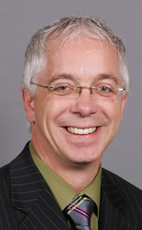 House of Commons photo
Won his last election, in 2006, with 62% of the vote.
Committees Of The House December 1st, 1999
No.
Committees Of The House December 1st, 1999
Could we get more information about where are they going and how long their trip will last?
Committees Of The House December 1st, 1999
Mr. Speaker, there are things in the explanations my hon. colleague provided the House that need to be clarified, like the dates and the names of the members taking part in this trip and their destination.
Canadian Tourism Commission Act December 1st, 1999
Mr. Speaker, I thought you were boycotting me. I was getting scared; I was surprised because this is not a habit of yours.
I have a two tiered question for my hon. colleague, our critic for foreign affairs, something it is important to remind the House of.
I know she does some excellent work and has to represent Quebec and the sovereignist movement all over the world. She has had the opportunity on several occasions to visit embassies abroad, where there are often offices of the Canadian tourism commission.
I would like her to tell us a little about how she sees things. When she visited these offices, what was the image of Quebec shown abroad?
Not too long ago, I was the critic for international trade, I also had the privilege to visit these offices. Canada is a big country and when one tries to promote tourism for almost all the provinces, some of them are left aside, and it happened quite often that I saw little or no information about Quebec.
I would also like to make another comment. By trying to repatriate everything to the federal level—I have seen this in different English provinces—does the federal government not give quite clearly the impression that provincial jurisdictions are second class jurisdictions, that it is the one who has to do the real work and leave minor details and trivia to local authorities, which are expected to carry out the orders taken by the superior minds, as they see it, in the central government?
All the government's bills smack of its smug attitude toward all institutions. As the hon. member for Mercier said quite clearly, in Quebec, there is another example of a principle that works. Tourisme Québec has been around for a very long time. It has developed through regional divisions, and this is working. I would like to hear the hon. member on these two issues.
Municipal Grants Act November 25th, 1999
Mr. Speaker, I thank my colleague from Châteauguay for the clarity of his remarks, because this is obviously not a simple bill.
He made frequent reference to clarity. I know that I will have to be brief, because the ten minutes for questions and comments go by quickly.
Before I question him on the bill as such, I would like to put a question to him about the debate currently under way in the House of Commons, especially during oral question period and also in the media, on a clear question for the referendum.
Let me mention in passing that the Prime Minister, who apparently spends more time in the Ottawa area than at his cottage at Saint-Jean-des-Piles, I think, voted in that riding.
If the Prime Minister understood the referendum question in 1995, why, in his opinion, did the other Quebecers not understand it?
My question on the bill before us today is the following. Why does the hon. member think it is urgent to have this bill passed in a hurry, when, in the case of a bill that could help municipalities develop substantial programs for the future—such as the infrastructure program—the government is dragging negotiations on or not beginning them in order to reach a rapid conclusion, instead of one that is expected in December 2000?
My questions are: Why act with all haste with this bill, putting the other issue on cruising speed, and, why, in his opinion, if the Prime Minister understood the referendum question would the other Quebecers not be at least as intelligent as he is and would they not have understood it too?
Federal Public Servants Retirement Fund November 15th, 1999
Mr. Speaker, once again, the Liberal government is demonstrating its inability to govern responsibly.
After taking the pay equity question to the courts, government employees must once again turn to a court of law for recognition of their rights.
The $30 billion in the pension fund for public servants, and members of the armed forces and the RCMP, do not belong to the government. This money belongs to retired workers and to present employees of the government; grabbing it constitutes legalized theft. The Liberal government must stop treating its employees this way.
The Bloc Quebecois has fought hard against Bill C-78 and the usual indifference of the Liberals. Today, we wish to reaffirm our support for public service unions, so that another of their employer's injustices will finally be put right.
Supply November 4th, 1999
Mr. Speaker, if I understand the NDP member who has just spoken correctly, there is a wide gap between what they think and what they write, and another equally wide between what they write and what they say.
This may explain our difficulty in understanding what they are getting at.
A Canada-wide consultation was carried out, in which the hon. member for Peace River was involved. We heard hundreds of representatives of NGOs, who were in favour of or opposed to free trade agreements and represented tens of thousands of Canadians.
I would like to hear what he thinks about the NDP's lack of participation in that consultative process.
Supply November 4th, 1999
Mr. Speaker, before putting my question to the Minister of National Revenue, I would like to caution members of the public and of non-governmental organizations that the NDP is using this official opposition day on the subject of free trade agreements to do a bit of grandstanding.
I would urge the public to look into the New Democratic Party's record of attendance at the many consultations that have been held and the many forums where it was given an opportunity to express its disagreement with the free trade agreements. NDP members were never there.
The Minister of National Revenue said that, in 1911, in the days of Wilfrid Laurier, the ruling Liberal Party was wonderful and supported free trade. This former prime minister must have been turning in his grave in the 1980s. It seems to me that, at the time, the Liberal Party's position on free trade was a lot less clear.
It also seems to me that, on the GST and NAFTA, the Liberals have broken two promises. With respect to environmental and social clauses, could the minister tell me whether his government maintained its 1993 position in the free trade agreements with Chile, Israel and the FTAA?
Supply October 28th, 1999
Mr. Speaker, I will be brief to give other members an opportunity to ask questions.
My hon. colleague from the Reform Party talked about consultations and the short time available for consultations. I would simply like to compare that to the prebudget consultations.
I would point out to him that the auditor general has found a $25 billion surplus in the employment insurance fund and that it is up to the minister to decide what to do with that money.
In all the prebudget consultations we have had since 1993, I do not recall the government asking people if they agreed with the way the finance minister intended to use the surplus. That is a good indication of the government's philosophy with regard to consultations.
This morning, the Minister of Transport said—and his colleagues read speeches prepared by his officials—that we were initiating an important debate. I want to point out that the Standing Committee on Transport will be studying this issue until November 26. It was said that, within the committee, the majority is Liberal and does as the minister says. In the House, the majority is Liberal and does as the minister says. In the Senate, the majority is Liberal and does mostly as the minister says. What does the member think about consultations in that context?
Supply October 28th, 1999
First of all, Mr. Speaker, I would like to congratulate the hon. member for his great performance in reading his speech. It was written either by Department of Transport officials or by Onex bureaucrats, we do not know exactly. In any case, we have to admit that he read it very well.
With all due respect, I also want the hon. member to know that I would have liked to direct my question to the hon. member for Notre-Dame-de-Grâce—Lachine, the hon. member for Vaudreuil—Soulanges or the hon. member for Verdun—Saint-Henri, but as my colleague, the member for Frontenac—Mégantic, said today, we will not hear a peep from them. It would be nice if their constituents had the opportunity to hear them, here in the House of Commons, or outside, in the foyer, or in their riding. One member, the hon. member for Lac-Saint-Louis actually did speak out, but oddly enough, we have not seen much of him lately.
I have two very simple questions to ask the hon. member. Could he give us an example, in Canadian history, of the 10% rule being violated? For example, for the banks, did the rule stand, yes or no? I am sure that the hon. member looked into this issue at length before delivering his speech, and I would like him to give us any example in Canada, since 1867, of the 10% rule being violated. My second question is this one: as things stand now, is the proposal from Onex legal or not?