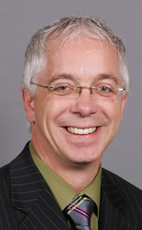
House of Commons photo

Crucial Fact

  • His favourite word was quebec.

Last in Parliament November 2006, as Bloc MP for Repentigny (Québec)

Won his last election, in 2006, with 62% of the vote.

Statements in the House

Supply April 19th, 1999

Mr. Speaker, the foreign affairs minister has mentioned countries where there has not been a vote. I could mention one where members voted twice, and that country is Germany, the peace plan sponsor.

Canada could have shown leadership and put the matter to a vote in the House.

When members change sides in the House, they tend to forget certain things. I wonder if the minister will recall the following statement “As we now stand, in the present situation we are looking at very long-protracted sanctions in the gulf—which could take months. We are looking at a very major military build-up... and we are looking at a potential military option. We would like to get some assurance specifically from the government that we will not engage in any offensive action in this region unless there is a consent of parliament”. This is a quote from the current foreign affairs minister.

Supply April 19th, 1999

They are not on top of the situation.

Supply April 19th, 1999

Madam Speaker, I thank the Reform Party critic, who congratulated the Bloc Quebecois for moving this motion. As we can see, and as the hon. member pointed out in his reply to the Liberal member, this is not a partisan issue. This is very clear in light of the position stated by the hon. member.

Earlier during the debate, the Parliamentary Secretary to the Minister of Foreign Affairs said “Yes, but in 1991 we had to wait several months before being allowed to vote on the Iraq conflict”.

Does the foreign affairs critic for the Reform Party think that a vote should take place after the conflict? Also, does he agree with the Liberals that this is a hypothetical issue? Considering that 43 mass graves with tens of thousands of bodies have been discovered, this is an urgent situation.

The parliamentary secretary said that a decision could be made at the last minute. Has the hon. member ever heard of the House being urgently recalled for a special vote?

Kosovo April 14th, 1999

Mr. Speaker, the peace plan proposed by Germany allows the UN and its secretary general to play a key role in the Kosovo peace process.

However, Germany is not a member of the UN security council at this time and is therefore unable to put forward its plan itself.

My question is for the Minister of Foreign Affairs. Will Canada use its seat on the security council to sponsor a resolution to have the German peace plan for Kosovo adopted by that UN body?

Kosovo April 12th, 1999

Mr. Speaker, this morning, the Minister of Foreign Affairs said in Brussels that we should set up a peacekeeping force in Kosovo, to ensure the implementation of an eventual solution to the current crisis.

Can the Prime Minister tell us whether this peacekeeping force will be under the command of the UN, the OSCE, or NATO?

Supply March 15th, 1999

Mr. Speaker, I believe that, indeed, the euro was created, among other reasons, to strengthen the monetary policy and the world situation vis-à-vis the United States, the U.S. dollar and the possible fluctuations of the exchange rate.

Take, for example, what George Sauras did to the pound sterling. Over a period of just a few days, he was able to get the value of the pound sterling to go down by gambling on that value. Today replacing these 11 European currencies by the euro provides increased protection against this type of speculation.

We are not here to examine this issue, but to ask that a committee be set up to undertake that task. As we demonstrated today, in the past, speculators could gamble on 11 different currencies that have now been strengthened by creating a single new currency, the euro. These speculators will have to look around to find a currency that is not as strong and as economically important. They will be able to gamble on that currency and, perhaps, create more problems for it.

Given that all these other currencies have now been grouped together and are better able to protect themselves against such speculation, it is likely that these speculators will turn their attention to the Canadian currency and will target our dollar.

This is an issue which the committee could examine. I suggest to the hon. member that he should submit this issue to the committee. Said committee will determine if the Canadian dollar is indeed strong enough to withstand international speculation. If it is unnecessary, as in the case of trade rules, why is Canada such a fervent supporter of the WTO? We might put this question to my colleague.

Together, the various countries in the world can stand up to the United States in the case of a trade dispute. Could Canada withstand speculation over its dollar, given that the Europeans will perhaps consider going elsewhere? That question could be raised in committee.

Now, how financially and fiscally independent is Canada from the United States?

What is the extent of this independence when we look at the curve since 1950? When 80% of our trade is with the United States, how independent are we in trade terms from them?

In 1993, and during the last election campaign, in 1997, the Canadian government said “In terms of foreign trade, we will open our market to other sectors of activity, toward Asia, Europe and Africa”. In the meantime the curve of trade with the U.S. continues to climb.

We are economically dependent on the U.S as well as commercially dependent on them. We must make sure that we are prepared for potential speculation and for a potential change in direction in relation to them. Perhaps a study on the subject could help us prepare for an increase in the value of the Canadian dollar, for potential speculation on it.

This is the question my colleague from Charlesbourg is trying to answer by asking parliamentarians to assume their responsibilities. However if Liberal members wish to disregard their responsibilities when they vote, the people of Canada will know about it.

Supply March 15th, 1999

Yes, I know. But if the value of the Canadian dollar increased, would this automatically means that our exports might be penalized? Should we therefore set up a monetary policy to keep our dollar at 63, 65 or 70 cents? Is that the federal government's monetary policy? Perhaps it should tell us that too.

As for the independence of our monetary policy, my colleague for Charlesbourg, my colleague for Mercier and my other colleagues who took part in the debate have shown it very well. Since 1950, if we look at the line of the U.S. dollar value in relation to the value of the Canadian dollar as well as the interest rates, we can see that the lines are following the same curve, they look like exact copies of each other, with one exception, in 1993, if I am not mistaken.

Today, we are doing 80% of our trade with the United States, where our exports are going; we are more closely linked with the United States than the European markets are among themselves, yet the European countries, after ten years of discussion, opted for a single currency.

Why are they closing their minds to any potential discussion and study of such a possibility? Why do they absolutely want to rule out a debate on that subject, in spite of the fact that the Canadian ambassador to the United States, Mr. Chrétien, said that it was something to consider, in spite of the fact that the chief economist and vice-president of Nesbitt Burns said that this was inevitable within five years, and in spite of the fact that several economists and experts said that we should look at this issue today?

Why should we Parliamentarians want it all done for us? Why should we want the people at Finance to discuss this matter, and then we will just vote on the bill to implement it, as was done with the free trade agreement with Chile?

Why should we want to do as we did with the free trade agreement with Israel, and just vote on the bill to implement it?

Is this what MPs should be, mere rubber stamps? Should we adopt implementation legislation and say yes, this is fine, the public servants did a good job? No. Like the hon. member for Charlesbourg, I too believe our job is to study it, to examine all the possibilities, and then to be in a position to make enlightened decisions.

Supply March 15th, 1999

Mr. Speaker, I thank the hon. member for Mercier for sharing her time with me.

I say to the deputy government whip that if he wants to quote L'Actualité , he does not have to go that far. On page 10 of the magazine, we find the following: “I anticipate a North American currency within five years. It is unavoidable”. That comment is from Sherry Cooper, the chief economist and vice-president of Nesbitt Burns. Incidentally, Ms. Cooper is not a member of the Bloc Quebecois.

The Secretary of State for International Financial Institutions said he was opposed to the motion of the Bloc Quebecois on a monetary union with the United States. Up to that point, I understand him, because he is not referring to today's motion. He is opposed to something we are not discussing. The Liberals are off the track, but we are used to that. It is par for the course with them.

However, today's motion calls for a committee to consider a pan-American currency. We cannot presume to know at this time what conclusions such a committee would reach, as the Liberal members are doing.

It is also puzzling why there is such vehement opposition to a committee to consider the possibility of a form of monetary union in North America and in the Americas at the very time when members of this House are giving thought to a free trade zone for the Americas.

How can the Liberal members be so removed from a topic such as a common currency at the very time when we are debating international and intercontinental trade? These same individuals who, as my colleague, the member for Mercier, pointed out, are now supporting the elimination of barriers between all countries in the Americas, are the same folks who said in the red book, and I quote from page 24, for my colleague, the member for Outremont:

A Liberal government will renegotiate both the FTA and NAFTA to obtain a subsidies code, an anti-dumping code, a more effective dispute resolution mechanism, and the same energy protection as Mexico. Abrogating trade agreements should be only a last resort if satisfactory changes cannot be negotiated.

All members remember that, in 1993, the Liberals campaigned against NAFTA, against the lack of consultation and information with respect to these agreements, and that they said on page 24 of their red book that they were prepared to abrogate the FTA.

What have they done since? They have signed it without a word, they have let in Chile, and they recently signed with Israel and Palestine. This was another promise they broke, along with the GST and many others.

One might wonder why our Liberal colleagues want to drag the debate down to partisan levels. What we are suggesting today to our colleagues is to act as responsible parliamentarians. What they are telling us is that it is bad thinking and plainly bad to suggest to this House that we act as responsible parliamentarians.

If a review committee concluded that under no circumstances should we adopt a common currency with the Americas, we would certainly abide by and support its decision. It might decide, surprise, surprise, that we should have a fixed exchange rate with the U.S. dollar, set at 80 cents, for example, after negotiations, to avoid the uncertainties—a word we hear often from our Liberal colleagues—regarding exports, which account for one job out of three in Canada.

It might decide we should adopt the American dollar or a pan-American dollar. We are not experts, so today we are suggesting that a review committee be struck to hear what experts, economists, exporters, the Canadian Manufacturers Association, the Canadian Exporters' Association might have to say on the matter. If they tell us “Yes, we should go ahead with this”, why should we as parliamentarians stubbornly refuse to have a quality debate and not do our job?

I will ask this to my colleagues, because soon we will have a question and answer period. I would like them to respond to my arguments. Why do they not want to do their job as parliamentarians? They opposed free trade, what is their opinion of a free trade zone? Do they oppose it too? I have news for them. Their government and their party are in favour of this American free trade zone and even presided over the first 18 months of negotiations. Why not then take advantage of this forum to expand the debate to the possibility of a unique currency for all those partners?

The question is legitimate. Why do they not want to talk about this, and why do they always come back with the same message “the bad separatists are only introducing this debate to be able to separate more easily”. This has absolutely nothing to do with today's debate.

They also raise the objection that, as far as exports are concerned, we have an advantage now. The Quebec minister of finance was saying that it was because our weak dollar. He was saying “Yes, but all this has a pernicious effect, a little bit like drugs. At the outset, it is pleasant, but in the long run, it can be very detrimental to our health”. It is the same thing for the economic well-being and the low Canadian dollar.

It might be that today it is easier to export our goods on certain markets because our dollar is weaker than the U.S. dollar. Who knows. Those who have travelled to the United States lately have certainly noticed that the Canadian dollar is worth very little compared to the U.S. dollar.

Foreign Affairs February 10th, 1999

Mr. Speaker, I will explain my calculations.

I was at Repentigny at 8.30 a.m. on Sunday when I was told I had to be in Ottawa for 11 a.m. to get the flight out. That being physically impossible for me also, I asked if the flight could be held until 12.30 p.m. I was told it could. And I am not the Prime Minister.

How can the Prime Minister explain that it did not occur to him to have the flight held for another hour or two to allow him the time to get to Ottawa to join us, since our flight arrived at Amman a good three hours before the start of the ceremonies.

Foreign Affairs February 10th, 1999

Mr. Speaker, I had the honour of being part of the Canadian delegation to the funeral of King Hussein of Jordan.

According to my calculations, from the time the PMO was notified until the start of the ceremonies, and taking into account the nine hours of flight time between Ottawa and Jordan, there was still nine hours leeway.

How can the Prime Minister explain that, with nine hours to spare, he could not have got from Vancouver to Ottawa, when a flight normally takes about four and one-half hours?