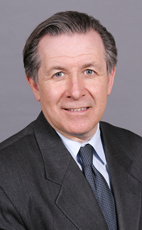
House of Commons photo

Crucial Fact

  • His favourite word was industry.

Last in Parliament September 2008, as Liberal MP for Algoma—Manitoulin—Kapuskasing (Ontario)

Lost his last election, in 2008, with 33% of the vote.

Statements in the House

Aboriginal Youth Scolarship November 18th, 2004

Mr. Speaker, I rise today to acknowledge the contribution of the MuchMusic aboriginal youth scholarship program and to congratulate Brent Wesley, a constituent from my riding, this year's aboriginal youth scholarship winner. The $3,000 scholarship, created in partnership with the Aboriginal Youth Network, helps students with tuition for the school year at the institution of their choice.

This year's winner, Brent Wesley, won thanks to his letter that outlined his passion and devotion to first nation issues and desire to learn and work in the broadcast industry. He is 24 years old, of Cree and Abenaki descent, and a band member of Constance Lake First Nation near Hearst, Ontario in my riding. This kind of initiative is a positive force aimed at helping Canada's aboriginal youth.

I commend MuchMusic and the Aboriginal Youth Network for their efforts. I congratulate Brent Wesley on his win, and on behalf of all members, wish him the very best of luck in his new and blossoming career.

Research and Development November 16th, 2004

Mr. Speaker, Genome Canada is a not for profit corporation funded by the federal government. It is the leading funder of genomics and proteomics research in Canada. It has received $375 million from the Government of Canada. As of June past, Genome Canada has levered $346 million in funding from other partners. The funding agreement is due to expire at the end of March.

Will the government renew Genome funding and allow Canadian scientists to keep their jobs here in Canada?

Competition Act November 16th, 2004

Mr. Speaker, I am pleased to participate in this debate on Bill C-19. As a member of the industry committee, I look forward to studying this bill in greater detail, hopefully as soon as Thursday if all colleagues are agreeable.

I listened carefully to the previous speaker, a member for whom I have great respect. I am sure the points he has raised will get good attention at the committee. We appreciate his bringing those points forward.

In addressing Bill C-19, a bill which proposes some important amendments to the act, I would like to focus on two particular provisions, both of which deal with deceptive advertising.

The first amendment would increase the administrative monetary penalties, or AMPs, that can be imposed when the courts find that a company's false advertising has had a significant negative impact on the economy. The second amendment would allow for restitution when false or misleading claims harm consumers in a manner that can be objectively quantified.

These provisions are improvements to the existing aspects of the act. AMPs, administrative monetary penalties, for false and misleading advertising already exist. The government is simply proposing to increase the amounts. Similarly, the addition of restitution is to increase the options available to courts to help consumers who have suffered losses because of deceptive claims.

It is important to remember as we consider these proposed amendments that catching and punishing flagrant violators of the Competition Act is only a very small part of what effective competition legislation allows the government to do. By way of analogy, we might think of traffic legislation. The most important function of a highway traffic act is to make it clear and obvious to everyone what acceptable driving practices are to give us all an incentive to follow those rules. Catching violators is pointless if the law does not provide that incentive.

Canada's Competition Act is effective because the major thrust of the act is to encourage voluntary compliance. This is also true of the amendments before us today. The effectiveness of the act is backed up by the Competition Bureau's work to ensure that Canadian business people know what is required of them.

The proposed amendments are refinements, not innovations. The administrative monetary penalties are already an option available under the act for some kinds of deceptive advertising as determined by the courts. Increasing the amount of penalties does of course increase the deterrent effect. That said, there is always a deterrent effect. The very fact that a company has to respond to proceedings against it has a deterrent effect.

What I would like to stress to the House is that a larger AMP emphasizes the seriousness of the deceptive behaviour. It tells people in the industry, the company's shareholders and the general public that a business has done something seriously wrong.

The second matter I would like to discuss is closely related in that it also applies to cases of deceptive advertising. It is a very unfortunate thing that few remedies under the Competition Act exist to address losses incurred by consumers affected by false and misleading advertising. This is a situation that needs to be changed.

The proposed amendment would give the courts another remedy for cases in which advertising has misled consumers into buying a product that simply does not work or meet the standards the advertiser proposes. This restitution, however, also has the ability to send a powerful message. It is only in a limited number of cases that deceptive advertising can be demonstrated to have had a measurable impact and that a case can be made for restitution. But when that happens, the message sent will be unmistakable.

I would remind the House that it is not enough to say caveat emptor, or buyer beware, when responding to some kinds of deceptive advertising. It is one thing when a consumer does not realistically assess a product. It is quite another when a company makes false claims about a product in its advertising.

Advertising is not just a way for a company to pitch and promote a product. Advertising is often a primary source of information about a product. It is not objective information. Vendors are trying to make the best case for their products, but the majority of advertisers manage to do this without misrepresentation. If this were not the case, nobody would pay attention to advertising.

Honest advertisers will naturally defend their freedom to promote their products aggressively, and they should, but this freedom needs to be balanced. Honest advertisers will recognize that some kinds of deceptive advertising call the legitimacy of all advertising into question when not actively discouraged.

Some critics will suggest that there is an equally valid fear on the other side of the scale: that we have to be careful not to create a chill effect that would frighten companies away from perfectly acceptable advertising practices. Is that fear legitimate? It most certainly is. That is precisely why the government has proceeded so carefully here.

Following the industry committee's review of the Competition Act, the government studied the issues extensively and consulted widely. The changes proposed here are not far-reaching or drastic. They are careful but effective steps in the direction the government has established it should be moving.

I will sum up as follows. Yes, it is true that the majority of advertisers intends no mischief, but it is also true that the Competition Bureau hears too many complaints from consumers who have lost money because the products they have purchased simply do not work as advertised. The message the government wants to send about some kinds of deceptive advertising is more than “do not do this”. The message the government truly wants to send is “do not even think about doing this”.

The amendments we have before us today are a sensible refinement of the legislation that exists to send just that message. I encourage my fellow members to support Bill C-19. As a member of the industry committee, I certainly look forward to dealing with the bill, with my colleagues, as soon as the House is ready.

Foreign Aid October 28th, 2004

Mr. Speaker, we all know Canada is a leader in helping the developing nations of the world, especially those in greatest need. Can the Minister of International Cooperation tell us how much of the government's expenditures on foreign aid are for administration and specifically, what percentage of the total money spent on aid does running the department cost?

Science and Technology October 22nd, 2004

Mr. Speaker, my question is for the Minister of Industry. As members know, we are celebrating the completion of the $174 million Canadian light source synchrotron at the University of Saskatchewan in Saskatoon. This new world-class facility will attract scientists and projects from around the world.

Could the minister tell the House how this new facility will benefit Canadians and how this investment will contribute to our future?

Resumption of Debate on Address in Reply October 19th, 2004

Mr. Speaker, we are glad the parliamentary secretary is over here with us. He raised an excellent point. There are those who would, foolishly I believe, criticize us for having a surplus. That surplus has allowed us not only to pay down the debt, we have saved interest money every year from that which we can then plow back into our social safety net and into economic development.

When I leave here I will be joining my northern Ontario caucus colleagues at our weekly meeting where we will discuss the challenges and the need for diversification in our region, which is not unlike other rural regions across the country, where we have experienced our young people going off to school and not always being able to come home right away.

A number of tremendous things have happened in northern Ontario. I will point to Sudbury, my neighbouring riding. It has become a world leader for research into mining technology. I would encourage everyone to investigate what is happening in Sudbury because it is tremendous.

In my own riding my 20-plus first nations are incredibly well led. Our programs should honour and respect the leadership that our first nation chiefs are providing. I had a delegation visit today, the chief of Zhiibaahaasing on Manitoulin Island and Chief Franklin Paibomsai from Whitefish River First Nation, two people who bring to their leadership roles a tremendous interest in the health of their communities, the ability of their communities to produce young people who will go off to post-secondary education and so on.

Fundamentally, the government has, to the best of its ability, demonstrated that it cares about the people of this country and its communities. At the end of it all it is not up to bureaucrats in Toronto, Ottawa or me for that matter to tell our communities what they should do when it comes to diversifying their economies. However, as my colleague has suggested, it is important that the Government of Canada be there to support our local leaders and the ideas that automatically percolate up from our communities.

Strong communities build on that strength. Successful communities breed further success not only for themselves but for their regions. We need a government like ours, one that believes in its communities and one that is prepared, as we committed in the election campaign, to put an additional $2 billion back into economic development. I know my region in northern Ontario through FedNor will continue to work very hard to make sure that diversification and responding to local needs is priority number one.

Resumption of Debate on Address in Reply October 19th, 2004

Mr. Speaker, I have a riding in northern Ontario called Algoma—Manitoulin—Kapuskasing. It is a large rural riding that is 110 square kilometres. It is bigger than any of the countries in Europe, including France. It is a riding that is diverse. It has a very strong Francophone presence, particularly in the Highway 11 corridor in the northern part of the riding, which includes communities like Kapuskasing, Hearst, Fauquier, Moonbeam, Smooth Rock Falls, Mattice, Opasatika, Constance Lake Indian Reserve and Val Rita.

These are communities that I wish to welcome into the riding. With redistribution, I was the beneficiary of over 20,000 new constituents from the Highway 11 area. I am very happy to be here to represent them and to have had their support. I wish to thank not only the electors of the Highway 11 area, but the electors from across the entire riding for their continued confidence in me. I can assure them that I will continue to work hard on their behalf and continue to get out to the more than 50 communities in my riding, including over 20 first nation communities. There is no greater honour that I could imagine than to be a member of Parliament in the best democracy in the world and in the best country in the world.

That said, that does not come about without a lot of effort. I am proud that I have been a member of a government that for the last nearly 11 years has brought an excellent level and quality of governance to the country that we see in the numbers.

Let me take my few minutes here today to highlight some of the features of our recent throne speech, a throne speech that continues what for me has been the essential message of the government since 1993, when we were first elected. That message is we bring a balanced approach to governing the country. We are not slaves to the debt; however, we have put the country's finances back in the black. We have had seven surpluses in a row, and because of those surpluses, we have been able to pay down the national debt by over $60 billion. We have a ways to go yet, and I am not one who believes we should pay down the debt so fast that we suffer in other areas. The government has brought a very intelligent and considered approach to paying down the debt, while at the same time allowing, through our surpluses, for major investments in our social safety net. Primary among those is our health care system.

Before I say too much about health care, it has been forgotten by members opposite, and to remind all Canadians, that it was this government about five or six years ago that put the Canada pension plan back on a strong footing. We are the first and maybe the only industrialized nation whose national pension plan is on a secure footing. It is important to remind Canadians that they need not worry. The Canada pension plan will be there when they retire. It is actuarially sound, it is being managed well and it is being managed well because the government took steps some years ago to allow that to happen.

Our country is noted for its social safety net around the world. Why do people want to come to our country besides for the peace, tranquility and security that we can offer, the beautiful landscapes, trees and water? What we also can offer is a system of governance, a form of community management, whether it is national, provincial or local, that ultimately puts people first. Yes, there are errors and mistakes from time to time, but ultimately we have evolved a system of governance that really does put people first.

A hallmark of the government's record over the last 11 years has been in putting people first. We have done the best we can to show Canadians that we care about their priorities by not only balancing the books but having made significant major investments in health care. That was the number one issue in the past campaign. When we got past the fact that a balanced approach to governing the country was the underlying most important facet of governing the country, health care was then number one.

I heard it over and again as I travelled more than 11,000 kilometres during the campaign, like many of my colleagues in the House, as you may have, Mr. Speaker, in your large rural riding in British Columbia. Those are hours travelled at night and during breakfast, lunch and dinner so that we had time to meet with people and do the things that we normally do during elections.

In travelling around my riding, I was reminded every day of how much my constituents valued health care. They were concerned about the three hour drive to a hospital, the long waiting times and whether they would even get to see a specialist and, if they did not get to see a specialist, would they have to drive home and return another day. They wanted to what would happen to people who lived far away from a hospital and were sick. They wanted to know what would happen to them when they grew older. Some people wanted to be able to stay at home and not have to face the prospect of living in a nursing home earlier than needed.

Canadians have a lot of concerns about health care in spite of the fact that we have a system that is among the best and maybe even the best in the world in its universality, portability and the fact that it is publicly funded. It is a system where the Prime Minister could get the premiers of the territories and provinces together, as he did in September, and hammer out a deal, notwithstanding the begrudging acceptance of some measures by some of the premiers. The fact that the Prime Minister could sit around a table in public view and then, sometimes quietly with them in private, hammer out a deal that at the end of it all will further improve our system, is a testimony to the kind of country we have.

I am proud to be a part of a government that reflects the balanced approach that Canadians take, not only to their own lives but to the way that they think about their communities, neighbourhoods, regions and the country as a whole.

In having a balanced approach to governance, this includes, beyond health care, a number of other very important facets of our nation. That includes at the same time providing support for our children, whether it is early education, health initiatives or measures to support caregivers who, for one reason or another, must stay home to take care of a sick child or an elderly parent who needs their support.

We have not only taken measures in the past but in the throne speech we have even moved those yardsticks even further forward and will be increasing support for children in the early years and support for those who take care of sick family members. Not only has the government considered the needs of individuals and their families, the young and the old, through very significant tax cuts over the last many years, but we also have looked after our communities as a whole.

It was this government in 1995, after responding to the Federation of Canadian Municipalities, that initiated the first Canada-provincial-territorial infrastructure program. I have over 50 communities in my riding that have not only appreciated the federal investment in their communities but now know that under our new deal for communities we will be placing on the table significant and stable funding for many years to come.

The funding will provide our mayors, reeves and first nation chiefs with the kind of confidence they need as community leaders to make the important plans to improve the roads, water and sewer systems, and community facilities that are needed to improve their communities and to ensure their future as communities is very strong.

I could easily go on for a couple of hours but I will end by thanking the citizens of my riding. I want to wish everyone here a wonderful fall and Godspeed as members travel to and from their ridings.

Agriculture October 7th, 2004

Mr. Chair, I do not use name calling as any kind of tactic and I am not aware that he does either. I prefer not to comment on the tactics of others. I can only manage my own behaviour.

My colleague stated that according to his own reports the U.S. congress was ill informed. Our ambassador in Washington has worked tirelessly on the other major problem of softwood lumber and has spoken for Canadians with our U.S. counterparts.

I would like to emphasize that I and my colleagues in the House consider our neighbours across the border our friends. While we do have these unfortunate differences from time to time, we have to use due process to resolve them. I hope that our neighbours to the south will obey the results of due process as much as we in this country like to do.

On the question of playing hard ball, what does that mean? If it means following the rule of law to the letter, we do that here. We would expect our trading partners whether they are Americans or countries elsewhere to do the same. We always do that fairly. Having pitched baseball in the past, I like to believe that as average a player as I might have been, I at least played it as best I could. It was hard ball but it was played by the rules. Playing hard ball does not mean one plays unfairly and I do not include name calling as part of playing hard ball. Playing hard ball is simply sticking to the rules, making one's points, and encouraging one's opponents to do the same.

I and all my colleagues here call upon our American friends to follow due process. We ask them to look carefully at what we are doing on this file and listen to the majority of beef producers in the US who agree with my colleague's constituents and mine in the beef industry that the border should be opened. We should return to what we have come to know as a normal cattle trading industry in North America.

Agriculture October 7th, 2004

Mr. Chair, I commend the member for Palliser on his first intervention in the House. I would like to review for his benefit and the benefit of his constituents what the minister announced on September 10. Keep in mind that the federal government works in cooperation with the provinces on agricultural matters. It is difficult, if not impossible, to move unilaterally. That announcement was made less than a month ago.

The member can sincerely believe that the government and the minister are working hard to make sure that all measures are put in place quickly to get dollars into the hands of the producers and the industry as soon as possible.

Let me review the highlights of that September 10 announcement. There was the creation of a loan loss reserve to facilitate the increase in domestic slaughter capacity for ruminants. This is to deal with the uncertainty about when the border will be opened and if the border will be opened.

The announcement also included measures to provide cash advances on the Canadian agricultural income stabilization program, CAIS, for certain breeding animals and other ruminants until domestic capacity targets are reached and very importantly, by introducing set aside programs for fed and feeder animals to manage Canada's current oversupply of cattle. We will contribute as a government to Canada's surveillance program and further our efforts to gain access to foreign markets.

Finally, among the highlights was establishing additional technical experts to focus on strengthening relationships with regulatory agencies in export markets. We have to diversify our markets. We have to deal with the reality as it faces us, but I can only underline the government's very good intentions and efforts to put in place the measures that have been announced. These reflect what the industry has been calling for.

That said, I appreciate the member's efforts on behalf of his constituents. While I may not have as many beef producers in my northern Ontario riding, I do have a lot. They too would entirely commiserate with the member's constituents. In the spirit of non-partisanship, I believe every member of the House wants to see this issue resolved. I can only say that everyone is trying their best.

Agriculture October 7th, 2004

Mr. Chair, thank you for your very capable assistance tonight in making sure that this take note debate is as productive as all members in the House want it to be. It is very important that we take these opportunities to discuss matters of great importance to the country. The crisis facing our beef farmers is pre-eminent among those concerns.

I would like, as so many before me have done on this first occasion, to thank my electors, the electors of Algoma—Manitoulin—Kapuskasing, for having honoured me again in my capacity as a federal member of Parliament so that I may continue serving the vast and beautiful area of northern Ontario. As l have committed to in the past, I continue to commit myself to work hard on their behalf. I would also like to acknowledge some friends and certainly some important family members who may be watching tonight. We certainly look forward to continuing discussions at home as well in support of our beef farmers, who are struggling at this very difficult time.

In addressing the House this evening on this most important matter, we recognize that it affects the lives of tens of thousands of farm families across the country and, directly or indirectly, the lives of each and every Canadian.

The beef and cattle industry is a major economic driver in this country. Exports were over $4 billion in the year 2002 with the lion's share of that going south. That kind of activity cannot be shut down without a severe domino effect right through the economy.

The BSE situation and specifically the U.S. border closure to live cattle is having a serious impact on the beef and cattle industry in Canada, right from farm families through to all the industries that depend on the beef sector. It is also affecting other livestock sectors, including sheep and goats, but especially dairy producers, who have lost markets for their cull cattle and bred heifers.

One might think that in a northern Ontario riding there would not be a dairy or beef industry, but in fact the opposite is true. I am glad to help inform members of this chamber that on Manitoulin Island, in east Algoma, on the north shore of Lake Huron, and indeed in the highway 11 Hearst and Kapuskasing area, there are many dairy and beef producers who have been hit severely. I, in sympathizing with my own constituents, sympathize with beef producers right across this country, whether they are in the west or the east or in central Canada.

I have had occasion to meet with many farmers over the last year and a half, people like Brian, Stan, Beth, Ron, Cathy, Tom, Gail, Doug, Jim, Harold and so many others, either at meetings in Gore Bay or Echo Bay or Bruce Station or individually at so many other locations throughout my large riding. I know they are hurting. I know they want to see this situation resolved. I know the government has stepped up to the plate. I wish we had jurisdiction over the U.S. side of the border, but we do not. What is important for us is that we continue to deal with the science, with regulation and with those issues that will ultimately bring a solution to this problem.

The Government of Canada continues to respond to the situation as it unfolds. In the roughly 17 months since the first native-born case of BSE was discovered, the federal government, along with the provincial governments, has been extremely active in developing a collaborative response to this problem. Since that case of BSE was discovered, the federal and provincial governments have delivered at least $2.5 billion to the beef and cattle industry, which serves to underscore how committed we as the federal government are, both to the industry and to working with our provincial counterparts.

This does not take into account the cattle industry repositioning strategy announced September 10 by the federal Minister of Agriculture and Agri-Food. At this time I would like to commend the efforts of both the present and the past agriculture ministers, who, faced with this very difficult problem, have worked diligently and tirelessly to find a solution. If it were entirely in their hands to find a solution, we would have long since had one.

Unfortunately, we are dealing with a sovereign nation to the south of us. It is a nation that we consider our neighbour and our friend, but nonetheless a nation that we call upon again here tonight in the spirit of non-partisanship to re-open that border to allow for the return of an industry. It is definitely a North American industry. It is an industry that is strong when it is seen from a continental point of view, but the fracturing of that trade by this very serious problem has not helped anyone.

As the minister has explained, the goal of the package is to put the Canadian beef sector on the road to profitability through developing solutions that are truly made in Canada. The various components of the package were developed based on intensive consultations with the provinces and industry.

One of the messages that came through loud and clear was the critical shortage of slaughter capacity in our processing sector. Compounding that is the need, especially on the part of small to medium size packers, for some sort of credit assistance for the new investments that any expansion requires.

As part of that package the minister announced on September 10, there is a federal only investment of more than $66 million to facilitate increases in slaughter capacity of beef and dairy cattle. It is true that industry has already begun to build new capacity and has already invested substantially, but this new capacity will take time to come on stream. What the program will do is help accelerate this growth with a view to putting Canada in a strong position to be able to supply more value added exports while reducing our dependence on live animal exports.

One of the key measures announced is a loan loss reserve. This will go a long way to increasing the comfort level of lenders considering financing expansion proposals, particularly for smaller operations which are having some difficulties in securing the necessary financial support. The decision on whether or not to extend credit will remain with the commercial lender based on a sound business plan put forward by the applicant.

Additionally, the Canadian Food Inspection Agency will work to streamline and expedite reviews and approvals of new plans under the Meat Inspection Act in a manner that does not compromise health and safety. As we know, Canada has an excellent record of food safety. We have had this unfortunate isolated incident, but Canada's reputation worldwide is second to none. With the cooperation that continues among all levels of government and the CFIA, I am sure that we will not only build on that reputation but that we will do so not only for this generation but for generations to come. We will also make sure that the Canadian Food Inspection Agency has the resources it will need to handle the increased inspection activities.

Finally, federal and provincial governments will work together to identify areas where the regulations can be streamlined to allow expansion or construction to begin sooner.

This package sends a strong signal of the government's commitment to the beef and cattle industry and will provide much needed flexibility for the industry to process cattle in Canada.

We do not know when the border will open. In fact, we have no guarantees in this regard. It is important that we have a strategy, and we do have a strategy which will take into consideration all the contingencies.

Going forward, I call upon our U.S. neighbours, as we all do in the House, to consider our history of good cooperation. In terms of the beef industry, we are going through changes here that are necessary in light of what has happened. However, our friends to the south know that they can count on us to do what is needed to minimize the chance that this kind of incident will happen in the future.

I commend the minister and the government for the very proactive steps taken to resolve this issue. I look forward to talking to farmers in my constituency and those who buy groceries at the grocery store, who have no other involvement except as consumers. They, as do members of my family, share a deep concern that our farm families and the industry dependent on the beef sector return to full health soon.