moved that the bill be concurred in.
(Motion agreed to)

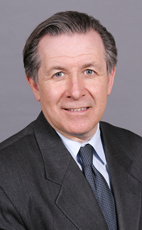 House of Commons photo
Lost his last election, in 2008, with 33% of the vote.
Vimy Ridge Day Act February 20th, 2003
moved that the bill be concurred in.
(Motion agreed to)
Small Communities November 7th, 2002
Mr. Speaker, I thank the member for Cumberland—Colchester for his motion. Whenever we are concerned about rural Canada, a motion is always appropriate and always pertinent. I am sure his wife Rosemary is most pleased with his fine comments today.
I would like to first acknowledge that the census reports show that we are experiencing a shift in our population. It is not a simple thing to analyze because our country is made up of many different regions with unique characteristics and with a unique set of large and small communities. It is not just cities and the rest of Canada.
When we leave the boundaries of our major urban centres, we do not find a homogeneous rural area from that boundary and beyond. It is very different when we look at what is happening around our cities, what is happening further out in what we call the heartland areas and what is happening beyond that, in what we might refer to as our remote areas, such as the area that I come from in northern Ontario and beyond into the Northwest Territories and so forth.
I would like to just take a moment to say that we have a minister who is responsible for rural development in Canada. The minister has worked very hard to raise the profile with our urban neighbours. We need a strong rural Canada to have a strong country. I would like to emphasize that it is not a matter of urban versus rural. It never has been and never should be. It is a partnership. Each recognizes in the other that a healthy urban society is good for the country and a healthy rural society is good for the country.
I would like to just comment briefly on immigration. I have discussed with some of my mayors and reeves the notion of attracting immigrants from other parts of the world to our rural areas. For instance, the member for Cumberland—Colchester would like to see immigrants come to his neighbourhood.
He mentioned a pilot project in Truro. I was most intrigued about that, and I hope he will keep the House apprised of those developments. I am encouraged, and I am not surprised, that the Minister of Citizenship and Immigration is supporting that initiative to see if there are new ways and some different thinking that can be brought to the challenge of attracting immigrants to our non-metropolitan areas. I appreciate that he has raised the idea that Truro is trying to attract a group of maybe five families from one area of one country. It did not work out regarding the five families in Korea but that it is an excellent idea. That and many other ideas need to be tried.
I think he will find great support for good, new ideas that might help bring immigrants to the parts of the country that are not used to having immigrants come in large numbers. Our population decline is a complex thing but we need to have our share of new Canadians who will choose to make Canada their home. They invariably bring good skills and great economic wealth to the nation.
I would rather focus the rest of my time on the economic development side of things. In northern Ontario, in the area I represent, economic development goes right down to the grassroots. I noticed in the member's motion, and it may have been inadvertent, that it mentions that the federal government should have economic development strategies and programs for the provinces. I do not think he meant that we should tell the provinces what to do. By way of clarification, I think he really means that the federal government should show, by leadership and by example, its interest in economic development in the different regions of the country.
I can tell member that the government, while always willing to try new ideas, has already put in place numerous excellent measures to help local communities, where the ideas should come from, to develop good ideas. I am sure the member does not mean to suggest that bureaucrats or politicians in Ottawa or Toronto should tell local communities what is best for them.
In the case of northern Ontario, FedNor, and ACOA in his area in the Atlantic provinces, try to promote local partnerships to allow good local ideas to be supported in the hopes that the best ideas will grow and become those economic generators that we need.
I would just point out the many things that the government has already done. The Canadian rural partnership program, with a $55 million investment, has done a lot to promote dialogue, to promote the information sharing and to promote the sharing of best practices at the local levels in rural Canada.
Under the telecommunications initiative, the government has committed to ensuring that broadband telecommunication is available to all of our communities by 2005 so that every community will have a door to the world when it comes to communications and access to the best of medicine and education. It will give our local businesses in those communities a chance to share in the worldwide marketplace.
The government not only continues to support our regional economic development agencies, but in many cases has improved that support and has allowed those agencies to be more flexible and more able to adapt to regional realities. In particular, I know in my area, and I would say in all areas in the country, our local Community Futures Development Corporations, our CFDCs, have done a marvellous job in ensuring that local ideas are supported.
I would like to take this opportunity to thank the volunteers who make up the boards of these CFDCs. They provide the kinds of insights at the local level that we could never find from far away places. We appreciate that, and the federal government's support through the regional agencies for those local programs which is absolutely essential.
Under the Canada provincial-territorial infrastructure program, the Government of Canada recognizes the importance of improving infrastructure, not just in our urban centres but across the country, reaching out to the smallest of our villages and hamlets. In northern Ontario there are hundreds of communities. In my own area there are 40 to 60 smaller communities. Without the federal government becoming involved, they would never hope to improve their local infrastructures which are needed to create and foster a local environment of economic health and hope. We hope that in the future our young people will want to come home after they have received their college or university educations or after they have spent some years working somewhere else. We hope they will feel they can go home to their rural areas, their rural homes and build something for the benefit of all.
I could go on listing the many things that the government has done and continues to do. I will not even mention the initiatives to support renewable energies under the tax regime. Many of these initiatives emanate from rural Canada.
I want to underline that rural Canada is not a homogeneous set of villages dotting the country as soon as we leave the boundaries of a city. It is made up of generally three categories of communities.
First are those areas that are adjacent to metropolitan areas and that benefit from a spillover effect which is good for them.
Second are those communities that are in the heartland. The populations in this area are more or less stable. They suffer the challenges of competing, like all the communities do, with larger cities.
We really must recognize that they too differ from the third category, our more remote regions like northern Ontario, the far north of Canada, the northern areas of our prairie provinces and of Labrador and northern Quebec. These areas are so far from our metropolitan centres that the distance really counts for a lot when it comes to economic development.
I will conclude by thanking the member for Cumberland—Colchester for putting forward the motion. He does us all a service by making sure that this place recognizes the importance of rural Canada to the nation. That is indeed where this country started from. If we lose sight of the importance of rural Canada we will in fact lose sight of what it is to be a nation.
I am sure that rural Canada will continue to be strong and will carry this country into the future forever.
Airport Security November 5th, 2002
Mr. Speaker, the Minister of Transport has said in the House that aviation security is being assessed on an ongoing basis.
Could the minister please tell the House today what further action the Government of Canada has taken to ensure that security matters are indeed being addressed?
Petitions October 28th, 2002
Mr. Speaker, I have the honour to present a petition from dozens of constituents from Chapleau, Ontario. They are very supportive of research in support of finding cures for Parkinson's, Alzheimer's, diabetes and other terrible diseases. They support what they refer to as ethical stem cell research and would prefer that Parliament focus its legislative efforts on adult stem cell research.
Northern Ontario October 11th, 2002
Mr. Speaker, my question is for the Secretary of State for Rural Development and Federal Economic Development Initiative for Northern Ontario.
The government has made considerable progress to ensure that the people of northern Ontario share in the economic benefits enjoyed by other Canadians.
While the government has achieved considerable success in this area, due in great measure to the minister's efforts, could the secretary of state explain how the government's programs for northern Ontario communities remain relevant to the region's economic development needs?
Vimy Ridge Day Act October 10th, 2002
moved for leave to introduce Bill C-227, an act respecting a national day of remembrance of the Battle of Vimy Ridge.
Mr. Speaker, pursuant to Standing Order 86.1, I ask that the bill be reinstated at the same stage that it was when the session broke, which was that it had concluded second reading and was referred to the heritage committee. I appreciate the agreement of the House at that time.
I just want to point out that the Battle of Vimy Ridge, which took place on April 9, 1917, was a turning point in World War I. The Canadians, who fought together with numerous battalions for the first time and under Canadian command, took Vimy Ridge, which was a turning point in World War I, and earned Canada a place at the table of the signing of the Treaty of Versailles.
I want to thank Bob Manuel of Elliot Lake for his great effort to bring a citizen's initiative like this forward. For greater clarity, April 9 of each year would not be a statutory holiday but a day of recognition of this very important historical event.
(Motions deemed adopted, bill read the first time and printed)
Resumption of Debate on Address in Reply October 8th, 2002
Mr. Speaker, I do not have enough time to describe all the things we have accomplished since 1993 so I will summarize.
I sense a degree of confidence in my constituency, which I know my colleagues on both sides have seen, although the other side might have a harder time acknowledging it, about the future of the country that was not felt leading up to the election of 1993.
When we went into that election we knew that people were in despair. The OECD was suggesting that Canada was a basket case. The Wall Street Journal had some reports that Canada was a third world country when it came to its fiscal framework.
Because we have been able to manage the books, we have made major investments in health, and there is more to come. We have revitalized the Canada pension plan. We do not hear seniors or people of any age asking whether the Canada pension plan will be there when they retire. We can tell them, yes, it will be because we have taken the initiative to put the Canada pension plan on stable footing.
Resumption of Debate on Address in Reply October 8th, 2002
Mr. Speaker, I would like to thank my friend from Acadie—Bathurst for his question. It is not a surprising question coming from the NDP that has an allergy toward balancing books and toward I think balanced spending.
He suggested that the government was repeating itself. He should know that good things bear repeating. A good thing is to approach the country, not as a business, as my Alliance friends across the way might suggest, but as a cooperative effort to build our nation and to provide a good place for our children and our grandchildren.
A balanced approach means investing in our communities through programs like ACOA in Atlantic Canada, FEDNOR in northern Ontario and western diversification in western Canada to make sure our communities have access to those financial resources to build on their ideas and to invest in our social programs. We have seen a major investment going into the last election. In September 2000, the government in cooperation with the provinces invested $23 billion in skills and innovation.
Our young people, quite contrary to the member's point of view, have tremendous access to education. Yes, there are some requirements that families and students contribute toward that, and any amount of debt is unfortunate, but I graduated from university with a debt and I was happy to pay it off.
Every family should have the opportunity to make sure their children have access to education. We do not manage education, the provinces do, but we are doing our part in cooperation with the provinces and others to make sure our kids have the best chance to continue to be the leaders in science and technology, medicine and social services, and leaders in the world in many other ways.
I hope I can speak to the member behind the curtain some day and help him understand that we are doing a great job.
Resumption of Debate on Address in Reply October 8th, 2002
Mr. Speaker, I will be sharing my time with the member for Waterloo—Wellington.
It is a pleasure for me to participate in the debate. If there was any message that I wanted to convey in response to the throne speech that we heard from the Prime Minister through the Governor General last week it is that the throne speech is solid, balanced and responsible.
Let me outline why I believe that those three very positive words explain the great value and substance of our latest throne speech, a throne speech that shall be the foundation for the months and years between now and the next election. I know I will be proud to contest the next election based on the record of the government, not only since the year 2000 but in fact from the year 1993.
Why is it a solid throne speech? Why is the opposition somewhat blind in failing to recognize the value and vision contained in that speech? The fundamental premise of the speech is on health, the physical health of people. We look forward to the report by the hon. Roy Romanow next month. He will be reporting on behalf of the national Commission on the Future of Health Care in Canada which he has undertaken at the behest of the Prime Minister. It will be the most thorough, modern, up to date and current report on the state of public health care in Canada and will certainly provide a strong signal to the government on what should be done, not only federally but provincially and territorially, to make sure that our citizens get the health care they deserve.
When I use the word solid to describe the throne speech that also refers to the health of our communities, be they rural communities or major cities and all sizes of communities in between. I represent a rural riding in northern Ontario, the riding of Algoma—Manitoulin, with some 60 communities ranging in size from a few hundred citizens up to 12,000 or 13,000. That would be the largest community in my riding. We do not see our large cities in Canada as the enemy. They in fact are our partners. It is not a matter of the cities versus rural Canada. It is a matter of the cities and rural Canada working together to make the country strong.
The throne speech recognizes the value of all communities, large and small, to the economic strength of our nation. The announcement of a 10 year program for infrastructure investment is an example of the government's recognition that our future lies, on one hand, in our citizens, but, just as important, in the communities wherein those citizens live.
The throne speech is solid also because it talks about health of the environment. Several bills will be reintroduced, such as species at risk and others, that will deal with the environment. However I would like to point out that the government's commitment to the Kyoto accord is a real commitment. I look forward to the debate in the House of Commons on the Kyoto accord. I look forward to a vote in this place hopefully before the end of the year where the House of Commons will endorse the government's plan and intention to ratify the Kyoto greenhouse gas accord.
Our citizens expect nothing less than that we do the right thing, not only for ourselves and the planet in this day but for our children and grandchildren who will inherit this planet from us.
We cannot pick up and leave. We obviously have to live here. It behooves us to manage this beautiful planet for the benefit of all, not just our own wealthy nation but for poor nations as well.
This solid throne speech talks about the health of the economy. Some of the national media and certainly the opposition, before the throne speech was read, were suggesting that the Prime Minister, for his legacy, would undertake some huge, wild and careless spending. The proof is that is not the case. Just as he has managed the government properly, appropriately, and fiscally in a sound fashion since 1993, that continues. This is not the throne speech of a big spender. This is the throne speech of somebody who says “I have been here for 41 years and I plan to leave this place and the country the message that responsible management of the federal government finances is really what makes it easier for future governments to continue to deliver quality services and appropriate services to the public”.
During the fall 2000 election, I as a candidate, my party seeking re-election and the Prime Minister promised to continue with a balanced approach to our economy. It was balanced on the one side, in terms of debt and deficit, that we must in each year seek a balanced and surplus budget to pay down the nation's debt. It was a debt that was far too huge when we were elected and is still far too large for our country's good fiscal health but certainly a debt that is in decline relative to our GDP.
I recall that our federal debt was something in excess of 70% of GDP when we were first elected in 1993. The members do not have to believe my comments. The comments and reports of other nations in the OECD indicate that the ratio of our debt to GDP has now plummeted to below 50% and is dropping. This is a good thing for our economy. It will ensure that we are not competing with the private sector for loan dollars.
We have had five balanced budgets in a row. I believe and I am very confident that we will have another one ahead of us. With the continued support of the public, who have shared in the exercise of making sure the deficit has been slain, who understand and trust our approach regarding the finances of the country, we hope to have another opportunity in a couple of years to continue that solid approach.
When I said that the throne speech in total was solid, it was with regard to the health of our future, most particularly the future of our children. It will ensure that they have hope for jobs when they are ready for jobs, that they have hope for a good education, either college or university, that they have hope that the environment is a healthy one for them, and that they can raise their children in a place that we all can be proud of.
The throne speech also talks about the health of the planet, not just environmentally but also politically. We are facing some very challenging times right now, as we all know. I really believe the Prime Minister has led us wisely when he counselled his fellow world leaders, particularly the U.S. president when he told him to walk carefully through this difficult time and to use the resources and leadership of the United Nations as a means to find the path through this difficult time. Although the UN, I agree, is not a perfect place, at the very least a community of nations is better equipped to find a way through this difficult time than any single nation, or two or three nations.
I will conclude by saying that the throne speech is a solid, balanced and responsible approach to governing the country.
Vimy Ridge Day Act June 18th, 2002
moved that Bill C-409, an act respecting a national day of remembrance of the Battle of Vimy Ridge, be read the second time and referred to a committee.
Mr. Speaker, it is my distinct honour to begin the debate on Bill C-409, which if enacted by parliament would set April 9 of each year as Vimy Ridge day.
This day would not be a holiday, but rather a day to recognize an important part of our national history, a World War I battle which occurred on April 9, 1917. This was a battle months in the preparation and included for the first time since Confederation Canadian troops operating under Canadian command. Up until that time Canadians had been part of British units under British command.
At Vimy Ridge we fought as one national team with Canadian leadership. Our soldiers, while suffering significant casualties and loss of life, accomplished a feat that other Allied forces had failed to do up to that point in World War I. There were about 10,000 Canadian casualties, including about 4,000 killed at Vimy Ridge that day. It is a battle recognized by many which opened the way to the eventual victory in World War I by Allied forces.
I would like to quote a piece of historical text. It states:
The Canadian share of the British assault was the seizure of Vimy Ridge. The task was formidable. For the Germans it was a vital key in their defence system and they had fortified it well. The slopes which were in their favour were interlaced with an elaborate system of trenches, dugouts and tunnels heavily protected by barbed wire and machine guns, and defended from a distance by German artillery. They had even installed electric lights, a telephone exchange, and a light railway to maintain supplies of ammunition. All previous attempts to take the Ridge had failed.
The attack began at dawn on Easter Monday, April 9. All four divisions of the Canadian Corps - moving forward together for the first time - swept up the Ridge in the midst of driving wind, snow and sleet.
A situation we could hardly imagine today. It continues:
Preceded by a perfectly timed artillery barrage the Canadians advanced. By mid-afternoon the Canadian Divisions were in command of the whole crest of the Ridge with the exception of two features known as Hill 145 and the Pimple. Three days later these too were taken.
The victory at Vimy Ridge is celebrated as a national coming of age. For the first time Canadians attacked together and triumphed together. Four Canadians won the Victoria Cross and Major-General Arthur Currie, commander of the 1st Division, was knighted on the battlefield by King George V.
Canada's conquest at Vimy Ridge won Canada a place as a signatory at the treaty of Versailles. Canadians have fought many great battles as members of other national units or under Canadian commanders over the decades and we honour all those veterans who survived and those who were lost.
To honour the battle at Vimy Ridge is to honour all battles as April 9, 1917, is the first time that Canadians fought side by side as Canadians under one Canadian commander. Most important, there were some 100,000 Canadians from coast to coast. There were four divisions involving brigades from every region of the country. The four Victoria Crosses were spread across the country including a recipient from Quebec, British Columbia and Ontario.
To honour Vimy Ridge is to honour all great battles involving Canadians. Bill C-409 would accomplish two things. It would be a day of remembrance, a day of heritage. This day would not be a holiday, but a day where young people could be reminded each year, as part of the evolving remembrance season that we see in this country, of the tragedy, terror and heroism of war, and the necessity to move forward looking for peace at all times.
The bill also asks that the Peace Tower flag be flown at half-mast on that day. I will ask the committee, if the House agrees to send the bill to committee, to accept a friendly amendment to make the flying of the flag at half-mast to be from 11 a.m. to sunset, to be consistent with Remembrance Day. That is something the committee could consider after the fact.
It is important to note that the bill has the support of the Royal Canadian Legion, Dominion Command. I also have dozens of letters from individual legion branches, private citizens, municipal councils and others offering their support for this initiative.
At this point I wish to explain why I initially introduced the bill. It was thanks to a constituent of mine from Elliot Lake, Ontario, Mr. Robert Manuel , a member of the local legion branch who recognized how important the Battle of Vimy Ridge was to Canadian history, not just military history. He wrote countless letters seeking support for this initiative and presented the letters and petitions to me.
It is very appropriate and true to the intent of private members' bills that issues which arise from the grassroots of Canada come to seize the attention of Canada's parliament. It is important that the House know that this was not a late night idea brought forward by this member of parliament. It was brought forward by a constituent who consulted with his fellow peers. He obtained letters of support and brought the issue forward. It is my duty and privilege to bring forward the fruits of those labours as Bill C-409.
I wish also to point out that I do not intend to create a precedent with Bill C-409 by suggesting that all great battles be recognized by a special day. Rather it is my intent to give the Battle of Vimy Ridge a special place because as many have come to agree, it was the beginning of Canada's march toward nationhood.
I appreciate the opportunity to add a small part to the important efforts of war remembrance in Canada. I pay further respect to our veterans, their legions and those who lost their lives in battle or peacekeeping and in fact to our military today by bringing forward Bill C-409. We owe a great debt of gratitude to our war lost and to our veterans. Each year, through what is a growing recognition of the importance of remembrance, our veterans bring us opportunities to come together in social gatherings and remembrance gatherings to make sure that the future of our nation is filled with peace. In doing so however, we must remember the tragedy and heroism of the wars behind us.
I want to be sure there is time for other members to speak. I seek the support of the House that eventually the bill will go to the appropriate committee. I look forward to the comments of other members who no doubt can add even more to this debate than I have been able to do in this short time.