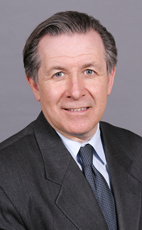
House of Commons photo

Crucial Fact

  • His favourite word was industry.

Last in Parliament September 2008, as Liberal MP for Algoma—Manitoulin—Kapuskasing (Ontario)

Lost his last election, in 2008, with 33% of the vote.

Statements in the House

Vimy Ridge April 9th, 2002

Mr. Speaker, on this day we honour the life of the Queen Mother and pay special tribute to the Canadians who fought in the famous battle of Vimy Ridge. The then commander of the 28th battalion, Alexander Ross, delivered the now famous words:

It was Canada from the Atlantic to the Pacific on parade. I thought then that in those few minutes I witnessed the birth of a nation.

Eighty-five years ago on April 9, 1917, for the first time all four divisions of the Canadian Corps attacked the German held Vimy Ridge under a unified Canadian command led by Lieutenant General Sir Julian Byng. During the previous 3 years, 200,000 British and French soldiers had died in failed attempts to take the ridge. Through meticulous planning and extraordinary execution the Canadian Corps were able to take the ridge, but not without great cost. There were over 10,000 Canadian casualties, nearly 4,000 of them fatal.

The Canadian victory at Vimy is considered a turning point in the first world war and won Canada a separate signature on the treaty of Versailles. Vimy marked the first time Canadian soldiers fought shoulder to shoulder as Canadians.

The Middle East April 9th, 2002

Mr. Speaker, I have had the opportunity both in my office and in the lobby to listen to a number of speeches this evening on this very important subject, including that of my colleague just in front of me. Without exception I have learned something from each of the speeches. Even while within our 10 minute or 20 minute speeches each of us has not been able to cover all the things we wanted to cover or to express all the solutions we think are appropriate, the sum total of what has been said and will be said this evening and into the night will express in a very full way the feelings of Canadians toward this very terrible situation in the Middle East.

I try to imagine the typical constituents in my riding, whether they are retired senior couples or high school students or young families, observing through the media and the news what is going on and trying to make some sense of it all. They hear the reasons from one side for certain activities and actions and they hear the reasons from the other side for that side's actions and responses. None of us, even if we were born there and live in Canada now or whether we visit there a lot or whether we are experts in political science, can really get our heads fully around the depth and despair of this situation. It is far from a simple situation. Whether complex solutions are required or whether it is one simple solution that is required, only time will tell.

The purpose of having a chance to debate this issue in the House is really not so much to disagree on one side or the other about who is right or wrong, because there are rights and wrongs on both sides of the issue. It is like looking at the situation in Northern Ireland. Although it is a very different history, there are still two sides fighting over age-old issues of which most of us have little understanding.

It is my feeling that we and the protagonists tend to spend too much time on the past, on what brought the players to the present situation. Not enough time and consideration are being given to the future, the future being young families, their children and their grandchildren who will inherit this relatively small but important area of the planet, an area that in fact carries within it the roots of three of the world's great religions, Christianity, Islam and Judaism. We are all related in many ways, but most important, we are related in that way. Our roots are really in the very same small part of the world.

It really is puzzling and mysterious why a place which one would assume would be a beacon of peace in the world, a paradise, a place of religious understanding and tolerance and give and take, is instead a place of seemingly endless fighting. If there is nothing else we can do at this time, then let us bring hope to the present and future generations. I have a strong belief that all the principal protagonists in place right now should leave, not just Mr. Arafat or Mr. Sharon. They both should leave as they are key players and new teams should take over, new teams of leaders who will maybe listen to the people more closely.

I am sure that if we could get a real sense of what the people wanted, it would be peace. While both sides claim a willingness to compromise and come to some kind of a solution, it seems that every time they are brought to the table some reasons on one side or the other are brought to bear and cause such agreements to collapse.

I do not have any magic answers. I just wanted to try to express that for many Canadians, while this is far away and in an area of the world they may not have or may never visit, that this issue is very important. It deals with not only the economic stability of the world when it comes to capitalistic things such as oil, a necessary thing, but a situation like that can too often as we have seen in the past lead to a worse conflict and a spreading of that conflict. That is the last thing any of us want to see happen.

There would be a collective sigh of relief if they all decided to come to terms with the problems. It may be naive for me and others in the House to suggest that because nothing we say will have an impact on the key players in Israel and Palestine. Canada has a history as a peaceful nation and a country willing to help keep the peace. I know our Minister of Foreign Affairs and the Prime Minister have indicated Canada's willingness to do whatever is reasonable and possible in the circumstances to help bring about peace and hope for the children of Israel and Palestine.

It is tragic, sad and totally unnecessary that young Palestinians have become suicide bombers. It is unacceptable, just as unacceptable in some ways is the disproportionate response of the IDF. I am not nor will I lay blame on one side or the other. I lay blame on all sides. Both sides and the neighbouring countries have the greatest stake in and say about what should happen. I appreciate, and we all should appreciate, the efforts of the United States to bring the parties together but I really cannot imagine a solution being brought in from the outside. We have seen this tried in other places in the world in the past but ultimately it has to be resolved locally. However I agree that monitors and peacekeepers from around the world could help the local players in this tragic situation to come to a solution.

I was impressed with the efforts of some of my parliamentary colleagues who attempted to bring Israeli and Palestinian parliamentarians together at a meeting in Halifax. I thought that was a wonderful initiative. I was pleased it was brought forward by an opposition member. It was warmly received by our foreign affairs minister. Things like that, while they may seem small in the grand scheme of things, can have an impact.

The protagonists need to see that it is possible to run a country where a parliament is made up of people who were born in the Middle East, maybe of Arab descent or of Jewish descent, a parliament made up of people from all kinds of backgrounds who can debate and deal with issues in a parliament that allows for the consideration of other points of view. We really need to see democracy working in a real way, on both sides of the fence, in Israel and Palestine.

As I said earlier, both sides have their guilty ones but both sides have many innocents who deserve much better leadership than they are getting now. Messrs. Sharon and Arafat have been protagonists for a long time. I know it is naive on my part, but that is why I suggested that if they put ego aside, agreed to step down simultaneously with their key supporters and let a new leadership take over, it would be a grand step in the right direction.

I did not make this speech to offer any great solutions, but I do want to add my support to this government's efforts to beseech the Israeli army to be pulled out as soon as is practical from the occupied areas and that Mr. Arafat speak clearly to his people in their language that terrorism through suicide bombings must stop. We must not let the terrorists dictate the agenda there or anywhere else in the world.

Supply March 14th, 2002

Madam Speaker, I first want to say in commenting on my colleague's very helpful remarks that what is really good about the issue, as difficult as it is, is that there is support on both sides of the House for a fair and appropriate resolution. Urban members and rural members are coming together on an issue that is of importance not just to rural Canada but to the whole country. I commend our urban colleagues on both sides for their support on the issue.

I also want to thank my colleague who just spoke for her helpful remarks. I agree with her that our team Canada approach under the leadership of our trade minister, the provincial ministers and industry leaders, has for the first time in a long time shown a united front when it comes to dealing with this very difficult issue.

Does my colleague from British Columbia agree with me, and I am sure she does, that a strong rural economy has an impact on our urban cities? The Statistics Canada report has indicated that many of our rural citizens are moving to the cities because we really love our cities. However, by having a strong rural Canada we hope to get some of them back in the years ahead.

I am sure she agrees that a strong rural economy is important to our urban cities.

Steel Industry March 1st, 2002

Mr. Speaker, the Minister for International Trade is very aware of how important the steel industry is to Canada and in particular to the city of Sault Ste. Marie and to my own neighbouring riding of Algoma--Manitoulin.

On March 6 U.S. President Bush is expected to respond to the recommendations by the U.S. International Trade Commission on restrictions to steel imports. Does the minister have any information on what his decision will be and how it may affect the Canadian steel industry?

The Budget January 29th, 2002

Mr. Speaker, while I disagree with quite a bit of what my colleague said, I agree with him that we both appreciate very well the tremendous wealth of spirit and creativity that resides within our aboriginal people in our aboriginal communities. Like myself, he represents thousands of aboriginal people. It is with great pleasure that I visit the first nations communities in my riding to share in their festivals, to share in their hopes, dreams and struggles.

I disagree with the member when he says that the budget has not responded to the needs of our aboriginal communities. If he were to look at the budgets for the Department of Indian Affairs and Northern Development since 1993, he would find that the department's budget increased every year, notwithstanding that in the fight against the deficit many departmental budgets, in fact most of them, had to be decreased.

That notwithstanding, the last budget included $100 million for child care and head start program enhancements for our first nations children. There was $25 million over two years to help the adjustment of families and newborns affected by fetal alcohol syndrome. Also, there was $60 million in support of children living on reserves who have special needs. These were among many other initiatives by the government to ensure that our first nations people fully share in the wealth and benefits of our society. Ultimately though, we count on the leadership of our first nations to ensure that the people they represent in that capacity are well served by all of Canada.

The Budget January 29th, 2002

Mr. Speaker, it is a pleasure to share my time with the member for Northumberland whose speech I enjoyed greatly. We share a common bond in being representatives of rural areas, his in southern Ontario and mine in northern Ontario. We also share another bond in that even though there is a fairly large geographic distance between our rural areas, it is heartening to know that the challenges and opportunities we each face in our areas are not that uncommon and not that dissimilar.

In his remarks the member spent quite a bit of time talking about the broadband initiative and the need for a connectedness. I fully support the remarks he made. While we have had to make some adjustments because of September 11, I am very confident that the commitment made in the fall 2000 election will be met in due course.

We want to be sure that our rural areas share in the wealth and the opportunities of the country. I can hardly point to any government other than this one which has committed itself so greatly to ensuring that rural Canada meets its full expectations, that its young people achieve the objectives they have set for themselves, that families have the access to health care and the prosperity they fully deserve as Canadian citizens.

I would like to also mention in passing that the member for Northumberland and I share something else. His uncle was the chief architect in the design of Elliot Lake, the city in which I live in northern Ontario. We are very pleased to have had the influence of his family on our community.

My riding of Algoma--Manitoulin is large. It takes about nine hours to drive across it. It contains about 50 communities. About one-third of them are first nations communities. Like Canadians everywhere, they are resilient. They are prepared to face challenges with optimism and vigour. They are certainly prepared to ask tough questions of me and the government from time to time, as any Canadian should be prepared to do. At all times they are prepared to dig in hard to make sure their communities and their families achieve the very best that is possible in this great country of ours.

Like many other rural ridings, my riding faces challenges such as the unfortunate problem we have with our American friends on the softwood lumber agreement. I am hopeful that in the weeks ahead we will see a settlement of that issue in a way in which our American neighbours recognize that we are fair traders in lumber products, that we are efficient at producing quality lumber. If they look at the facts, they will be pleased to agree with us that allowing Canadian lumber manufacturers fair and open access to their markets is the right thing that should be done in these circumstances.

This winter something else is facing us. My area is heavily involved in winter tourism. The lack of snow has been a real hardship for many of our tourist operators and those who depend on our snow trails and so on. We hope that will be resolved fairly soon.

The budget the finance minister presented on December 10 has, as has all past budgets of this government since 1993, evoked a sense of confidence and a willingness by the government to listen to all corners of the country. While having to deal with the consequences of the tragic events of September 11, the budget also made sure that we stayed on track as far as meeting our throne speech and election commitments. It also ensured that we did not again return to deficits such as we saw under the last administration which ended in 1993.

In the budget the finance minister was able to announce that we are the only G-7 nation to balance its books this year.

I had the opportunity to be on the finance committee in my first parliament, from 1993 to 1997. During that parliament the government, with the help of the finance committee and stakeholders across the country, had to tackle the problem of what to do with the deficit we had inherited, which was over $40 billion a year.

Those were very interesting years as we listened to Canadians from coast to coast. We tried to provide whatever advice we could to the government on what should be done to deal with the government's books.

Working together with Canadians, we have now had five surplus budgets in a row, something which has not been seen for 50 years in this country. While Canadians might be concerned from time to time about specific issues, I believe that fundamentally they want the country to be managed well. I believe they agree that we have been doing that consistently year in and year out. Things are not always perfect, but overall we have managed our affairs in such a way that confidence can be achieved in all sectors of the economy.

When the finance minister presented his budget, he had to set aside considerable sums to deal with the need for increased air security and security of our borders, including our ocean borders. These do not come without great expense. Because of that it was necessary to reprofile and reschedule certain government initiatives without lessening our commitment to those initiatives. The broadband initiative is one of them.

I strongly believe in the broadband initiative. I had the opportunity to discuss this initiative with a number of my constituents at three broadband round tables I helped host in Little Current, Blind River and Wawa in my riding last fall. As my colleague from Northumberland said in his remarks a few minutes ago, keeping Canadians connected and improving the degree of connectedness is absolutely essential to ensure that all Canadians from coast to coast share in the wealth of this country.

Let me touch on a few topical subjects. Notwithstanding the tragic events of last fall, health care is an issue at the top of the minds of Canadians. We recently saw the results of the premiers meeting, who met mainly to discuss health care. I agreed with them and their recommitment to the five principles of the Canada Health Act. They took the opportunity and recommitted themselves to remind all of us that we have one of the best health care systems in the world.

Most Canadians when polled will agree that while our health care system may need a bit of fixing and in some areas may need some major tinkering, it is one of the best systems in the world. We must at all costs not compromise the public nature of our system by moving in the wrong direction at this time. I would counsel my opposition colleagues, who speak about the need for a two tier system, that we must at all costs not move in that direction.

I remind my friends opposite that in the fall of 2000 the Prime Minister made an agreement with all the premiers that the federal government would invest an additional $23 billion over the next five years in health care. This is on top of the many billions of dollars that are transferred each year under the current transfer programs for the purposes of health care.

When the premiers claim there is a diminishing financial stake in health care by the federal government, they fail to point out that it was only a few years ago, I believe 10 or 15 years ago, that the federal government gave up tax points to the provinces at their request so they could have extra tax room in their provincial taxation systems to raise funds for health care, education and so on. They asked for the transfer of tax points. In so doing the federal government gave up tax room and in fact reduced its tax revenue for the benefit of the provinces.

When we do the arithmetic, the federal share of health care is in excess of 30% of the total cost. Since we depend upon the provinces and territories to administer the system, we do not have any say in how it is managed day in, day out, year in, year out. We simply transfer the funds and only demand that they maintain the five principles of health care.

In conclusion, this budget has proven again that Canadians can have confidence in the ability of the government to manage the finances on their behalf. I look forward to the support of our colleagues across the way when we vote on the budget later today.

Softwood Lumber November 6th, 2001

Mr. Speaker, I will be sharing my time with the member for Mississauga West, who like myself has his roots in Algoma district. I am pleased to be sharing this time with him.

This is a very serious subject and all members of the House share that sentiment. While we might argue over the details and over what should best be done in this very difficult time, we do agree that what the U.S. industry in conjunction with its government is doing is truly unfair to our softwood lumber sector.

When we think of the sector, we think of the mills and their workers. Some think of the investors without whom it would not be possible to build and expand mills. However, let us think more carefully about the families of those workers. Let us think of the bush workers who do not go to the mill with their logs but who are a very important part of the industry and, of course, the truckers, without whom the logs would not get to the mills. The bush workers, truckers and suppliers have families as well.

The loss of a job in a mill because of the unfair U.S. approach to trade with Canada on softwood lumber has an impact well beyond that worker. It is a small business and many more people are affected.

In my large northern Ontario riding of Algoma--Manitoulin, there is a large number of small communities that depend upon the softwood lumber industry. I will not name them all, but communities like Chapleau, White River, Espanola, Thessalon and a number of others would not have a major employer in their communities without the softwood lumber industry.

You are from northern Ontario, Mr. Speaker, and you know very well that our economy has depended for many generations upon the primary resources of forestry and mining. Fortunately in the latter decades tourism has come along to create jobs and augment our economy. However, we always go back to our primary sectors, in the case of my riding to forestry, to maintain our local economy, to make sure our people are not forced to move away to find employment and to make sure there are jobs in the industry for young people to come back to once they graduate from college or university.

The forestry sector is quite a high tech sector. This is probably one of the root causes of our problem with the Americans. The American industry has not kept up. It has not made the investments in its mills and bush operations that would have allowed it to be as competitive and efficient as our mills.

Members of the House may have been to mills where computers are used to maximize every bit of the log to make sure that the optimal number of board feet come out of a tree so that there is very little waste. Without computerization our industry would not be the leader it is.

It also seems to me that we are jeopardized because we happen to have vast resources in forestry. We also happen to have vast resources in energy. I doubt that when it comes to energy our American friends will complain if we can provide them with energy at a very competitive price. They should look at our plentiful energy and our plentiful forests as a resource over which not to fight, but over which we should be allowed to compete fairly.

We each have our domestic advantages. The Americans have a longer growing season. In many cases they have much better terrain on which to harvest their forests. These are their natural advantages. They perhaps have a more extensive road system simply because they have a greater population. Those advantages are not present in Canada, but we have other advantages so it is all balances out.

I believe that as this works its way through the system, and I remain confident that a solution will be found, a solution will be found, one that is for the long term and not a five year patch as we have been forced into too many times over the last few decades.

I have great confidence in our international trade minister who has spoken with a very strong voice. He has brought together the industry and provinces in a way that we have not seen in past attempts to deal with our American friends on softwood lumber. I have great confidence in his ability to get us through this.

I know we are coming to the 11th hour. It will not be too many weeks from now that the final determinations will be made. To remind those who question the commitment of the government, and they should not question it, the Prime Minister has on numerous occasions over the last weeks and months, if not years, raised the softwood lumber issue with the president of the U.S. Year in and year out the issue was raised with the American secretary of trade. However there is no accounting for the ceaseless attempts by the U.S. forest lobby to undermine, criticize and incorrectly characterize Canada's softwood lumber industry.

For the benefit of my constituents and others who may be listening, I reiterate that the minister talked about a two track approach. The legal side would require preparation for a WTO challenge. Hopefully the Americans will respond appropriately should they lose that challenge, but in the meantime Canada and U.S. officials, at the industry, provincial and federal levels are having ongoing discussions with our American neighbours to try to find a solution once and for all. I am confident that will take place.

It is about not negotiating. Canada does not have to negotiate from the position that it already takes. We do trade fairly in lumber. We do not subsidize our industry. Our industry does not dump product into the U.S. market. There is no real proof of injury to the U.S. producers. I do not believe it to be necessary for us to negotiate but I agree it is important to discuss. Maybe it is a matter of the U.S. finding a way to get through it on its side which mollifies its industry.

I accept and understand that some provinces are looking at the way they contract out tracts of forest with so-called stumpage fees. Maybe there is some room for improvement there, although I have heard it said that should our forest resources be tendered or auctioned out at market, that in many cases the prices will be lower than the stumpage fees charged, so our American friends may be in for a surprise. They might want to be careful for what they wish.

Some of my colleagues across the way call for the government to do more. I doubt that we can do more except to remain diligent. It is naive to believe that we can tell the Americans what to do on any given subject. They have to see the resolution in terms of what is best for them, an understandable position if one is discussing an important subject from two different points of view.

I believe at the end of the day the Americans will realize that it is in their best interests to deal fairly under NAFTA and under the emerging rules that govern world trade. It is incumbent upon them to accept the discipline that comes with free trade.

As a nation we are free traders. We are attempting to adjust as we must to the new world trade realities. I call upon our American friends to do the same.

I appreciate this chance to say a few words on a very important subject. I know that all colleagues in the House agree that we have to find a long term solution.

Vimy Ridge Day Act November 5th, 2001

moved for leave to introduce Bill C-409, an act respecting a national day of remembrance of the Battle of Vimy Ridge.

Mr. Speaker, I am honoured, especially as we commemorate veterans week, to rise today to introduce a private member's bill which, if enacted by parliament, would create a special day each year on April 9 to recognize Vimy Ridge day. This would honour the memory of this great World War I battle of April 9, 1917, which is considered by many to be a turning point for our country and the beginning of Canada's march to nationhood.

For the first time Canadians from coast to coast fought under a Canadian commander. Their heroism and valour in that battle is legendary. In many ways it represents all great Canadian battles.

I wish to thank Bob Manuel of Elliot Lake for his support and the Dominion Command of the legion for its very strong letter of support.

I wish to emphasize that the bill would not create a holiday. It would simply create a day of recognition and asks that the Peace Tower flag be raised to half mast.

(Motions deemed adopted, bill read the first time and printed)

Anti-Terrorism Act October 16th, 2001

Madam Speaker, our attention has been turned upon a changed world since the New York and Washington, D.C., terrorist attacks of September 11. A paradigm shift has occurred, like no other that most of us will ever see. I do not believe we will ever erase the impact of these tragic events on our personal lives, on the life of our nation and indeed on that of our global village. We have had a wake up call like few others in our history.

I have been very proud of the leadership of our Prime Minister and of the tremendous competence exhibited by our cabinet ministers as the government responded quickly, responsibly and carefully to the new challenges of making our neighbourhoods, our country and our world safer for everyone.

I have also been very impressed with the calm and caring response of my constituents and Canadians from coast to coast who refused to rush to justice. I believe the vast majority of my constituents and Canadians, as they express their support for our American neighbours, want us to deal firmly, effectively, thoroughly, but justly, with the threat of terrorism everywhere, not only through this terrible episode but in the future as well.

As we debate Bill C-36, a bill to combat terrorism, let us first review some of the many challenges that seized the attention of our leaders and the government over the past month.

There was the whole general area of security, especially airport security. I remind members that each one of these security matters entailed tremendously complex issues to be resolved and they were resolved quickly and effectively with the assistance of a tremendous public service. There was border security. As we all know, we share the longest unprotected border in the world with our U.S. neighbours. Included with the issue of border security was making sure that cross-border commerce would soon return to some semblance of normality. I would like to mention that the president one of my constituent businesses, Manitoulin Transport, contacted me and asked for our best efforts to make sure that cross-border commerce would return as soon as possible. I am sure every effort will be expended to achieve that goal.

The Prime Minister and all of us have been seized with trying to get life back to normal, making sure that tourists were travelling and that small businesses were trading not only among themselves in this country but across the border.

The Minister of Citizenship and Immigration has been seized with refugee and immigration issues, and of course the media attention, especially in the early days, really put a tremendous amount of pressure on her and the government. I appreciate how it was handled. Her response, along with the responses of other ministers, resulted in great confidence across the nation.

More recently there have been issues of bioterrorism, but we do not know the outcome yet. There is also the issue of money laundering.

Of course there is the need to respond in a military way to the call of our U.S. neighbours and allies to deal with terrorism. We can only express our pride in and appreciation for our military personnel, land, air and sea, for their willingness to be prepared and to, when needed, enter into dangerous situations on our behalf to make sure that we, our children and grandchildren can look forward to a more peaceful world.

The public has noted with approval the support of both sides of the House for the involvement of our military in Afghanistan and here at home and for the need for an appropriate military response. It has been refreshing. Partisanship has for the most part been set aside during this difficult time. I do know that the public appreciates that.

November 11 is the day that we cherish each year to remember the members of our military from past wars and peacekeeping. We have come to count upon our legion branches across this country to make sure that we never forget the terror and tragedy of war. It is very comforting that at this time we have those elders among us to make sure that we continue with measured steps over the weeks, months and years ahead. There are many lessons that we can learn from our legion members. I want to express thanks to them for what they have done for us. I know that we will be counting on them considerably in the future.

I would like to very briefly mention that I think the government's response to the September 11 attacks has been clear and concise. Canada's anti-terrorism plan has four major objectives. The first is to basically stop terrorists from getting into Canada in the first place and to protect Canadians from terrorist acts. The second is to bring forward tools to identify, prosecute, convict and punish terrorists. The third is to prevent the Canada-U.S. border from being held hostage by terrorists and impacting on the Canadian economy. We count on that Canada-U.S. trade. The fourth is to work with the international community to bring terrorists to justice and address the root causes of such hatred.

More specifically regarding Bill C-36, we must give some credit to the great number of public servants who spent intense hours and days in a large group effort to bring forth legislation that I believe will withstand the test of time. However, with the assistance of the justice committee it will no doubt be made even better. We commend them for their efforts.

Bill C-36 includes defining and designating terrorist groups and activities to make it easier to prosecute terrorists and those who support them. It includes tougher sentences for terrorism offences. It would make it an offence to knowingly participate in, facilitate or contribute to the activities of a terrorist group. It would make it an offence to instruct anyone to carry out a terrorist activity or an activity on behalf of a terrorist group. It would be an offence to knowingly harbour a terrorist. Also, it would move us forward in cutting off financial support for terrorists and would make it a crime to knowingly collect money or give funds either directly or indirectly in order to carry out terrorism. It would make it easier to deny or remove charitable status from terrorist groups under the Income Tax Act and easier to freeze and seize their assets. Of the 12 UN conventions, of which Canada has already ratified 10, the last 2 are ratified in the bill.

I hesitate to use the word war. I prefer the word campaign, because I think our efforts here are about making peace. However, sometimes making peace requires a firm hand and a firm resolve to deal with people who would abuse the freedoms of others. This is not a campaign against an ethnic group nor is it one against a country or a religion. It is a campaign against terrorists, who are essentially criminals seeking to destabilize our society for their own ends. Regardless of how they would rationalize those ends, in the eyes of the vast majority of the people on this planet those ends are not justifiable. Not only have they hijacked planes for their terrible cause, they have also hijacked a great religion, Islam. Indeed, the roots of Judaism, Islam and Christianity are the same. I am sure no amount of terrorism will deter us from finding peace some day for the entire world.

As I wish our military bon voyage, safe travel and a quick return, I will conclude by expressing my hope that the co-ordinated efforts of the countries of world at this time to deal with terrorism will in due course turn to dealing with the other great challenges of this planet, such as poverty, environmental pollution and other forms of crime.

I am pleased to have a chance to speak tonight. I only hope we will see the end of all this soon.

Terrorism October 1st, 2001

Mr. Speaker, I commend and thank our Prime Minister for his leadership and wisdom during these difficult times for the world. He has made me feel proud as a Canadian. In so doing I call upon my colleagues in this place and all Canadians to unite behind him. He deserves it.

This has been a time of deep sorrow and a time of great change but indeed a time of epochal opportunity for world co-operation. We have witnessed horrible acts of terrorism and wonderful acts of heroism. We have also witnessed a coming together in the face of adversity.

There is a lesson in observing the U.S. congress united behind its president. They stand together and we should do the same. Canada will continue to stand with our American friends, but we must first stand together here as an example to the Canadian people. Yes, let us debate the details but let us move forward together.

I agree with U.S. President Bush that now is not a time for politics. Now is a time for leadership, wisdom, co-operation and concerted action. Again, let us all unite behind the Prime Minister and his cabinet. Working together Canada will be stronger as we face the challenges ahead.