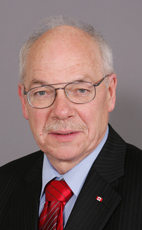
House of Commons photo

Crucial Fact

  • His favourite word was reform.

Last in Parliament September 2008, as Liberal MP for Kitchener—Waterloo (Ontario)

Lost his last election, in 2011, with 38% of the vote.

Statements in the House

Corrections And Conditional Release Act September 28th, 1995

Mr. Speaker, I would like to follow up on the question raised and the answer given by the hon. member.

First, people are not in federal penitentiaries for non-payment of fines. It is important for people to fundamentally understand that and not to allow the red herring being thrown out by the Reform Party to confuse the issue.

Second, the member mentioned that he worked in the justice system with young offenders and adults for seven years. I have worked in that system and I also worked with young offenders, adults, victims and victims' groups for 20 years. The hon. member's example of not incarcerating people for their inability to pay fines was addressed in Bill C-41.

That is something the hon. member with his colleagues voted against. We on this side and the government supported it. It is important for people to understand that there is the option now where somebody does not get incarcerated because they are unable to pay a fine. If they refuse to do the alternative, then they get incarcerated. That is a correction which was made to the sentencing process and which was long overdue.

The member for Wild Rose, a member of the party who promised to do things differently, calls that socialism. I am amazed at the shallowness of the member's understanding on this very complicated issue.

There is a very important point to be made. I wish my colleague from the islands would put his mind to it that prisons are very expensive, federal penitentiaries being even more expensive.

Surely the people in prison should be relegated there because they are a danger to the community and are not able to follow the conditions of their probation or parole for other crimes. Surely the member would agree that prisons should be reserved first and foremost for the small numbers who are a threat to public safety and second for those people who are given alternative options, say, for a property offence and not making restitution, not following the probation order then of course one cannot do much else but enforce the law that way.

Corrections And Conditional Release Act September 28th, 1995

Mr. Speaker, I am pleased to enter into this discussion.

The member from the Reform Party said the actions of the government drive every member of the Reform Party crazy. He inferred that the same is applicable to this side of the House. Let me agree with the first part of his statement and very strongly disagree with the second part.

The member, in his convoluted statement, said he supports what we are doing but that it does not go far enough as far as he is concerned, so he and his party will vote against this bill. I have sat in the House for the past two years and I have never ceased to be amazed as to how simplistic the Reform Party's attitude has been to this whole issue. It seems to me that during many of their interjections and their discussions they are promoting a very simplistic justice system, very simplistic solutions to a very complex problem.

They are forever talking about victims and victims' rights. I am amazed that a party that purports to be for law and order would not support the victim groups that want stronger gun control and support the government's legislation. Maybe the member can tell me how and why he does not support gun control as asked for by victims groups as well as the police in the country.

Alternative Fuels September 21st, 1995

Mr. Speaker, GFI Control Systems Inc., located in the riding of Waterloo, is the world's leading designer, manufacturer, and supplier of technologically advanced natural gas and propane automotive fuel systems. GFI holds the coveted ISO 9001 quality certification for its entire facility.

GFI products are now being exported to the U.S. and to over 10 other countries and to dozens of original equipment manufacturers that are moving to alternative fuels.

As a result of legislation in the U.S. and Bill S-7 in Canada, GFI is looking forward to additional sales and employment. In order to accommodate this growth, GFI is enlarging its facility. This expansion will produce several advantages. The new and improved facility will accelerate the development of leading edge technology for markets worldwide. It will allow GFI to operate an inhouse emissions control laboratory. It will also offer opportunities for more extensive training of dealers and technicians. The centre will create 50 new jobs.

The success of GFI is good news for the consumer, the environment, and Canada. To all the people involved with GFI we send our congratulations and thanks.

Electoral Boundaries Readjustmentact, 1995 June 20th, 1995

Mr. Speaker, this debate has been going on for quite a while. I remember it as one of the first debates in the House. It was ferocious and motives were attributed to the government that were not true, but what else is new.

I recall vividly the first debate we entered into when we said we wanted to update the electoral boundaries bill to better reflect the communities of interest and also make some other adjustments. I recall so well the member for Beaver River commenting on the fact that what we were doing was gerrymandering, trying to fix boundaries and trying to assure our political futures.

Today I listened to one of my colleagues from Peace River who was still using some of the same arguments. I thought it would be useful to recount what happened in my community and how the community came together. Instead of being divided by various political alliances, the community put aside its various partisan political representations and learned to cross political boundaries to support the interests of the community of the regional municipality of Waterloo, of which my riding is one member. There are three ridings contained in that region: Waterloo, the Kitchener riding and the Cambridge riding.

I recall when the commission came out with its proposal on how it was going to divide up the regional municipality of Waterloo. The consensus across the region was that the proposal was not acceptable. It did not make any sense and that the community, on which it would impact, had no representation. Their wishes were ignored.

I underline that because it is important, particularly for our colleagues in the Reform Party to understand this. What I as a member and my colleagues from Kitchener and Cambridge were reacting to was to the presentations made to members of

Parliament by members of the community. Let us say that we were representing the wishes of our constituents.

As I mentioned before, we are contained within the regional municipality of Waterloo. It has three cities, Waterloo, Kitchener and Cambridge. It also has four townships, North Dumfries, Wolwich, Wilmont and Wellesley. We have seven local municipal councils. Then we have the regional municipality of Waterloo council.

If you looked at the partisan politics of these various councils, we had Liberals, many Conservatives, some New Democrats and even some Reformers. In the case of the riding of Waterloo, which contains the township of Wolwich to the north, the city of Waterloo and part of the city of Kitchener, I used to sit on the Waterloo city council. When I was elected to come to the House of Commons by the electors of the riding, the person who filled my position on the council was a gentleman by the name of Mike Connolly who was a candidate for the Reform Party in the 1993 elections.

When the Waterloo city council first heard about the proposal that was put forward, it was Mr. Connolly, the former candidate for the Reform Party, who moved the motion at the council that the boundaries commission proposal was not acceptable. Is that not rather interesting? You would think that the sincerity of partisan politics would go from the grassroots up to this place but it seems to remain at the grassroots. Mr. Connolly was quite active in making sure the resolution was passed on to the other six municipal councils as well as regional council.

Mr. Connolly, who was appointed to fill my position on city council, had the same kind of support for the government's infrastructure program. Reformers in the House could not find anything useful to say about what turned out to be a very successful program.

Once the local councils talked about the issue they met with my colleague from Kitchener and myself regarding the boundaries. They were very concerned that the Waterloo region, which has evolved over a period in excess of 100 years, have its political integrity respected.

We went to the boundaries hearing. I was there, along with my colleague from Kitchener and the mayor from Waterloo. Representatives from the regional municipality of Waterloo were there. We had representation from all the individual councils. It was a community of interest that crossed partisan political lines to push for something on behalf of the community that made political sense. When one talks about community of interest that is one of the things that I am very happy about in terms of my community, the Waterloo region.

We were going to plead with boundaries commission to change its mind because it had already said what it was going to do. The response of the boundaries commission to our joint plea was that it made a few very minor adjustments. Its members could have told us they could have accommodated us within the perimeter of the boundaries that they set up or they could have accommodated us by drawing lines that made sense, some of which would have coincided with the provincial boundaries but they did not do that.

Once again I am very pleased with this bill. I am pleased with a number of aspects of it. One is that the commissioners in the future will listen to reports from communities before they make up their minds. They will canvass the whole province and then they will have an overall idea of what should take place. Before they can do that they are going to have to hold hearings.

It is somewhat similar to what happens at the local council level when a developer proposes to zone a piece of property. We have in the province of Ontario and in other provinces a process under the planning act that is known as the informal public hearing where people in the community have an opportunity to have their say before the commission makes up its mind or ties itself down to some options.

The reason that is important is I believe that a community like Waterloo region probably could have got the commission to consider much more seriously what my community asked of the boundaries commission. We are going to have minimal changes. We are going to try to minimize the changes to boundaries. Let me expand on that a bit. The boundaries commission took the city of Waterloo, with a population of about 84,000, which is well below the 100,000 or 105,000 people that are supposed to be in a riding, and dismembered that city. It took a big chunk of lakeshore on the north side of the city and then it drew an imaginary line to the east and really did a hatchet job on the municipality. The commission then took a big chunk out of Kitchener and added it to the new Waterloo riding. That did not make any sense.

The commission also did the same thing to the riding of Kitchener. It took away a big chunk of Kitchener and then it gave it a bigger chunk.

It is important for the people in the communities of Waterloo, Kitchener and Cambridge to have boundaries where they can understand who their provincial representatives are and who their federal representatives are. As much as possible those boundaries should coincide. As well, we should have boundaries whose names reflect the geographic location of the riding. In the case of the Waterloo federal riding, the township of Woolwich is included as well as the northern part of Kitchener. By calling the riding Waterloo, that is hard for people to understand.

One of the proposals put forward in the bill is that there should be a minimizing of the changes to the boundaries. The interests of the community should be the dominant factor. The commissions will listen to the input of the people living in the districts before its members make up their minds. The commissions will conduct informal public hearings where it will hear the constituents. I believe that the end product will be something with which

my community, both in the Waterloo federal riding as well as in the regional municipality of Waterloo, will be a lot happier.

Let me conclude by emphasizing that the partisan political parties in my community came together and in my riding, the city of Waterloo, the person who moved the motion expressing grave disagreement with the proposed boundaries was the candidate for the Reform Party in the last election campaign. He stood for what the community wanted. My position, the position of my colleague from Kitchener, as well as my colleague from Cambridge, come from trying to represent what is best for our community and what our community so articulately expressed to us.

Electoral Boundaries Readjustmentact, 1995 June 15th, 1995

The hon. member of the Reform Party who took my seat on Waterloo council moved a motion that the proposed redistribution debate should not stand. Not only did that person do it, the former Reform candidate, but every municipal councillor of every political stripe in the regional municipality of Waterloo unanimously said that. That community unanimously opposed the proposal. That is what the bill is all about. I am glad it is addressing that.

How can the Reform argue against listening to communities representing all political stripes and being unanimous in their stance?

Electoral Boundaries Readjustmentact, 1995 June 15th, 1995

Madam Speaker, much was made about doing what our constituents want us to do. Members of the third party repeat that as their mantra. That is what they are going to do. They are going to represent their constituents. They have 1-900 numbers where they encourage the public to call in to voice their views so they can be represented.

Then we had some members of the Reform Party standing during the gun debate and saying that they did not believe in polls. The leader of the Reform Party said that he would not take a poll on the issue because it was too difficult for the public to understand. He made references to how support was changing but he was not going to listen to the constituents.

Another bill we dealt with mentioned by the member was Bill C-41. It deals with trying to make sure that hate crimes are dealt with harshly. Of course there was no support on that.

Let me just relate a very small incident regarding the present bill before us.

Electoral Boundaries Readjustmentact, 1995 June 15th, 1995

Madam Speaker, I was not referring to a member with that word. I was referring to an action.

Let me expand on it a bit. The Reform leader promises to do things differently. He makes a great show by taking the keys to a five-year government car and turning them back in. Then we find out about the situation where that party is providing the individual with a $30,000 suit allowance.

We are told that on this side we are ruled by a dictatorial Prime Minister. Let us not forget the code of ethics the leader of the Reform Party was going to impose upon members of the Reform Party dealing with how many drinks they could have, whom they could have dinner with-of course not with members of the opposite sex-and on and on.

Let me say that the Reform has shown itself to be a warmed up version of the social credit which has a long illustrious history. Let the Reformers say, when they attack appointments by prime ministers to the Senate, that the father of the present leader of the third party was appointed to the Senate. I have not heard criticisms on that.

Be that as it may, let us look at the policies. Gun registration was mentioned. The fact of the matter is that this party supported gun registration because the people of Canada wanted it and it was good public policy. We are not captives of the religious right in the country.

Electoral Boundaries Readjustmentact, 1995 June 15th, 1995

Madam Speaker, I heard the hon. member talk about deficit, pensions, an elected Senate, et cetera. He spoke very little on the bill before us. I feel compelled to make a few comments.

I will say this often because I feel voters have a right to be reminded. Members of the third party mentioned they were to do politics differently and instead of mindlessly opposing all government legislation they would actually contribute to make it better. We in the Liberal Party, both new and veteran members, really appreciated those promises. Instead we have the sanctimony of previous parties replaced by the Reform Party which reminds me of the rise of the right wing parties in the United States.

We have a virtual attack on every institution in the country as well as on every bill we put forth. I still recall the hypocrisy of the leader of the third party who turns in a government car and then we find out he has-

Criminal Code June 13th, 1995

Mr. Speaker, I rise to speak on Bill C-41.

Let me first pay homage to the hon. member for Halifax. Her comment about the influence her mother had on her definitely indicates a life well spent and she can be very proud of it. I am proud of it as a Canadian.

A lot of misinformation is floating around about Bill C-41. It is quite a comprehensive bill. It is a major bill. One hon. member mentioned some misgivings about the issue of alternative measures. Alternative measures refer to cases where jail is not appropriate and community service can be utilized. Rehabilitation is first and foremost and saves society money, as well as being more humane.

My seatmate from Mississauga South had a part to play in the bill, including special considerations for family members. I applaud him for that initiative.

The controversial section of the bill is section 718.2. It deals with hate motivation. One of the things I heard most often is that we are conferring special status on homosexuals. We are giving them special treatment. Let me just say that the law applies equally to heterosexuals and homosexuals.

If a group of gay people or homosexuals were to attack a heterosexual, the law would have the same application. Everybody is equal before the law. That is an important point to make because a lot of people would propagate misinformation on this bill.

When I listen to arguments in the House about hate crime I really am amazed. This is the year we celebrate the 50th anniversary of the end of the second world war. We are all proud of the contributions that Canadian soldiers made.

Let us think back to what happened during the second world war. Everybody seems to forget. Let us talk about some of the hate crimes that occurred during that war. The horrors that the Jews suffered are well known. First they lost their property, their jobs, their civil rights. Then they were taken to the gas chambers. When the war came to an end six million Jews had died in the holocaust.

I cannot for the life of me understand how this year when we are celebrating the 50th anniversary of victory in the second world war we could have such flippant attitudes in the House about hate crimes. It is just amazing.

We have all heard about the Spirit of St. Louis that went from port to port looking for refuge for Jews. They were turned away at port after port and were sent back to their deaths. Nobody wanted to know or to believe this was happening.

A few short months ago we remembered the 80th anniversary of the massacre of the Armenians when 2.5 million people died. They died because of hate. Finally we seem to have some good news coming our way. Members of the IRA are putting down their arms. What is the basis of that conflict? It is a religious conflict-hatred.

Take a look at the present situation in Yugoslavia. What do we have there? It is not some minor disagreement. A holocaust is

occurring right now and it is based on hate. There are also the Hutus and the Tutsi in Rwanda. It goes on and on.

Recently I attended a NATO conference in Budapest in eastern Europe. The major problem discussed in the civilian affairs committee related to the treatment of minorities and avoiding the examples of history. How do you do that? It is done by recognizing that hatred for others because they are different from us can have a very drastic impact.

Let me express a bit of a disappointment. When this new Parliament started a new party came into the House that promised to treat politics differently and not heckle other people while they were trying to speak. I am referring to members of the Reform Party. They have been a major disappointment on this issue to me personally.

I come from the community of Kitchener-Waterloo where neo-Nazis have made their presence felt. They have marched in front of European Sound. They have spewed forward their hate propaganda. One of the Jewish activists in my community, Mona Zetner, had her house burned down. She had to go into hiding.

As a person who came to this country as a refugee having grown up in war torn Europe, I can appreciate what hatred has done. I would suggest to members of the House that perhaps they might think about that, look around at the problems in this world. Many of them come from hatred.

I heard many people talking about how this bill has had no support. The United Church of Canada supports this bill. The Centre for Research-Action on Race Relations has urged members of Parliament to support it. The Urban Alliance on Race Relations support the bill.

I say this to my colleagues in the Reform Party because they often ask for the police officers' stance. The chief of police for Ottawa says: "As chief of police, I strongly support this legislative change that will allow my officers to effectively work to counter hate crimes in our community. I urge the quick passage of Bill C-41".

The Canadian Jewish Congress, a community so much more than many others knows the effect of hate and hate crimes, supports the bill. The list goes on and on.

Let me end with the support that comes from the Canadian Federation of Municipalities. At its March meeting held in Ottawa, the Federation of Canadian Municipalities' national board of directors endorsed a resolution concerning violence arising from hatred over race, religion, gender and sexual orientation. FCM supports the position taken in Bill C-41 which would provide sentencing guidelines to enable judges to impose tougher sentences on those who commit crimes of hate based on race, religion, gender and sexual orientation.

These people represent the grassroots of the country and are at the level of enforcement of the law. I stand with them and I stand with my colleagues in the Liberal Party who are going to pass this bill. I am going to do it proudly.

Firearms Act June 13th, 1995

Mr. Speaker, I am pleased to enter the debate on this matter.

I was here this morning when the Minister of Justice gave his presentation. He talked about the members of the third party trafficking in fiction. If the member who just spoke had been here he would have been the beneficiary of some of the information, in particular the cost of registration.

The minister was very clear in pointing out we cannot compare the registration cost of handguns to long guns because with handgun registration there are police investigations, et cetera involved which makes it much more expensive.

We also had the member for Wild Rose telling the House there is no difference in crime rates between the United States of America and Canada. Let me tell the Reform Party that is trafficking in fiction and Canadians will not buy that line.

Members of the Reform Party say we have had registration of handguns which has not lowered the crime rate. Let me suggest to them that when a police officer arrests an individual who is carrying an unregistered handgun and he does not have a permit to carry that gun, the police officer can now arrest that individual for the possession of a restricted firearm. He can take him to the police station and no doubt the investigation will reveal that many crimes have been committed.

Let me also use another example that was cited by the Minister of Justice this morning. It relates to an incident where police officers can raid a motorcycle club where they will find 20, 30 or 40 long guns. Under the present legislation there is no way for the police to determine whether those are illegal guns.

It is important to get all the facts. This legislation is trying to move toward maintaining the kind of society Canadians have come to accept. We do not believe in mirroring the Americans and their crime rate.

On Tuesday, June 6, an article Second Opinion appeared in the Kitchener-Waterloo Record . The author of this article was John Dadds of Kitchener who was an OPP police officer for 20 years

and previously was with the metro Toronto and London, England forces.

This former police officer took aim at the Ontario Handgun Association which produced an 84 page booklet called "Politics of Panic". In his article he says that what he wanted to do was to make sure that the police have the ability to control the spread of guns, the police have the ability to control the use of guns and to make sure that the United States does not become a model for this country.

In closing, I have a question for the member. We have heard often enough from members of the Reform Party about commissioned 1-900 calls to hear what their constituents have to say. With the exception of three members who are a bit more enlightened than the rest, when are they going to come clean and actually start listening to their constituents and not say to us, as was said earlier on by the member for Crowfoot, that they do not believe in polls. You guys promised to represent-