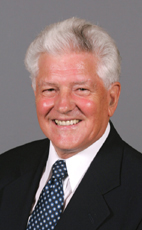
House of Commons photo

Crucial Fact

  • His favourite word was particular.

Last in Parliament November 2005, as Conservative MP for Kelowna (B.C.)

Won his last election, in 2004, with 48% of the vote.

Statements in the House

Christmas Charity Campaigns December 14th, 1999

Mr. Speaker, I wish to pay tribute to two charitable Christmas initiatives in my riding of Kelowna. The first is the Be an Angel Fund organized by one of our local newspapers, the Daily Courier .

For three weeks, beginning on December 3, in words and pictures it has shown what it is like to face the holiday season with fear instead of joy, with despair instead of anticipation, with a tear instead of a smile. The angel fund receives donations on behalf of the Salvation Army and the food bank, and publishes stories explaining what the donations do to turn these situations of hopelessness to happiness.

The Tree of Hope campaign features a 110-foot tall tree where individuals and groups purchase lights on the tree. The money goes to local children's charities: Central Okanagan Foundation and the Rainbow of Opportunities. This year the campaign raised over 30% more than last year.

Together these two campaigns prove that there truly are angels who spread the light of hope during the Christmas season.

Nisga'A Final Agreement Act December 2nd, 1999

Mr. Speaker, I will continue with my presentation, in particular with the reference to the Diane Francis column of November 20 in the National Post on the Nisga'a treaty:

Not only does this constitute a hideous giveaway based on unproven claims that their ancestors roamed around the area, but there are overlapping claims by neighbouring bands that also claim their ancestors roamed around there too. Some are threatening violence.

Counter-claims are hardly surprising given the flimsy “evidence” behind the exercise...

My ancestors roamed around the United States for a couple of centuries and Europe for millennia but that doesn't give me any claim to a piece of Dublin or Chicago.

What we have now is a questionable collective memory of entitlement, and governments that fail to meet their responsibilities to the public interest.

Simply put, the Nisga'a treaty is the beginning of turning much of Canada into a series of “balkan” principalities often run by feudal chieftains.

Worse yet, the Nisga'a claim is one of 30 being cobbled together in British Columbia—

Other authorities would say more like 50:

—even though treaties were never signed between the British and locals as in other parts of Canada. Many other land claims are justifiable because deals were inked with the Crown.

But this type of ad hoc treatism is dangerous because it also abrogates the basic values of this society. Its only result will be to create privileged franchises for self-defined ethnic groups with questionable provenance, who already get excessive and unjustifiable special entitlements out of the public purse such as tax-free status.

Nisga'a ignores the rule of law.

Nisga'a ignores democratic rights.

Nisga'a disdains transparency of process.

She is speaking of the treaty:

Unfortunately, political correctness has set in on this one. The Canadian establishment has ganged up against the public just as it did behind the attempt by Ottawa to railroad Canadians into voting for the Meech and Charlottetown accords. The only ally the public has federally is the Reform party, which is clearly aligned with the public interest on this one.

Unlike those sweeping accords, Canadians will not get a chance to vote on the matter in a referendum, nor will British Columbians.

This is because the rest of the federal parties—Liberals, Tories, NDP and Bloc Quebecois—are in favour of the treaty.

Most worrisome is the support for this treaty by the Bloc Quebecois. It means the Liberal government is being led into an ambush by Quebec secessionists who support passage of the Nisga'a deal because it circumvents the Constitution and gives an ethnic group self-government and vast lands.

To ram through the Nisga'a treaty in Parliament may be to unravel the Supreme Court of Canada initiative undertaken by the federal government in the case of Quebec secession.

It is a serious allegation that Ms. Francis states here. She goes on to say:

The court ruled that any referendum on self-government by Quebecers would have to be passed by a clear majority responding to a clear question and involving all parties pertinent to the issue.

Nisga'a is not being offered up to the public for its approval and therefore all parties pertinent to the issue are not being involved, except indirectly through the Liberals in Ottawa and the NDP in Victoria.

Plenty of constitutional experts maintain, as does the Reform Party and the B.C. Liberal Party, that the people of British Columbia have a right to vote on this matter in a referendum. Some 78% of the people of British Columbia oppose Nisga'a.

Without a doubt, most Canadians oppose any special deals for anyone. Privileges already exist and should be dispensed universally on the basis of need, and not on race—

That almost brings to a conclusion her statement except that she ends with this sentence:

Instead, we have the Liberals and NDP heaping more unnecessary burdens on to taxpayers in order to unfairly reward a few vocal, politically correct and taxpayer supported ethnic organizations.

So much for what Ms. Francis had to say about the Nisga'a treaty.

I will continue to reference Squamish women and their concern about the provisions of the Nisga'a treaty. I have the verbatim report of what was heard by the committee on Friday of last week. A Ms. Baker said:

I am Maisie Baker from the Squamish Nation, and I'm one that don't just sit back and let everybody else do the work for me, I got to get up and do my own fighting. I fight my chief and council every day, and when they see me coming, they say, oh, no, is that Maisie coming after who, and I said well, if you're on my way, look out. But I'd like to say that the Squamish nation is so corrupt, it's unbelievable. The money that comes from the government gets stuck in our band office and it stays there. We never see it, and I am very angry at my Squamish Nation's so-called chiefs and councillors for putting me into this Bill C-49. Not only our chiefs and council, but I'm angry at the government for putting me in this position, because it doesn't give us any rights at all. We can't fight them, we have no money, we have nothing but I'm really angry at government for not listening to the grassroots, when we are the most important people.

Nisga'A Final Agreement Act December 2nd, 1999

Mr. Speaker, I wish to comment pretty well exclusively on what other people have said about the Nisga'a treaty. Some people have said “The only people who are opposed to this treaty are people in the Reform Party”. I want to make it abundantly clear that that is not so.

I want to refer to two major documents. The first one has to do with the transcript of the record of the presentations that were made to the committee in Vancouver last Friday. I also want to refer to one of the senior columnists with the National Post and then refer further again to one of the transcripts from the committee in Vancouver.

I will begin by referring to the comments that were made by Mr. Plant who accompanied Mr. deJong, the MLA from the British Columbia legislature. He reviewed very briefly the three arguments that were presented in the court case that the opposition in British Columbia has given to the courts. Here are the three arguments to why the Nisga'a final agreement is unconstitutional. First, that it is not open to the federal and provincial governments within the existing constitution of Canada to create a new freestanding third order of government. The question is: Does the government even have the authority to do that?

Second, that it is not open to the federal and provincial governments by negotiation with the Nisga'a or in any other way short of a constitutional amendment to confer upon a new order of government paramount legislative power. This is what the Nisga'a treaty does in at least 14 areas.

Third, that the Nisga'a final agreement violates the charter because it denies non-Nisga'a the right to vote for a government which will have the power to make decisions that affect their lives. As the House knows, the charter guarantees every citizen of Canada the right to vote. That is being denied to the people of Canada.

Those are the three arguments that have been presented to the court that is currently examining this particular treaty.

I will refer to an article in The National Post dated November 20. It was written by Diane Francis. The headline reads “Land claims will be the next big crisis: Political correctness is costing Canadians a bundle.” The article states:

This country's next crisis will be about aboriginal claims.

Already, aboriginals have taken the law into their hands and seized private property belonging to others involved in the fishing and forestry sectors. These actions should be met with the full force of the law, in my opinion, and have nothing to do with promises by the British Crown decades ago that aboriginals could fish the waters and hunt in the forests they traditionally used only for their own consumption. Anything more than subsistence rights may be upheld by some courts but these decisions should be immediately struck down with new legislation limiting aboriginal claims.

But we ain't seen nothin' yet.

A precedent-setting treaty in British Columbia negotiated by the feds and province behind closed doors is about to become law. The NDP in B.C. has approved it already and the Liberals want to ram it through by Christmas. The treaty gives the Nisga'a band some 2,000 square kilometres of land, $253 million in cash and self-government powers.

And that is just the beginning.

That is a handout of $101,200 in tax dollars to every one of the 2,500 members of the band and title to a land mass just slightly smaller than the country of Luxembourg.

Not only does this constitute a hideous giveaway—

Canadian Tourism Commission Act November 26th, 1999

Mr. Speaker, I will begin my debate by recognizing how significant is the tourism industry. I commend the level of debate that has taken place up to this point, especially by the hon. member opposite when he said how beautiful the provinces of Quebec and Ontario were, how people move back and forth between them, and the significance of tourism to them.

The constituency of Kelowna which I represent is actually in another world known as paradise. It is a great and wonderful place. It is a place that would stack up to anywhere. I notice an hon. member clapping. I agree with him. It is a wonderful place.

This demonstrates that western Canada, Quebec and all the rest of Canada benefit from tourism. We need to get together in this whole operation. The part that bothers me is that we would use this debate as some kind of a vehicle or wedge to drive between Canadians. This should be a unifying activity, not a divisive one.

Before I move to the actual substance of the bill I would first like to ask a question. Why has the bill come before us? The bill creates a tourist commission that already exists and will somehow create a crown corporation. Why would this happen?

At the present time we have the Canadian Tourist Commission. The bill will establish a crown corporation to be known as the Canadian Tourism Commission, which is the same agency that presently exists. If the name is the same and if it is simply to create a crown corporation for something we already have, what is different?

I looked at the objectives of the corporation. The bill says that the corporation shall sustain a vibrant and profitable Canadian tourism industry. That is the first point. The second one is that it shall market Canada as a desirable tourist destination. The third is that it shall support a co-operative relationship between the private sector and the governments of Canada, the provinces and the territories, with respect to Canadian tourism. The final point is that it shall provide information about Canadian tourism to the private sector and to the governments of Canada, the provinces and the territories.

These are wonderful objectives, but are they different or more comprehensive than what exists at the present time with the Canadian Tourism Commission? I went to the commission and asked what was the issue. Here are the exact statements from the Canadian Tourism Commission.

As it exists at the present time the major purpose of the Canadian Tourism Commission is to create a vibrant and profitable part of the Canadian economy. Let me go back to the first objective of the crown corporation: to sustain a vibrant and profitable Canadian tourism industry. With the exception of one or two different words the meaning is identical.

I will go to the next one. It states that the main thrust of the tourist commission as it exists today is to position Canada as a desirable destination to both international and domestic travellers. If I look at the bill before us it states that its second objective is to market Canada as a desirable tourist destination. What is the difference? There is no difference.

Finally, the Canadian Tourism Commission as it exists today is a partnership among tourism industry businesses, provincial and territorial governments and the Government of Canada. Lo and behold the bill before us states that it shall support a co-operative relationship between the private sector and the governments of Canada, the provinces and the territories with respect to Canadian tourism. The only difference is in the order in which the words are presented.

I fail to see that the bill creates anything different from what we have today, except the relationship with the government is a bit different in the sense that it is now a crown corporation. It is currently an agency within a department and under the bill it will become a crown corporation.

I thought then if there is not a difference in the objectives perhaps there could be a difference in the preamble that gave rise to the bill. Very often it is in the preamble that we find the rationale that gives rise to the bill. I examined it to see whether it materially justified and created a solid, sound and very substantive reason for the creation of a crown corporation. The preamble states:

Whereas the Canadian tourism industry is vital to the social and cultural identity and integrity of Canada;

Whereas the Canadian tourism industry makes an essential contribution to the economic well-being of Canadians and to the economic objectives of the Government of Canada;

Whereas the Canadian tourism industry consists of mainly small and medium-sized businesses that are essential to Canada's goals for entrepreneurial development and job creation;

And whereas it is desirable to strengthen Canada's commitment to Canadian tourism by establishing a Tourism Commission that would work with the governments of the provinces and the territories and the Canadian tourism industry to promote the interests of that industry and to market Canada as a desirable tourist destination;

Therefore, Her Majesty, by and with the advice and consent of the Senate and House of Commons of Canada, creates an act. I emphasize the last paragraph I just read. We have that, so what are we doing here?

What on earth possessed whoever it is who had the audacity to bring this matter to the House? Why would something like this be done? We have the commission. We have the agency. We have the minister. Now we are to do it all over again. How many different ways is a spare tire put on a car?

Canadian Tourism Commission Act November 26th, 1999

Mr. Speaker, I want to commend my hon. colleague for the comments he made. Mr. Speaker, I have to pay a special tribute to you too, sir. The hon. member mentioned certain things in his speech that I think refer directly to the efforts you have made toward tourism and the establishment of industries in Canada and in particular, a certain establishment that has some taste, that makes some bread, and which has brought together some cultures in Edmonton. It brings to mind one of the purposes of the tourism industry which has to do with the promotion of culture.

My hon. colleague would recognize only too well that one of the functions of tourism is to bring people to Canada to let people see the culture we have here. It is such a varied culture. There is the French culture, the aboriginal culture and all the various ethnic groups that have come to Canada over the years. It is a real kaleidoscope.

It is a wonderful combination of the way people can actually work together. People of different ethnic backgrounds come from other parts of the world where they actually fought with one another and got into not just minor fights in the back streets but they would shoot each other, maim each other, kill each other, plant mines in the ground so that people's legs would be blown off.

Could my colleague make a comment about how Canada through the expansion of our tourist industry can demonstrate to the rest of the world how we can live together more harmoniously?

Canadian Tourism Commission Act November 26th, 1999

Mr. Speaker, the enthusiasm of the hon. member who just spoke is well directed. I think we all agree that the tourism industry in Canada is a very significant issue and that it has not been developed as well as it might have been. That goes without saying. I am a very strong proponent of supporting the development of the tourism industry. I agree with the hon. member.

How does the member see this crown corporation advancing the cause of tourism more effectively, more efficiently and more rapidly than is the case with the Canadian tourism commission that currently operates under Industry Canada?

There are 26 directors under the Canadian tourism commission at the present time, including the president and the director. That is exactly the same number that exists under the provisions of the new legislation to set up the crown corporation. The representation from the various parts of Canada, the provinces and the regions, is more or less the same, if not exactly the same. The way in which the distribution takes place as to which parts of the tourism industry ought to be represented is also the same.

Does the hon. member really believe that a crown corporation will more effectively meet the advancement of tourism in Canada?

I agree, that should be the case for Canadians. It ought to be happening. That is why the CTC was established in the first place.

Does the hon. member really believe that a crown corporation will be more effective and more cost effective than the current tourism commission?

Canadian Tourism Commission Act November 26th, 1999

Mr. Speaker, the hon. member does a pretty good job of turning the question around, and I compliment her on that.

Has she ever asked why the industry is supporting this approach? Why is the staff supporting this approach? Why does this seem to be something different? Is it better? If the functions are the same, if the objectives are the same and if the CTC is operating effectively now, why would a crown corporation be more effective than the present commission?

Judd Buchanan, present chairman of the CTC, was a very strong Liberal cabinet minister in the Trudeau regime. He does his work for $1 a year. If the crown corporation is established, does that mean that the president of the corporation will work for $1 a year? Is one of the reasons the staff is supporting it that their salaries will rise? Why is it supporting it? Could the member answer that question?

Canadian Tourism Commission Act November 26th, 1999

Mr. Speaker, I thank the hon. member for her speech. I would like to ask her how Bill C-5, an act to establish the Canadian Tourist Commission, would be different from what the Canadian Tourist Commission does now. I will read a paragraph about what the Canadian Tourist Commission is doing at the present time:

The CTC is industry led and market driven. It is a consortium of Canadian private sector, provincial, territorial, regional and federal tourism partners who collaborate closely to match Canada's tourism products and services with customer demand...both regional and global...and to focus the Canadian industry's efforts as a whole. The CTC actively pursues partnership opportunities for its marketing, research, and industry and product development programs. Interested organizations or individuals are invited to contact the Commission with ideas and proposals. It should be noted, however, that the CTC does not provide grants or subsidies, nor does it act as a lobby group on behalf of the industry.

Could the hon. member explain how the new tourist commission, under the corporate banner of being a crown corporation, would in any way be different? Would it be more efficient? Would it do the same kinds of things? Would it do things differently? How does she see it operating? This is what is happening now. Is that bad? Does she not like it? What is the real advantage to forming a crown corporation?

Municipal Grants Act November 25th, 1999

Mr. Speaker, it is very interesting the hon. member suggested that in the end they would support the bill. There are a lot of things in Bill C-10 that I would support. However there are a couple of questions I would like to ask him to clarify whether the hon. member would like to see the bill amended to meet some of the other requirements that ought to be in it.

For example, we are talking about crown corporations. Schedule IV lists all crown corporations that make money and are there for profit. One in particular is the Business Development Bank of Canada. That bank is included as a crown corporation that must pay business tax because it is in the business of making money for the Government of Canada.

Three corporations are also making money for Canada. They are the Canada Mortgage and Housing Corporation, the Canada Post Corporation and the Canadian Mint. These three corporations are excluded from schedule IV. In my opinion they ought to be included because they should pay business tax to the municipalities as do all other businesses in the area. Indeed there are other crown corporations that pay it.

The requirement in the bill is that the minister may pay business tax to municipalities for those corporations listed under schedule IV. Would the member agree that these three corporations—the Canadian Mint, Canada Post and Canada Mortgage and Housing Corporation—should also be included under schedule IV?

Division No. 54 November 18th, 1999

Mr. Speaker, I thank my colleague for the question. It is an excellent question because it has two parts.

Back in 1994 I had the honour to present a petition containing about 25,000 signatures that was started by high school students in Kelowna. They asked that the Young Offenders Act be amended because it was a joke.

We had a meeting about two weeks ago in the constituency dealing with some of the provisions of the proposed act. The people knew we had the Young Offenders Act and were to have the youth criminal justice act and asked what had changed. That was their first reaction.

The name has changed. Indeed there is more flexibility in the new act, and we went through some of it. One of the points I made this morning with regard to the justice system not being in fact the justice system but being a legal system is one point that they drove home over and over again.

Another point they made was that no matter how good the legislation is that is presented to the House we as parents, as educators and as leaders in society need to recognize that young people have to be taught and shown what is right and what is wrong. It should be incumbent upon every leader in the community, teacher, parent, church or whatever group, that once they have dealt with young people there should be no equivocation that a joyride in a stolen car is an acceptable the right of passage into adulthood.