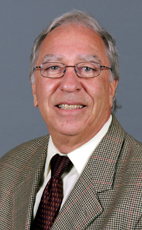
House of Commons photo

Crucial Fact

  • His favourite word was quebec.

Last in Parliament November 2005, as Bloc MP for Saint-Maurice—Champlain (Québec)

Won his last election, in 2004, with 55% of the vote.

Statements in the House

First Nations Fiscal and Statistical Management Act November 6th, 2003

They were young women and we could just not accept that. We were shocked. We asked them, “What can we do to help you?” And what they said to us was, “Let us live. Let us flourish. Let us share this country, which was ours before you came, in our own way”.

I share my colleagues' opinion that we Quebeckers behave better towards the Amerindians, the first nations.

I would never agree to a law that still told them what to do. “Under certain conditions, we can help you, but you will always be at our mercy, you will always be minors with relation to us”. That is demoralizing and humiliating. I understand why these people are doing all they can to try to tell us, “Oppose this bill”.

I repeat what was said earlier: we have had Bill C-6, C-7, C-19, ehough is enough. We have had enough of pushing around people who have a right to live, who have a right to all they posses, and who have the right to develop in their own way.

Once again, I am probably wasting my breath, because the majority is over there and the bill will pass. Still, we will have the pleasure of saying that we did our duty, that we said what we had to say, and that we have tried to speak up for the people who have asked for our help.

As for the communities in my riding, unfortunately, I do not have an opportunity to see them very often, because they are far away and the riding is large. Still, if I can help them develop in their own way, I will do what I can.

First Nations Fiscal and Statistical Management Act November 6th, 2003

Madam Speaker, again today we are having an emotional debate. Having listened to the members for Saint-Hyacinthe—Bagot, Drummond and Saint-Jean, I realize how true my feelings are, and how much they are shared by others.

The government is acting the way it always has. As a superior being telling others what to do and how to do it, rather than allowing the first nations to develop according to their potential, their interests and their abilities.

These are recognized peoples. Why are we always so paternalistic? Why not let them develop at their own speed and according to their own abilities? We have heard the comments on Bill C-6 on first nations specific claims, and C-7, and now on C-19. The first nations are on the verge of announcing that enough is enough, and of demanding the powers they need.

Not long ago, I and my colleague from Saint-Hyacinthe—Bagot had the opportunity to visit the Attikamek of Weymontachie. I was amazed at these brave people, who have done wonders despite being blocked at every turn.

I found it fantastic to see this community of 1,150 had managed to preserve its language and was teaching its children Attikamek up to grade three. This community is perfectly bilingual; both French and Attikamek are spoken.

We can learn something from this people, with their amazing will to survive. We cannot help but be amazed at their determination and their abilities.

The member for Saint-Hyacinthe—Bagot shared my amazement when they told us that there are six seasons when you get 100 km north of La Tuque. The way they explain the different seasons is really extraordinary and well worth the trip just from the cultural point of view. The Attikemek have a very logical explanation for their six seasons.

The member for Saint-Jean has referred to his unforgettable memories of trips to aboriginal lands, and I can say the same.

What is regrettable is witnessing how hampered they are in their development, when that development would enrich all of society. It is not true that we stand to lose when we allow others to grow. The same applies to Canada as a whole. The day that Quebec can reach its full potential on its own, everyone will stand to gain. I am certain that if I develop my personal potential to the fullest, others gain something from it.

I am reading a book about this on that period. We took their land, yet the first nations saved us. Learning about history makes us realize to what extent we owe them our being here. It is painful to see them constantly being put down and told how and what to do, when we have so much to learn from them.

Forty years ago, I was coming back from La Tuque, where I was a manager for a company. I gave a ride to a hitchhiker, a man between 25 and 30, who looked pretty demoralized. I asked him what was wrong.

He said, “I have left my country”. I asked him where his country was. “It was located north and west from La Tuque, near Gagnon Lake. Our people lived there”, he said, and he added, “We had our customs, our language, our culture”. He went on to say, “I buried my father yesterday. He was the last one. He wanted to be buried with his ancestors. But I am leaving because our country is gone”.

That day, I told myself I did not know what I would have done in his place. I was the white man who had not allowed him to develop, while he had as much right as I did to do so, and his people and language had enriched my life.

I asked him if he resented me. His answer was, “Why would I? What I have lost is lost forever”. That is right. When we manage to pass legislation here that allows these people to survive, they enrich us at the same time as they enrich themselves.

When I was in Weymontachie with my colleague from Saint-Hyacinthe—Bagot, we learned that, in the early summer, one young person a week, for three weeks in a row, had committed suicide.

Criminal Code November 5th, 2003

Madam Speaker, once again, I have heard a colleague give an excellent speech explaining what this bill is all about.

I will return to the issue I was discussing a little earlier with the hon. member for Saint-Jean. Why does the federal government, yet again, feel obliged to interfere in areas of provincial jurisdiction? Why do they operate this way, always complicating matters? Instead of improving things, the federal government is always trying to take over fields of jurisdiction that do not belong to it.

My colleague mentioned the example of Bre-X. He is perfectly right. Something quite serious happened: a company sold stock under false pretences. I will note here that Bre-X stocks were also sold in Quebec, but such sales were not governed by the Quebec securities commission.

In passing, I should say that I think the Quebec securities commission does the best work in all of Canada. As the hon. member for Saint-Jean said, it is certainly better than what is done in the United States. We have seen the Enron case, in the United States, which was quite an incredible scandal.

I would like the hon. member to answer my question. How can he explain that the government does not look after its own jurisdictions? For an example, look no farther than the environment. At home on Friday, I listened to a televised debate during which they showed that there is an incredible amount of work to be done in Lake Saint-Pierre.

This government has the jurisdiction. Why does it not work within its own jurisdiction? Why is it always meddling in areas of jurisdiction that are none of its business?

Beyond that, there is no doubt that a law that makes investing safer is a good law. What is bad about this legislation is that it is no business of the federal government. I would like to hear my hon. friend's ideas on this.

Criminal Code November 5th, 2003

Madam Speaker, I want to thank the hon. member for Saint-Jean and congratulate him. Whenever he speaks, no matter what the subject, I am impressed by his abilities, and not only as the defence critic.

He just spoke on a bill I am somewhat familiar with, because I worked on the stock market. I was also a bit disappointed to see that the federal government is still trying to interfere in an area under provincial jurisdiction; Quebec's securities commission does an excellent job.

The hon. member talked about a number of important issues, like insider trading. At one point, he also mentioned capital markets fraud or tax evasion. I do not know if my question relates to how this term is defined in the bill, but when we talk about it and realize that the government wants to interfere in such matters, I wonder if the bill has anything to do, for example, with individuals doing business in Canada but flying foreign flags.

Could we amend the legislation so that people working in Canada have to pay taxes in Canada, particularly those who own companies, get rich here and, to a certain extent, destroy our resources. I am thinking, for example, of a particular shipping company. The St. Lawrence River is important to me because I live close to it. When I see a shipping company belonging to Canadians fly a foreign flag, pay taxes abroad and refuse to repair the shores it has ruined, this might come under the broader meaning of tax evasion.

I would like the hon. member to tell me a bit more about this kind of fraud; when I came in, he was talking about it and unfortunately, I missed some of what he said.

I would also like him to talk again about insider trading. This is extremely important. He has touched on it. We see that bad or dishonest decisions have led to the almost total disappearance of a certain pension fund over the past few years.

I ask the hon. member to explain this in greater detail.

Federal-Provincial Fiscal Arrangements Act October 30th, 2003

Mr. Speaker, I thank the hon. member for Saint-Hyacinthe—Bagot. He is one of only a few who are familiar with this program. As Mr. Séguin, the Quebec finance minister has said, very few are. The hon. member for Saint-Hyacinthe—Bagot. is one of them.

The only place people do not believe there is fiscal imbalance is here in the federal government. All of the provinces agree that there is one. One need only look at the money wasted here at the federal level while the provinces, which have the responsibilities, lack the resources. The money is here, yet they are inventing all manner of systems when all that is needed is one fair one, which would redress the fiscal imbalance so the equalization payment program would no longer be needed.

Here things are more complicated. The harder it is to administer, the more it costs, yet there is still money left for the friends of the government in power. All of the provinces admit the existence of a fiscal imbalance, but it needs to be admitted here, and then it can be fixed.

Federal-Provincial Fiscal Arrangements Act October 30th, 2003

Mr. Speaker, as a matter of fact, if someone wanted to convince me to vote in favour of the bill by saying it is an insurance policy, they would achieve the opposite effect. I do not believe in it.

Indeed, this is the first time that a government has done something like this concerning equalization. The insurance policy is for one man only. It is an insurance policy for a government and a man that do not want to be here to face questions. It is certainly not an insurance policy for the provinces.

However, the best insurance policy for everyone is balance. The best justice for everyone is that we continue to sit in the House, that the new prime minister, whom we will know shortly, finds a way to sit in the House, that the government does its job, since it was elected for five years and is only in its third year. We have to do our job. This is the insurance policy that we will be able to provide everyone.

Federal-Provincial Fiscal Arrangements Act October 30th, 2003

Mr. Speaker, here we have a debate that seems very curious to me. We have just heard an hon. member say that she does not agree with this kind of insurance policy. I agree with her completely.

It is quite surprising to see a government, not yet a full three years into its mandate, elected with a huge majority, hurrying to adjourn the House and get ready for an election, when in theory a government is elected for five years. People are asking us questions, “Why is there such a hurry? Why do you have to go so fast or stop working now, when the government is still in its teenage years?” Elected for a five year term, we have not yet completed three years, and here we are passing laws to take out insurance policies, just in case, and put off the work. It seems very curious.

I forgot to mention that I will be sharing my time with the hon. member for Bas-Richelieu—Nicolet—Bécancour.

I do not think we need this insurance policy, because we have all the time in the world. This agreement is good for five years and there are still five months left until it is due for renewal. We simply have to keep on sitting and working. The provinces would like nothing better.

Why should we pass a law that gives the federal government an insurance policy against its inaction and against the fact that we will not be sitting, even though we were only elected three years ago? This Parliament's mandate could theoretically last five years. Why is this government so inactive that it needs an insurance policy? At the same time, what would that insurance policy provide to the provinces?

In the spring, we will be having an election. Between now and the spring, we will hardly be sitting at all. Why? Because there is a man at the controls who does not want to show himself. And what is more, there is a man who shows himself to us, but he is not at the controls. The other day, he said that the Liberals could walk and chew gum at the same time. The difference here is that one of them is doing the walking and the other is chewing the gum.

It is quite curious to see that we are in a situation where nothing is moving forward. This is the second bill we have had to consider that moves something up. It is also the first time that a government has presented a bill like the one that moved the date of implementation of the new electoral boundaries ahead. Under normal circumstances, we would have had until August 28 to work with the old electoral boundaries if there were an election.

Suddenly, there is someone outside the House, walking between the walls and the curtain, who is pulling the strings. Or rather to ensure even greater invisibility, he is walking between the wallpaper and the wall. Sometimes he is visible. Suddenly, like the holy ghost, he disappears. This makes things difficult.

We are being asked to adopt this bill, which will mean that provinces will not be assured of being heard. Once this bill is passed, the government will have one year. This means that there will be an election and a new government. As a result, those in power will be able to say that they have all the time in the world, and the provinces will not be assured of being heard. This is normally the case, and it will be even more true once the hon. member for LaSalle—Émard is at the helm.

It is difficult to believe that Canadians and Quebeckers will be subjected to something so completely illogical.

The equalization program is up for discussion and is being discussed. It is also difficult to understand. It must be renewed and is subject to constant negotiations. This is an extremely costly program to administer and is extremely difficult for all the provinces and those heading the negotiations to understand.

The old program is being extended, simply because there is a refusal to deal with our obligations. It would be infinitely easier, as the Bloc Quebecois motion asked, for the hon. member for LaSalle—Émard, the future prime minister, to come to the House. In a few days, he will be elected leader of his party, so he should be in his seat. Instead of paralyzing the government, which is afraid of being wrong about issues the hon. member will be asked about prior to an election, he should face the music so that negotiations on equalization can continue and so that we can do our jobs.

We will not be asking for an insurance policy for the federal government. The best insurance is for us to do our jobs. There are five months left in which to negotiate with the provinces and renew the equalization agreement. Then the provinces should be able to demand whatever they are currently unable to demand because everyone has been waiting for the federal government to renew the agreement since the spring.

We can see what is happening with government spending and all that is being spent to paralyze the government. I know how much it costs to run this government and the House of Commons. For several months, we have been at a standstill. A telling comparison would be a car without snow tires on an icy road. The wheels are spinning and the car is not moving. We are just killing time.

A more logical approach, and a better insurance policy, would be for those who are pulling the strings from behing the scene come to the House. We could then do our work.

The hon. member for Joliette mentioned the astounding increase in spending, especially in the administration of a program such as this one. For example, he said that the cost of running the federal bureaucracy has increased 35%. Meanwhile, they managed to cut the budgets of almost everyone. They have cut the health budgets of the provinces and demanded all kinds of things in return for handing them their due.

The income of seniors has been cut, because they were not given the guaranteed income supplement. We know a bill is in the works, just before the election, to right these wrongs. The fact remains that some $3 billion has been taken from the income of the neediest seniors. The EI fund has also been used.

This government feels it can used whatever means are necessary to serve the political interests of the party and of the one who is pulling the strings behind the scene.

To conclude, I would like to tell you that the best insurance policy we can get is for the House to go on sitting and finish its work, so that the provinces and our fellow citizens will be well served.

Federal-Provincial Fiscal Arrangements Act October 30th, 2003

Mr. Speaker, I find today's debate extremely interesting and I am learning a lot about equalization and its components.

I have one concern about this bill, and I think my colleague mentioned it briefly towards the end, but I would like him to come back to this issue.

As we all know, there will be an election next spring. Short of a miracle, an election will be held. Right now, the provinces are in a strong position to negotiate and have many demands. In the next five months, they could have the opportunity to negotiate and get what they deserve.

If the agreement is extended for a year and a half, the provinces may lose ground. The provinces are now the strongest, but the new elected government may not see it that way. This is one reason why I will be voting against this bill, to ensure that the provinces are in a strong position to negotiate and get their fair share.

Also, as my hon. colleague briefly mentioned, for these people to say that we voted for such a measure is both frustrating and insulting. I also have a feeling that we will be criticized later on for supporting the previous formula because we voted in favour of a bill extending the agreement for another year.

I would like the hon. member to clarify some of my concerns and tell me if I am right in my thinking.

Federal-Provincial Fiscal Arrangements Act October 30th, 2003

Mr. Speaker, you can tell I was anxious to rise to participate in the debate. I was not a hockey referee, but I was quite athletic in my youth, and I am always anxious to get into a debate such as this.

I find it quite interesting to hear the member for Joliette. I was listening to Mr. Séguin, the Quebec finance minister, who said that the equalization formula is so complicated that, according to him—and he said this as a bit of a joke—there may be 10 or 12 people who fully understand it. He said that its very complexity makes it extremely expensive to administer. We are fortunate, because the member for Joliette must be one of those 10 or 12 people who have a good understanding of the equalization formula.

When I see that the government took into account 3,000 variables to distribute a tax base of $10 billion out of $180 billion, I think this is extremely costly and there should be other formulas.

I would like to hear what my colleague has to say about the amounts that we could save if, for example, Quebec were to become independent and keep all its revenues. I would like him to comment on this.

Federal-Provincial Fiscal Arrangements Act October 30th, 2003

Mr. Speaker, my colleague raised a whole new issue when she talked about the 60% of our taxes that go to the federal government and about what we get in return in the form of equalization payments or other types of payments. An Alliance member said that we are getting our fair share.

I would like to hear what she has to say on one particular issue. There is a difference between keeping the money and managing it ourselves, meaning that we can spend it as we see fit. But when we have to get down on our knees and beg, to negotiate to get what is owing to us, not only are we losing money but, more often than not, when the federal government redistributes the money, it does so on its own terms and not on those of the provinces, including Quebec. I would like my colleague to comment on that.