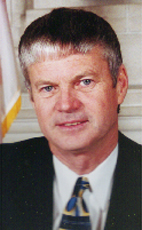
House of Commons photo

Crucial Fact

  • His favourite word was industry.

Last in Parliament May 2004, as Liberal MP for Prince Edward—Hastings (Ontario)

Won his last election, in 2000, with 50% of the vote.

Statements in the House

Agriculture April 15th, 2002

Mr. Speaker, in a meeting last Wednesday in Washington with the deputy secretary of health, I raised that issue clearly and suggested that rather than put that type of concern into legislation they put it into regulation. In that way they could recognize the virtual equivalency that we have between our two countries and not necessitate another piece of paperwork for the 10,000 truckloads of food that go back and forth between our countries each day. He said he would take that into full consideration. We will keep reminding him of our concern.

Agriculture April 12th, 2002

Mr. Speaker, the dialogue is taking place in consultation with the provincial governments. We talk to them and make sure that every organization and every farm group in the sectors are represented in these discussions.

I can assure the hon. member that whether he thinks so or not, this is the broadest consultation that has ever taken place.

Agriculture April 12th, 2002

Mr. Speaker, I find it very sad that the party that says we should talk to the agricultural industry and Canadian farmers is now telling us that it does not want us to do that. I am sorry to disappoint the member but we will continue to do that.

People, including those in his own party, have said that the country and the Government of Canada need an agricultural policy and an architecture for the industry for the future. We are going out with the broadest dialogue with the Canadian agriculture and agri-food industry that has ever taken place to ensure that when we take action we have listened to Canadians.

Agriculture April 9th, 2002

Mr. Speaker, here is the critic for a party that says we should talk to the grassroots. We are spending some money to have the widest, broadest and most indepth dialogue with farmers and all Canadians about the future direction of the agriculture and the agri-food industry in Canada.

We think it is the way to go. We want to talk to people. There is no done deal. We do not know all the answers. We do not know all the questions. That is why we want to talk to Canadians about it and work with everyone to do so.

Agricultural Co-operatives March 22nd, 2002

Mr. Speaker, I have told the co-operative movement in Quebec, and particularly on the specific issue the hon. member has raised, I too have raised it with the Minister of Finance and the finance department. We will continue in those discussions on behalf of and with the co-operatives.

Agricultural Co-operatives March 22nd, 2002

Mr. Speaker, the issue the hon. member has raised is one which I know is of concern to all of us. The specific issue is one that will need to be addressed by the Minister of Finance and the finance department.

With regard to the issue of co-operatives, we have shown very clearly in the last few years that we in the agriculture and agri-food department and industry support the co-operative movement in Canada. We know it has strengths. We also know that 40% of Canadians belong to a co-operative of some sort. We know the value it means to them and to the communities in which they live.

Canadian Grain Commission March 18th, 2002

Mr. Speaker, I know that there has been a full debate and discussion going on regarding the issue of producer car loading facilities in western Canada. The Canadian Grain Commission has been having consultation meetings with the industry. It has not concluded them at the present time, but I certainly think that the hon. member will support the fact that we need to talk to producers when there is a controversial issue like this. That is exactly what we and the grain commission have been doing.

Agriculture March 15th, 2002

Mr. Speaker, if the hon. member had been paying attention at the standing committee when I was there not too many weeks ago, I explained very clearly that this was one of the approaches we were taking in the agriculture policy framework we were developing with the provinces to regionalize the country. If we ever get into the unfortunate situation of a foreign animal disease outbreak or tuberculosis, we will be able to regionalize it and continue to have the free status that we have at the present time.

Agriculture March 15th, 2002

Mr. Speaker, we certainly are proud of the record and the fact that we are tuberculosis free in Canada. We are always monitoring the situation to do all we can to ensure that that continues to be the situation.

We are working with Heritage Canada. We are working with all the sectors of the bovine industry in Canada to ensure we have a plan and the surveillance in place so we can continue to have the status that we have.

Trade March 14th, 2002

Mr. Speaker, the hon. member knows full well that the research is being done on that in co-operation with the industry and the United States. Our primary concern has been and will continue to be the consistent maintenance of the health of the Canadian livestock herd.

We have shown in the past that when we can ensure regional recognition of health standards, with certification from the United States, we move ahead, but we will not move ahead until we have that assurance.