Madam Speaker, before I answer that question I would like to propose an amendment to the motion, that the words—

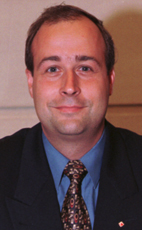 House of Commons photo
Won his last election, in 1997, with 50% of the vote.
Supply February 11th, 1999
Madam Speaker, before I answer that question I would like to propose an amendment to the motion, that the words—
Supply February 11th, 1999
Madam Speaker, first of all, I wish to thank my colleague from Shefford for agreeing to share her time with me so that I might speak to the House on this motion.
It is a motion of vital importance to me. There is no doubt that a lot of statistics will be recited to us today, some more disquieting than others. In my own riding, nearly 20% of families were low income families in 1995. That same year, close to 50% of single people were in the low income category.
In other words, the problem of poverty is not only an urban one. It does not manifest itself only in major centres. Poverty is a scourge in all regions and in all communities in Canada. We have a duty to address this problem in a concrete manner. We could spend weeks and months throwing up our hands at the huge scope of the problem, but that will do nothing to help the poor of this country,
The motion we are presenting today offers some really down to earth solutions which would make a big difference to many low income individuals such as the elderly, young people and children, single mothers, low wage earners, and many others.
The issue of poverty is very complex, which is why we know very little about the true state of poverty in our country. As a country we have not developed an effective way to identify and measure poverty. We have not identified all the causes of poverty and we do not have an effective and complete strategy to eliminate poverty. That may be a tall order, but unless we take specific first steps poverty will continue to grow.
The House has always been full of good intentions. In 1989, 10 years ago, members of the House gave their unanimous support to a motion which sought to achieve the goal of eliminating poverty among Canadian children by the year 2000. A mere 10 months away from this critical date, the rate of children living in poverty has grown by 500,000, from 1 million in 1989 to 1.5 million in 1999. This is a true shame and a national tragedy.
I would like to quote one parliamentarian who spoke in the 1989 debate:
I never hear the Minister of Finance talk about the real deficit of this country, which is those one million kids in poverty. That is the real lack of investment. That is the real tragedy. That is the greatest deficit we face. That is the problem, and there is nothing being done to address that kind of issue.
The person I have just quoted is the current foreign affairs minister of the Liberal government. I look forward to hearing his comments today to find out if he is proud that many more children go hungry every night because of his government's policies.
The growing rate of poverty has become an international embarrassment for Canada. Last December a United Nations committee chastised Canada for its inaction in this domain. The 1998 report of the United Nations Committee on Economics, Social and Cultural Rights is less than flattering and Canada has a long way to go to meet the covenant obligations.
The UN report pointed out that since 1994, in addressing the budget deficits by slashing social expenditures, Canada has not paid sufficient attention to the adverse consequences of the enjoyment of economic, social and cultural rights by the Canadian population as a whole.
It also notes that the absence of an official poverty line makes it difficult to hold federal, provincial and territorial governments accountable for their obligation under a covenant. There has been little or no progress in the alleviation of social and economic deprivation among aboriginal peoples. In all but two provinces the national child benefit is in fact only given to children of working poor parents instead of all children of low income families as it was meant to be given.
A reading of the UN committee's report leaves us with the impression that, in recent years, poverty has become an even more serious problem in Canada. Our country boasts about being a champion of human rights, co-operation and compensation. This means the international community should see us as a country that is trying to eliminate poverty.
However, based on our Prime Minister's recent actions, it looks like the tarnishing of Canada's international reputation is no big deal for this government.
Reports such as this one serve two main purposes. First, because they tarnish our international reputation, they motivate us to take quick action to solve the issue and thus limit the damage. Second, they make us see the point of view of outsiders who have no direct interest in the affairs of our country. Consequently, these reports are generally quite objective, honest and fair.
Most people are prepared to talk about poverty and are concerned about the poor. Unfortunately, when the time comes to act, they usually decide to use their time and energy for other purposes. To merely talk about poverty does not help alleviate the problem at all. If we really want to eliminate poverty, we must immediately take concrete action.
There is only one way to eliminate poverty and it is by placing more money in the hands of Canadians. The government can do this through lower taxes and tax exemptions, better education and the creation of an environment that will stimulate economic growth and development.
In the motion we have proposed today we have identified but a few simple steps that would go a long way toward helping poor people. We suggest that the government should increase the basic income tax credit to $10,000. It should index tax brackets and index the child tax benefit.
There are many other measures that could be undertaken and I am sure we will hear many other suggestions today from all parties in the House during the debate.
No one party can lay claim to the best solutions to eliminate poverty and no one party can appropriate social conscience to the exclusion of all others. Within our chosen parties we are individuals who serve the people that live in our communities.
The people in my riding want us to act to better the lives of many of our neighbours, our friends and even strangers we have never met. I for one look forward to listening to my colleagues in the House in the hope of having a non-partisan and productive debate on this burning issue.
As I stand before the House I am reminded of the words of John Donne, a 16th century English poet and clergyman who wrote the following:
No man is an island, entire of itself Every man is a piece of the continent, a part of the main If clod be washed away by the sea, Europe is the less. Any man's death diminishes me, because I am involved in man kind. And therefore never send to know for whom the bell tolls, It tolls for thee.
The bell is tolling for all of us in the House.
Human Resources Development Canada February 4th, 1999
Mr. Speaker, this HRDC document proves once again that the Minister of HRDC is not in control of his department.
We have seen him kneel before the Minister of Finance on raiding the EI surplus. Now we see him kneeling before the President of the Treasury Board on quotas and ultimatums.
It is high time he protects his own departmental employees from such intimidation.
Will the minister get off his knees and stand up to his cabinet cronies?
Human Resources Development Canada February 4th, 1999
Mr. Speaker, yesterday the House learned of a Department of Human Resources Development internal document indicating that Treasury Board intends to cut 150 jobs at HRDC.
The Human resources development minister may play with words all he wants, the fact remains that quotas do exist and that jobs will be eliminated if they are not reached.
Can the President of the Treasury Board explain why he is making such threats against HRDC employees?
Fishers' Bill Of Rights February 1st, 1999
Mr. Speaker, I am pleased to speak today on this first day back to the House. I would like to take advantage of this opportunity to wish all my colleagues a happy New Year.
I am even more pleased that I am speaking on a bill initiated by my colleague, the member for New Brunswick—Southwest. The House is addressing a matter that is of great importance to a number of Canadian communities. The fishery is not the focus of the economy in the majority of ridings represented here. Still, there must not be indifference to the ongoing crisis in the fisheries sector in my province, in the Atlantic region and in the Pacific region.
With all due respect to the scientists in the Department of Fisheries and Oceans, as well as the minister and senior departmental officials, those who earn their daily livings from the sea are the ones who know it best. That is why I applaud the initiative of my colleague from New Brunswick—Southwest.
His intent in this bill is to ensure that fishers have a say in decisions which may affect their work, their community and their way of life. What could be more praiseworthy?
Allowing fishers to have their say is not so far fetched. It is something we as elected persons have been struggling to do for years.
For instance, the Standing Committee on Fisheries and Oceans visited 15 communities over a period of nine days in the late fall of 1997. The committee spoke with fishermen, plant workers and others involved in the east coast fisheries in Newfoundland and Labrador, Quebec, New Brunswick and Nova Scotia.
Many of the witnesses who appeared before the committee felt betrayed by the federal government. In their opinion the federal government was responsible for managing the fishery and did not meet its responsibility. The committee heard about the inequities and the arbitrary designations of those ineligible for the TAGS program. Many plant workers were ineligible because of small breaks in employment despite a long attachment to the industry.
It was felt that the licence buyout portion of TAGS was not successful because the boats, gear and other licences were transferred to other fishermen. Therefore the capacity was not reduced. Fishermen have little confidence in the ability of the Department of Fisheries and Oceans to manage the fishery. As well fishers question DFO's scientific estimates.
There is a concern about the independence of the fisheries resources conservation council as the council used DFO staff and office space. Fishermen from all areas are criticizing the quotas for foreign fishermen. One fisherman quoted in the committee's report said “The fishery is the biggest foreign aid program around”. The east coast communities want fish caught in Canadian waters to be processed in Canadian onshore plants rather than on foreign vessels that process onboard.
The standing committee travelled in January 1998 to west coast communities where it heard many of the same concerns it heard on the east coast.
The west coast fishery has experienced a rapid restructuring, due in large part to the Pacific salmon revitalization program, but also to various other factors affecting fishers and coastal communities.
Very many fishers are of the opinion that DFO no longer has any interest in the future of their communities, but has centralized its decision-making process in the regional offices and in headquarters.
Many witnesses have criticized the lack of resources allocated to new fisheries. Downsizing at Fisheries and Oceans has resulted in a shortfall of personnel available to develop new fisheries.
DFO policies have raised serious concerns in many communities. For instance, the village of Ucluelet has invested massively in enhancing its water supply system because the processing of hake requires huge amounts of water. Then, DFO announced it planned to review its hake policy.
Also, DFO imposed on municipal governments in the Fraser Valley complex and expensive requirements with respect to cleaning ditches, while not taking any responsibility or sharing any costs.
Such departmental decisions may be warranted, but they are being made without any consultation or paying any attention to their impacts on the individuals and communities concerned. That is what needs to change. They must be accountable to these people.
There is a wealth of information and plain good common sense to be had from simply listening to the people who know the fishery best. It is time to rely on more than just the good graces of the Standing Committee on Fisheries and Oceans. The time has come to formally recognize the voice of fishers in the decision making process.
The bill endeavours to establish the rights of fishers so they will be involved in the process of fishery stocks assessment, fish conservation, setting fish quotas, fishing licensing and the public right to fish. The bill would establish the rights of fishers to be informed in advance of decisions affecting fishing as a livelihood and the right to compensation if other rights are abrogated unfairly. The livelihoods of people in Atlantic Canada and Pacific coast fish industries have been affected by arbitrary decisions made with little or no consultation with those directly affected.
It is nothing short of a crisis. Fishers are increasingly frustrated and discouraged with the government's inability to deal with real issues affecting their lives. The fisheries industry should be a sunrise industry, not a sunset industry as seems to be the case today.
The bill before us today is a votable one. I urge all my colleagues to vote in favour of this bill.
There has been such turmoil recently in the fishing industry that the least we can do is to involve fishers in decisions affecting them personally.
Division No. 300 December 7th, 1998
Mr. Speaker, I would like to have my vote also recorded, as I have just arrived as well.
Balanced Budget Act November 24th, 1998
Mr. Speaker, on November 5 of this year, I told the Minister of Human Resources Development that, according to the auditor general, there were some 311,000 valid social insurance numbers for persons over 100 years of age, even though most of these individuals were actually deceased.
I also said that fraud involving social insurance numbers was costing Canadian taxpayers millions of dollars. Yet, not one department is willing to take responsibility for SIN reform.
I then asked the minister whether he would take his responsibilities and act immediately. I think I have been rather generous. I gave the minister a perfect opportunity to redeem himself, more particularly after the lack of power he displayed in the urgent matter of social insurance numbers.
Unfortunately, the minister chose to answer that he had set up five working groups to examine the issue. We already knew that. What we would like to know is whether the minister is ready to take action and to correct the problem. I have a hard time understanding why the minister needs so much time to examine the problem when the auditor general has done all his work for him.
This brings me to another question: Why did the minister wait for the auditor general to examine the SIN problem before he himself took action?
I would like to remind the minister of certain facts showing the seriousness of the situation. There are currently 3.7 million social security numbers too many. Not 100, not 1,000, but 3.7 million. This is incredible!
There are 11.8 million social security numbers that have been attributed without proof of identity, 11.8 million!
In 1996, more than $500 million in social security and workers compensation payments were made to claimants who had not supplied their social security numbers.
With all these millions floating around the halls of HRDC we would think the minister would want to act quickly to solve these problems. Unfortunately neither the minister nor anyone in his government is willing to touch the issue.
I am not the one making these allegations. This comes from an article published in the Globe and Mail on November 4. The title reads: “Ottawa has no plans to deal with abuse of social insurance numbers. Auditor general identifies fraud, says dead people are still registered, but no one in government accepts responsibility for reforming the system”.
I return to my original question. The minister waited for the auditor general's report before looking at the social insurance number problem. His department still refuses to commit itself to reforming the SIN. In the meantime, millions of dollars of taxpayer money are going out fraudulently through illegal claims.
My is simple. When will the minister take charge, when will he show some leadership and sense of direction? When will he present to Canadians a clear outline and timetable for a complete reform of the social insurance number? What more will it take for the minister to act?
Questions On The Order Paper November 16th, 1998
Has Human Resources Development Canada carried out studies on the effectiveness of the planned adjustments to short weeks under the employment insurance program that are to end on November 15, 1998; and, if so, what are its findings?
Social Insurance Numbers November 5th, 1998
Mr. Speaker, the government says it has no money for the victims of hepatitis C, it has no money for the unemployed, it has no money for farmers, it has no money for health care.
Could the Minister of Human Resources Development explain why his government can afford to pay out millions of dollars to people making fraudulent use of social insurance numbers?
Social Insurance Numbers November 5th, 1998
Mr. Speaker, in September the auditor general reported that our social insurance number system was in total disarray.
According to the auditor general there are approximately 311,000 valid social insurance numbers for persons over 100 years of age, even though most of these individuals are deceased.
Related fraud cases are costing Canadian taxpayers millions of dollars. Not one department is willing to take responsibility for SIN reform. Not one department has given the taxpayers a timetable for the completion of this project.
Will the Minister of Human Resources Development step forward, take responsibility and act now?