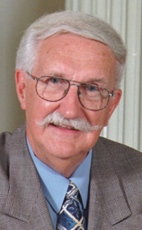
House of Commons photo

Crucial Fact

  • His favourite word was seniors.

Last in Parliament October 2000, as Bloc MP for Argenteuil—Papineau (Québec)

Won his last election, in 1997, with 41% of the vote.

Statements in the House

World Aids Day December 1st, 1997

Mr. Speaker, I would like to take advantage of World AIDS Day to honour all of the men and women engaged in the search for a cure for this dreadful disease.

I would also like us all to remember its far too numerous victims. Since 1978, 14,836 cases have been reported in Canada. To date, 10,837 people with AIDS have died. Far too many, alas.

According to the Department of Health, the AIDS epidemic could cost the Canadian economy up to $22 billion over the next five years, if nothing is done to check it. Terry Albert and Gregory Williams, the authors of the report, conclude that “over the past seven years, Canada has lost ground in its battle against the AIDS epidemic”.

Canada must regain lost ground and develop an AIDS prevention strategy that is beyond reproach, not only for economic reasons but also, and above all, for humanitarian ones.

Canada Pension Plan Investment Board Act November 27th, 1997

The Canada pension plan must be adjusted to have a semblance of fairness that will be accepted by all generations.

Therefore, the earlier proposal made by the Reform Party to create a super RRSP is also unacceptable.

Under a system of super RRSPs, the government would have to guarantee a basic income for retirees, either through a minimum annuity or a separate assistance plan. In both cases, major costs would be associated with such a type of guaranteed minimum income. Again, the Bloc Quebecois never advocated the end of the Canada pension plan.

In my first speech on Bill C-2, I mentioned that the United Nations had declared 1999 the international year of the elderly, to pay tribute to our seniors. The theme promotes a society for all ages by developing greater public awareness regarding the essential role played by seniors in every field of activity. The international year of the elderly should promote the principles aimed at improving our seniors' quality of life by emphasizing autonomy, participation and care.

It goes without saying that the Canada pension plan is obsolete and no longer meets the public's requirements. I hope that, as the UN international year, 1999 will be special, because the Bloc Quebecois supports the objectives of the reform.

However, we urge the government to be very vigilant and to adopt the appropriate amendments.

Canada Pension Plan Investment Board Act November 27th, 1997

I see that the hon. member just realized we were talking about his party.

Canada Pension Plan Investment Board Act November 27th, 1997

Mr. Speaker, I am pleased to rise in this House a second time to speak to Bill C-2 concerning reform of the Canada pension plan.

When I spoke the first time, I mentioned that this reform of Canadian pensions was of special concern to me, because I am the Bloc Quebecois critic on policies affecting the elderly. Furthermore, I have risen many times in this House to defend the rights of the elderly, one of the most vulnerable groups in society.

The Bloc Quebecois agrees with the general objective of the reform, which is to preserve the viability of a public pension system. However, this reform concerns Canadians more than Quebeckers, since less than 0.5% of the people living in Quebec receive Canada pension plan benefits.

I would like to reiterate what my colleague for Mercier said: the Government of Canada or the governments of the other provinces should have done the same thing as Quebec in 1964-1965 when it created its Caisse de dépôt et placement.

According to forecasts, retirement benefits from the Régie des rentes du Québec, and also the benefits from federal income security programs, will reach $49 billion in 2001, and as much as $170 billion in current dollars in 2030.

Since the birth rate has gone down considerably over the past several years, we have to ask ourselves: What will be the consequences of the greater than expected rise in the contribution rate that will result from the increase in capitalization?

Whereas there were 7 people of working age for every pensioner in 1951, the ratio dropped to 5.3:1 in 1991, and by 2031 will be 2.4:1. Unlike the Quebec pension plan, then, the federal programs have no reserve they can capitalize on.

We therefore believe that this will have the effect of reducing the intergenerational inequality by making the baby-boomer generation pay, and most of these have about twenty years left to work. Needless to say, the Bloc Quebecois has never called for the end of the Canada pension plan and I would refer you to the speeches of myself and my colleagues in this connection, all of which focussed on the same thing: leaving seniors' rights untouched. The younger generations must also be able to benefit from a public pension plan.

In Machiavelli's Prince , he says “The people could bear any burden, provided it was imposed gradually”.

I would like to focus once again on the changes proposed for federal disability benefits. The federal government is experiencing great difficulty in implementing the disability benefit. Last year, the auditor blamed the federal government for the unjustified escalating costs of disability benefits, for the most part the result of its rules being too lax.

At the present time the federal benefit is more generous that the Quebec pension plan's disability benefits, mainly because federal administrative policy allows more people to be eligible. A departmental directive allows a person to be declared disabled after the age of 55 if unable to perform his or her own job. The federal government intends to abolish this directive, thus tightening up administration of the plan.

Quebec has never had a directive of this type. In fact, a person is eligible for disability benefits if he or she has contributed for two of the past three years, five of the last ten, or half of the same contributory period.

The federal government wants to limit eligibility to those who have contributed for four of the last six years, which ought to cut back considerably on eligibility to the plan. Today, at the report stage, we need to look at a number of amendments moved by several of the parties.

I will deal particularly with Motion No. 9, moved by the New Democratic Party, which provides that a provincial government should be entitled to borrow funds at the lowest rate of interest available to the federal government. Unfortunately, the Bloc Quebecois cannot support this amendment, because it goes against the primary responsibility of the investment board, which is to achieve a maximum rate of return to ensure the plan's viability. A wide consultation process will take place, possibly in early 1998.

Railway Transportation November 18th, 1997

Mr. Speaker, I am pleased today to draw attention to the sale of the section of rail between Saint-Augustin and Thurso by Canadian Pacific to Genesee Rail-One and the operation of that corridor by its subsidiary Les chemins de fer Québec-Gatineau.

Canadian Pacific decided in 1994 to dismantle this section of track. Bloc Quebecois MPs and stakeholders in the Outaouais and Laurentian regions were opposed to this. The hon. member for Blainville—Deux-Montagnes and myself co-authored a brief which convinced the national transportation committee to hold public hearings on the matter.

The train between Saint-Augustin and Thurso, which serves Lachute and Montebello along the way, is back in operation. This is a great victory for the people of Argenteuil—Papineau and an excellent example of how useful the Bloc Quebecois is in Ottawa.

Employment Insurance November 7th, 1997

Mr. Speaker, over the past four years the government has managed to wrest $19 billion from the unemployed and the employed, by pocketing the annual surpluses from the fund in order to improve the deficit figures.

When will the minister put an end to this scandalous misappropriation of public funds?

Employment Insurance November 7th, 1997

Mr. Speaker, my question is for the Minister of Human Resources Development.

After a first announcement in the budget speech and another during the election campaign, the government ought to soon be making an official announcement on the EI contribution rate that will be in effect next year.

Everyone now acknowledges that a substantial drop in the employment insurance contribution rate would stimulate job creation. For once, does the government intend—

Clerics Of St. Viateur And Sisters Of The Holy Cross October 31st, 1997

Mr. Speaker, this year marks the 150th anniversary of the arrival in Quebec of two religious communities from France, the Clerics of St. Viateur and the Sisters of the Holy Cross.

To speak of the Clerics of St. Viateur is to speak of their schools and colleges in Quebec and in Canada: Saint-Nicolas d'Ahuntsic, Rigaud, Joliette, Berthierville, Matane, Roberval and Lachute in Quebec; Embrun in Ontario; Otterburn and Saint-Pierre-Joly in Manitoba, and the list goes on. It is to speak of Father Georges Lindsay, director and founder of the famous summer festival in Lanaudière; of Léo Bonneville, my old teacher, and director and founder of the movie magazine Séquence .

The Sisters of the Holy Cross set up their first congregation in Ville-Saint-Laurent. They provided instruction at all levels, particularly to young girls in the Collège classique Basile-Moreau.

In my riding, they taught at Lachute, Brownsburg, Sainte-Scholastique, Saint-Augustin and Saint-Hermas. I pay tribute today to these educational pioneers, and to my former teachers.

Canada Health Act October 23rd, 1997

Madam Speaker, I am pleased to say a few words in support of Bill C-202, introduced by my colleague who is a physician and the hon. member for Pierrefonds—Dollard, and seconded by the hon. member for Pontiac—Gatineau—Labelle, whose riding is just beside mine.

The Bloc Quebecois has always been in favour of measures aimed at improving the health of the population. However, we always insisted on respecting the jurisdiction of Quebec and other Canadian provinces in the area of health.

Nutrition services can be of great help to Quebeckers and Canadians. Whether they work at the community level, in food services management, in education or in clinical practice, nutrition professionals help the population to better balance their food intake, hence their health in general.

In the present context of tremendous pressure due to budget cuts imposed by the Liberals since they came to power, it is clear that any measure aimed at improving the health of Quebeckers and Canadians can only be welcomed. When people are in better health—something good eating habits can only promote—they are less likely to become frequent users of health services; and this relieves pressure on the system and reduce costs in general.

That having been said, Bill C-202 is not without raising a few questions. The Canada Health Act, which would be amended by Bill C-202, sets out the conditions for the payment of the amounts provided under the 1977 Established Programs Financing Act, now part of the notorious Canada social transfer, for insured health services and related services.

As you know, the Bloc Quebecois has always taken a very firm and very clear position on health: the administration of health care is a provincial matter. It is necessary to be vigilant and ensure that a province that does not wish to comply with this measure or that wishes to introduce a similar service is compensated.

We must therefore be clear. Nutrition services cannot help but have a positive impact on the health of the general public. And if this is done with respect for the respective jurisdictions of each level of government, a point that has yet to be thrashed out, broadening access to nutrition services will help thousands of Quebeckers and Canadians to achieve a better lifestyle, better nutrition and, therefore, better health.

Canada Pension Plan Investment Board Act October 7th, 1997

Madam Speaker, I am pleased to speak to Bill C-2 on the reform of the CPP.

As is usual, I would like to begin by thanking all those in the riding of Argenteuil—Papineau for their vote of confidence in once again sending me to represent them in this 36th Parliament. I will continue to uphold their rights as staunchly as I have in the past.

This reform of the Canada pension plan is of particular interest to me because I am the Bloc Quebecois critic for seniors and also because it affects me as a member of that generation.

I have risen many times in the House to uphold the rights of seniors, one of society's most vulnerable groups. The Bloc Quebecois agrees in principle with the contents of Bill C-2 at second reading.

I am now going to give a brief history of this bill. The government introduced a preliminary bill in February 1997, followed by a revised bill last July. Amendments proposed by the federal government were approved by at least two thirds of provinces representing two thirds of the Canadian public, as required by law. Eight provinces in all, including Quebec, approved the proposed changes. Only British Columbia and Saskatchewan voted against.

Generally speaking, the Bloc Quebecois is in agreement with the primary objectives of this reform, with a few reservations. Indeed, I cannot help but mention that, on March 9, 1994, I asked a question to the then Minister of Human Resources Development concerning the reform of social programs.

As the official critic on seniors issues, I also made the following statement in the House, again in 1994, and I quote:

Mr. Speaker, my question is for the Minister of Human Resources Development.

On March 9, the minister indicated in this House that he wanted to review old-age security programs. Following the general outcry caused by this announcement, the Prime Minister decided that the review would be limited to the Canada Pension Plan and RRSPs. This review was to be tabled last June but the government has clearly delayed it.

My question is this: Can the minister tell us why the government has delayed announcing its intentions by tabling the review promised for last June?

The following was part of the answer was:

We are presently speaking with a number of groups and organizations throughout Canada, particularly as they represent seniors, to get their point of view.

Allow me to wonder what the government's true intentions were, since it called an election before making good on that commitment. However, we realize that some changes have become necessary, because of the financial implications and of the plan's sustainability.

It had been forecasted that there would be no money left in the fund by the year 2015, at which time contribution rates would have gone up from 6% to 14% for the Canada pension plan, and from 6% to 13% for the Quebec pension plan.

The reform is also more of a concern to Canadians than to Quebeckers, since less than half of one per cent of Quebec residents receive CPP benefits.

So, the bill proposes the establishment of the CPP investment board, which will be quite similar to Quebec's Caisse de dépôt et placement. The Quebec government introduced Bill 149 to deal with the Quebec pension plan and to amend various related acts.

Allow me to reiterate the remark made by my hon. colleague from Mercier, who indicated that the Government of Canada and every province except Quebec should have taken Quebec's lead in 1964-65 when it established the Caisse de dépôt et placement.

While the Bloc Quebecois supports this reform's objective, which is to preserve this public pension plan, increasing contribution rates faster than initially planned will cause an increase in benefit funding. We believe that this in turn will reduce intergenerational inequity by charging more to baby boomers, who, generally speaking, have another 20 years to put in on the labour market.

I would also like to emphasize the changes proposed by the federal government with respect to the disability pension. Under an existing ministerial directive, any person over the age of 55 who is unable to perform the duties of his or her own job can be declared disabled. Now the federal government wants to repeal this directive, thereby making the administration of the plan much stricter.

We have never had any such directive in Quebec. The federal government wants to limit eligibility to those who have contributed to the plan for four of the past six years, which should make the plan considerably less accessible.

In Quebec, those who have contributed for two years out of the past three, five years out of the past ten or half of the contribution period are eligible for disability benefits. Unlike the federal government, the Government of Quebec is about to recognize a proportionately larger number of persons with a disability. The Bloc Quebecois cannot support this part of the CPP reform.

The Reform Party's proposal to establish a super RRSP is based in part on the model developed in Chile. According to the example provided by this country, however, the administrative costs of such a system are far higher than for the present ones. The Quebec pension plan devotes the equivalent of 1.7% of the amount paid out in benefits to plan administration.

In this system of super RRSPs, the government will have to guarantee an acceptable base income at the time of retirement, in the form of either a minimum pension or a separate assistance plan. In both cases, considerable costs are associated with this type of guaranteed minimum income.

This Reform Party position leads me to the position of the government, which is trying to worm out of it by shifting the administration of a government plan to a local administration. The Reform Party proposals will enable the government to assume the same attitude toward its responsibilities, as the example of ADM, Aéroports de Montréal, clearly illustrates.

As the member for Argenteuil-Papineau, I have spoken out on numerous occasions in defence of the development of Mirabel airport, which is located in my riding.

In order to understand the similarities, we must start with a brief review of the history of ADM. This is a not-for-profit body, or as it states in its letters patent, a corporation without share capital, constituted under part II of the Canada Corporations Act. The government is washing its hands by handing the airports over to this body, because it refers any taxpayer claims to it.

The Reform Party proposals relating to the reform of the Canada pension plan place the federal government in a similar position, since it can always answer that, in future, this plan is privately administered and is similar to the registered retirement savings plans.

The Bloc Quebecois has, moreover, never called for termination of the Canada pension plan, and I would refer you to my speeches in the House, which have always been along the same line: do not touch seniors rights.

The younger generations must also be able to benefit from a public pension plan. Our approach is the opposite of the Reform Party's.

I wish to repeat my position on seniors rights and to point out that October 1 of each year will always be a memorable day, because the United Nations have designated that day to mark the important role seniors play in society.

As well, the UN has decreed 1999 to be the international year for paying homage to seniors. Its theme, “Toward a society for all ages” is aimed at raising public awareness of the essential role seniors play in all sectors of activity.