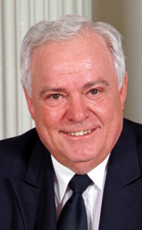
House of Commons photo

Crucial Fact

  • His favourite word was quebec.

Last in Parliament October 2000, as Bloc MP for Joliette (Québec)

Won his last election, in 1997, with 47% of the vote.

Statements in the House

North American Free Trade Agreement March 22nd, 1996

Mr. Speaker, my question is for the Acting Prime Minister.

On February 16, Canada and the United States reached an agreement in principle on softwood lumber. The five year agreement seeks to restrict Canadian softwood lumber exports to the U.S. It provides for an increase in stumpage fees in Quebec, Ontario and Alberta, and for the implementation of a quota system of sorts in British Columbia.

Does the minister realize that letting British Columbia set up such a system violates the free trade agreement itself, which is precisely based on the elimination of control measures at the border?

Financial Administration Act March 21st, 1996

Madam Speaker, I am very pleased to rise in this House to speak on the motion put forward by the hon. member for St. Albert. I am doubly pleased because my hon. friend from St. Albert, with whom I sit on the Standing Committee on Public Accounts, is among the members of that party who take the work they do very seriously. Every time the hon. member speaks, he is clearly trying to improve on things, he is a making a sincere effort and not joking around. I commend him for that.

Today, his motion reflects just that. I am not at all surprised to hear my government colleague comment that the motion is in order and describe it as totally admirable because it is designed to improve in things. The government member says that he agrees in principle with this proposal but that he cannot support it. It is like saying that you are all for virtue but cannot afford to be virtuous.

Through this private member's motion, he has an opportunity to make sure that the government will save money, and we are in great need of some. Since we cannot get any more money out of the taxpayers' pockets, we must take steps to save the government money that can then be put toward other programs, which are necessary to ensure the well-being of our taxpayers.

The Standing Committee on Public Accounts does a fine job, and the auditor general is also doing his job. But the auditor general will not achieve the desired result in his audits unless he can count on the support of a committee of elected representatives and that is the role the public accounts committee is playing.

The auditor general mentioned on several occasions having made one recommendation after another to certain departments; yet, two or three years later, none had been acted on.

It is true that, when he carries out an audit, the auditor general questions departmental officials, those individuals who are responsible for making certain decisions.

It is also true that these people then have the opportunity to tell the auditor general what they think of the issue. In other words, the auditor general could tell department officials: "It seems to us that the books for your program should be kept in this fashion".

It may happen that officials defend their position and say: "Sorry, but we do not agree. We feel that we should continue to account for the money spent like we have been doing for three or four years".

The auditor general is an expert, but he is not infallible. Moreover, departments have competent officials and staff who can make a case for a different way of doing things. If the truth was always obvious, we would not need lawyers and courts. It may be that, in some cases, a department will not agree with the auditor general's opinion.

What better way to deal with the issue than to refer the dispute to a committee made up of elected men and women? That committee would review the issue and report to the House, which would make the final decision, since it is the supreme authority in the land.

The auditor general told us on numerous occasions that it was important for the public accounts committee to urge the House to order a department, I will not name any for the time being, to follow up on the auditor's recommendations. Under such circumstances, some departments have indeed agreed to change their attitude or their way of doing things.

This is an important measure which, we feel, should have been put in effect a long time ago. Let us not forget, as the auditor general himself pointed out, that close to 70 per cent of government programs are not subject to any assessment. Hundreds of millions of dollars are invested in a scant 30 per cent of the programs, and barely thirty programs are evaluated. The question is asked: did the program yield the expected results?

For example, there was the fishery problem-one which affected your area, Madam Speaker-the problem of the New Brunswick fisheries. At one point they were hit with disaster and the government, overnight practically, in just days, set up a relief program for the fishermen. Nobody stopped to say: "If we create a program, we must be sure to create program evaluation criteria at the same time, to be sure at the end whether the money went to the right people, if they had enough, if they had too much".

There are a whole lot of questions to be thought of ahead of time, to ensure that the money has been spent properly, has attained the desired objective. Unfortunately, nothing like that is done in 70 per

cent of the cases, something the auditor general has often mentioned. Unfortunately, however, it has not been possible to set up such a thing.

Of course, a minister can be told "Mr. Minister, the auditor general wants you to apply this or that measure". Then the minister via the departmental employees, or the deputy minister if the case involves the public accounts committee, will often respond with: "Oh yes, we agree with the auditor general's recommendations and we will take the necessary steps or do everything in our power to remedy the situation".

So when the minister said he agreed with the recommendation and that he would do everything in his power to improve the situation we are enclined to believe him and expect that, with the next report by the auditor general, everything will be in order. Unfortunately, this is not the case. If there is no mechanism in place to follow the thing through, we will never know whether recommendations have been followed or not.

I have to talk about schools from time, because I come from an educational background. The effect would be the same if, in a school, we made rules and established discipline for students but never went to see whether they were behaving or following the rules. You know where we would end up, and it would not take long: the students would realize that, when the school principal issued an order, he never checked up on it or made sure it was followed. So the students would very quickly avoid putting themselves out and would simply do what they felt like with the least amount of effort.

The same thing happens when the auditor general makes recommendations and a department says: "Oh yes, oh yes, we will follow them". There is, however, no follow up if no agency is assigned to ensure action has been taken. Things will never change.

If, as proposed by my colleague for St. Albert, each department identified by the auditor general-and not every department is identified every year, there is not time to examine them all; some departments may be examined only every two, three or four years-would know the next day, if this legislation were passed, that it had to prepare a response to the questions raised by the auditor general and, as well, a plan to remedy the situation. These plans would be tabled in the House so that the ultimate authority would know that action had been taken.

You know this is the only way we will improve things. This is not to add to the paper burden. We are not asking for 75-page reports; we are asking the department to respond to the allegations of the auditor general in a report that would be determined ahead of time to be a certain length-not too long-and would be concise and clear so that taxpayers could understand it. This way we could save money that would no doubt be very welcome in other areas.

Supply March 19th, 1996

Mr. Speaker, we thought the division was deferred until after government orders. I think that means 5.30 p.m.

Supply March 19th, 1996

Mr. Speaker, I thank my colleague for giving me the opportunity to acknowledge the Quebec government's initiative in economic reform.

When we talked earlier of setting up a committee to provide help, which we would be part of, this is what we were thinking of. What is the Government of Quebec doing at the moment? It is turning to experts, obviously. Dozens of experts will be there, along with union presidents and business leaders who know about creating jobs or not creating them, about making profits and avoiding taxes. It means bringing these people together around a table, forming a consensus, assessing the situation and then dealing with solutions together and this is the only way we will pay off our debt.

Supply March 19th, 1996

Mr. Speaker, there is one thing on which I can agree with the government member. We have been saying it to the government for three years now. Even before the first budget was brought down by the Minister of Finance, and before every budget since, we suggested that the government create a special working committee including not only experts chosen by the government, but also some hon. members from every party in the House. That would be the right way to have a problem studied not only by experts, but also by members of Parliament who, because they have been elected by their fellow citizens, are responsible for ensuring openness and for making sure that the government's recommendations will not favour a social class over the others. That is what we want. That is what we have been recommending for years to Parliament and to the government. But the Minister of Finance, the Prime Minister and the Liberal Party as a whole rejected our proposal.

Our proposal is still on the table. Tomorrow morning, if the Minister of Finance wants to strike such a committee, he will find us ready. We will be the first to bring a positive contribution, to offer suggestions, and to sell them to the people affected by the measures.

Supply March 19th, 1996

Mr. Speaker, I thank my colleague opposite for listening to what I said. However, it is unfortunate that he did not listen a bit more carefully because he would have understood a whole lot better.

I never meant to question the integrity of the advisers that were chosen by the government. What I am saying is that you cannot serve two masters at the same time. Would the member accept that, for the next election campaign, the same strategic advisers work for both the Liberal Party and the Bloc Quebecois? Can he imagine that? Does he think that a perfectly honest person can advise both parties at the same time on the strategy they must follow to win the next election? If he understands that, he will certainly understand that an accounting firm, as honest as it may be, is in a conflict of interest position when it must advise both the government and those who take advantage of tax havens on the means to avoid one another. That is what it means to be in a conflict of interest position.

I just want to add a few words concerning other tax havens. There are things that are difficult to verify, but when you realize that 57 of the 119 subsidiaries of our six major Canadian banks are located in the West Indies, an area where tax havens abound, you have to wonder. There are 28,000 businesses for a population of 30,000 in the Cayman Islands. Unemployment must surely not be a problem in that area: 28,000 businesses for 30,000 people. If these corporations are not there because it is a tax haven, then we must ask ourselves some serious questions.

Supply March 19th, 1996

Mr. Speaker, on the subject of business taxation, I would like to resume the debate where I left off when I responded to the budget speech of the Minister of Finance. At that time I was talking about the debt that Canadians have accumulated over the last 20 years.

I think it would not be a bad idea to repeat the image I was using when I demonstrated to Canadians, and Quebecers in particular, where we are when we talk about the national debt.

We are in a huge black hole, the vastness of which we can barely imagine. It is not unlike the black holes astronomers are looking at in the sky. They try to measure their size, but in order to do so they need very sophisticated instruments, like telescopes. Yet, even with these instruments they can barely gauge the size of these holes.

To visualize the Canadian debt, this huge black hole, to allow the individual not familiar with large figures to grasp its size, we have to use instruments which talk to people. We can use figures. As I said at the end of my speech, last week, between 1993-94 and 1997-98, the debt will go from $508 billion to $619 billion, which means an increase of $111 billion. It does not look very big, it sounds like a small number, but when you think about it and when you compare it with other figures you are familiar with, you realize that it is really enormous.

I used the example of a person playing Loto-Québec and winning a million dollars. One million dollars is enough to make you a millionaire, to reach the dream of anyone, becoming a millionaire.

But, one billion dollars is $1,000 million. This means that, over the last four years, if the federal government had distributed that money to Canadians, it would have created 111,000 millionaires, but it did exactly the opposite.

Since 1993-94, Canada has deprived itself of 111,000 new millionaires because it increased its debt. A thousand millions is a one followed by nine zeros. This means that any new Canadian born this morning already has a $20,000 debt. If he had any trouble breathing, such a knowledge would be enough to choke him. You know, when an infant is born, a small slap on the buttocks is usually enough to give it life, to force it to breathe for the first time. But, if an infant could understand what is going on and if we showed him the debt, it would refuse to breathe and say: I would rather not be alive in this country. However, each week in this House our Prime Minister praises the merits of this vast and beautiful country, the best in the world with its $619 billion debt.

Last week, I said: "If this is the best country in the world, we can stop travelling, we will never see any better". It is true. It is impossible to find beauty in figures such as these. However, this is what our Prime Minister does. He finds it beautiful. He boasts about it and tries to have people believe that we are reaching our goals.

Of course success can mean different things to different people. The Prime Minister says that the deficit was reduced from $42 billion when they formed the government to $24 billion this year. It is true there has been a improvement in the sense that every year people are getting a little bit less in debt than they used to do. They still pay groceries with money they have accumulated or that they did not have. They still buy groceries on credit, they borrow money from abroad, from the United States, from Japan, from England, all around the world, from Germany. They are borrowing to buy groceries.

As my grandfather or my father would have said: "We are living too high off the hog". Perhaps this is not parliamentary language, Mr. Speaker, but it allows those who usually use colorful imagery to better understand what we mean. It means having a lifestyle that we cannot afford. It means that if we wanted to pay off this debt, because we are not paying it off right now, we are only slowing its growth. Instead of increasing by $42 million a year, it is increasing by $24 billion a year.

But we will have to pay that debt one day, and to be able to do so, there must come a time, somewhere in the history of Canada, when the government takes in more than it is spending. Only then will it be able to reimburse a part of the debt. And how can we expect this to happen quickly? I will give you an example: with a $619 billion debt, assuming that we managed to save $1 billion a year on that $619 billion without increasing the debt-we would not increase the debt each year, but on the contrary, we would put aside $1 billion a year to pay it off. Well, the way things are going now, it would take 619 years.

This week, we celebrated the 109th birthday of the oldest woman in Canada. Poor lady, she will not have lived long enough to see the end of the debt, even if she holds a longevity record.

But let us go further than that. Let us try even harder to save, to cut spending and let us assume that in the next few years, in four or five years, we can manage to have a zero deficit, and even better than that, to put aside $5 billion a year that we would use to reduce the $619 billion accumulated debt. Well, even at $5 billion a year, it will take us about 120 years to pay off all the federal government's debt. Of course, this does not take into account the fact that we as taxpayers have to pay off provincial, municipal, school board, personal debts, etc.

There again, it would take 120 years. I could be long gone and Canada's debt would still not be paid off, which comforts me in a way, because it reminds me that, considering the amount, I could not pay it off by myself no matter how long I live. This is small comfort to me, but it is far from being one to my children.

Such is the situation in Canada now. In fact, what is being proposed to change this situation? We heard the budget speech and we realized that it contained nothing. It did not propose any measure to eliminate the deficit and the debt. On the contrary, we are just coasting along. Two years ago we adopted measures that were supposed to be implemented one, two, or three years down the road, others five years later. For now, taxpayers are not hurt because these measures are not being implemented right away. That makes them easier to swallow.

That does not hurt taxpayers for the moment. They are told that it will not be implemented right away, which is a little easier to take.

The only new measures that have been adopted will not be implemented now either, but at the end of the Liberals' mandate. They only have one or two more years to go, because the Prime Minister is already starting to lay down the background.

So, there is no action here. We were expecting the Prime Minister to assume his responsibilities and take strong measures, particularly with regard to business taxation. However, what do we see under the guise of measures about business taxation? The finance minister has told us that there will be a review of business taxation. That will hurt. When the government sets out to study something, it usually means that it does not know what to do. That is exactly what we are being told. There will be a review, not some kind of a review, but a thorough review. That means, first, that it will be a lengthy process, and, second, that once the review is over, the government will be aware of all the problems because they will have been thoroughly reviewed. So an in-depth review of business taxation is to be conducted, not by just anybody, Mr. Speaker, but by a technical committee with a view to three general objectives. First, to promote job creation and economic growth; second, to simplify the taxation system; and third, to enhance its fairness.

First of all, let us have a look at the membership of this committee. Since this is meant to be a serious committee that will make in-depth studies, the Minister of Finance preferred not to take any chances. He appointed the most eminent experts. Who are the greatest experts to advise the government on tax havens and tax avoidance? We know the measures under consideration are legal for the time being, but the tax loss runs into the hundreds of millions of dollars annually.

So, the government decided to appoint responsible, experienced and highly qualified people to this committee. Let me give an example: someone from Price Waterhouse, a company that has expertise in this area. Why is it so? Because it has many clients who use tax havens that it had recommended. I will not go through the whole list of companies that sit on this committee, because the minister did it on budget day. There are about ten members, not taking academics into account. A few more experts have been appointed on the basis of their knowledge, because they are experienced managers or advisers in companies that already use tax havens. You can be sure no mistake will be made.

When these companies advise the government, I would be very surprised if they recommended ways to go after their main clients. And if they do so, they will first warn their clients that they should beware because the government is about to strike.

This is not a very good way of examining this issue, because these experts are in conflict of interest.

Of course, we asked the minister of Finance why he was appointing these people who are obviously caught in the middle of a conflict of interest? The minister told us that, in order to get good advice, he needed to hire the best experts around. It is a bit like the police chief who would set up a committee made up of Hell's Angels to fight crime, because no one else knows the crime scene better than these bikers, who deserve then to sit on the committee.

I do not want to make any comparison between these accountants and the Hell's Angels. This is not what I want to do. I just want to show how ridiculous the whole situation is and how these people, in both cases, are in a conflict of interest.

In how many months will the committee table its recommendations? No one knows. But one of its goal is to promote employment. I would imagine that these same people also advise banks. We can see how deeply the banks are committed to solving the unemployment situation and how they perceive the growth problem.

This year, Canada's four or five major banks made billions of dollars in profits, one billion and some hundreds of millions of dollars in profits, which, of course, had some impact first and foremost on the income of the presidents of these banks. As for the second consequence, one would have expected that the increase in profits-which is growth-would have translated into the creation of new jobs but we realized that, on the contrary, the number of jobs in these five banks either remained stable or decreased. This is how these companies conceive employment and growth. I certainly hope that the committee of experts will examine at length this philosophy of the banks and that it will be able to recommend other ways to revive the economy.

The system must be simplified. Sure, suggestions to that end were often made to the government. Each year, at the time of the budget speech, suggestions are made to the government on ways to reinvent business taxation in order not only to put an end to loopholes but also to find longer term solutions. The present policy is only aimed at putting an end to loopholes. We put an end to loopholes and we think that the whole system is fixed.

This way, new loopholes soon appear and experts are usually quick to detect them and take advantage of them.

The only solution is to simplify the system so that we know once and for all where taxation is headed. Businesses need stability. We are told year in and year out that businesses cannot prosper without a stable economic and political situation. They need a stable climate.

I imagine that such a stable climate also starts with fiscal goals. We must tell businesses what lies ahead for them. We must tell them, we must tell the thousands of businesses that have made profits for 15 years and do not pay one cent in taxes that, starting tomorrow, they will have to pay a minimum tax. This is what we must tell them and we must ensure that these measures will not apply only for one year or until the next elections. We must tell them that they will pay taxes as long as they will be in business. It is a matter of distributive justice.

It is a matter of having each citizen pay, whether it is an individual or a corporation. It is a matter of ensuring that each Canadian, each citizen pays his fair share of tax. Therein lies stability. When corporations know that, they make plans and they anticipate. In any case, with the benefits they already have and they will keep, you can be sure that corporations, even if their net profits decrease, will use their expenses to pay less taxes. Corporations can buy themselves many things.

Business executives include in their expenses many things that we, as individuals, cannot. Once they have charged all that, they can afford to have lower revenues; they do not have any more expenses to pay; everthing else has been paid by the corporation. Under these circumstances, leftover profits could be taxed at a higher rate and there would still be some left.

Lastly, the taxation system which, hopefully, will be implemented would take into account the fact that at present, if we look at taxation-and I will conclude with this-in 1993-94, personal income tax represented 44 per cent of all the government's tax revenues, while corporate tax accounted for only 8.1 per cent. In 1997-98, and notice the change, individual taxpayers will pay a little more, that is 47.6 per cent of all taxes in Canada, while the corporations will pay only 12 per cent. It was the same in 1961, corporations paid 15 per cent, and individuals 27 per cent. Look at that increase. Who absorbed that increase since then? The individual taxpayers, not the corporations.

The analysis that the technical committee will make will have to focus especially on that. The problem no longer lies in the pockets of individual taxpayers, but in the pockets of other taxpayers, namely, of course, the big corporations.

Supply March 15th, 1996

Mr. Speaker, I wish I could understand what Reformers have in mind with such a proposal. I have been trying all morning to figure out their real motives. Are they defending the interests of a private firm or their own interests on the eve of a byelection? This is what we must ask ourselves. After all, the basis of their argument is that the federal government should get involved in a dispute between two private firms that signed a contract a few years ago and concerning which one of them is not happy.

This is like asking the federal government to step in between two hockey clubs because, two years after trading Lindros, one of them is not happy and feels it got shortchanged. This is almost the same thing.

Are we going to ask the federal government to get involved every time a private contract is signed by two major companies but one of them suddenly decides that it suffered a prejudice because it feels it could have made greater profits by acting differently or by agreeing to different conditions?

When one signs a contract, one must behave like an adult. Those who represented Churchill Falls when the contract was signed behaved like adults, as did those who represented Hydro-Quebec. There is a duly signed contract between two private firms. I do not see why we would want to set a precedent and ask the federal government to get involved, except to make voters believe that the Reform Party is the one that understands them best, the one with the solution to their economic woes of the last few years.

The best thing that voters can do is to wonder if they should put their trust in the Reform Party, given that, in the eyes of that party, an agreement is no assurance for the future.

Privilege March 13th, 1996

And that of the Reform Party.

Privilege March 12th, 1996

Mr. Speaker, I think the House has spent enough time on this point of privilege this morning. We had some important problems to discuss. The real problems are those of the bills we should be debating, those of the unemployed. We are digressing; the government and the other opposition party are digressing from the discussion we should be having on the real problems at hand.

We asked for an allotted day in order to talk about those problems and not to find out if the Bloc Quebecois had the right to tell the truth to people during the referendum campaign.

Mr. Speaker, I call on you to declare the debate concluded on this question of privilege. I think you have heard enough to have a good idea and that you will be able to hand down a fair ruling in the near future.