This is debate.

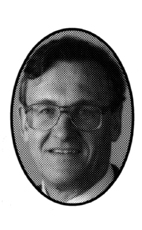 House of Commons photo
Won his last election, in 1993, with 42% of the vote.
National Housing Act November 7th, 1995
This is debate.
National Housing Act November 7th, 1995
The hon. member says it is not a subsidy. It is breaking even, but where does the organization get the resources to do what it is claiming? It is making it possible for some people to have houses who otherwise would not have them. By definition that is a subsidy. Where is the money coming from?
To say that unless we subsidize and encourage the housing industry the economy will not boom is what we call vulgar Keynesianism. Vulgar Keynesianism means that unless we run a deficit and subsidize a certain activity, the economy left on its own will never produce a full employment equilibrium. That idea was current and fashionable in the 1960s. Today it is totally defunct. Most members opposite seem to have gone to university and have studied it in the 1960s, in the dark ages of Keynesian economics.
We know today that if we subsidize some industries by raising-
National Housing Act November 7th, 1995
Mr. Speaker, I am very pleased to have been named so often in the member's address. I will summarize what I as an economist consider the argument against the bill to be.
One view we have heard again and again in today's speeches is that CMHC is self-supporting, that it does not really cost anything. Economists are asking why the government is in the business if this is so. Are members opposite suggesting that the free market will not work, that the free market does not produce services more efficiently than the public sector? The evidence is strongly against that because throughout the world, governments are privatizing and taking these kinds of activities out of the market.
Strangely enough, other members are bragging about the fact that the CMHC system is providing subsidies to others so that they can have houses that otherwise they would not have. How is this possible? If the organization is breaking even, where does it get its resources with which to pay the subsidies? It is conceivable that some activities undertaken by CMHC are creating a surplus. Thus a surplus is being forced or squeezed out of some unsuspecting Canadians participating in CMHC. It is taken by the system to subsidize others.
As a conservative I would suggest that is not the way we should run our society. If there are reasons for subsidizing some types of housing such as that for natives, I believe we could reach agreement on it. Let us make it obvious. Let us make it transparent. Let us not have it hidden in the operation of some huge bureaucracy or in some obscure book.
Another point made by the hon. member was that the housing industry would collapse unless the insurance was there. Whenever we have a subsidy program the economy and the industry adjust to take advantage of it. If we take away the subsidy there is a reduction in output. If subsidies are offered to banks or to anyone they will take them. That is not an argument in favour of saying that we need it.
National Housing Act November 7th, 1995
It is against the will of the people in the regions.
National Housing Act November 7th, 1995
Mr. Speaker, I have another question for the member.
Insurance exists in the private sector. Insurance is there whenever there is the need to protect against some sort of hazard. One of the hazards is that occasionally mortgages will be defaulted.
It is the belief of Liberal governments that in fact the private sector will provide inadequate coverage for such risks, so the government has to step in. If in fact the insurance that is being provided is profitable then there is no need for the government to step in, because the private sector would do it.
It is not reasonable at the same time to say it will not cost anything, that it is only something we are facilitating in the economy and it does not cost anything. If it does not cost anything, why is the government doing it? Everyone knows that whenever such activities get privatized efficiency goes up and consumers are more satisfied. So why is the government in there? It is because it is subsidizing an activity.
The question then becomes: Why subsidize housing? Why not subsidize food, cars? Why not subsidize clothing? There are all kinds of things that are essential for human life. We are running out of finances in this country. We are going bankrupt.
What do we do as we are going bankrupt? We take over a function the private sector could provide, but of course it is not doing it adequately. It is not giving enough subsidy. So here we are creating a program that gives more subsidy to an activity that some believe is no more worthy and no less worthy than any other of the kinds of things we consume in Canada.
Is there a prima facie case for the fact that this activity of the organization that is having its liabilities raised by $50 billion is one that requires a subsidy in the form of contingent liability? Could the member please explain to us, since she has studied the subject, how big the contingent liability is that Canadians see when they look at the annual budget?
Federal-Provincial Fiscal Arrangements November 3rd, 1995
Mr. Speaker, my question did not reveal ideology. It reveals a new position in which this country is finding itself, one over which the last election was not fought. At that time we did not know how strongly
Quebecers felt about their desire to have control over these kinds of spending programs.
The ball game has changed. I would like to get to the question of spending another $750 million on yet another program that not only we cannot afford but also impinges on provincial sovereignty, namely spending on day care facilities.
When will the Minister of Finance cancel the program that not only destroys national unity, but ruins spending programs?
Federal-Provincial Fiscal Arrangements November 3rd, 1995
Mr. Speaker, the federal government collects money from taxpayers in Quebec and other provinces. It then spends that money, after keeping some of it, on programs for manpower training, for immigration settlement and a whole range of programs, all with lots of strings attached that the provinces do not like.
My question is for any minister responsible for such spending programs. For the sake of unity, why do not the ministers responsible for this spending simply call up their counterparts in the provinces and say: "As of the first of next month we will send you the money, totally without strings attached, for you to spend any way in which you wish for the sake of unity"?
The Economy October 30th, 1995
Mr. Speaker, whatever the outcome of the referendum today, Canada's debt will still be $560 billion. Our generation imposes an irresponsibly high burden on young Canadians.
Can the minister assure young Canadians that he has decisive plans to deal with the burden of the debt on young Canadians?
The Economy October 30th, 1995
Mr. Speaker, whatever the outcome of the referendum today, Canada's deficit crisis remains. The difference between the government's spending and revenues is nearly $100 million every 24 hours of every week, of every month, at least for this year.
Can the Minister of Finance assure the people of Canada that whatever the outcome of the referendum, he has decisive plans for the prompt elimination of the deficit?
Quebec Referendum October 30th, 1995
Mr. Speaker, we Canadians are lucky. Our country's political and democratic institutions are sound and have the confidence of the people. They have served us well in a long history. They were used to resolve some of the most fundamental conflicts any society can face, the role of government in private lives and the power of centralist institutions in conflict with regional aspirations.
The resolution to these and many other conflicts were never supported by all Canadians. Before votes, they were discussed widely and heatedly. They divided families, friends and regions. But after the votes were counted, the democratic decision was accepted. Losers licked their wounds and resolved to fight again by the same rules.
This democratic tradition will be tested severely when the votes are counted today, when the stakes are higher than they have ever been before, when many fear the end of Canada.
I pray that all Canadians and especially we in these chambers continue to follow our successful democratic tradition and accept the people's-