That is not true.

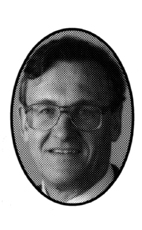 House of Commons photo
Won his last election, in 1993, with 42% of the vote.
Supply March 17th, 1995
That is not true.
Supply March 17th, 1995
Mr. Speaker, I have never heard such rubbish.
Is it really an honourable debate of issues when somebody gets up and says the superior Liberal Party doesn't want to kill people and doesn't want babies to starve on the streets? By implication it is suggesting the people on the other side would have policies which deliberately would kill people and make babies starve.
We do not by that kind of debating style advance the cause. Let us understand that all of us wish to have the best for all Canadians. The issue is how do we best get there. Only by discussing the issue of how we get there is any progress being made.
Let me take the issue of unemployment insurance. The hon. member has never read any of the royal commissions made by previous governments, including Liberal, on the examination of the unemployment insurance system. They have universally said that system was created to protect Canadians from the hazard of unemployment. There was never any conception this should be used to pay for people who choose to become pregnant or who are ill, as she noted.
The point is we have different systems for taking care of these things. It is totally inefficient and inequitable to ask some people to pay for hazards for which they are not exposed.
Her calculations on welfare payments are totally off. We are currently paying $20 billion in UI and government OAS benefits to retired people. We are paying $18 billion in CPP-QPP. That is $38 billion.
If $3 billion is cut out of that from the top, the arithmetic shows it is not necessary to go to the lower level. That is the kind of discussion we need, not saying we want to save lives and the other people want to kill Canadians. That is totally inappropriate for the Chamber. It is an indignity.
Supply March 17th, 1995
Mr. Speaker, the introduction of the current Canada pension plan was preceded by an intense discussion over the merit of fully funded rather than a pay as you go social security system
Under the fully funded system Canadians would have paid taxes to the government which would have been forced to make private market investments with the money. The system could never have gone bankrupt and would have increased enormously the amount of savings in the economy and therefore the rate of investment in economic growth.
However, such a funded system would have resulted in unpredictable retirement benefits since the earnings of the funds would have been uncertain. In addition it would have resulted in high costs of portfolio management and a serious concentration of financial powers in the hands of the managers of a very large amount of money.
The Government of Canada decided to adopt a pay as you go system under which continuously a currently working generation is taxed to pay for the pensions of the retired generation. This approach fit well into the political climate of the time when private markets were distrusted deeply and governments could do no wrong. The system also had political advantages. The population was growing rapidly and was expected to continue to do so.
As a result, the tax burden on the relatively large number of working age people was and always would be low to provide the pensions for the relatively small number of those retired. In addition, the government could set guaranteed pension benefits and cover any unexpectedly high costs by raising government taxation rates.
Sophisticated economic and actuarial models showed that in a world of constant population income there would be perfect intergenerational equity as all working contributors to the scheme would receive in return exactly the same amount they contributed.
The Canadian pay as you go system is now in some trouble because the predicted population growth did not take place. Using reasonable assumptions, the unfunded liabilities of the Canada and Quebec pension plans have a present value of $750 billion. In other words, the amount that is promised to be paid out is smaller than the amount to be taxed under current rates. If we sum all of those future deficiency of payments we will come to a discounted value of $750 billion, about the same as the value of our current debt that is so hotly disputed all the time.
In the early part of our next century the working generation may have to pay as much as 15 per cent of its come to pensioners. Other disadvantages of the present system are that it has lowered the private rate of savings and investment in economic growth. Public opinion surveys show that Canadians have become skeptical about their ability to receive promised benefits when they are retired. The ideals of the system for a population free of worries about retirement finances clearly has not been realized.
With this empirical information about the shortcomings of the present system available now, the Reform Party believes it is time to replace it with a fully funded, what we call private security system. Canadians will continue to make mandatory contributions to their retirement savings just like under the present system, with some money coming from their pay and matching funds from employers. These contributions are deducted from income before taxes are calculated. There would be reasonable maximum contributions to prevent use of the instrument for massive deferral by high income earners.
The biggest difference from the current system is every Canadian would have the option to pay these funds to a private trust administered by approved financial institutions, much like they can now under the registered retirement savings plans.
All income and capital gains earned in the private system investments are also sheltered from income taxes. As a result, the average Canadian worker who contributes to such a scheme during their full lifetime may be expected to have accumulated a surprisingly large sum. This is possible in spite of seemingly small annual contributions they are used to now. The power of compound interest working on a tax free income works wonders.
Rough calculations show that persons now 65 who started to work at age 20 and enjoyed average wages and returns on their investments would be the proud owners of a nest egg greater than $1 million today.
The individual Canadian would own this money and all rights to it. Access to it would no longer be subject to the whims of Parliament and other generations. However, because the fund was built with deferred tax obligations provisions have to be made that taxes are paid at some point on the assets.
For this purpose the owners have the same three basic options that exist under the present RRSP system. The entire fund can be turned into an annuity at age 71, permitting the payment of taxes during the remaining years at the relatively low rates applicable to the annual annuity.
Alternatively the funds can be freed from all restrictions on use by paying income taxes in the years it is done. The third option is that funds can be withdrawn at minimum rates that roughly assure the entire amount is depleted at age 94 or one progressively higher in the future as people live longer. Taxes are payable on the withdrawal of funds each year.
The preceding represents my own tentative ideas on the operation of the proposed personal security system. Actuaries, accountants and economists are needed to work out the details and assure the viability of the system.
Much work has to be done to assure the smooth and equitable transition from the present to the new system. I am confident the devil and the detail will not destroy the basic vision. The system can also be used for the tax free use of funds for mortgage down payments, higher education, medical expenses and possibly unemployment.
Such a universally funded and privately administered system would take Canada into the modern age when governments have to accept that socialism and collective approaches have failed. It would increase freedom and economic growth. Get to it, Canada.
The Budget March 17th, 1995
Mr. Speaker, this is not the message I receive from accountants in my riding.
The legislation affecting the accounting years of proprietary professional business leaves unaffected the freedom of incorporated business to choose their accounting year.
What justification does the minister have for discriminating against unincorporated businesses which will now have to spend thousands of dollars to incorporate if they want to retain flexibility in choosing their taxation year end?
The Budget March 17th, 1995
Mr. Speaker, every December accountants in Canada will have large, extra expenses because the new budget forces all professional income returns to be filed at the same time. Professionals will have to bear this extra cost forever, while the government will have only a one time increase in cash income. By no economic standard is this an efficient tax.
Has the minister estimated the efficiency of the new tax measure by comparing the present value of the higher accounting costs with the one-time gain in revenue?
Shipping Industry March 17th, 1995
Mr. Speaker, the type of labour management crisis crippling Canada's shipping industry happens all too frequently. This has to be prevented in the future.
This objective can be achieved without labour legislation. The government only has to declare existing railbeds a common carrier accessible to any railroad company. As a result, shippers can switch from the use of struck railroads to others that are still operating.
In addition, the government should remove all restrictions on the use of shipping routes. As a result, if the docks in one city are tied up in a labour dispute, docks in other cities can be used.
Under these conditions, labour disputes in the shipping industry will become extremely rare. The employers and workers know well what the market will bear. Industries hitherto protected from competition by government granted monopolies and regulation are exposed to the healthy winds of competition. They can no longer hold the Canadian public ransom.
I personally urge the Minister of Transport to propose such legislation and deregulation. It can be enacted quickly.
The Budget March 16th, 1995
Mr. Speaker, accountants in Canada are in an uproar. The budget proposes to make all professional income statements due at the end of December rather than throughout the year. Accounting costs will skyrocket because of the need for overtime and extra staff at year end. These extra costs will be passed on to the professionals.
Had the Minister of Finance consulted with accountants and professionals on this matter?
Borrowing Authority Act, 1995-96 March 2nd, 1995
Mr. Speaker, does the member who just spoke have any sense of embarrassment whatsoever for saying that the red book was still their Bible?
I heard throughout the campaign and many times here that the immigration level would be 300,000 and it is 200,000; that the GST would be gone; that there would be a renegotiation of NAFTA; and there would be no cuts in social programs.
Unfortunately I am running out of time, but the list is so embarrassingly large that if I had made those comments I could not speak for blushing.
Petitions March 2nd, 1995
Madam Speaker, the third petition is a very thick set of papers. The petitioners urge strongly that the House reduce spending rather than increase taxes.
Petitions March 2nd, 1995
Madam Speaker, the second petition asks the House to exclude the phrase sexual orientation from Bill C-41.