
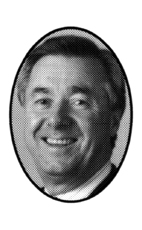
House of Commons photo

Crucial Fact

  • His favourite word was made.

Last in Parliament April 1997, as Liberal MP for Acadie—Bathurst (New Brunswick)

Won his last election, in 1993, with 66% of the vote.

Statements in the House

Unemployment Insurance Reform May 1st, 1996

Mr. Speaker, one of the reasons why we had to find ways to improve on the Unemployment Insurance Act was precisely the fact that tens of thousands of women could not have access to the program at all.

The hon. member knows full well that, as a result of changes made to the Unemployment Insurance Act, women working less than 15 hours per week for instance, who used to be penalized for all kinds of reasons, will now be covered and have access not only to the unemployment insurance program, but also to a variety of programs also designed for those considered to be ordinary employees by their employers.

There is no doubt that the Unemployment Insurance Act had to be amended. Everyone agrees with that. But what is happening now? The government has introduced legislation. Members of the committee to which the bill was referred have proposed amendments. But all we hear coming from the official opposition party is that the bill should be withdrawn.

We do not know whether they in favour of the status quo, whether they have amendments to suggest that might be regarded as improvements, or whether they are just playing petty politics at the expense of the most vulnerable segment of our society.

Canada Pension Plan May 1st, 1996

Mr. Speaker, because of the nature of the Canada pension plan and how it can be modified, I am sure the hon. member knows it is a very complex situation requiring a large number of provinces representing a very significant percentage of the population of Canada before anything can be done. We will have as extensive a consultation as possible.

A very integral part of the process of consultation involves the provinces because the CPP is a partnership. As we enter into the consultative process, obviously we have to ask our provincial colleagues how they wish to proceed as well.

There is no intention on the part of anyone either at the national government level or at the provincial level to preclude the participation of anyone. This process of public consultation is only one of the many available to members of Parliament and to Canadian citizens.

I repeat my offer to the member and to any other Canadian who wishes to participate to make their views known to us. We will take them into account.

Canada Pension Plan May 1st, 1996

Mr. Speaker, the process of consultation on the CPP is a joint effort between the Government of Canada and the provinces. As we go across the country federal representatives are conducting hearings in co-operation with their provincial counterparts.

There are very few Canadians who have the kind of opportunity the hon. member has to make a contribution on a whole series of subjects brought before the House. This and other topics can be discussed in the House on any number of occasions. Whatever contribution the hon. member wishes to make to the consultative process on CPP we would be happy to receive.

To have members of Parliament take up the time of committees when they are travelling across the country does not appear to be necessarily the best use of committees time.

I want to tell the hon. member that whatever her views on this consultative process, I would be happy to receive them and will make sure they are taken into consideration.

Manpower Training April 30th, 1996

Mr. Speaker, I can assure you that it was not in the least our intention to ask a group to administer any program known as Experience Canada, and we certainly would not have entrusted it to the Bloc Quebecois.

Manpower Training April 30th, 1996

Mr. Speaker, on Friday the young people of Canada were delighted to learn that the private sector throughout the country is prepared to contribute more than $12 million in a partnership with the Government of Canada to assist young Canadians everywhere in the country. Thus, not only will they be learning to work in a sector that is familiar and appropriate to them, but they will also have an opportunity to get to know Canada better.

Young people in all of the provinces and territories will be able to take part in this program, because the private sector has seen fit to take part along with the Government of Canada, contributing $12.7 million of the $21 million to which the hon. member refers.

In my opinion, this is once again a very fine example of how Canadians, the Government of Canada, and the private sector can all work together for the common good.

Employment Insurance Act April 25th, 1996

Mr. Speaker, I move:

That in relation to Bill C-12, an act respecting employment insurance in Canada, not more than 10 further hours shall be allotted to the consideration of the committee stage of the bill and, at the expiry of the time provided for in this Order, any proceedings before the Standing Committee on Human Resources Development shall be interrupted, if required for the purpose of this Order, and in turn every question necessary for the disposal of the said stage of the said bill shall be put forthwith and successively without further debate or amendment.

Employment Insurance Act April 24th, 1996

Mr. Speaker, I must inform the House that we have been unable to reach an agreement under Standing Order 78(1) or 78(2) regarding consideration at committee stage of Bill C-12, an act respecting employment insurance in Canada.

Therefore, I give notice that, pursuant to Standing Order 78(3), I will be moving at the next sitting of the House a motion on time allocation to allot a specified number of days or hours to the consideration of this stage and to the decisions required to dispose of it.

Manpower Training April 24th, 1996

No, Mr. Speaker, we do not believe that what we are doing at this time is adding to duplication and overlap.

What we believe is that there is a desire country-wide to find new ways of getting federation to work. This includes anything related to job creation, trade training, active measures in the private sector. We hope to be able to find solutions to these knotty problems, for they have been discussed long enough, as the hon. member has said.

I do, however, find it somewhat surprising that, when we are attempting to withdraw from manpower training, the hon. member appears to think we are heading in the wrong direction. I thought that was the direction the consensus in Quebec wanted us to take.

Manpower Training April 24th, 1996

Mr. Speaker, we are committed to holding discussions with our Quebec colleagues, in order to find ways of meeting our commitments concerning withdrawal from manpower training.

As for all of the other issues relating to active measures and what is reflected in part II of the employment insurance bill now before Parliament, we have every intention of entering into negotiations with the province of Quebec, and all of the provinces in this country, for it is the intention of the Government of Canada to show good faith in this entire matter, once again demonstrating that, with flexibility and good intentions, we can prove the federation is working very well.

Unemployment Insurance Reform April 24th, 1996

Mr. Speaker, we have been asked many times to withdraw from manpower training in a number of provinces, including Quebec. We have made the commitment, reiterated by the Prime Minister and confirmed in the throne speech, to withdraw from manpower training, not only in Quebec but throughout the country. Thanks to this decision, the Government of Canada is, in fact, pulling out of training. We have promised to do so within three years, and I hope to be able to do so earlier than that.

[English]