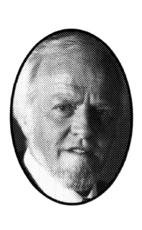
House of Commons photo

Crucial Fact

  • His favourite word was transport.

Last in Parliament April 1997, as Bloc MP for Louis-Hébert (Québec)

Won his last election, in 1993, with 56% of the vote.

Statements in the House

Care Canada May 31st, 1995

Mr. Speaker, regarding the federal government's financial commitments to Care Canada, does the Deputy Prime Minister intend to suspend all federal grants to this agency until the announced investigation gets to the bottom of the troubling allegations against Care Canada?

Care Canada May 31st, 1995

Mr. Speaker, my question is for the Deputy Prime Minister.

A CBC program reported that, in addition to spending donations from the public extravagantly, the $300,000 that Care Canada raised in its campaign to relieve hunger in Somalia never made it to its destination. Given the seriousness of the allegations and Ottawa's financial support of Care Canada, the Secretary of State for Latin America and Africa has announced the government's intention to investigate this agency.

Ottawa funded Care Canada to the tune of $28 million in 1993. Therefore, will the Deputy Prime Minister tell us whether the federal government's grants to Care Canada, especially its

contribution to the campaign for Somalia, were really used for their intended purpose?

National Defence May 12th, 1995

Mr. Speaker, considering that Canada contributes $200 million every year towards the financing of NATO, how can the Minister of National Defence be so optimistic about Mr. Claes's integrity when he is being investigated by the police on a bribery charge?

National Defence May 12th, 1995

Mr. Speaker, my question is directed to the Minister of National Defence.

This morning in Belgium, NATO Secretary General Willy Claes was again questioned by Belgian authorities about bribes totalling US $1,720,000 paid by Agusta, an Italian company, in order to obtain a contract for the purchase of 46 EH-101 helicopters by Belgium.

In the light of these new developments, could the Minister of National Defence indicate whether Canada intends to ask that NATO Secretary General Willy Claes be relieved of his duties, at least for the duration of the investigation?

Prime Minister's Moscow Visit May 11th, 1995

Mr. Speaker, I thank the Deputy Prime Minister for her laconic answer, to say the least.

How can the Government of Canada think that the Russian president would take seriously this symbolic protest against Russia's attitude in the Chechen conflict when in the same breath, in the same interview, the Prime Minister stated that the top priority for the Canadian government was to increase trade with Russia?

Prime Minister's Moscow Visit May 11th, 1995

Mr. Speaker, my question is for the Deputy Prime Minister.

There is some confusion as to why the Prime Minister did not attend the military parade in Moscow. The Prime Minister said he boycotted the parade to protest against the war Russia is currently waging against the Chechens. On the other hand, the Prime Minister's assistants denied repeatedly that he had refused to attend, arguing that the parade had never been on the Prime Minister's agenda.

How can the Deputy Prime Minister explain the discrepancy between the statements made by the Prime Minister, who said he had boycotted the parade, and his assistants, who said that he was never scheduled to attend?

Lobbyists Registration Act May 5th, 1995

Mr. Speaker, in closing, I pointed out that Bill C-43 reassured no one. I said that the Liberals should have a "best before" label, a bit like dairy products. They were better before they came to power, better before the elections, better before they lined up at the trough. The fine principles they defended in opposition have evaporated.

I could explain at length the many shortcomings of Bill C-43. My colleague for Berthier-Montcalm has already done so amply. As we are short of time, I will raise two flagrant examples of this change taking place in the Liberal family.

First, the appointment of the ethics counsellor. With great pomp, as usual, the Liberals across from us announced the appointment of an ethics counsellor to advise ministers and government officials and to examine the need to amend the legislation.

These fine principles will not go far, however, if this counsellor is not given some independence from the Prime Minister and his government. Do not forget that the Prime Minister appoints the ethics counsellor, consults him when he sees fit and allows him to make public statements only when they are to his political advantage.

A true ethics counsellor would be accountable to the representatives of the people. All of the counsellor's decisions should be made public. He should have the power to launch investigations and have enforcement powers. Bill C-43 does none of the above. It merely gives the illusion that someone is ensuring that decisions are made ethically, while in reality, the role amounts to nothing.

We are giving the Prime Minister the right to appoint an ethics counsellor, to consult the latter when he feels like it and to keep the counsellor's advice secret unless he decides otherwise. They will have to think of something else if they want to restore the trust of Canadians and Quebecers in our institutions!

Scandals like the attempted privatization of the Pearson airport hit home the need for a bill on the registration of lobbyists. I will not describe in detail all of the underhanded tricks and schemes that came into play in this tainted deal. What is really important is that we remember it as a sad incident in which the government's reputation was tarnished in the eyes of the public.

As it stands, Bill C-43 could not have prevented this kind of scandal, no more than it could shed more light on the suspicious comings and goings of the current Minister of Canadian Heritage. The ethics counsellor does not have the power to set up an investigating committee to get to the bottom of it for Quebecers and Canadians.

The second shortfall of Bill C-43 on which I would like to comment concerns the categorization of lobbyists. The Bloc Quebecois wants to eliminate distinctions between different types of lobbyists. When the Liberals were in the opposition, when they were "best before", they took exactly the same view as the Bloc Quebecois: lobbyists are lobbyists and should be accountable for their actions. Since then, the Liberals reversed their position, probably under pressure from lobbyist friends and contributors to the party coffers.

And speaking of party coffers, when I look at the latest figures on funds raised by political parties in Canada, I can understand why the Liberals are so anxious to change their position on lobbyists. In 1993, the Liberal Party of Canada raised more than

$20 million in political contributions which was, needless to say, the largest amount ever collected by the Liberal Party of Canada during an election year. Last year, in 1994, the Liberals raised $9 million, the largest amount ever collected by the Liberals outside an election year. This year, the Liberals have set their fundraising objective at $10 million.

During the election campaign, the Liberals claimed, and this is again from the red book: "No one should be required to pay fees in order merely to arrange meetings with ministers or senior officials". However, just to give a few recent examples, last Wednesday in Montreal, the Prime Minister met 1,800 people who had each donated $400 to the Liberal Party.

Last month, the Minister of Finance invited members of the business community to a private reception at $1,500 a head, to talk about his budget, and so forth. Are we to understand that the Liberal government's message is: For access to decision makers, instead of investing in lobbies, contribute to the party coffers of the Liberal Party of Canada for a better return on your investment. It seems to be the message an increasing number of Canadians and Quebecers are hearing.

Bill C-43 does nothing to remove this impression. The Bloc Quebecois tried to give this bill some teeth by proposing at least 60 amendments. The Liberals were adamant and rejected all proposals that would have made this a bill with teeth. The obvious conclusion is that for Quebecers, their only hope for more democratic and more transparent institutions lies in sovereignty. Through its bill on political party financing, Quebec has made an important contribution to the resolution of this important ethical matter.

Quebec City Bridge May 5th, 1995

Mr. Speaker, my question is directed to the Minister of Transport. For many years, the federal government has been very negligent about maintaining the Quebec City bridge, which has led to major deterioration of the structure as a result of rust, so that today, repairs are necessary that will cost an estimated $40 million. Two years ago, the government turned the bridge and responsibility for its maintenance over to Canadian National.

Considering that the federal government is about to privatize CN, does the Minister of Transport intend to include in the appropriate legislation a provision that the potential buyer will be responsible for maintenance of the Quebec City bridge?

Lobbyists Registration Act May 5th, 1995

Mr. Speaker, I am pleased to speak about Bill C-43, which seeks to amend the Lobbyists Registration Act and thus, we are told, ensure greater transparency regarding representations made to the Canadian government by lobbyists.

The Bloc Quebecois has always insisted on the need to monitor the activities of those who make representations to politicians and public servants in an attempt to influence decisions for the benefit their clients.

The Liberals' red book is infamous, because it was their election platform, but has become the graveyard of all their unfulfilled commitments and promises. The red book stated that "a Liberal government will move quickly and decisively in several ways to address these concerns about conflicts of interest and influence peddling". A few weeks later, as soon as they got to power, the Liberal government stressed in its Speech from the Throne that "legislation will be placed before you to increase the transparency of the relations between lobbyists and the Government".

Despite the far from exemplary past of the federal Liberals in this area, Quebecers and Canadians were ready to believe that this was it, that this federal government was finally going to clear out this dark corner of our political institutions and bureaucracies. Patronage and partisan politics have fed the public's cynicism regarding the government apparatus for much too long now for the government to be able to restore their trust. The 35th Parliament was given a clear mandate to change these old ways. Canadians and Quebecers opted for change and they elected us to defend the interests of all our fellow citizens.

Bill C-43 and the Zed report on the registration and control of lobbyists brought Canadians and Quebecers back to the sad reality. We have learned that the Liberals should carry a "best before" date, just like dairy products.

Quebec City Bridge May 4th, 1995

Mr. Speaker, in a letter to me that included references to the Quebec City bridge, the Minister of Transport wrote, and I quote: "At a time when restructuring has made it necessary for CN to cut personnel, the company could hardly be expected to spend substantial sums of money out of mere aesthetic considerations".

How can the Minister of Transport claim that the maintenance of a major structure that is part of the railway network is merely a matter of aesthetics, when rust is eating away at the structure, which is bound to shorten its life expectancy?