
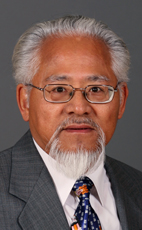
House of Commons photo

Crucial Fact

  • His favourite word was immigration.

Last in Parliament September 2010, as Conservative MP for Dauphin—Swan River—Marquette (Manitoba)

Won his last election, in 2008, with 61% of the vote.

Statements in the House

Supply September 30th, 2003

Mr. Speaker, on behalf of the Progressive Conservative Party, I am pleased to take part in the supply motion debate. The motion posed by the hon. member for Regina—Qu'Appelle deserves to be read again. It is:

That this House call upon the government to hold a referendum within one year to determine whether Canadians wish to replace the current electoral system with a system of proportional representation and, if so, to appoint a commission to consult Canadians on the preferred model of proportional representation and the process of implementation, with an implementation date no later than July 1, 2006.

Since the debate today is about elections, I want to take a moment to draw the attention of the House to two related events that occurred yesterday.

The premier of Newfoundland, after doing a dilatory dance of the seven veils all summer, finally called an election in that province. Our national caucus met in St. John's earlier this month. It was clear to all of us that change was in the air. I can tell the House that Danny Williams will make a fine premier of Newfoundland.

Yesterday the people of Prince Edward Island went to the polls and re-elected Premier Pat Binns and his Progressive Conservative colleagues. This is Premier Binns' third consecutive victory, a remarkable and historic achievement indeed.

The real story of the election in Prince Edward Island is that it was conducted in the wake of a devastating hurricane that struck the night before polling. Approximately 44,000 Islanders were without electricity. Trees blocked roadways. Houses and vehicles were damaged and boats were sunk. What did Islanders do on that hurricane election day? They went to the polls. They cast their votes. They voted, like most Canadians. More than 80,000 people voted. The voter turnout was over 83%. All of us should salute the people of Prince Edward Island with 83% voter turnout the morning after that savage storm.

I should also point out that Prince Edward Island still uses door to door enumerators for its elections rather than the flawed system of no enumeration and a permanent list for federal elections. There was an 83% turnout. Federally we are nearing 60% with a permanent list.

Turning to the motion, I congratulate the member for Regina—Qu'Appelle for his persistence in bringing it to the House. He has fought for years to bring forward a debate on proportional representation.

At a Progressive Conservative Party meeting in Edmonton in August 2002, we debated a report on democratic reform. That report was a concrete achievement for the PC/DR coalition. The position of the Progressive Conservative Party adopted at Edmonton is:

Upon formation of government, a commission will be immediately struck to hold public consultation on the most appropriate electoral system for Canada. The commission will be empowered to make recommendations to Parliament regarding any changes in the electoral system. Parliament, if possible, will implement changes in time for the next election.

We agree with the member for Regina—Qu'Appelle when he says there needs to be a public debate on this issue. As the people of Prince Edward Island showed yesterday, Canadians do take their franchise seriously and we should have a system that allows them full expression of their wishes. We also need a system that will allow for the governance of a very large and complex national society.

The member for Regina—Qu'Appelle engaged his party on the general use of proportional representation about four years ago. Thus far he has not defined a system, and I think it is fair to say, he has not engaged the wider community in a detailed discussion about systems. He is still at the first step. He wants a debate on an undefined system of proportional representation, but that debate is not now taking place around the kitchen tables in Canada. In fact, where he comes from the debate is about BSE and what the government is doing about it to make sure that the cattle producers stay in business.

Proportional representation has some merits. It also has some negatives. It significantly increases the power of the party elite and those who decide who gets on a list of party nominees. Some feel it favours the status quo and party veterans. Canadians are not talking about the merits of this or that system of proportional representation.

The motion calls on the government to hold a referendum and then to flesh out a system of proportional representation for Canada. Here is where the proposal fails. In order to have a meaningful referendum, the population must be informed and there must be, to use a phrase of a few years ago, clarity in the question. People have to know what they are voting for or against.

The motion calls upon the government to ask Canadians if they want to trash the present system and opt for an undefined system of PR and then the country will embark upon the job of defining a new system. Experience shows that Canadians sometimes find it difficult to agree on things. Is it wise to further erode the existing system, flawed as it may be, without having a decision on a replacement system? The community needs to know what the precise alternative is before they vote in a referendum.

At the same Edmonton policy conference on democratic reform, the PC Party also considered the use of referenda. Let me quote from chapter nine of the report which deals with referenda:

Progressive Conservative MP Patrick Boyer told the House of Commons on 18 June, 1991: “I think it is highly appropriate, from time to time--not on every question, certainly not, but on those issues of transcending national importance--to put the question to people so that they can all become involved in this and get out of themselves and express their feelings on the issue. Ventilation on some of these issues is a very important part of Canada's nature as a democracy.

Another proposal is government sponsored referenda. Only three national referenda have been held in Canadian history, in 1898 on prohibition, in 1942 on conscription, and in 1992 on the Charlottetown accord. While they ought not to be used lightly, it may be thought that the Canadian people could preferably be consulted more frequently than every 50 years or so.

The federal Referendum Act, enacted June 23, 1992 by the Mulroney government in preparation for the referendum on the Charlottetown accord, provides a strong framework. For example, it stipulates that the question must be able to be answered by a yes or no, that a referendum may not be held simultaneous with a federal election, that the Canada Elections Act applies, and that three days of debate will be held on the question in the House of Commons.

The Progressive Conservative Party supports government sponsored referenda in two circumstances.

The first example is in the case of constitutional amendments. Two provinces, Alberta and British Columbia, already require that proposed constitutional amendments be approved in a referendum, and the Charlottetown accord has almost made this an unwritten convention. We would recognize this requirement. Passage in a referendum would require support from voters according to the appropriate constitutional amending formula, i.e., the different requirements for amendments under sections 38, 41 and 43.

The second example is in the case of issues of transcending national importance, to use Patrick Boyer's expression, where the federal government judged that legitimacy for a specific legislative proposal requires direct approval by voters. The government could also seek guidance from Canadians at the outset of a nationally important policy discussion as to whether legislation ought to follow and what form it should take.

As well intended as it may be, the motion calls for a referendum to put an end to the existing electoral system without placing a specific legislative proposal before Canadians. That is the flaw in the member's motion.

We agree that we need to debate possible changes to the system, both here in Parliament and in the community, if the community wants to engage in that debate. It would be folly to force a process debate on Canadians if they do not want one. They have other issues on their minds. Judging by the mail in my office and my conversations with constituents, this is not their number one issue. The number one issue in my riding of Dauphin--Swan River is mad cow, or BSE. Another is the proposed same sex marriage legislation.

But if there is to be change, it is time to hold a referendum only when there is a concrete alternative to place before voters. We do not think it is the time to ask voters to dismantle one system without having something to offer as a replacement.

At the same meeting in Edmonton, which the member for Regina—Qu'Appelle referred to, under chapter 12, this is what we concluded in the Progressive Conservative Party platform when we talked about an electoral system:

The plurality system of elections (commonly known as “first-past-the-post”) has been a feature of many liberal democracies, including Canada. Dysfunctional aspects of plurality systems have led most liberal democracies to adopt other vote counting rules. Even the United Kingdom, the birthplace of many of our institutions and practices, is seriously considering change. Only the United States and Canada seemed to be wedded to the status quo, though in both there are calls for reform and, historically, there have been non-plurality elections.

No electoral system is perfect. For Canada, however, the plurality system has been so problematic that political scientists have produced volumes of critiques.

Simply, plurality elections create distortions between votes received by parties and seats won. Majority governments are created when parties fall far short of 50% of votes cast, indeed, short of 40%. Parties oriented toward certain parts of the country do better in terms of seats than do parties with national appeal, with more or less the same share of the votes. I think the current climate or environment of this House is a good example. Discrepancy between votes and seats exaggerates both the regional strengths and the weaknesses of parties, thus exacerbating regional tensions and conflicts.

Plurality systems from the perspective of voters are also a problem. A voter, instead of casting a genuine vote for the preferred party, will vote strategically in order to defeat another party. Voting should be an affirmation rather than a negation. As I indicated earlier, our preference is that a commission be struck to hold public consultations to find out just exactly what the community of Canadians is looking for.

Even more important than electoral reform is parliamentary reform. We need to look at it. We have heard parliamentary reform discussed in this House for probably over the last 20 years. It appears that very little reform has taken place. There are issues like free votes, confidence votes and party discipline in this House.

Again, at the Edmonton convention in August 2002, the Progressive Conservative Party had a position:

The importance of caucus solidarity in the British/Canadian parliamentary system has to be acknowledged. On it rests the integrity of a party's commitment to implement, in government, the platform on which it sought the support of the electorate. It is the means by which an MP respects his/her commitment to the party platform on which he/she was elected. Equally important in Canada, the party caucus is the indispensable parliamentary forum in which parliamentarians must reconcile different regional, cultural, social and economic perspectives in order to achieve a workable national consensus.

However, the commitment to party solidarity in Canada's House of Commons in modern times has been far beyond what is needed for the effective functioning of our parliamentary democracy. Its enforcement by party leaders and whips has been excessive to the point of demeaning MPs and of bringing the parliamentary process into disrepute.

Our proposal states:

the status, the dignity and the multiple loyalties of an individual MP--to his/her constituents, to his/her convictions, to his/her party, country and Parliament--must be respected. MPs, individually and collectively, can be trusted to decide how to honour each of these responsibilities in a particular instance.

Change in some parliamentary practices is essential. In particular: “Free votes”, especially on amendments to government bills and at the 3rd reading stage of bills, should be the norm rather than the exception.

The policy also states:

To make this possible, the extravagant and unwarranted use by governments of the “confidence” convention, with its threat of dissolution and a new election in the event of losing a vote that is not explicitly designated as “non-confidence”, must be severely curtailed.

Another issue that is very important to the House deals with standing committees of the House of Commons:

Standing Committees of the House of Commons, to whom all legislation is referred for detailed examination, and who can also undertake special policy studies, have become tools of Prime Ministerial patronage and, in a majority government situation, enforcers of the Government Whip's will.

Since the recent changes in parliamentarians' pay packages, the committee chairs and vice-chairs get extra pay, which has the effect of increasing the PM's control over his nominees. With the stroke of a pen, the whip can remove an independent-minded MP from a committee and replace him or her with someone more reliable. Need I say more?

We believe that:

The ability of the House of Commons to hold the government accountable and to exercise its legislative supremacy must be restored. A large measure of autonomy, subject only to the authority of the House as a whole, must be given back to committees. In particular: MPs must be assigned to committees by vote of the House. Once there, they are “permanent”, i.e. to serve until prorogation of that session of Parliament. An MP must co-sign any Whip's notice for his/her removal from a committee.

Committee Chairs and Vice-Chairs must be elected by secret ballot of the members of the Committee.

Opposition parties should get a share of the Committee Chairmanships that is roughly equal to the share of seats they occupy in the House. This will be negotiated among House leaders.

Parliamentary secretaries and other MPs in receipt of extra pay (Whips, Caucus Chairs et al) should generally not be eligible for membership on Standing Committees.

Ministers should be required to remain at Committees while witnesses are heard on their bills and amendments are discussed. Ministers must be present through clause-by-clause consideration of their bills.

Let me conclude by saying that on the issue of proportional representation there is no doubt that it is about access to power. In a representative democracy like ours, elections are about power. Winners wield power. Losers and those not engaged in elections can be left behind. Proportional representation describes the voting system used in most democracies in which parties or individuals gain office in direct relation to their support among voters. Without doubt, PR is fairer than our current system, but in our particular case we do not know what system the NDP is advocating.

Of equal importance, proportional representation makes power more accessible by increasing the number of effective votes and the diversity of winners. In our current system, most elected officials, including members of the House, come from single member constituencies where winning is required to gain the most votes in the constituency, up to 50% of the votes or, as we always say, 50% plus one.

Our system results in greater injustice to any person voting with people who are in a permanent minority in the single member constituency, like members of the NDP. Such groups have little power and, as a result, do not have their interests addressed or even taken seriously. They also have little chance to change the majority's view.

I will conclude by saying that because this motion says the referendum must be held within one year, the Progressive Conservative Party will be voting against the motion. As I indicated earlier, the cost of a referendum separate from an election dictates that it should be held at the same time as the next federal election. It is debatable that the population can be informed in time of all the options, benefits and pitfalls of such a system.

Criminal Code September 29th, 2003

Mr. Speaker, there is no doubt that if we had hundreds of millions of dollars in tax dollars we could certainly spend them in a health care system. However, on the same point, we could do that right now with all the money the government has wasted on its failed long gun registry. Billions of dollars could be put into health care.

Criminal Code September 29th, 2003

Mr. Speaker, this summer I spent some time meeting with people in the municipalities and the band chiefs on Indian reserves talking about the problems with youth justice, youth vandalism and youth criminal activity. If we had unlimited dollars it would not be a problem. The problem is that we do not have the money. When a youth is charged with abuse at this point in time, it could take up to 12 months before the youth appears in court. What are we to do with these young offenders?

I know all communities have a problem wrestling with what to do with kids who continually damage property. Under the new act we cannot lock them up. What do we do with them? The support system is not there. We need more federal dollars to support the programs and initiatives found in the Youth Justice Act but without the money it just does not work.

Criminal Code September 29th, 2003

Mr. Speaker, if we believe in Canada as our country of origin, we need to support it in every way possible. In the business world sometimes the bottom line is the way in which companies operate. For example, this past week the jeans companies folded their tents and crossed North America. They packed up their companies and will probably move to China where they can be more profitable.

I do not know how much money Canada loses. I am sure we lose hundreds of millions of dollars, probably billions of dollars in taxes. However the role of government is to ensure all the loopholes are plugged so Canadians who profess to operate under the flagship of this country pay their fair share of taxes.

Profit is not a four letter word and I do not think anyone in the House would deem it to be so because without profit no one would be in business. There has to be a balance. I am sure all members in the House want fairness to prevail and loopholes that cause extravagant losses to the public coffers should be plugged.

Criminal Code September 29th, 2003

Mr. Speaker, I am sure the member for LaSalle--Émard will respond to the same question when he returns to the House.

In terms of fraud, I earlier mentioned and compared the whole business of capital markets fraud with the fraudulent attitude of the government toward the billion dollar plus expenditures in the gun registry.

Liberal members need to open their eyes. If they are putting together legislation to make other people accountable then maybe it is time they were accountable themselves in terms of how they spend taxpayer money.

Criminal Code September 29th, 2003

Mr. Speaker, I am pleased to rise today to speak to Bill C-46. For our viewers this evening, let me begin by reading a summary of Bill C-46:

This enactment amends the Criminal Code by creating a new offence of prohibited insider trading and creating a new offence to prohibit threatening or retaliating against employees for disclosing unlawful conduct. The enactment increases the maximum penalties and codifies aggravating and non-mitigating sentencing factors for fraud and certain related offences and provides for concurrent jurisdiction for the Attorney General of Canada to prosecute those offences.

That indeed is a tall order.

The Progressive Conservative Party supports Bill C-46 in principle.

Why have we seen this legislation come into being? Recent major accounting deceptions and other corporate scandals, such as those of Enron and WorldCom in the United States, have resulted in multi-billion dollar losses and have devastated investor confidence. The United States has already responded with the Sarbanes-Oxley Act of 2002 and with increased resources for investigations and prosecutions.

The Canadian government is now acting to increase the resources available for enforcement of existing Canadian laws and to strengthen existing criminal sanctions. What we gather from that statement is the government wants to be seen and perceived as being tougher on crimes, certainly capital market crimes. Yet at the same time we see the government being really soft on criminals. It is easy to say one thing but, as the old saying goes, to walk the talk is something else.

Even in the field of immigration enforcement, Ontario has a total of eight immigration enforcement officers. That is in a province the size of the Ontario. It just does not make any sense.

The Youth Criminal Justice Act has created a lot of problems from coast to coast to coast. Communities are dealing with vandalism and youth crime and their hands are tied. They really do not know how to deal with it. In fact I have spoken to attorneys general of the provinces and they have the same problem. They really question why the new Youth Criminal Justice Act is the way it is. It is actually worse than the Young Offenders Act which it supposedly replaced.

In the field of immigration, which I am very familiar with, I am told that staffing levels are not up to 1994 levels. When the Liberals came into power, they made all those big cuts, like $24 billion in health care. They also did the same thing in immigration even though the work probably tripled or quadrupled from 1993 to today. It is easy for the government to say it will be tough on crime, and now we are looking at a new bill. However to be tough on crime, it has to put in the resources.

Some members spoke today about mandatory sentencing. On my way back to Ottawa, I read in the paper that the attorney general of Manitoba, Gord Mackintosh, was asking the federal government to change the Criminal Code so that no bail would be granted to repeat offenders. It is creating a problem in the field. There is a huge disconnect with what we believe should taking place and what is actually taking place out in the real world.

There are new offences under this act. Insider trading is already illegal under the provincial securities laws and the Canadian Business Corporation Act. In instances that merit a more severe response, Bill C-46 creates the new criminal offence of inside trading with a maximum prison term of 10 years.

Bill C-46 also provides whistleblowing protection for employees who expose wrongdoing under federal or provincial law. A new criminal offence of employee related threats or retaliation would carry a maximum prison term of five years.

Bill C-46 is really about making the private sector and the capital market sector more accountable. Governments and certainly this government should eat their own words. If they really want to be accountable, they should demonstrate that by the way they spend taxpayer money. How accountable are they?

The bill talks about capital market fraud. The Auditor General has criticized the government for keeping the House of Commons in the dark when it comes to the way it has spent the money on the failed gun registry. It is fraudulent how it spends billions of taxpayer dollars. If it wants to tell taxpayers, the citizens of the country, how things should operate, then it should set the example.

When we examine the long gun registry from the fraudulent point of view and the waste of taxpayer money, this is really what we are trying to do here today. Bill C-46 is about the capital market, people's money being used in a fraudulent manner or in misleading investments in the private sector. With the long gun registry, even today the government still has not reported to Parliament what the total cost of the program has been so far. The government still has not reported to Parliament what the total cost will be to implement the firearms program.

The Treasury Board officials finally admitted that even they will not know the total cost of the firearms program until the fall. The government has been hiding the truth from Parliament and the public for seven years and has not been any more forthright in the last five months, over this past summer, or even this fall. Even when we ask questions about the new estimates of the Department of the Solicitor General, the Solicitor General refuses outright to say that there is a new $10 million in his account for the long gun registry.

The government estimates are still grossly under reported because of the justice department's plans and priorities report for 2003-04, which was tabled this past March, has 111 blanks. We are talking about the government's use of taxpayer money.

The government also refuses to reveal the cost of enforcement compliance as recommended by the Auditor General. The government refused to release a cost benefit analysis on the firearms program by declaring it a cabinet secret.

When we talk about accountability, it leaves a lot to be desired in the way the government handles taxpayer dollars.

Bill C-46 is supposed to be tougher on crime with tougher Criminal Code sentences. The current maximum sentence for fraud affecting the public market will rise to 14 years from 10 years and the maximum term for fraudulent manipulation of stock exchange transactions will rise to 10 years from 5 years.

Perhaps we need tougher minimum sentencing. In other words, we need mandatory minimum sentencing for people who are convicted of capital market fraud.

Bill C-46 also adds a list of specific aggravating factors that would result in harsher penalties such as the extent of economic damage caused or the impact on market stability. A person's reputation and status in the community or workplace can no longer be considered as a mitigating factor to lower penalties in cases where those who commit capital market fraud rely on those very factors to carry out their crimes.

In the area of evidence gathering, Bill C-46 introduces production orders as a tool for criminal investigations. Production orders are already part of the Competition Act. They are also less intrusive alternatives to search orders. They would compel a third party to produce pertinent documents within a specific time period. Failure to comply could result in a jail term of up to six months and a fine of up to $250,000.

Regarding concurrent jurisdiction, currently the Criminal Code gives the provinces responsibility for prosecuting cases that involve capital market fraud. With Bill C-46, either the federal or provincial governments may prosecute such cases. The government says that the federal involvement would be limited to a narrow range of cases that threaten the national interest.

As I mentioned earlier, the provinces need to be wary when the feds promise that they will fund prosecution under the federal courts. We have many examples where funding relationships between the federal government and provincial governments on paper appear to be in order. However in practical terms, in real costs, day to day activity, it just does not work out. Health care is a good example. We all know the problems of health care across Canada. As was mentioned, when it was first started, the cost was shared between provincial and federal government, fifty-fifty. Now we are down to about 15¢, I believe.

Another good example is the long gun registry on the prosecution side. Eight provinces have already indicated that they will not prosecute long gun registration offences and that they will let the federal courts deal with the prosecution of people who have breached Bill C-68, those hunters or firearm users who either do not have the gun registered or do not have a possession certificate. Up to today I know probably hundreds of people who have been stopped and caught for that breach, yet no charges have been laid by the federal government.

I know the reason why no charges are being laid. The government is in no way willing to spend millions of dollars prosecuting innocent Canadians who do not have their family heirloom or some rabbit gun their grandfathers passed on to them registered.

In terms of the financial relationship with Bill C-46 provinces have to tread very carefully.

The government is playing catch-up with the United States lawmakers who have already passed legislation, not just to strengthen criminal sanctions but also to reform the way corporations are governed. Boards of directors, auditors and audit committees all have key roles to play in protecting the interests of shareholders. Indeed the scandals that rocked the capital market of 2001-02 are widely seen to be the result of poor corporate governance, lax auditing, accounting standards and oversight and the incentives provided by executive compensation arrangements. In spite of this, the government's background information on Bill C-46 does not once mention the role of good corporate governance legislation.

Shortly after the government tabled Bill C-46, the Senate banking committee completed a year long study of the circumstances that resulted in the American corporate scandals. The committee was particularly interested in whether these circumstances might occur in Canada with similar results and if so, how they might be avoided.

While the committee called for tougher sanctions, whistleblowing protection for those who report financial irregularities and increased resources to investigate wrongdoing, it also recommended legislative measures to: require that a majority of board members be independent; require the development of a code of ethics to be followed by all board members; require audit committee members to be independent and financially literate; limit the non-audit services that auditors can provide to their audit clients; require the chief executive officer and the chief financial officer to certify that the annual financial statements fairly represented the organization's results and financial conditions; and prohibit compensation committee members from being a member of management and require them to have expertise in compensation and human resources.

The challenge will be to separate jurisdiction between the provinces and the federal government. We must be aware that father does not always know best. The Progressive Conservative Party looks forward to the further hearing process at committee level.

Social Condition September 25th, 2003

Madam Speaker, I am pleased to rise this evening to debate Motion No. 392. First, I wish to applaud the member for Sherbrooke for the motion that says that the government should add social condition to the prohibited grounds of discrimination in the Human Rights Act.

Human rights is a dear topic to all Canadians. Canada is seen around the world as a leader in human rights. In fact, Canada initiated the universal declaration of human rights and certainly the Progressive Conservative Party supports Motion No. 392.

The motion brings attention to the neglected area of discrimination called social condition. We must remember that what we are doing here is protecting not only rights of individuals but ensuring that they are not discriminated against. We have come a long way in the field of human rights in this country and that is what we are talking about, but we still have a long way to go.

We only need to point out along this rocky path of Canadian history that this country has some bleak moments in its past. Let us recall the deportation of the Acadians and the treatment of the first Irish immigrants to this country. Let us remember the internment of Japanese Canadians during the second world war and the internment of Ukrainian Canadians between 1914-20 when over 5,000 Ukrainians were put into 24 internment camps across this country. Let us remember the Chinese exclusion act of 1923-47 when Chinese were kept out of this country because of their race.

We can see there are a lot of lessons that we need to learn from our history. In fact, I raise the question, how many Canadians know about this history which they need to learn? We as a society do not tolerate discrimination. According to the Human Rights Act, the prohibited grounds of discrimination are race, national or ethnic group, colour, religion, age, sex, sexual orientation, marital status, family status, disability and conviction for which a pardon has been granted.

Canada has always been a leader on the international stage in terms of promotion and protection of human rights. Indeed, a Canadian, John Humphrey, was one of the architects of the universal declaration of human rights, often referred to as the “Magna Carta of Humankind”. The declaration includes the right of social security and to the realization of social and economic rights indispensable for a person's dignity and the free development of his or her personality.

The international covenant on civil and political rights, which Canada ratified in 1976, is the most comprehensive international document in the area of social and economic rights. Article 9 guarantees the right to social security and social insurance. Article 12 guarantees the right to the highest attainable standard of physical and mental health. Article 13 guarantees the right to education. Article 11 enshrines the right to an adequate standard of living as set out in Article 25 of the universal declaration. Article 2 of the covenant binds state parties to guarantee all rights without discrimination on the basis of race, colour, sex, language, religion, political or other opinions, national or social origin, property, birth or other status.

Many Canadians naturally assume that the same vigilance has been taken domestically to safeguard social and economic rights which we are talking about this evening. At first blush, that would appear to be the case. Human rights are both entrenched in the Constitution and protected in provincial and territorial human rights acts across the country.

However, upon closer examination, an argument can be made that Canada has fallen short of its international obligations by failing to fully implement its international commitments to promote and protect social and economic rights. Concerns have even been expressed at the international level in this regard.

In talking about social condition, we are talking about the poor and impoverished of a country. Welfare recipients are becoming poorer than ever.

This is not helped by the fact that despite increased contributions by the federal government through the national child benefit, most provincial and territorial contributions to welfare incomes for families with children have eroded significantly. As well, people on welfare who are considered employable have endured years of cuts and freezes to their welfare incomes and have been forced to subsist, in some cases, on income as low as one-fifth of the poverty line in 2002. Similarly, the value of the welfare incomes of people with disabilities continued to decline.

As in previous years, Canada's low performance with respect to poverty is highlighted by the most recent United Nations human development report of 2002 which contrasted Canada's third place ranking in terms of human development with its 12th place ranking with respect to poverty. The report ranks 173 countries with respect to human development by means of a composite yardstick that measures the average achievements in a country on the basis of life expectancy, education and standard of living. While the human development index ranked Canada third in terms of achievements in the basic dimensions of human development, the human poverty index put Canada in 12th place when assessing deprivation in the same three dimensions of human development captured in the human development index.

Despite the increasing level of poverty in this country, the courts have been reluctant to recognize social and economic rights under the Canadian Charter of Rights and Freedoms. Most see this area as better suited to the institutional competence of the legislative, as opposed to the judicial, branch of government. In view of the interconnection between poverty and other forms of disadvantage recognized by human rights legislation, considerable attention has therefore been given to human rights legislation as a source for ensuring the promotion and protection of social and economic rights in this country.

It has been argued, for example, that without legislation protecting against discrimination on the basis of poverty, the true experience of people who are the most disadvantaged in society will never be completely addressed. That is why we are here this evening talking about social condition as a necessary point to be considered.

Because we are talking about human rights, I would like to make a couple of comments about the Canadian museum for human rights project that was announced for the province of Manitoba this past spring. This project presents an important opportunity for Canada to acknowledge and educate about human rights struggles in this country and the world, and to present our country's commitment to respect and understanding.

The national project came about because of the work put forth by Mr. Izzy Asper and the Asper Foundation of Winnipeg. Mr. Asper is currently expanding the project's base of support so that it is inclusive to every community in Canada. I know that he has the support of both the Chinese and the Ukrainian communities.

The human rights museum will be located at The Forks in Winnipeg and will house displays and programs focused on the understanding and the advancement of human rights, including the struggles faced by Canada's aboriginal people. The Forks enjoys a 6,000 year history that celebrates and embraces diversity. The 56 acre site attracts more than five million visitors annually. It is the ideal location to establish the Canadian museum for human rights, to promote respect and understanding.

We do not choose where we are born or into which family. Studies have shown that there is an increasing gap between rich and poor. We have all heard the saying “born on the wrong side of the tracks”. One principal Canadian value is that of equality. We cannot have equality unless we get rid of discrimination. People are discriminated on social status in this country.

I applaud the member for Sherbrooke for tabling this motion.

Canadian Firearms Control Program September 24th, 2003

Mr. Speaker, I am very pleased on behalf of the Conservative Party of Canada to take part in this debate.

Let me first congratulate the member for Saint-Bruno—Saint-Hubert for her motion. For the record, I will read it into Hansard . It states:

That, in the opinion of this House, the government should immediately suspend application of the Canadian firearms program in order to hold a public inquiry into the reasons for the program's extraordinary cost overruns, and to submit a structured and detailed strategic plan that would have to be approved in advance by this House.

That sounds pretty rational in light of when one looks at the mess that the whole Bill C-68 gun control legislation and program has become.

Canadians out there watching know the mess that this program is in. As has been mentioned, it pitches urban Canadians against rural Canadians. Unfortunately we know that back in 1993 the Liberals thought this was a good program because they thought they could sell the idea of registry and safety together, but unfortunately that is not the real truth. The truth is firearm use and crime are unrelated.

If this program has done anything, it has turned law-abiding citizens of this country into criminals, but not by intent. It has turned provinces against the federal government. We know that 8 out of 11 provinces have contested the Supreme Court case over this issue and still the majority of the provinces do not want to put in place any kind of a prosecution system for firearm possession charges that are laid by the RCMP.

It is ironic that today I received a phone call from a constituent telling me that last week, because the family had a break and enter on their property, the RCMP came out to investigated and accidentally found a .22 rifle unregistered and a shotgun. The RCMP took them. As it turned out, they turned to the provincial court system and the provincial court would have nothing to do with it, so it threw it back in the face of the Federal Court.

The problem with the Federal Court system today is that it is inconsistent in how it applies the law. The RCMP is telling people it will not lay charges and if it does, it will be for unsafe storage, but certainly not for possession of a gun that is unregistered. It is inconsistent. Even the Federal Court is confused today.

At this point in time, my poor constituent has to now appear before the Federal Court. As far as I know, a charge has been laid against him for possession of an unregistered firearm.

We also know that the aboriginal community and the Inuit community are totally against this. As Canadians know, firearms are part of life in the north. Aboriginal communities need firearms to secure food, sustenance for their families, so it makes absolutely no sense to apply the same laws of southern Canada to the north. We know that there is an injunction I believe in the north on the whole registry. I guess they will stop it for now.

There is absolutely no evidence that the initial intent of this legislation works. We know it does not work. It has nothing to do with the criminal use of firearms. Criminals are still using firearms. It was so ironic to hear the Privacy Commissioner when he came before the immigration committee. We were talking about national ID systems and the Privacy Commissioner said that there was no guarantee that criminals would apply for a national ID card. Similarly, it is the same scenario that criminals do not register their guns. The Liberals just do not get it. Criminals will use firearms that are stolen. In fact a study done in the late 1980s in central Canada showed that 85% of all firearms used in crimes were either smuggled or stolen. I believe this was done by the Police Association of Ontario.

Canadians are also fed up with the waste of money. We know there are huge needs in the health care system. We are spending billions of dollars. In fact we are on our second billion dollars today.

The citizenry of the country is asking when will the government stop wasting its hard earned dollars? Meanwhile, in my own riding hospitals are being closed in some communities. The communities are crying out for more health care services. Meanwhile here in Ottawa, as was mentioned earlier, we are throwing another $10 million into the pot for the gun control debacle. It sounds to me as though the federal government is plainly not listening.

There are hundreds of reasons why Bill C-68 should be suspended for the purpose of a public inquiry. The government still has not reported to Parliament what the total cost of the firearm program has been so far. We still hear the first number of $85 million. The Liberals said that it would cost $85 million to put the program in place and that it would not cost any more than that. Unfortunately, we are into our second billion dollars.

The government still has not reported to Parliament what the total cost will be to fully implement the firearms program. It is ironic because come January all of a sudden it becomes free if a person registers on the Internet. Who is paying the bill? Obviously it is the taxpayer.

Treasury Board officials finally have admitted that even they will not know the total cost of the firearm program until the fall.

The government has been hiding the truth from Parliament and the public for seven years. It has not been any more forthright in the last five years, through this past summer or as we witnessed in the House yesterday and today.

The government estimates are still grossly understated because the justice department's plans and priorities report of 2003-04 was tabled in March with 111 blanks. I thought Canada is a free country, that we have freedom of access to information legislation. The information belongs to the public. People should know how their money is spent.

The government refuses to reveal the cost of enforcement and compliance, as recommended by the Auditor General.

The government refuses to release the cost benefit analysis on the firearms program by declaring it a cabinet secret. That is easy avoidance of disclosure.

I will conclude by saying that over a half a million gun owners in Canada failed to obtain a firearms licence and cannot register their guns without one. More than 600,000 individuals still had to register or reregister their firearms before the end of June this past summer. We seem to continue with the government saying that there is no problem in registering guns and that they will take the registration. Justice department officials admitted they had received only 53,000 letters of intent to register.

The whole program is an absolute mess. Again, I close by applauding the member for Saint-Bruno—Saint-Hubert for her motion. I am sure the public cannot wait to hear more of this discussion.

Firearms Program September 24th, 2003

Mr. Speaker, an access to information request revealed that between April 14 and June 30 no full time and no part time employees of the Department of Justice were working on the Canadian firearms program. The same applies to the Solicitor General.

If no one in either the justice department or the Solicitor General's office is paying attention to the gun registry, who exactly is in charge of this bottomless money pit?

Supply September 23rd, 2003

Mr. Speaker, I commend the member from the Bloc for his comments. He mentioned the survival of the regions in Quebec from an economic point of view. That is basically what we have talked about today. We have talked about the broad impact the mad cow disease issue has had across the whole country. Members from western Canada, from central Canada, from Quebec and from the Maritimes have spoken. We are all saying the same thing: do something about the problem. The people in the industry are crying for help.

One topic that has not been discussed has been the impact on the public school system. The fact of the matter is that many farmers across the country cannot pay the school taxes. The public school system relies on the collection of these taxes. What are we going to do, shut the schools down because the school boards cannot operate? That is a real fear.

I want to ask my Bloc colleague how this will play out in the province of Quebec.