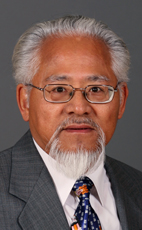
House of Commons photo

Crucial Fact

  • His favourite word was immigration.

Last in Parliament September 2010, as Conservative MP for Dauphin—Swan River—Marquette (Manitoba)

Won his last election, in 2008, with 61% of the vote.

Statements in the House

Firearms Registry September 23rd, 2003

Mr. Speaker, today we learned that the supplementary estimates show an additional $10 million for the firearms registry.

Access to information requests have revealed that between April 14 and June 30 there were no full time or part time employees of the Department of Justice working on the Canadian firearms program. Another access to information request showed that during the same period no employees in the department of the Solicitor General were working on the firearms program.

My question is, if no one in either the justice department or the Solicitor General's office is working on the gun registry, just exactly who is minding this--

Supply September 23rd, 2003

Madam Speaker, I applaud my colleague from Cumberland—Colchester for his comments. He demonstrates that this problem is a very broad one. He demonstrates how the dairy industry is being hurt by the BSE problem. Not long ago we heard from the member for Drummond, who talked about the problems in Quebec.

I think we also need to talk about and look at the impact it has had beyond agriculture. From this perspective of central Canada, the public of Ontario probably does not realize that the agricultural business industry in Ontario is second only to the auto industry. We can imagine the impact this will have down the road for the people of Ontario.

This is not just about people who live on farms. It is about the people who live in small communities. We can imagine cashflow coming to a halt and how that would impact business. In fact, as my hon. colleague is a former private entrepreneur and was in the business field, I would like him to comment on how it would impact all the small communities in his own riding.

Supply September 23rd, 2003

Madam Speaker, let me applaud the member for Drummond for her presentation and representation of the real situation in her riding. Her comments demonstrate that this is not just a beef cattle, western Canada problem. This is an agricultural problem across the country.

Very little has been said about milk producers, the dairy industry. It has the same problem right now. The problem is the border is closed. What does the dairy industry do with its old cows? Normally the old cows would be shipped down to the United States for cheaper cuts of meat. Right now there is absolutely no market. It is the same thing with the old cows in the beef industry.

Further, not only has it affected the dairy industry in a similar manner that it has affected the beef industry, but because the borders are closed, the people who raise buffalo or bison have the same problem. The people who raise domesticated elk have the same problem. The sheep industry has the same problem. People who raise goats have the same problem. It just goes on and on.

It is not about all the billions of dollars that the Liberals tell us they are putting into funds to help people. The fact is that people who want help are not getting the help. That is the question the Liberals have to answer. If they were doing such a great job, people would not be asking where is the money. People are going broke. They are pleading for their livelihood. That is the issue today.

The member for Drummond indicated that yesterday the provincial ag ministers met with the federal minister to talk about funding. In fact the federal ag minister has always said it should be a 60-40 split on the BSE crisis. To date, the federal government has only committed $276 million, while the BSE affected provinces have contributed over $350 million. That is a fact. That came out of yesterday's meeting. How can the provinces get the federal government to really provide the help the people in this country need?

Supply September 23rd, 2003

Mr. Speaker, it is unfortunate that we have to compare one province to another. It is not productive in this federation to pitch provinces against each other.

If the border were closed to the movement of auto parts between southern Ontario and the United States, how long would it take to re-open that border? I do not think it would take four months.

Supply September 23rd, 2003

Mr. Speaker, the minister needs to respond to the guy on the ground, the cow-calf producer, the guy who cannot pay his bills, the guy who cannot ship his 700 pound yearlings and the guy who is on the verge of going broke.

I applaud the minister for all the work he has done because he has done it well. Everything certainly helps. This is an issue where everyone has to pull together. There is nothing to gain by member's criticizing each other in terms of what we have or have not done. The problem is politics, and that is the bottom line.

I was at the committee meeting a month ago and members asked about the transition fund of over $460 million. We wanted to know where the money was. The question came up when Ontario Liberal members were asked this summer why beef prices at the counter were so high considering there was so much beef and problems in shipping it. Beef producers were getting 30¢ per pound and cows were worth 10¢ a pound. That is a very relevant question.

Packers across the country were trying to track the money but no one could figure out where it went or how much money was spent. This is just like AIDA. The government threw $1.5 billion into AIDA and it took years to figure out where all the money went, and we still do not know where it went.

It is easy for the government to say that it will spend money, but that money should be put into the hands of the people who need it.

Supply September 23rd, 2003

Mr. Speaker, I am pleased to rise in the debate, although it is not really a pleasure because the problem is so large that no doubt disaster is just around the corner.

I also believe that most urban Canadians do not really understand what is happening. I know rural members of Parliament were busy throughout the summer trying to resolve the issue. The reality of the day is that even though the press headlines are saying that the borders are open, the fact is that the borders are not really open. There may be a crack in the door but, as we have heard, only a few truckloads of muscle cuts have been shipped to the south.

When we think what one mad cow has done to an industry, basically it has brought it to standstill.

I just want to let urban Canadians know the issue. Prior to May 20, 90,000 cattle were butchered per week in the country and after May 20 the number fell to 30,000. We have been told by packers that every possible piece of freezer equipment from coast to coast is filled with meat.

The big picture is that urban Canadians need to understand the size and the impact the cattle industry has on our economy. The fact is that the cattle industry is worth over $30 billion. It is the third largest sector. It accounts for almost one-third of the agricultural sector. It affects tens of thousands of people. It affects rural people and urban people. I do not think urban people really understand how it affects them.

This disaster already has basically eliminated the transportation industry, the packers and even the fast food industry, everything to do with food.

I was here a little over a month ago to attend a Standing Committee on Agriculture and Agri-Food emergency meeting. Ironically, after that meeting we were led to understand that the borders would open, but that was over a month ago. We are no further ahead today than we were a month ago.

When we think of the timeline, from May, June, July, August and September, the farmers, basically, have no cash. I think that is the issue.

I asked at the committee how many of us could survive for four months without a pay cheque, especially when some people have millions of dollars invested in their businesses. At that meeting I learned that the cattle industry was certainly controlled by our American friends. As was mentioned earlier, why would we slander or treat with disrespect our best trading partner and our market?

The fact of the matter is that in terms of market, six out of ten cows we raise in the country are exported. Canadians cannot eat all the beef we produce. My understanding is that at best we would probably be overfed with beef if we ate that one extra beef. It is highly improbable that we could eat five out of ten cows we produce.

As we heard from the agriculture minister, it is not the science. He is very accurate when he says that it is not the science. In fact I applaud the agriculture minister for the efforts he has made. However If it is not science then obviously it is politics.

As I said yesterday in my statement, politics created the problem and the only way we will get out of this is through politics, and through leadership. If we do not have the leadership on the government side with the Prime Minister, there is no doubt that the problem will continue and the cattle industry in the country will be decimated.

That is why the motion makes sense, that the Prime Minister convene and lead a multi-party delegation including representatives of the industry to Washington at the earliest possible date to discuss with officials of Congress and the government of the United States all possible means to fully reopen the U.S. border to shipments of Canadian beef.

I come from Manitoba. The industry there is supposedly 10%, give or take $3 million, and worth $550 million in revenue annually. The unfortunate part of the Manitoba beef industry is that 90% of the beef raised has to be exported. What does that mean to the industry in Manitoba? Basically, it shuts it right down. Of my constituents, 80% are mixed farmers. They raise cattle, cereal grains and other cash crops as well. The problem is it is out of their control.

Governments have told farmers across Canada to diversify. They have done that. They have gone into cattle so when grain prices are low they have something else on which to depend. This is even a bigger problem than what I have witnessed since 1997, when I came to the House, even than drought and low grain prices. Today people in the cattle industry, which account for a majority of the farmers across the country, some say probably 90,000 farm families, are on the verge of going broke.

As members of Parliament, it is very difficult for all of us to deal with this. We get calls from farm families who are pleading for help. They are almost crying on the phone. They ask how they will feed their families or pay their hydro or telephone bills. Some have children who are ready to go to university. I spoke to Betty Green, the president of the Manitoba Cattle Producers Association. Her children are at university and she wonders how she will help them continue their education. Farmers who have been bull producers for three or four generations have told me that there is absolutely no market for bulls today. How do they pay their bills?

Today on the average farm there may be 100 to 200 head of cattle. Summer has come and gone. In some parts of my riding they did not even have a good summer because of drought conditions. They cannot even feed their cows. There is a problem even when they put them in community pastures owned by the federal government. I had to intervene to get the government to defer payments so farmers could get their cattle home. Even on that point the government wants to charge them interest and wants them to pay the bill for grazing their cattle by next March.

I am here to plead on behalf of the people of Dauphin—Swan River and certainly the farmers across the country. This problem is impacting not only the farmers of Dauphin—Swan River but also those farmers across the country. It is impacting not only the beef producers, the dairymen, the bison producers, the chicken producers but all farmers. Again I plead with the government to show some leadership and deal with the problem so we can get it fixed.

Petitions September 23rd, 2003

Mr. Speaker, the last petition talks about the elk herd in Riding Mountain National Park, which is infected with bovine TB. The disease is being spread to surrounding cattle herds and zoning has been imposed in Manitoba. The petitioners call upon Parliament to request that Parks Canada take immediate action to save the elk herd and protect the surrounding livestock and wildlife by eliminating the disease within the elk herd.

Petitions September 23rd, 2003

Mr. Speaker, the second petition states that the national parks are a Canadian institution. The petitioners request Parliament to reduce national park fees and camping fees.

Petitions September 23rd, 2003

Mr. Speaker, it is a pleasure to rise this morning to present three petitions on behalf of the people of Dauphin—Swan River.

The first petition deals with the issue of unlimited net fishing by aboriginals from Lake of the Prairies in Manitoba. The petitioners call on Parliament to enforce the laws of Canada so that those who are taking advantage of their status and who breach federal laws are held accountable for their actions and they say that Canada needs a single justice system for all its citizens.

Petitions September 22nd, 2003

Mr. Speaker, in the second petition, the petitioners call upon Parliament to focus its legislative support on adult stem cell research to find the cures and therapies necessary to treat the illnesses and diseases of suffering Canadians