
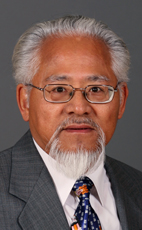
House of Commons photo

Crucial Fact

  • His favourite word was immigration.

Last in Parliament September 2010, as Conservative MP for Dauphin—Swan River—Marquette (Manitoba)

Won his last election, in 2008, with 61% of the vote.

Statements in the House

Pension Benefits Standards Act, 1985 November 5th, 2002

Mr. Speaker, on behalf of the PC Party of Canada it is a pleasure to rise to take part in this debate on Bill C-226, an act to amend the Pension Benefits Standards Act.

This bill would amend the Pension Benefits Standards Act insofar as it would require the administrators of a pension plan to prepare a specific annual report. This report would summarize the social, ethical, and environmental factors that were considered during the previous fiscal year in the selection, retention and liquidation of investments under the administrator's responsibility. A copy of the report would have to be provided to every member who requested it.

The PBSA is an act respecting pension plans that are organized and administered for the benefit of persons employed in connection with certain federal works, undertakings and businesses. The Canada pension plan does not come under the auspices of the PBSA. This proposed requirement to compel an administrator to file a report listing the social, ethical and environmental factors that might have been involved when making investments seems, perhaps, redundant if, in fact, it is accountability on investment criteria that the private member is seeking.

One can only assume why this amendment was put before the House. Possibly the hon. member did not want any pension administrator investing funds in certain companies for various reasons, ethical governance breaches, companies having suspect foreign practices or companies operating with a poor environmental track record. These are important issues that the employees and employers party to any private pension plan in a federally regulated undertaking should take note of. However, there is more than one way to ensure that pension plan administrators invest in an economically sound and prudent fashion.

The increase of regulatory requirements, which is what this bill would bring, might not be the answer to any real or perceived accountability problem. Parliament should be looking at ways to reduce regulatory requirements as opposed to increasing them while still ensuring the efficacy of any legislation.

Bill C-226 proposes to amend subsection 7.4(1) of the act, ostensibly to ensure that the administrator's investments are ethically and environmentally sound, et cetera. This amendment might not be needed considering the other sections that already exist in the act.

Section 7 of the act currently stipulates how some administrators are appointed. This section could possibly be used to ensure that any administrator appointment invest according to the wishes of the employer or employee. There are accountability safeguards already in place. Section 7 reads as follows:

  1. (1) The administrator of a pension plan shall be

(a) in the case of a multi-employer pension plan established under one or more collective agreements, a board of trustees or other similar body constituted in accordance with the terms of the plan or the collective agreement or agreements to manage the affairs of the plan;

(b) in the case of a multi-employer pension plan not described in paragraph (a), a pension committee constituted in accordance with the terms of the plan, subject to section 7.1, to manage the affairs of the plan; or

(c) in the case of a pension plan other than a multi-employer pension plan,

(i) the employer, or

(ii) if the plan is established under one or more collective agreements and the terms of the plan or the collective agreement or agreements to manage the affairs of the plan provide for the constitution of a board of trustees or other similar body, that body.

(2) In the case of a simplified pension plan, the administrator of the pension plan shall be the prescribed person or body.

7.1 A pension committee must

(a) if a majority of the pension plan members so requests, include a representative of the plan members; and

(b) if the pension plan has fifty or more retired members and a majority of the retired members so requests, include a representative of the retired members.

Thus, we already have in place provisions where investors can actually be involved in scrutinizing the investment.

Section 8 of the act also deals with accountability issues, namely the standard of care that must be exercised by administrators when investing funds.

Section 13 deals with information that the administrator must furnish to the Superintendent of Financial Institutions. Section 13 states:

The administrator of a pension plan shall provide to the plan members, former members and any other persons entitled to pension benefits or refunds under the plan, at the time and in the manner specified by the Superintendent, any information that the Superintendent specifies.

Section 13, if utilized, could possibly be used as a tool to get the information that Bill C-226 seeks without the amendment. In other words there are already sections in the act to do what the amendment intends to do.

Furthermore, not rooted in any legislation is the premise that pensioners need only ask administrators for the social, ethical and environmental indices he or she took into consideration when administering the pension's funds.

Should the administrator not want to furnish the information, there are certain avenues open to the information seeker. Some are legislated avenues and some are not.

In addition, if the administrator feels unduly constrained by various criteria concerning investment standards, environmental or otherwise, the pensions and pensioners might suffer financial hardship if an administrator shied away from excellent investment opportunities that have negligible environmental breaches.

The bottom line is that pensioners want money in their bank accounts so they can put food on the table and a roof over their head.

On strictly a housekeeping note, this amendment should not be proposed as subsection 7.4(1.1). Rather the new amendment should properly be placed with the rest of the administrative reporting requirements as listed under section 12. It is important to keep legislation coherent and all possible provisions that deal with similar matters should be grouped together. Section 12 is titled “Duty to Provide Information”. This, one would think, is where the amendment should go.

On a final note, sections 33 to 37 are the inspection and enforcement provisions of the act. Certainly at first glance they seem fairly well equipped to deal with unruly administrators.

Public Safety Act, 2002 November 5th, 2002

Mr. Speaker, I listened attentively to the member. I would like to ask the hon. member one question. Does he feel that the ministerial permits signed by the minister create a risk in terms of security for this country?

Ukrainian Canadians November 5th, 2002

Mr. Speaker, today marks the beginning of a national postcard campaign by the Ukrainian Civil Liberties Association and Ukrainian Canadian Congress to ask the Prime Minister to honour his 1993 promise to acknowledge and provide restitution for those people who were interned in Canada's first national internment operations.

On June 8, 1993, the Ukrainian Canadian Congress received the following letter from the current Prime Minister. It reads, “Thank you for your letter and the copies of the 'Economic Losses of Ukrainian Canadians resulting from internment during World War I'.

The Liberal Party understands your concern. As you know we support your efforts to secure the redress of Ukrainian-Canadians' claims arising from their internment and loss of freedoms during the first world war and inter-war period. You can be assured that we will continue to monitor the situation closely and seek to ensure that the government honours its promise.

As Leader of the Opposition, I appreciate the time you have taken to write and bring your concerns to my attention”.

The letter was signed by the Prime Minister.

It is time the Prime Minister honoured his promise to the one million Canadians of Ukrainian descent.

Petitions October 25th, 2002

Mr. Speaker, the last petition, signed by hundreds of petitioners, calls on Parliament to enforce the laws of Canada so that those who take advantage of their status and who breach the federal laws be held accountable for their actions. This is in regard to unlimited net fishing by aboriginals. The petitioners believe that Canada needs a single justice system for all citizens.

Petitions October 25th, 2002

Mr. Speaker, the second petition calls on the government to protect our children by taking all the necessary steps to ensure that all materials that promote or glorify pedophilia or sado-masochistic activities involving children are outlawed.

Petitions October 25th, 2002

Mr. Speaker, it is a pleasure to rise to present three separate petitions on behalf of the good people of Dauphin--Swan River.

The first petition calls on the government to focus its legislative support on adult stem cell research to find the cures and therapies necessary to treat the illnesses and diseases of suffering Canadians.

Kyoto Protocol October 25th, 2002

Mr. Speaker, the Gary Doer Government of Manitoba wants the federal government to ratify the Kyoto agreement in haste. Unfortunately, Manitobans have not been consulted by the Doer government on this issue. There are many questions that need to be answered by the Manitoba NDP government.

Premier Doer, how will ratifying Kyoto benefit all Manitobans? What will be the costs to Manitobans in terms of jobs and economic benefits? How will Kyoto cost individual Manitobans living in Manitoba? Premier Doer, when will Manitobans be consulted on a province-wide basis in a transparent process?

Manitobans are too smart to be led by the Doer government's blind faith approach to supporting Kyoto.

Literacy Action Day October 24th, 2002

Mr. Speaker, learners, teachers and administrators have come to Ottawa today to urge parliamentarians to make advances on our literacy policy.

Almost half of the Canadian population does not have the literacy skills they need to succeed in today's society. Literacy affects child poverty, unemployment, immigration settlement programs and advances for aboriginal people.

I call on the Government of Canada to: one, ensure literacy is key to the federal innovative agenda; two, create a Canadian literacy and essential skills strategy; and three, expand the role and resources of the National Literacy Secretariat.

With critical labour shortages threatening we cannot allow low literacy levels to force any of our citizens to the economic sidelines. We need to act now to advance literacy.

Yukon Environmental and Socio-economic Assessment Act October 21st, 2002

Mr. Speaker, I appreciate the comments of my hon. member across the way. That is the reason we have committee hearings so we can go through the whole bill clause by clause and sort these things out.

At this point in time our role is representing respective parties to put forth our position, certainly our preliminary position, in terms of how we view the bill whether in a positive vein or a negative one. Obviously the Alliance is the party that perceived this whole process in a negative vein and I guess we will have to work it through in committee to show it that there is always room for improvement. I believe there always is room for improvement in all legislation at all stages.

Yukon Environmental and Socio-economic Assessment Act October 21st, 2002

Mr. Speaker, I am pleased to take part in this debate representing the Progressive Conservative Party of Canada.

I have listened to the debate very carefully as various members of different parties enunciated this afternoon. Bill C-2 is an act to establish a process for assessing the environmental and socio-economic efforts of certain activities in the Yukon. The key word is process. In essence the bill establishes a process.

On first reviewing Bill C-2 it appears to make a lot of sense. It puts in place a new arm's-length assessment board to evaluate new projects. That is the primary goal. It makes sense to have all the stakeholders, all levels of governments, sitting at the same table. I know that is not an easy accomplishment.

The purpose of this board is to do both environmental and socio-economic assessments for all new proposals. In other words, assessment is the key function of the board. If the process had been totally inclusive then obviously it is rational to think that the selection of the board should be an inclusive one and all the stakeholders should be represented on the board.

All Canadians are concerned about our environment. They are concerned about waste, natural and man-made; the generation and disposal of waste; recycling; clean water and air; as well as the promotion of a clean environment. Canadians believe that it is the government's role to protect our environment as well as our resource base not only for today's generation, but for our future as well. In other words, all new development should be evaluated through the environmental lens. That is what Canadians will have to learn to deal with.

It is interesting to note that Bill C-2, in large part, will supersede the Canadian Environmental Assessment Act on most fronts. In principle, the Progressive Conservative Party of Canada supports the process as established in Bill C-2.

This is not a perfect bill, as we have heard today. There is no such thing as a perfect bill when it comes to this place. That is why we have this process. This is second reading and from here it will go to committee. Hopefully we will make it more perfect in committee.

We believe that a single board to do the work is a good idea.

Let me make some comments about consultation. When the government says it has done consultation, 99% of the time I am a skeptic. In my five years in the House, having shepherded a number of bills through the House, I am always disappointed with the way that governments have consulted in the past on previous legislation.

With Bill C-2, I am pleasantly surprised that the government did some consultations. We have been told there have been two major rounds of public consultation during the development of the bill. The first was in the fall and winter of 1998 and the second in the summer and fall of 2001. Both rounds of consultation provided opportunities to all Yukon first nations to receive presentations and to provide their comments orally in their own communities. First nations were also invited to make written submissions.

The reason I am surprised is that for too long different levels of government, whether municipal, provincial or federal, tended to do business by themselves. What makes sense is to get people together to sit at the table to work out the problems, especially when something affects all three levels of government.

I am happy to hear that this process actually took place. If access had been truly given to all stakeholders, and if all levels of government were involved, then this can serve as a template for other provinces to follow down the road. From that perspective new ground has been tilled with this particular bill.

I must remind everyone in this place that government is about people and is for the people. That is why we must ensure that the process is an inclusive one on any decisions we make, and that we all sit at the table regardless of the level of government. We must think this through regardless of political affiliation. We are here to deliver service to the citizens and taxpayers who sent us here. This is what democracy is all about. From that perspective, Bill C-2, if validated to be true, reflects what democracy should be.

People in other regions will have taken a proactive approach with regard to the bill. It is in their best interests to be involved. It is the people's resource base and environment. We all know that it is also their future, both environmentally and socio-economically. They need to be involved in determining their own economic future.

As has already been mentioned today sustainability of all communities in Yukon is important as it is everywhere else in this country. Hopefully Bill C-2 would help bring that goal to reality. Bill C-2 should create an atmosphere of stability and even more important, it should develop an atmosphere of hope for the people who live in Yukon.

The PC Party of Canada supports Bill C-2 in principle. We support a grassroots driven approach to legislation that is long overdue. More legislation coming from that side of the House should follow this process. We look forward to working out the details of this legislation in committee. We need to validate both the process and the contents of this legislation. It would also be a good idea for the standing committee to look at the new regulations attached to the bill which are almost ready to be tabled. The details will be worked out in committee, and I look forward to debating them there.