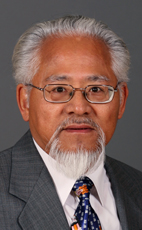
House of Commons photo

Crucial Fact

  • His favourite word was immigration.

Last in Parliament September 2010, as Conservative MP for Dauphin—Swan River—Marquette (Manitoba)

Won his last election, in 2008, with 61% of the vote.

Statements in the House

Resumption of Debate on Address in Reply October 8th, 2002

Mr. Speaker, I thank my colleague for the question.

I live in a large area and the majority of people who want to go to university have to leave the area. They are looking at a four to six hour drive to Winnipeg and there is that added cost. That has always been the dispute between rural and large urban centres. There is that added cost of living. Students have to find a place to live and there is that extra cost.

There are creative ways of dealing with that. Universities need to decentralize and offer courses in smaller communities. In the world of technology that we live in there is no reason why the Internet is not a big part of the equation. I see throughout the country that community colleges are probably way ahead of the universities on this point. They establish satellite locations in smaller regions and communities so that students from distant communities can have access to education whether it is at the community college level or taking university courses.

Resumption of Debate on Address in Reply October 8th, 2002

Mr. Speaker, I will be sharing my time with the member for Gander--Grand Falls.

It is an honour to stand today in the House to respond to the Speech from the Throne on behalf of the good people of Dauphin--Swan River.

Important issues are missing in the government's agenda. There is nothing for agriculture, there are no plans for rural Canada and there is no increase in funding for additional health care providers. Many of the promises we see in the speech have been mentioned in previous sessions of Parliament and only about 25% of those have been acted on by the government. No doubt this really was a useless exercise. We really did not need the Speech from the Throne. Over the last day we debated on the government's motion to bring back old legislation which died on the order paper.

The Liberals could have done several things with the throne speech. They could have promoted a responsible financial plan, an active international agenda or a collaborative approach to social programs and democratic reform. Instead, they chose to propose a long list of legacy spending in the absence of a budget. Canadians need planned direction, not spending sprees, from any of their governments.

I will take the time to quickly and briefly go through different sections of the throne speech. The first section deals with plans for and funding to health care. We all know that health care is first and foremost in the minds of all Canadians. As former government speakers indicated, we are at the point where only 14¢ out of every $1 comes from the federal government. When the plan was first put together it was 50¢. An increase in transfers to health is long overdue.

We must not forget the current disastrous condition of health care. This began in 1994 with the $24 billion cutback which forced the provincial governments to centralize and reduce their spending. Unfortunately, as we all know, technology is costly and is always on the rise. As we all age, a greater demand is put on health services.

The hon. member for St. John's West indicated to me this morning that in a province like Newfoundland, which has a population drain, it is even harder on the health care system because the number of taxpayers are not there to help pay for the system. Special attention certainly needs to be paid to that.

In terms of investment in cities and infrastructure, we know that over the last 50 years, from the first infrastructure program, which was the brainchild of FCM, that bridges and water and sewage systems are falling apart. It is unfortunate that governments, this one as well as past governments, have not paid more attention to infrastructure upgrades.

Today, with the experience of Walkerton, we know that potable water is very important. It is part of our health. In fact I have been lobbying the minister responsible for western diversification. Currently the situation with the prairie provinces is that most of the provincial-federal agreements have lapsed. Therefore they need to sit down at the table and renew these agreements so that more money for infrastructure development can be put in place.

Rural Canadians, certainly in my riding, are waiting for federal funding or tripartite funding to assist in potable water development. The community of Gilbert Plains in my riding is waiting to hear from the federal government. Unfortunately, if the money is not there, the work will not get done.

In the area of new money for early childhood programs and welfare reform, it is time this government and future governments started looking at the whole issue of free tuition for post-secondary education. Other progressive nations in the world are doing that. We all promote education in the House because we know it is necessary. It is how people change their status and improve their livelihood. We talk about that for the aboriginal community continuously and we all support that. I think that is the direction in which we need to head.

The speech talks about renewing environmental commitments and creating 10 national parks. Most Canadians would agree with that but the problem is that there are not enough funds to look after the parks we have today. In fact, the people living within national parks are fed up with the taxation increase. The ironic thing is that instead of looking after the urban sites, the recreational sites within national parks, the tax money is being used to look after the parks.

Another contentious issue is the whole issue of park wardens. It is ridiculous that the heritage minister, through Mr. Lee, the parks agency administrator, has absolutely refused to be rational when it comes to park wardens retaining their status as peace officers and being able to use handguns. The judgment from the labour board was in the park wardens' favour. It is so ridiculous that over the past year the park wardens have lost their status as enforcement officers. Do members know that a park warden cannot even stop a poacher on the highway or do anything about the poaching? The park warden has to contact the RCMP and literally wait until the RCMP arrive. It may take hours to do something about illegal activity in national parks.

Basically the park wardens have no role left other than that of being public paper pushers in their offices. It is very unfortunate and unreasonable. Park wardens are a part of the enforcement system in this country and they need to be treated with respect.

Ethics guidelines for public servants are long overdue. Perhaps we need to add ethics guidelines for governments. What will we do about broken government promises? We hear that concern from Canadians from coast to coast to coast. There is no recourse. Politicians can promise all they wish. Maybe it is time for them to be accountable for what they say. I think it is probably long overdue and most Canadians would agree with that.

In the time I have left I want to talk about what the throne speech says on page 14. It says:

Respectful of our history, confident in our future, let each of us do our part.

I want to mention two historical situations that this government and past governments have neglected and which need to be dealt with.

The first one is about the internment of Canadians of Ukrainian descent. We all know that during the first world war over 5,000 Ukrainians were interned in concentration camps and in 24 work camps throughout the country. The government must deal with this long overdue problem. These people were Canadians.

Past governments have resolved the issue of the Japanese internment. I think it is time the government acknowledged that the internment of Ukrainians actually happened in Canada, in this free, democratic and open country, during the war years only because they came from another country and perhaps looked or spoke like the enemy. Certainly that is a danger we encounter today with the war on terrorism and with people who have come to this country from the Middle East.

We also have the issue of Canadians of Chinese descent, of which I am one. The whole issue of the head tax must be dealt with. It was unjust and unfair, that whole idea of the Chinese Exclusion Act of 1923. The government needs to acknowledge this problem. If that is what is written in black and white in the throne speech then the government has to be accountable and carry out its promise.

It is time for the Liberal government to walk the talk. As we all know, actions speak loudest. We are looking for action from the government.

Agriculture October 7th, 2002

Mr. Speaker, I wish to thank my colleague from St. John's West for sharing his time with me.

I am honoured to take part in this evening's emergency debate on agriculture, as proposed by the right hon. member for Calgary Centre.

I represent a very large rural riding. In fact it is so large it is often compared to the country of Ireland. That is the size of Dauphin--Swan River. Agriculture is the lifeblood of Dauphin--Swan River. Unfortunately the government's approach to helping farmers is really choking the lifeblood out of the farmers.

Farmers are, to say the least, disappointed in the way the Liberal government has managed the agricultural portfolio.

I have been here for over five years. When it comes to farming and farming problems I ask the question: What has changed? Absolutely nothing has changed. The only change over the past five years has been that we have lost tens of thousands of farmers who could not afford to stay on the land and ensure that the country had a sound source of food.

The rural population base continues to shrink. Rural Canada depends on farmers. Canadians should know that all the little towns and villages in rural Canada depend on the farmer. Their survival depends on farm income. Farmers are the principal source of revenue for the economy of rural Canada. Basically at this time most of the rural regions are in the business of producing raw products, unlike that of central Canada which has the advantage of having the complete chain, both at the farm gate as well as the kitchen table.That is where all the jobs are created. Unfortunately, as I can certainly speak for the west, this is absent.

Farmers in Dauphin--Swan River are tired of listening to politicians, especially Liberal politicians. The Liberal government's promises are just that, promises. Farmers in Dauphin--Swan River have held protest rallies over the last five years, traffic slowdowns on Highway No. 1 and have even journeyed to Ottawa in protest, as well as to meet with government cabinet ministers and to lobby members of Parliament, but all of this was to no avail. In fact they have received very little benefit for all the work they have put into trying to get their issues on the table.

Why do we continue to debate farm emergencies in the House when the government has no solutions? It is quite obvious that if it had any solutions we would not be debating this matter.

I believe the member for Brandon—Souris said that this was the sixth time we have sat in the House in the evening to debate the emergency in agriculture. Are we going to keep doing this until there are no farmers left in this country?

The government continues to play politics with the farmers. The government proposals are all show and no substance. The big numbers that we hear from the agriculture minister, which come often, are just that, big numbers. Farmers want to know how these big numbers will help them stay in business. In fact, they are still waiting, the few who have successfully managed to stay in business despite all the challenges of not only debt but the weather.

Back in 1997-98 it was appalling that it took months and months of debate by the opposition before the government realized there was even a farm problem in Manitoba and Saskatchewan. Again and again the government came out with big numbers. In fact I believe there was something like a $1.5 billion support program and two years down the road it still had something like $600 million or $800 million in the kitty. That is the problem. These numbers are just numbers. The government has no solutions and no idea how it can help the farmer in need. It comes out with all these fancy programs that are still in existence but that do not work.

If the government really is concerned about our food industry why is it neglecting the issue of international trade subsidies? We have heard that debated this evening as well. The Europeans get something like 56¢ on the dollar. I guess the Americans with the new farm bill will probably get about the same. Meanwhile the poor Canadian farmer I believe gets 9¢ on the dollar. It is worse than the health care system.

Farmers want to be paid a fair price for their hard work. The neglect we see on the part of the Liberal government has forced farmers to eat up the equity in their business just to stay in business. I have had farmers call and tell me that at no time in history have they even called a member of Parliament for assistance. These are farmers who have diversified farms of 2,500 to 3,000 acres along with a 150 to 200 cow operation. Basically it is like robbing Peter to pay Paul. At the same time as they are paying their bills they are going nowhere. They are eating up their equity. These farmers are at the age where they should be thinking about retirement.

As we have heard farmers always say, hopefully next year will be better. Since I have been here, which has been over five years, farmers are still waiting for next year. The only good thing about this year for the farmers in my constituency is that they have had a decent crop. Unfortunately the prices have risen only because of the deplorable weather conditions of our neighbouring provinces like Saskatchewan and Alberta. However I am sure that will not last very long either.

NISA was also mentioned this evening. Many farmers do not even have a NISA account. Many farmers have told me that they will not use up their NISA account because they want to use that as a retirement fund. Unfortunately I do not think too many will have that option.

It is ironic that the minister created an advisory board many years ago. Through our travels back and forth we often encounter the board members coming to Ottawa. Surely the minister must be getting good advice. The board has representatives from national agricultural organizations. What has the advisory group been doing, or is the minister not listening to their good advice? So much for consultation on the part of the government.

Farmers in Dauphin--Swan River are also concerned about bovine TB because it will have a huge impact, not only on the cattle of Manitoba but perhaps on our neighbours as well. The government has to take a more proactive approach and deal with the problem. It cannot let it sit there, much like the American subsidy program. If it continues to do that we may find that we may not have a cattle industry in western Canada or Manitoba.

Let me close by saying that this country needs a new agriculture policy and it certainly needs a new safety net program. One of the problems I see is that we need to separate safety net from disaster programming. Will the government do the right thing before our food producers in Canada disappear altogether?

Committee Business and Reinstatement of Government Bills October 7th, 2002

Mr. Speaker, I am pleased to take part in the debate on the government's amendment to shut down debate in the House, which is called closure. Should I be surprised? Not really. Nothing has really changed in the House since the Liberal government came to power in 1993. In fact, we heard this morning from other members of the opposition that the Liberals have already established a record of closing debate in this democratic House. I believe it has been over 70 times

I would like to talk about the democratic deficit of the government and the whole issue of prorogation as well as some of the bills that the government wants to bring back to the House.

It is rather ironic that throughout the summer we read newspaper articles on comments made by Liberal members about the democratic deficit in Parliament. Here again we have, in the second week of Parliament, another example of why this place is in deficit when it comes to practising democratic values.

It is also unfortunate that the government House leader could not come to an agreement with the opposition House parties that would have avoided the situation that obviously led the government side to bring in a motion to shut down debate again.

The first thing on which members of the Liberal Party need to be reminded is that they rarely listen to Canadians. They do a lot of talking about consulting and listening but when it comes to putting their beliefs into practice usually it does not work out very well.

On the whole issue of proroguing the House and returning two weeks later, I had no complaints because I am always busy at home doing constituency work. However, in terms of delaying the House business for two weeks and then coming back here today with the government asking to almost reverse the process of prorogation, in other words, bringing the legislation that died on the order paper back into the House at this point in time, is rather a mockery.

It tells me that the throne speech, this whole business of going through the motions at the beginning of last week, was really all for show and for nothing else. I have been told that when we have a throne speech the government is supposed to put in place a new agenda, a new set of legislation that it wants to put through the House. Obviously, there is nothing new. We see the request of the government to bring back into the House old pieces of legislation which leads me to believe that we really did not need to prorogue the House in the first place.

I would like to comment on some of the bills that the government wants to bring back which are very contentious. It seems to be in the order of the day for the government to divide Canadians along the lines of urban and rural. We know for a fact that 80% of Canadians live in urban centres. That is probably the reason they would rather support the urban type legislation and many times forget about the effect they have in the rural communities.

Bill C-5 is a good example, the cruelty to animals legislation. My riding of Dauphin—Swan River is a very agricultural based riding. It is truly the backbone of our economy, the way our economic health is determined by the health of the agriculture industry. This bill really could be called a pet bill if someone did not know what it was. It is about the protection of pets. I do not think there is a Canadian who would disagree with the principal premise of this bill, of cruelty to animals, not only pets but also animals that we raise for food.

I believe farmers throughout the country agree that we need to treat all animals in the right manner. We live in the 21st century. We do not believe in beating animals, beating our children or beating our pets. The problem is that the way the legislation is written it could have a huge impact on people raising animals for the purpose of producing food for Canadians.

That leads me to make another statement which is that the government really does not value the whole food production industry. With that kind of bill it certainly does not respect or have any value for the people putting food on the table with reference to the raising of animals.

Another very contentious bill and one that was mentioned this morning is Bill C-15B, the species at risk bill. It would have a huge impact. Canadians have a great interest in our environment. In our nature as Canadians, we are environmentalists. The problem is we need to also look at the pitfalls of bills such as Bill C-15B and the impact they would have on people who live in the rural parts of the country. Farmers already are very aware of species that are at risk and do their utmost. They leave land untilled and leave an environment that is conducive to helping the species survive. We see that throughout this country. However, if it is legislated into law the demands on lands, and with absolutely no reasonable approach to compensation, it would create a conflict between rural Canadians and urban Canadians.

Unfortunately the government has a track record of dividing Canadians along urban-rural lines. I do not need to remind Canadians and certainly the Liberal government how the gun control bill, Bill C-68 has done exactly that. In fact, Bill C-68 is still paramount in the minds of most Canadians. It has absolutely nothing to do with the intent of the bill, which is to reduce violence in our society with which we all agree as Canadians. The problem is that the Liberals do not understand that the use of firearms as a tool is a way of life in rural Canada. Every time we look at a firearm, it is not a dangerous piece of material by itself. It is the person behind it and the person using it. In fact it has created a mess. The firearm registration system for long guns is a disaster. As Canadians know, we have had handgun registration in the country for over 60 years. Unfortunately, with the mixing of the two, even that registration system will be a mess.

On top of that, we talk about the financial deficit of the military. We are wasting over $1 billion on the long gun registration which easily could have been put into health care or put toward the needs of the military.

Another contentious bill in the eyes of aboriginal Canadians is Bill C-61, the first nations governance bill. The biggest criticism of the bill was that it lacked consultation with the first nations communities. Let me say that not all first nations agree with that comment. The minister has said that he himself consulted with many first nations communities.

I will close by saying that the Liberals as usual do not walk the talk. They tend to do a lot of talking. They have a history of that. Most Canadians agree that the whole political system needs an overhaul. Certainly we should begin in the House. It is really called democracy. If we are really to practise democracy then let us begin in the House.

Resumption of Debate on Address in Reply October 3rd, 2002

Mr. Speaker, I want to commend the hon. member for his response to the Speech from the Throne. I know that over the years he has certainly supported the theme of equal citizenship and equal rights for all Canadians regardless of whether they were born in this country or immigrated to this country.

While the throne speech addressed that vacuum and I understand the government will be tabling a new citizenship bill later on in the session, does the member think that his government will make those right changes for all Canadians?

Urban Affairs October 3rd, 2002

Mr. Speaker, in 1996 at the Federation of Canadian Municipalities convention in Calgary the Prime Minister acknowledged the importance of municipal governments and that it was time to recognize municipal governments in their own right. To this day, the Prime Minister has not officially recognized municipalities.

There are over 4,400 municipal governments in Canada that are the first order of government, the level of government closest to the people. Yet the Prime Minister refuses to acknowledge the legitimacy of these governments. The federal infrastructure program was really the brainchild of the Canadian Federation of Municipalities. If government programs are to be successfully implemented, the government closest to the people must have a voice at the table and be consulted.

When will the Prime Minister recognize the legitimacy of the first order of government in Canada or will this be just another broken Liberal promise?

Iraq October 2nd, 2002

Mr. Speaker, the official position of the PC Party of Canada is exactly as I have presented it this evening.

Iraq October 2nd, 2002

Mr. Speaker, I want to take part in this very important debate tonight on Iraq because of the potential for putting Canadians in harm's way.

Debate in this House of the people has been a part of our political history anytime this country has gone to war. Having listened to much of this debate over the past several evenings, I would like to present the point of view found in my riding of Dauphin--Swan River.

The constituents of Dauphin--Swan River are concerned about the possibility of this country going to war on another front when our troops are not finished with the war against terrorism being fought in Afghanistan. Two points of view have been communicated to me by my constituents.

First, how we can possibly not support the position of President Bush? We have to just look at our economy which is closely tied to our American neighbour. We share a common border, the longest undefended border in the world. We are the best of friends. Our economy is dependent on the American marketplace. In fact, 80% of the products we produce are shipped south. We share many of the same democratic values. Over a billion dollars daily of trade moves north and south from B.C. to P.E.I.

Constituents who share this view support following the direction of President Bush. These constituents feel it would be seen as a betrayal to our friendship to not support President Bush and would let Saddam Hussein continue his bullying of the world community.

The other point of view shared by the majority of people of Dauphin--Swan River is that, as a member of the world community, Canada must work through the United Nations to resolve all conflicts around the globe. As a country we believe in the rule of law. Our behaviour needs to reflect this principle. These constituents believe that all diplomatic options must be exhausted before the use of force.

Canadians are a peaceful and we live in a peace loving nation. When stirred by a just cause, Canadians are second to none when it comes to defending our nation. Our world record speaks for itself. Canada has never run away from any armed conflict.

This summer I had the opportunity to take part in a cenotaph rededication service in the community of Gilbert Plains, my hometown and the place where I grew up. The people who attended this very important ceremony were reminded of the supreme sacrifice made by the young men and women from the village of Gilbert Plains in both the first world war and the second world war.

We are also reminded of the effect that war has on Canadian families, as we recently witnessed with the loss of lives in our campaign in Afghanistan.

War has also had tragic effects on my life. After the second world war, my family lost everything they owned and were forced to escape from mainland China during the political climate change. Fortunately I was only three years old at the time. Thank God I do not remember a lot of traumatic things that took place at that time.

At this time as a father I am proud to have my son who is currently in the Canadian army go to war to defend this country for a just cause. I am sure most Canadian parents feel the same way as I do this evening.

We need to sort out the real issues in this debate. First, let us talk about Saddam Hussein. Enough has been said about him over the last two evenings to convince most of us in the House and probably in this country that he is not a nice guy. If he were not around, the people of Iraq and the world would certainly be better off. Most of us would agree there is no argument on that point.

The debate now is on how Canada should operate at this time. Should Canada follow blindly the President of the United States and his point of view? Should Canada follow a process as established by the community of the world through the United Nations?

Canada is a sovereign country and can think for itself. We are independent. A strong friendship with the United States should promote differing views. We need only to look at the domestic problems that we experience all the time. Currently we have disputes in the area of agricultural subsidies. We are having a dispute over softwood lumber. These are examples of how we differ in our points of view. We should not look at different views as being weak or disloyal to our American friends. As a sovereign country we need to do what is right for Canada first and foremost.

I want to reiterate some of the most recent developments of this past week. On September 30 the United Nations weapons inspectors began talks with Iraq regarding their return to Baghdad. The discussion began by holding Saddam Hussein to his pledge of unfettered access to suspect sites. Hans Blix, the chief UN inspector, stated that the talks would operate under the assumption that nothing in Iraq, including Saddam's palaces, would be considered off limits to inspectors. A deal was expected to be reached and it was reached yesterday.

Under a new United States resolution which we have been hearing about and expected to be brought to the Security Council soon, inspectors would have access to all sites including the palaces or any other government buildings. They would be protected by security forces during their visit.

The people of Dauphin—Swan River support the use of force only after all diplomatic options have been expended. If and when Canada sends soldiers abroad to participate in any campaign against Iraq, every single diplomatic channel must be exhausted beforehand. All Canadian diplomats need to use all of their contacts to pressure the Iraq regime to cooperate with the United Nations and its weapons inspectors.

A rare effort must be made to follow the directives of the United Nations and Secretary General Kofi Annan in taking action against Iraq. We must ensure that Iraq honours its commitments to ensure unfettered inspections take place and Canada must work with the United States to ensure that all of us work under the auspices of the United Nations.

Finally, rules based diplomacy must remain the centre of international cooperation and conflict. One superpower must not be allowed to change or make up rules as it sees fit. This would be a certain recipe for disaster in the present and the future.

Specific Claims Resolution Act June 18th, 2002

Mr. Speaker, I am pleased to take part in the debate on Bill C-60, the specific claims resolution act, on second reading, representing the PC Party of Canada as an independent Conservative member of the House. It is rather unusual to debate two bills on aboriginal affairs back to back. As we know, yesterday we debated the first nations governance act, Bill C-61.

I made reference during yesterday's debate on Bill C-61 to the fact that the member for Winnipeg Centre made a recommendation to the minister that aboriginal representation be included during the hearing process of the standing committee. I can certainly say at this time that the PC Party of Canada supports that recommendation. In fact, we would suggest that the recommendation be extended to Bill C-60 as well.

We all know that the land claims issue in Canada has been longstanding and has not been easy. Aboriginal treaties and land claims are part of Canada's history. I believe that Canadians want these outstanding land claims to be resolved in an expedient manner. It is in the best interests of all Canadians, including aboriginal Canadians. Bill C-60, in the PC Party's opinion, is a progressive step.

My first involvement with land claims was in 1995 with the Rolling River first nations band in my riding of Dauphin--Swan River. The then chief, Dennis Whitebird, who is now the grand chief in Manitoba, was one of the leaders involved in the entitlement land claims initiative in Manitoba. As the mayor at the time I learned a lot about land claims through the process and supported the Manitoba entitlement claim initiative. In fact, Dauphin--Swan River is fortunate to have 13 first nation communities as well as 88 other municipalities.

The land claims process, as I found out, is not as simple as it sounds. At this point I would like to relate some of the basic information that I had to learn to understand and I believe it would be in the interest of the viewers following this debate.

First nations in Canada have signed agreements with the crown that are called treaties. There are three groups of treaties: pre-Confederation treaties, numbered treaties, and modern treaties, which we designate as land claims. In July 1817 the Selkirk Treaty in my own province of Manitoba was signed by the Saulteaux and the Cree First Nations and the Government of Canada.

The pre-Confederation treaties include King George III's royal proclamation of 1763. Those treaties were negotiated in Canada before Confederation. Also included are the Robinson Treaty of 1850, Treaty No. 13, and the additions to the Robinson Treaty which are known as Treaty No. 12 and Treaty No. 14. Numbered treaties are the treaties numbered 1 to 11, which were negotiated between 1871 and 1877 with first nations people across Canada.

The third group of treaties is known as the modern treaties, or land claims as we know them today, which consist of land claims negotiated according to Canada's land claims policy established in 1973. The land claims policy recognizes two broad classes of claims: comprehensive claims and specific claims.

I will explain briefly what comprehensive claims are. Comprehensive claims are based on the assertion of continuing aboriginal title to lands and natural resources.

Comprehensive claim settlements are negotiated to clarify the rights of aboriginal groups to lands and resources in a manner that will facilitate their economic growth and self-sufficiency. Settlements are intended to ensure that the interests of aboriginal groups in resource management and environmental protection are recognized and that claimants share in the benefits of development.

These rights and benefits usually include: full ownership of certain lands in the area covered by the settlement; guaranteed wildlife harvesting rights, which I will come back to later and discuss in a little more depth; guaranteed participation in land, water, wildlife and environmental management throughout the settlement area; financial compensation; resource revenue sharing; specific measures to stimulate economic development; and last, a role in management of heritage resources and parks in the settlement area.

I would like to speak about how guaranteed wildlife harvesting rights has impacted both aboriginal and non-aboriginal individuals in Dauphin--Swan River this past winter.

No one disagrees that aboriginal Canadians have the right to fish and hunt on a sustenance level. In real terms, sustenance means putting food on the table, in the absence of aboriginal commercial rights to fish.

This past winter in Dauphin--Swan River we saw a small group of aboriginal net fishers net fishing on an unlimited basis in stocked lakes under the guise of sustenance. That is wrong. This illegal activity is not supported even by aboriginal people. Most of this illegal catch ended up on the commercial market through the Manitoba freshwater fish marketing board, which is a creature of the federal government.

Unfortunately this issue is still unresolved. Manitoba has no provincial regulations pertaining to unlimited net fishing by aboriginals. In fact, the Manitoba conservation minister is himself an aboriginal Canadian. He wants band bylaws on resource management to be applicable outside the boundaries of the reserve. This goes against the Sparrow decision.

The issue of unlimited net fishing by aboriginals in stocked lakes will not go away unless all stakeholders in Manitoba meet and come up with a solution. The provincial minister currently picks and chooses who should sit at the table. If humans do not agree, fish and game will be the big losers. We will all lose if we lose our wildlife resources.

Most specific claims are related to land other than a loss of reserve lands without lawful surrender by the band concerned or the government's failure to pay compensation where lands were taken with legal authority. Other specific claims arise with respect to the administration of Indian moneys and other assets such as timber and mineral rights.

This brings me to Bill C-60 dealing with specific claims. Before I talk about the bill I would like to put forth the Progressive Conservative position. We would respond energetically to the co-operative settlement of outstanding land and other claims with aboriginal people ensuring that they have full opportunity to grow, develop and prosper within Canada.

The position of the Progressive Conservative Party differs from the Liberals in that we would work with aboriginal people to expressly define aboriginal rights as a matter of public policy in a non-confrontational balance and interest based negotiations. We believe that the ineffective, paternalistic, colonial approach of the Indian Act must give way to greater self-reliance through effective education, economic development, social justice and local control.

The PC position is very clear. We do not share the position of another party in the House that believes special rights for any targeted racial group is contrary to the principle of equality and that they should be indistinguishable in law and treatment from other Canadians.

The minister said in committee that something was wrong when legal fees outstripped settlement targets. In principle the PC Party supports Bill C-60. On the matter of litigation we support the policy that Canada will not entertain a claim or participate in negotiations if first nations have active litigation on the claim.

The existing claims process has been criticized by many over the years. These are some of the criticisms. This was a backroom process hidden from the public. There is a lack of fairness and transparency in the area of research and assessment. It does not provide a level playing field for negotiations. Finally, there is a lack of independence and partiality and accountability. The new bill, Bill C-60, hopefully will address these concerns.

Canada's specific claims policy was first established in 1973. Over the years this policy has been amended several times to reflect the evolving legal and policy environment. Despite its shortcomings, it has settled many claims. In fact, 232 claims were settled, totalling $1.2 billion, averaging $5.3 million per claim and adding 16,000 square kilometres to the reserve land base. Approximately 580 claims, with an estimated contingent liability of $2 billion, have been added to the Indian and Northern Affairs Canada inventory of unsettled claims.

Calls for the government to establish an independent claims body have been numerous over four decades by three parliamentary committees: the parliamentary joint committee 1946-48; the joint committee of 1959-1961; and the Commons standing committee on aboriginal affairs in 1991. There was also draft legislation introduced twice in the House in 1963 and 1965. They all failed.

Three independent reports made similar recommendations for an independent claims body: Gérard La Forest in 1981; the Canadian Bar Association in 1987; and the royal commission on aboriginal peoples in 1995. There are other advocates who recommended the same point of view: the Indian Specific Claims Commission in 1991 and the first nations Canada joint task force created in 1996.

All stakeholders agree that establishment of this independent body is long overdue. The centrepiece of Bill C-60 is the establishment in law of the Canadian centre for the independent resolution of first nations specific claims. It will be comprised of a commission division to facilitate the negotiation of claims settlements between the parties by providing a range of dispute resolution processes and a tribunal division as a last recourse to adjudicate the validity of and compensation for claims where negotiations and dispute resolution processes have proved unsuccessful.

The commission and the tribunal will establish neutral arm's length claim facilitation and adjudication bodies, enhance transparency, remove the funding of first nations to participate in specific claims process from the minister's jurisdiction, simplify the existing structure and bring greater rigour to the process and provide an effective alternative to litigating specific claims, which are expensive for both parties, by actively promoting negotiated settlements and/or exercising its authority to render binding decisions.

One area in Bill C-60 which calls for debate is the fear of patronage appointments process. Why does the government get to pick all the commissioners in both divisions? How can it operate at arm's length and be impartial and away from political influence if this occurs? Does the aboriginal community have representation on those commissions?

June 21 is an important day as we celebrate National Aboriginal Day. Aboriginal history is a part of this country's history. How many Canadians know that during the war of 1812-1814 the aboriginals in central Canada, through their efforts in aiding the British, basically prevented the takeover of this country by the Americans?

Two weeks ago I had the privilege to help open the first annual parkland aboriginal festival in Dauphin, Manitoba. I am sure the festival will become an annual event and will continue for many years to come. I applaud the Dauphin Friendship Centre for taking the initiative to organize the event, with the full support of the aboriginal community.

In closing, Bill C-60 is needed. The PC Party supports the bill in principle. I look forward to the upcoming hearings by the standing committee.

Aboriginal Affairs June 17th, 2002

Mr. Speaker, the biggest criticism of Bill C-61 is over the consultation process. A Progressive Conservative government would have worked with all aboriginal people as a matter of public policy in a non-confrontational, balanced and interest based negotiation to come up with new legislation.

My question is for the Minister of Indian Affairs and Northern Development. After spending $10 million on consultation, why is there so much opposition to Bill C-61 from the aboriginal leadership?