Mr. Speaker, the next petition calls on parliament to repeal gun control Bill C-68 and to redirect the hundreds of millions of dollars to education and health care.

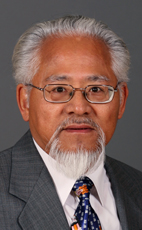 House of Commons photo
Won his last election, in 2008, with 61% of the vote.
Petitions October 5th, 2000
Mr. Speaker, the next petition calls on parliament to repeal gun control Bill C-68 and to redirect the hundreds of millions of dollars to education and health care.
Petitions October 5th, 2000
Mr. Speaker, the next petition calls upon the government to ensure emergency compensation be immediately delivered to farmers who have not been served by AIDA and immediately launch an international campaign against foreign subsidies.
Petitions October 5th, 2000
Mr. Speaker, the second petition calls upon parliament to allow the continuation of Canadian forces Snowbirds 431 air demonstration squadron through both funding and legislation.
Petitions October 5th, 2000
Mr. Speaker, I have the honour to present eight separate petitions on behalf of the people of Dauphin—Swan River.
The first petition calls on the government when selecting a candidate for the Senate to respect the democratic right of Manitoba to elect its own senator.
Immigration September 27th, 2000
Mr. Speaker, today's news confirms that our record high population is due to immigration.
Six years ago the government voted down one of the Canadian Alliance's motions to test all immigrants for HIV. The government has now had a change of heart. Ironically the number of physicians needed to check for infectious disease has been reduced over the last five years from 44 to 22. The auditor general has been hounding the department for the past 10 years.
How can the minister even assure Canadians that her testing plan will achieve results given the workload departmental physicians currently face? Six years after our motion the government has finally realized that Canadian health and safety must be a priority of immigration policy.
The last time medical standards were looked at was in 1978. Protecting the health of Canadians would be the first priority of a Canadian Alliance government.
Questions On The Order Paper September 25th, 2000
With regard to the new funding announced for CBC Radio: ( a ) how much and what percentage of the total of the new funding for radio went to the province of Quebec and French radio; ( b ) what is the percentage for CBC radio in French and CBC radio in English of the total funding package; and ( c ) what is the breakdown and ratio in funding for the aforementioned during the last three fiscal years?
Questions On The Order Paper September 25th, 2000
What is the breakdown and ratio of funding that the CBC is receiving in the current fiscal year 2000-01 from the Canadian television fund and Telefilm for the production of documentaries, feature films, children's programming and drama, showing not only national figures but regional figures by province and also a breakdown by name of production company and/or individual independent producer; and how do these figures compare with those for the last three fiscal years?
Health September 21st, 2000
Mr. Speaker, it is now time to turn our attention to protecting the health of Canadians. Health Canada is finally recommending that migrants be tested for the AIDS virus before granting them entry into the country.
In 1994 my colleague for Calgary Northeast tabled a motion which called for precisely that, mandatory testing for AIDS, and the Liberal government voted it down.
Why has it taken the government so long to protect the health of Canadians?
Supply June 15th, 2000
Mr. Speaker, our health critic indicated this morning in his speech that we are not in favour of a two tier health system. We have said that over and over again. I do not know why the member opposite keeps asking the same question about a two tier, American-style health care system. We are opposed to that.
I agree that we need to put money back into the system. The Liberal government indicated in its budget that over five years it will put money back into it, but it seems to have forgotten that it took out more than $24 billion. That is what I said in my speech.
Many of the problems we have today stem from the day when the government made that huge cut. I do not blame the government for all of the problems that exist, because there are increasing demands on the system, but certainly that is what started the problems and the crisis we have today.
Supply June 15th, 2000
Mr. Speaker, I will be splitting my time with the member for New Westminster—Coquitlam—Burnaby.
I am pleased to speak to the health crisis in Canada. I want to speak from the Manitoba perspective. Having actively been involved with this issue for many years in Manitoba, I can certainly tell the House that Manitobans are not happy campers when it comes to their health care services.
The cuts from the federal government have had a huge impact on all the people of Manitoba. The whole health care system in Manitoba had to be reconfigured to deal with the drastic cuts the government made to the tune of about $24 billion in the early 1990s.
It forced the provincial government to centralize the health system. It is sad that this was forced upon the Gary Filmon government. Unfortunately it may have been one of the factors that cost him the last election because people are still angry about the health care delivery system in the province of Manitoba. As a result we now have a number of regional health authorities who are unelected and appointed by politicians. It is another political game which we have to put up with.
What did I do about this, going back six or seven years? At that time I organized a provincial health meeting with municipal and aboriginal leaders to deal with the health crisis. We had a forum on health. We asked the then Manitoba minister of health, Darren Praznik, to appear before the angry delegates and he did. He found himself in a very difficult situation. He had been appointed to that position about a month prior to the meeting.
Unfortunately all the municipal and aboriginal leaders attacked the province of Manitoba and blamed it for the problem, which in essence was wrong. I can see with 20:20 vision in hindsight that the blame should have been put squarely on the federal government. In fact, no one even wanted to hear that the problem was created by the federal government. Can you believe that, Mr. Speaker? We still need to place the blame on the government that created this problem in the first place, the federal government.
Today the problem still exists. People are still not happy with the system that is currently in place. There are still long waiting lines. There are still shortages of beds. There are overcrowded clinics. Doctors are overworked. In other words, we need to remind Canadians how this big problem started in the first place. It all started with the big cuts at the federal level.
I would like to talk about a client central health care system that exists in my riding of Dauphin—Swan River, the Hamiota District Health Centre. It has been around for at least 50 years.
How do we measure the health of a community? Do we look at the number of medical office visits and days of hospital care and assume that greater activity indicates better health? Or is the reverse true? Current priorities in Canada's health care system are contested by community health centres which nurture health as a positive attribute to be protected, restored and enhanced.
Medical health centres are not new. Most of the dozen or so in Manitoba are unique in scope, ranging from a single specialized service to the Hamiota District Health Centre, the classic example of a comprehensive integrated centre. Located in southwestern Manitoba, the HDHC has been around since 1974. It provides a broad range of services geared to community needs, limited only by available means.
I would like to pay tribute to Dr. Ed Hudson who in 1945 took over his father's practice in Hamiota. His father, Dr. E.D. Hudson, began his practice in 1907. Dr. Ed Hudson is still actively involved in helping to deliver quality health care. Between his horses and the health centre, he certainly keeps busy in his senior years.
The Hamiota District Health Centre began with a belief in the health centre potential for improved quality of care. The providers of that care know the satisfaction of delivering care programs that are effective but definitive assessment is difficult. An evaluation concentrating on results of programs is limited in scope.
The 1972 white paper on health policy states, “a health system must also be judged by the numbers of people who in fact never succumb to disease or accidents or social distress”. A method of measuring quality of care is elusive.
Cost saving efficiencies were envisaged. There is the co-ordination of care by many disciplines, resulting in decreased numbers of diagnostic tests, the pooling of supplies and equipment, and more efficient use of physical facilities. There is the ability to use the most appropriate care provider in patient care and the appropriate level of care for the patient. There is the freeing of physicians to use their time and expertise more efficiently in preventive care and health promotion to reduce hospital stays. There is the use of home care, mobile meals and support services to reduce hospital patient days. There is the economy of using only one administration and one governing board in an expanded system of care. There is the active involvement of the community in establishing support for the programs and identifying needs.
Thirty years of experience seems to support all these tenets. Controlled spending has to date precluded any unapproved deficits that would become the responsibility of the municipalities of the district.
The centre lacks the information and statistics required to do a self-evaluation or a comparative one, but has co-operated with governments in several assessment surveys and questionnaires. Results of research, if any do exist, have never been publicized.
Quite apart from statistics but evident to a visitor to HDHC is an atmosphere no one had predicted. Staff morale is exceptional.
The current position is to devote half a day per month to a strategy meeting to critically assess the role in terms of efficiency, effectiveness and goals. It is expected that gains in health care in the next decade will be in preventive care, with emphasis on nutrition, health promotion, physiotherapy and occupational therapy, as resources are geared to keeping people well.
The expansion of existing programs or the introduction of new ones in times of fiscal restraint are largely matters of trade-off between priorities. The flexibility of the system is conducive to change to improve care and to respond to community needs.
Turn of the century health care in rural Manitoba was delivered by the dedicated and selfless family medical doctor. As the century closes we find a burgeoning multiplicity of health disciplines in a tangled web of administration by government departments, subsidized public offices and private agencies. The system has grown without plan or co-ordination in an expensive add-on fashion which encourages health care professionals to concentrate on protecting the turf of their own specialty, competing for limited resources and denying any vision of total care.
One health worker suggests “I am sure if I were to start all over again in health care there would be no doubt as to the direction it would take. Interdisciplinary health care management would be the only way to go”.
Wishful thinking, you say, Mr. Speaker? Perhaps, but this small community in Hamiota, Manitoba, has found it to be possible. I would invite hon. members, if they have the time this summer, to visit this place to see how client-centered health care takes place.
I would like to close by quoting from a letter that was sent to me from the Council of Chairs of the Regional Health Authorities of Manitoba. The letter reads in part:
Every day, members of the RHAM see the serious effects that cuts in federal transfers are having on our national healthcare system. The significant decline of public confidence in our healthcare system is compelling evidence that Canadians feel the system will not be there for them and their families when they need it. Federal/provincial/territorial co-operation to build a truly accessible, integrated, client-centered continuum of care is essential to restore the confidence of all Canadians in our health care system.