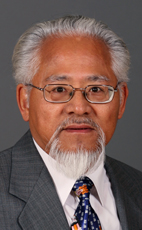
House of Commons photo

Crucial Fact

  • His favourite word was immigration.

Last in Parliament September 2010, as Conservative MP for Dauphin—Swan River—Marquette (Manitoba)

Won his last election, in 2008, with 61% of the vote.

Statements in the House

Canada National Parks Act June 9th, 2000

moved:

Motion No. 8

That Bill C-27, in Clause 18, be amended by replacing line 31 on page 14 with the following:

“18. (1) The Minister may designate persons”

Motion No. 9

That Bill C-27, in Clause 18, be amended by adding after line 40 on page 14 the following:

“(2) For greater certainty, park wardens are entitled to ( a ) the protection provided by the law to peace officers within the meaning of the Criminal Code; and ( b ) access to all of the resources that are required, including the possession of a firearm, for the enforcement of this Act and the regulations in any part of Canada and for the preservation and maintenance of the public peace in parks.”

Canada National Parks Act June 9th, 2000

moved:

Motion No. 11

That Bill C-27 be amended by adding after line 42 on page 24 the following new clause:

“36.1 (1) No lease or licence of occupation may be granted for the purpose of air facilities on public lands in a park except within the aerodromes that are in existence at the time this Act comes into force and are located within a park, including Banff National Park of Canada and Jasper National Park of Canada.

(2) For the purposes of public safety, the air facilities within the existing aerodromes referred to in subsection (1) shall continue in operation.”

Motion No. 12

That Bill C-27 be amended by adding after line 42 on page 24 the following:

“(3) For the purposes of this section, the word “aerodrome” has the same meaning as in the Aeronautics Act.”

Canada National Parks Act June 9th, 2000

Mr. Speaker, it is my pleasure to debate Bill C-27, an act respecting the national parks act of Canada at report stage.

The Canadian Alliance have made a number of amendments to help improve the legislation in the following areas: First, to strengthen democratic processes as well making it more inclusive; second, to help the parks administration become more accountable for its decision making; third, to recognize the traditional historic rights to access water from a park; and fourth, to make sure that park wardens have all the resources needed to do their jobs.

Let me being by saying that our amendments to clauses 5 and 6 will make the consultation process much more inclusive by including local government bodies in the text. We at the federal level always talk about municipal governments and how important they are but rarely do we include them in our legislation. It is irresponsible for the federal state to not recognize local government bodies throughout the act.

I still remember the present Prime Minister, in June 1996 at a FCM Calgary convention, telling the folks how important the municipalities were in Canada. Well, Mr. Prime Minister, the municipalities are all still waiting to be acknowledged. Perhaps accepting this amendment would be a good start.

The Canadian Alliance amendment to clause 10 by adding the words “traditional supply water from the park” will recognize the historic rights which existed prior to the formation of the park. This amendment will break the gridlock between Parks Canada and Dauphin, my home town. Dauphin has drawn water from the Riding Mountain National Park since the early 1900s, predating the existence of the park. Today the water source of the town is the same. Over the last decade, under my watch as the former mayor, an agreement could not be ironed out. Recognizing the traditional rights of the town will be a big help in finalizing an agreement with the park.

Having the ability to draw water from a park does not mean it is potable. In 1995 Dauphin was inflicted with a water emergency much like Walkerton, the only difference was that the infected did not die. They became very sick from drinking the park water. We found out that the water was contaminated with a micro-organism called giardia. The source of this giardia were the beavers in the park. A boil order lasted for almost two years until a new water treatment plant was constructed. The giardia is still in the water from the park.

Our amendment to clause 12 states that for greater certainty, whenever fees, rents, rates and other charges for the use of park resources and facilities are increased, the minister shall provide opportunity for public participation. In others words, the people must have a say whenever an increase is levied. The public must have input to decisions that are made which affect their pocketbook. If they do not have input, it is taxation without representation.

The Canadian Alliance amendment to clause 18 ensures that park wardens will have access to all resources that are required, including the possession of a firearm for the enforcement of this act and the regulations in all parts of the Canada, and for the preservation and maintenance of the public peace in parks.

Ten out of eleven provincial natural resources organizations equip their officers with firearms. I ask members to put themselves in their shoes before opposing this amendment. These officers have families and love ones like you and me, Mr. Speaker.

Our next amendment to clause 33 mandates that as a person who is a member of or who has a proprietary interest in the lands included in the park community is entitled to a reasonable opportunity to be consulted and make representation in respect of the development and approval of the community plan for the park community. In other words, if the park user has an interest in the park, then they need to have access to decision making. This in essence calls for democratizing the decision making process.

The Canadian Alliance's last amendment deals with the whole issue of air safety. This issue has been debated for too long. Small aircraft flying through the Rocky Mountains need alternate landing strips in case of emergency. This is the reason that all airstrips in national parks should be in operational condition. COPA has been lobbying for this change for too many years. This amendment was made for the purpose of public safety. The air facilities in national parks should be open at all times. The saving of one life is worth supporting this amendment. As a pilot who has been flying for over 30 years, this amendment is about saving lives, and I ask my colleagues for their support.

As Canadians we all love our national parks. We all use national parks in different ways. Some of us like to use the beaches and some the campgrounds, some like to see the town sites and some the wilderness areas, and some like to take part in the nature programs. Parks and people go hand in hand. Can anyone imagine a park without giving people access?

Having travelled and consulted with most of the western park communities, what I found disturbing was the lack of trust in Parks Canada by both seasonal and full time residents of national parks. People want to be treated with openness, honesty and respect. I do not think this will happen unless this legislation mandates compulsory consultation and accountability. The problem at this time is that the buck does not stop anywhere. I believe checks and balances are needed to ensure that the buck does stop somewhere.

In closing, I say that our amendments were made with the objective to improve this bill. I ask all members for their support to these amendment.

Canada National Parks Act June 9th, 2000

moved:

Motion No. 4

That Bill C-27, in Clause 10, be amended by adding before line 1 on page 6 the following:

“(2.1) An agreement entered into pursuant to paragraph (2)( b ) must take into account any traditional supply of water from the park.”

Motion No. 5

That Bill C-27, in Clause 12, be amended by adding after line 30 on page 6 the following:

“(1.1) For greater certainty, the Minister shall provide opportunities for public participation in respect of a ) the determination of an increase in fees, rates, rents and other charges for the use of park resources and facilities, and b ) the control of access to parks by air.”

Motion No. 10

That Bill C-27, in Clause 33, be amended by adding after line 38 on page 22 the following:

“(1.1) A person who is a member of or who has a proprietary interest in the lands included in the park community is entitled to a reasonable opportunity to be consulted and make representations in respect of the development and approval of the community plan for the park community.”

Canada National Parks Act June 9th, 2000

moved:

Motion No. 1

That Bill C-27, in Clause 5, be amended by replacing line 28 on page 3 with the following: b ) the government of the province and the local government body in which”

Motion No. 2

That Bill C-27, in Clause 6, be amended by replacing line 41 on page 3 with the following:

“province and the local government body in which the lands to be included in”

Cfb Shilo June 9th, 2000

Mr. Speaker, the defence department has been undertaking a land base study in Manitoba. The future of CFB Shilo in Manitoba is at stake.

Although several options were presented to the ministry, we have not heard the outcome of those discussions.

There is rumour of the rural based training facility being shut down. The training facility at CFB Shilo is second to none. Abandoning these facilities, which were recently upgraded at the expense of the public purse, does not make sense. I believe moving jobs from Shilo would be another attack on the rural culture of Canada.

Officials from CFB Shilo near my riding want to know what the future holds for their base. If all factors being considered in this study are correct, then I see no reason why CFB Shilo, a key piece of Canadian military history, cannot remain operational.

Considering the ministry has the final business case on the Manitoba study, I would urge the minister to unveil the action plan regarding the future of CFB Shilo and the future of this military base in Manitoba.

Citizenship Of Canada Act May 29th, 2000

Madam Speaker, I thank the hon. member of the Bloc for raising an excellent point on the whole issue of the Japanese internment.

Another example of internment in this country was from 1914 to 1918 when over 5,000 Ukrainian Canadians were interned and over 80,000 were made to register with the government like common criminals. There are a lot of examples in our history that should teach us the lesson that if we are to pass legislation in this day we should do it the right way.

Citizenship Of Canada Act May 29th, 2000

If it is fraud, as I said earlier, then get rid of them. That is not the problem. The problem is the process. The process should be the same and equal for all of us.

Citizenship Of Canada Act May 29th, 2000

Madam Speaker, if we go back through the history books we will not have a difficult time finding where many different ethnic backgrounds were discriminated against. Just because they were naturalized citizens does not mean they had full citizenship status.

We have the same question today on the whole issue of females when it is said that they are not full participating members of society. On the issue of law, I am not worried about myself. I am only saying that what is good for Canadian born citizens is just as good for adopted Canadians who came here and put in their time, whatever the number of years required to become a full status Canadian. They should be treated the same way. It should be no different.

Citizenship Of Canada Act May 29th, 2000

Madam Speaker, citizenship and other issues of the day need to be done right with absolutely no mistakes. If we look back to the bleak moments of Canadian history there have been times when we have done the wrong things. Certainly in terms of my own ethnic background, there was the Chinese Exclusion Act of 1923.

I will not say that we should compare this to it. That is not the point. The point is that we cannot make a mistake in terms of how we deal with Canadian immigrants from all over the world who come to this country. We have to do it correctly. People have to be treated on an equal footing. Long gone are the days when politicians can decide who they can discriminate or not discriminate against.

We have set ourselves up as a country to be the model for the world. Citizenship is one of the keys in becoming the model society for the world. If we are to do the talk then we need to do the walk. Doing the walk is making sure that this legislation is correctly done. We will all be happier for it as will the rest of the world. It will not only be people in this country because other people look to us for guidance.