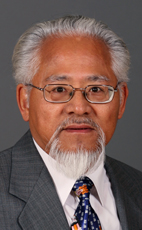
House of Commons photo

Crucial Fact

  • His favourite word was immigration.

Last in Parliament September 2010, as Conservative MP for Dauphin—Swan River—Marquette (Manitoba)

Won his last election, in 2008, with 61% of the vote.

Statements in the House

National Volunteer Week April 10th, 2000

Mr. Speaker, this week communities across Canada are celebrating National Volunteer Week.

What does it mean to volunteer? The dictionary describes it as spontaneously taking on a task, but rather than define the term being a volunteer really defines the person.

Canada has repeatedly been selected by the United Nations as the number one place in the world to live. This is in large part due to the friendly, voluntary spirit of Canadians.

We are beginning a new millennium. Everyone is in a hurry to get things done, with less free time to give.

Congratulations to the many individual volunteers and social groups who have made their communities a better place to live. On this, the first volunteer week of the 21st century, let us all make an extra effort to donate some of our precious free time this year and let us teach our children about the spirit of volunteerism, Canada's greatest natural resource.

Competition Act April 5th, 2000

Madam Speaker, the HRDC boondoggle will just not go away. The HRDC problem is the tip of the iceberg.

This debate came about as a result of a random audit to evaluate 459 projects receiving $235 million in grants and contributions from HRDC. The findings were astounding, to say the least: 97% contained no evidence of checks to see whether the recipients owed money to HRDC; 80% contained no evidence of financial monitoring; 72% did not have a cashflow forecast; two-thirds did not have a rationale for recommending the project; and 15% did not have an application form. This is unbelievable.

TJF grants are supposed to be used to create sustainable jobs. But at what cost? Here are some examples. Confections St-Élie Inc., a textile company in the Prime Minister's riding, failed to create the 61 jobs it had been committed to create but continued to receive a payment of $223,000 in 1997. A program to teach troubled youths to fix slush puppy and espresso machines received $300,000. Of the 20 who took the course, 4 found work.

Was the transitional jobs fund a slush fund? Let us take a look. In 1997, Pierre Corbeil, a key Liberal fundraiser in Quebec, was charged with four counts of influence peddling for allegedly threatening to dismiss or stall TJF grant requests unless firms donated to the party. He later pleaded guilty.

A 1998 independent review by Ekos Research Associates Inc. suggested that TJF grants were approved for political reasons. In 1999 the question was raised as to whether the Prime Minister used his power to secure a federal grant for a friend, Yvon Duhaime, to expand his hotel. Mr. Duhaime, whose hotel, Auberge Grand-Mère, sits in the Prime Minister's riding of Saint-Maurice and was once owned by the Prime Minister himself, received a grant of $164,000 as well as an additional $650,000 in government loans even though federal officials had a report indicating the hotel was poorly managed and had massive debt.

There seems to be no end to the shovelgate affair. There are at least 13 RCMP investigations occurring at this time.

I will conclude by quoting the auditor's report of December 1998, the section under the heading of grants and contributions. It states:

Our audits of the management of grant and contribution programs over the past 21 years have produced a long series of consistent observations: problems in compliance with program authorities, weaknesses in program design, instances of poor controls, and insufficient performance measurement and reporting. Overall we have continued to find the same problems. There are many reasons why these problems have persisted. They range from decision-makers not following the rules governing expenditures on grants and contributions to weak management practices.

The government, over the last 21 years, has not been accountable enough to pay attention to the findings of the auditor general. It is unfortunate that the auditor general does not have teeth. Perhaps it is long overdue that the House give the auditor general some teeth. After all, the buck stops with the politicians. The money belongs to the people. People expect responsible government, not a government that tries to write off the HRDC boondoggle as no big deal.

Petitions April 5th, 2000

Mr. Speaker, I have the honour to present to the House a petition from the good people of Dauphin—Swan River.

The petitioners pray that parliament withdraw Bill C-23, affirm the opposite sex definition of marriage in legislation and ensure that marriage is recognized as a unique institution.

Information April 3rd, 2000

Mr. Speaker, every day we find instances where government information is not being professionally managed. Records are not traded when they should be. Records are not properly indexed. These are not my words; these are the words of the information commissioner. He has been ringing the alarm bell for years, especially for the Treasury Board to enforce its own rules and guidelines.

My question is for the President of the Treasury Board. The bell is ringing once again. Why will the government not answer?

Awards March 31st, 2000

Mr. Speaker, recently the Canadian Taxpayers Federation presented the heritage minister with a lifetime achievement award for her many acts of wasteful spending.

The minister is up for best supporting actress for her recent role in the CINAR film credit scandal, where taxpayers appear to be footing the bill for tax fraud. That follows up her award winning performance to fund a soft porn movie called Bubbles Galore .

Speaking of acting, let us look at the heritage funded Call Girl Art Show at Canada's embassy in Paris. It cost taxpayers more than $43,000 for an 11 week run, paying actresses to pose as call girls and to talk about—

Awards March 31st, 2000

Mr. Speaker, fresh off the glamorous Oscars comes another glamorous award: the Teddies.

Recently the Canadian Taxpayers Federation presented the heritage minister, Sheila Copps, with a lifetime achievement award.

Racial Discrimination March 21st, 2000

Mr. Speaker, today is the International Day for the Elimination of Racial Discrimination. It is unfortunate that we need a day like today to remind us that racism still exists in Canada. This vast country is made up people from all walks of life, many ethnic backgrounds and personal beliefs. We need to deliver the message every day, a message of respect, equality and diversity.

Perhaps it is best said in the lyrics of a song by Garth Brooks which state:

When the last child cries for a crust of bread When the last man dies for just words that he said When there's shelter over the poorest head Then we shall be free

When the last thing we notice is the colour of skin And the first thing we look for is the beauty within When the skies and the oceans are clean again Then we shall be free

There is no question that racism exists in Canada. We have embarked upon a new millennium. Let us all continue in the fight to end it.

Supply March 20th, 2000

Madam Speaker, as I said earlier, individuals do pay for things such as eyeglasses, dental care, pharmacare, special shoes and special appliances. Public health care does not provide these things. It would be unrealistic to expect the public purse to pay for every service that an individual requires in the area of health.

Supply March 20th, 2000

Madam Speaker, today we heard the debate over who is responsible for the deficit and the national debt. Let me quote a few numbers here. Both the Liberals and the Progressive Conservatives were responsible.

Back in 1972 our national debt was $16 billion. When the Liberals came to power in 1983, the national debt was $160 billion. In other words, it climbed from $16 billion to $160 billion. The Mulroney Tories came to office in 1984 and by the time they left in 1993, the national debt had moved from $160 billion to $489 billion. The Liberals came back to power in 1993 and they took the national debt from $489 billion up to $600 billion in 1997.

I know it has been reduced since that time but the Liberals are reneging on their responsibility for fiscal problems in Canada. The deficit is one of those problems, especially when we spend more than we take in. The cause of that is that we have borrowed too much money over the years.

It is good news that we are balancing our annual budget but our national debt is still something like 71% of our GDP. It is still too high. Until we get that in order, health care and all other services will lose a lot of money. If we put $42 billion of our interest into our health care annually, everybody in the country would be happy.

Supply March 20th, 2000

Madam Speaker, I will be sharing my time with the hon. member for Surrey North.

I am pleased to take part in the debate on the motion which calls on the Minister of Finance to increase the Canada health and social transfers by $1.5 billion and to forgo the $1.5 billion increase to federal grants and contributions in this year's federal budget. It is important to say that we do not suggest slashing all federal grants and contributions, only that we forgo the increase contained in this year's budget.

The government must listen to the people. Health care is on the minds of all Canadians. How many times have we heard that health care is the number one issue? I want to concentrate on the state of health care in the province of Manitoba and my riding of Dauphin—Swan River.

Canadians must not forget that we are talking about the mess our health care system is in because of what the Liberal government did in 1993. We must not forget that it was the Liberal government that slashed $25 billion from the health and social transfer when it first came to power. It is ironic that the Liberal government wants to fix the health care system, yet it was the same Liberal government that created the problem.

Today federal cash transfers cover just 10 cents on the dollar. In 1997 federal dollars covered 19 cents on each dollar spent on health care. In fact by 2003-04 the Liberal government will have slashed out of the health and social transfer a total of $35 billion. Let me paint a picture of how this $25 billion reduction when the Liberals first came to power affected Manitoba and my riding of Dauphin—Swan River.

The first thing which occurred was that it forced the province to look at other ways of cutting its costs. When the money does not come from the feds, obviously it does not have the money to spend. People got fired; they lost their jobs. People received less service. Quite a negative situation was created and all the people of Manitoba were very upset. Beds closed and hospital services were reduced.

The province did not know what to do. It reorganized the whole system. It cut out all the existing boards, put them into huge new boards and then had the audacity to make political appointments to those boards, which did not do our former Tory government in Manitoba any good.

The whole issue of health care helped the current NDP government get into power. Health care of all things. That is because it was very important in the minds of all Manitobans and certainly was important to the residents of my riding of Dauphin—Swan River.

I spent a lot of time working on the health care issue. Being a municipal leader at that time I had lots of town hall meetings. I organized a provincial meeting of municipalities and the aboriginal community so they could sit down and discuss what the issues were and try to get the provincial government to deal with all the shortcomings that people had to deal with. Obviously nothing happened other than that we created a lot of criticism. The province did not really move in that direction. The problems still exist today.

At this time I would like to read a letter that I received from the Regional Health Authorities of Manitoba, Council of Chairs. This group collectively represents all the health authorities in the province of Manitoba and wrote me this letter:

The Council of Chairs and Manitoba's Regional Health Authorities work together to ensure that all Manitoba's residents have the access they need to high quality health services.

As part of our commitment to ensuring access to needed healthcare services, the Regional Health Authorities of Manitoba is a member of the Canadian Healthcare Association (CHA), the national federation of provincial and territorial hospital and health associations. Through its provincial and territorial members, the CHA federation represents over 1,000 organizations covering the broad continuum of care. These organizations employ approximately one million healthcare providers and serve Canadians across the country. They are governed by trustees who act in the public interest. CHA's mission is to improve the delivery of health services in Canada through policy development, advocacy and leadership. The provincial and territorial members of the CHA federation are committed to ensuring that all Canadians have access to comparable healthcare services wherever they live.

Every day, members of RHAM see the serious effects that cuts in federal transfers are having on our national healthcare system. The significant decline of public confidence in our health care system is compelling evidence that Canadians feel the system will not be there for them and their families when they need it. Federal/provincial/territorial co-operation to build a truly accessible, integrated client-centred continuum of care is essential to restore the confidence of all Canadians in our healthcare system.

Provincial and territorial members of CHA federation believe that the federal government must act to ensure access to comparable health services for all Canadians regardless of where they live. The CHA brief presented to the House of Commons Standing Committee on Finance recommended that the federal budget focus on health care by:

  1. Raising the cash floor of the Canada Health and Social Transfer by $2.5 billion immediately.

  2. Applying a growth factor of the cash component of the CHST.

  3. Adding $1 billion to launch a national home and community care program to improve access to the broader continuum of care.

It is essential that, as our healthcare system adapts to change, the devolution of resources away from hospitals must not imperil access to the needed healthcare services that they have traditionally provided.

Health reform must include investment in and augmentation of all parts of the continuum of care as we work toward an integrated, client-centred continuum of care. Adequate, sustainable federal funding and federal/provincial/territorial co-operation are both essential for this to happen.

Today we have heard members say that throwing money at the health care system is not the issue and perhaps not the solution. But the reality is that the money taken out of the system back in 1993 caused the problem we have today. Therefore money is one of the solutions. No doubt we all agree that people need to sit down and talk and work collectively to look at all the options, including the options being expressed in the Alberta legislature at this time.

It is ironic that people do pay for their health care. There are lots of services. In fact the CHA indicated there are many medically necessary services in Canada that must be paid for out of pocket by the people who require them. A recent report by the Canadian Institute for Health Information noted the shift from public to private spending for health care in Canada which has been going on for years is steadily increasing past the 70:30 ratio. The OECD standard is 75:25. This passive privatization of our health care system is a reality of health care today in Canada and not just a possibility of the future. It has worrisome implications for access to needed health care services for some people.

The current problem that we are experiencing is because of the $25 billion reduction by the Liberal government back in 1993 when it came to power. Government members have to recognize and accept that fact. It is time to put more money back into the health care system. Canadians deserve it.