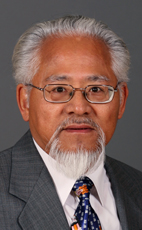
House of Commons photo

Crucial Fact

  • His favourite word was immigration.

Last in Parliament September 2010, as Conservative MP for Dauphin—Swan River—Marquette (Manitoba)

Won his last election, in 2008, with 61% of the vote.

Statements in the House

Supply March 20th, 2000

Madam Speaker, I listened closely to what the hon. member had to say. He tried to take credit for what the government has done in terms of spending. I would like to know whether the hon. member will take credit for the slashing of the $25 billion back in 1993 when his government came to office.

William Barker, Vc March 16th, 2000

Mr. Speaker, this week marked the 70th anniversary of the death of Canada's most decorated war hero, Lieutenant-Colonel William Barker, VC. Lieutenant-Colonel William Barker, VC soared through the sky during the first world war, shooting down 50 enemy aircraft in his famous Sopwith Camel biplane.

Born in 1894 in Dauphin, Manitoba, Barker joined the Canadian Mounted Rifles in 1914. He spent a year in the trenches before transferring to the Royal Flying Corps where his efforts went on to win him the Victoria Cross.

He died test flying an airplane near the Ottawa Rockcliffe airport in 1930. His funeral was the largest ever in Toronto's history with more than 50,000 spectators and a cortège of more than 2,000 soldiers in uniform.

On June 1 the heritage minister will unveil a commemorative plaque in his honour in Dauphin, Manitoba. The Snowbirds, another Canadian icon, will take to the skies to celebrate this special occasion. I invite all members to attend this historic event.

Human Resources Development March 13th, 2000

Mr. Speaker, we have learned that a sock company in Quebec received $8.1 million under the transitional jobs fund in 1997. This is more than what the entire province of Manitoba received, yet the Minister of Human Resources Development stands up in the House and says the program was about creating jobs in a fair manner.

When will the minister stop socking it to the Canadian taxpayers and step down?

Canada Post Corporation Act February 23rd, 2000

Mr. Speaker, prior to the Christmas break, I had the opportunity to ask the minister of agriculture about putting cash in the hands of needy farmers. Obviously, he did not say too much.

Let us be very clear that the situation in which many farmers find themselves is really not their fault. The current crisis is precipitated by two things: one, the weather, which is really out of the control of farmers; and two, the low commodity prices, which is also out of their control.

No one in the country can accuse the Canadian farmer of being inefficient. Canadian farmers are the leaders in the world on efficiency and their plight is not due to the lack of efficiency or diversification.

In my riding of Dauphin—Swan River many farmers are on the brink of going broke. A portion of them were hit with an overabundance of moisture this past spring. Many are struggling because of the poor prices they have received over the last couple of years.

We, as a country, as a farming community, cannot compete with the Europeans and Americans who support their farmers with very large subsidies. Farm subsidies today are staggering for European farmers who receive 56 cents out of every dollar. American farmers receive 39 cents out of every dollar. Canadian farmers, often accused of asking for subsidies, really receive very small subsidies. Today they receive 9 cents on the dollar.

In fact, Canadian farmers do not want a subsidy. They just want fair prices for their product.

The American president does not think twice about helping his farmers in the United States. It is unfortunate that Canada will not stand for its farmers. They are our sole source of food, which is essential to this country. What is more important than to ensure a secure supply of food?

Canadian farmers do not want a subsidy, as I have indicated. They only want a fair price for what they produce. They also want to control what they produce. The Canadian Wheat Board must change with the times and become more flexible. Today Canadian farmers are receiving 1932 wheat prices. How can we expect anyone farming in 1999-2000 to survive at 1932 cash receipts for their product? At $2.57 a bushel, farmers cannot even think of recovering the input costs for their crop, let alone try to make a living.

This past year many farmers have knocked on the doors of my constituency offices looking for solutions and asking what the federal government is going to do to help them.

There are two solutions: long term and short term. A short term solution is needed today. Many of our farmers in Manitoba will be leaving the farms if there is no short term assistance. In Manitoba there are over 24,000 farm families and many of them will be at risk. What is lacking is cash. That is what farmers need in the short term. They need help. The Minister of Agriculture and Agri-Food must find a vehicle to put cash into the hands of farmers before this spring.

Let us not get hung up on the long term solutions. We all know they are important, but farmers need help right now. They are crying out for help.

I advocated to the Minister of Agriculture and Agri-Food to put in place a crop acreage reduction program. This vehicle is already in place. It is called the PFRA. In fact, in the 1980s the PFRA, through a crop reduction program, took two million acres out of production and put $200 million into the hands of needy farmers. There is no reason this cannot be done again.

This farm disaster has had a large impact, not only on farmers, but also on small town Canada. As a country, do we want to decimate our rural culture? We are a country which is proud of its cultures, both urban and rural.

Heritage Day February 21st, 2000

Mr. Speaker, today is Canada's Heritage Day. Canada is a country with a rich history and heritage. This year we are celebrating our farming heritage.

The rural culture today is at risk. Farmers in Manitoba and Saskatchewan need farm disaster relief.

Safe firearm use on farms is also a part of the rural culture.

Today Canadians celebrate the contributions of our aboriginals an Inuit peoples, our pioneers who opened up this land and our men and women who laid down their lives in times of war so we can live in a free society.

Canada must show the courage to acknowledge the bleak moments of history, such as the internment of the Ukrainians at the turn of the century and the Chinese Exclusion Act of 1923.

Today we celebrate our heritage knowing that all Canadians, wherever they originated, have made significant contributions in building this country. Our history reflects this diversity. This history must be passed on to all Canadians, young and old.

Government Grants February 17th, 2000

Mr. Speaker, the government needs to add a new page. This page should be entitled “Accountability”. Not only do we see the lack of accountability in Human Resources Development with the transitional jobs fund, but it appears more six point plans are required in departments like heritage.

The heritage minister, through the Canada Council, signs off on hundreds of millions of dollars worth of grants with little scrutiny or follow-up.

The auditor general should look into it: for example, $34,000 for an artist to reflect and develop his thoughts, $34,000 for an artist to work 18 months without the usual financial strain.

Farmers in my riding are asking for disaster relief. They are going broke. Yet the government finds $15,000 for year two of the continuous garbage project.

Canadian taxpayers have a simple question: Whose accountable in the government and where will the buck stop?

Government Grants February 17th, 2000

Mr. Speaker, this government needs to add a new page for its famous binder boy. This page should be entitled “Accountability”.

Chinese New Year February 7th, 2000

Mr. Speaker, I welcome back all members of the House by wishing them a happy new year. I am honoured, on behalf of Canadians of Chinese descent, to extend Chinese new year greetings to everyone.

February 5 marked the beginning of the year of the dragon, the most revered sign of the Chinese zodiac. It symbolizes happiness, power, fortune and love.

Canadians of Chinese descent can be proud of their heritage and history in Canada. It started with the Chinese railway workers whose labour helped unify this great country. The story of their struggle to become equal Canadians must be told and passed on to future generations.

Who would ever believe that today Chinese would become the third most spoken language in Canada? Canadians of Chinese descent are forever thankful to this country. In the new millennium the roar of the dragon will be heard across the land. Happy new year.

Agriculture December 17th, 1999

Mr. Speaker, last week I was in Manitoba with the Standing Committee on Agriculture and Agri-Food listening to the farm community pleading for help from the federal government. Yes, there really is a farm disaster. Even the United Church of Canada and the Manitoba Interfaith Council are helping in this crisis. This plea for help is not being heard in Ottawa. One billion dollars sits idle in the AIDA program.

Will the food producers of this country have to get their food from food banks down the road?

Parliamentarians' Code Of Conduct December 16th, 1999

Mr. Speaker, why does the government put gun registration ahead of putting more police on the streets? This policy of the government has negatively affected my riding of Dauphin—Swan River.

If safe streets are a priority of the Prime Minister, then the government is spending in the wrong places. Let us look at some facts.

Hundreds and hundreds of RCMP positions remain unfilled throughout the country. There are 39 RCMP positions vacant right now in Manitoba. The RCMP training depot in Regina is currently closed. The new government estimates show the spending of $35 million for gun control and only $13.8 million for the RCMP. Where are the priorities of the government?

Canada has had gun control for over 60 years. No one disputes that need. Wasting hundreds of millions of dollars on a wasteful long gun registry is irresponsible. This money would be better used to put more police officers on the street, or used in health and education or in defence.

I want to read for the record some information obtained through access to information by my colleague the member for Yorkton—Melville on the current registry of long firearms in this country.

The registration system has cost more than $300 million so far. Only $2.9 million in user fees were collected in the last six months of operation. Justice department has still not released the registry's budget for this fiscal year. Cabinet secrecy was used to hide 172 pages of documents on true costs of gun registry. On bureaucrats, as many as 800 paper pushers are now working on the firearms registration scheme. The RCMP have diverted resources from law enforcement to employ 391 on the firearms registry.

Statistics Canada reports that 98% of violent crime victims never encounter firearms. Forty-six percent of all murders are committed with handguns despite a 65 year old handgun registry. Criminal incidents have doubled since 1970 but the number of police officers per capita is dropping.

The RCMP report less than 10% compliance. What use will this be to police? Backlogs are increasing despite a 70% lower than expected number of applications.

A consultants' report states that workflow is inflexible and inefficient at the registry. Only 87,825 photo IDs were issued in the first year of operation; only 2.5 million to 6.5 million to go. Only 260,464 registration certificate numbers have been issued; only six million to 20 million to go. The minister's firearms experts say production must increase from 1,500 per day to 13,500 per day.

On the economic impact, cabinet secrecy was used to hide a 115 page report on the economic impact of the registry. There are still legal challenges ahead. Six provinces and two territories are challenging the registry in the supreme court.

In closing, the government is making the streets of Canada less safe through the headstrong drive to register all long guns in this country. When will the government wake up, quit playing politics and fund the RCMP properly instead of wasting hundreds of millions of dollars on useless long gun registration?