
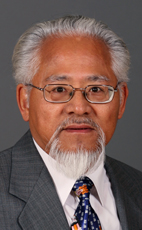
House of Commons photo

Crucial Fact

  • His favourite word was immigration.

Last in Parliament September 2010, as Conservative MP for Dauphin—Swan River—Marquette (Manitoba)

Won his last election, in 2008, with 61% of the vote.

Statements in the House

Canada Travelling Exhibitions Indemnification Act April 23rd, 1999

Mr. Speaker, I am very pleased to rise to speak to Bill C-64 this morning.

The Reform Party, the official opposition, certainly supports Bill C-64, the Canada Travelling Exhibitions Indemnification Act. The bill would in effect make the Government of Canada the underwriters for travelling international exhibitions under the auspices of public institutions up to a maximum of $450 million per show and up to an aggregate of $1.5 billion for any given year.

Before I begin to tell the House why we support Bill C-64, I want to say that this is another good example of Reform's support for legislation put forth by the government. It makes sense and it will ultimately provide better service to all Canadians.

Our record shows that almost half of the time we do support legislation from the government side. We support legislation when it is well thought out, when the people have been consulted and when we know the impact that it will have on the country. This side of the House would support more legislation if the government would be more transparent and take its time when it is putting together its legislation.

I will now tell the House why the official opposition believes Bill C-64 should be supported. By serving as underwriter to the public travelling exhibitions, the government potentially saves taxpayers the cost of paying a premium for private showings. For example, insurance on a recent travelling exhibition valued at $1.5 billion carries a premium of $1 million. Under the current circumstance, how can anyone afford to pay those types of premiums? Without this legislation, the premium is certainly a barrier to museums and other organizations that would like to bring in international and national exhibits and have them circulated throughout the country.

As long as standards of security, care and transportation are maintained at a high level, it seems unlikely that a potential liability would turn into an actual liability. Under a federal United States identification program, with a ceiling of $5 billion, in the last 25 years of operation only two claims were filed totalling $100,000.

I had the opportunity to meet with the Canadian Museum Association this past year to discuss Bill C-64 in-depth. This indemnification program was requested by the museums and by the Canadian Museum Association. They want the bill amended so that the maximum aggregate liability of $1.5 billion in any fiscal year be changed to $1.5 billion at any time.

However, section 53 and 54 of the Constitution Act, 1867 require that supply be specifically proposed by the crown and specifically authorized by the House of Commons. From a constitutional point of view, $1.5 billion at any time is disallowed. There is provision in the subclause for the amount to be raised or lowered by an appropriation act for a given year.

There is no minimum exhibition value set for participation in the indemnification program by the governor in council, but the governor in council is authorized to make regulations for setting a minimum. The government intends to set the minimum at $500,000 in order to maintain standards sufficiently high that losses are highly unlikely. This is a good approach.

It has been mentioned by the parliamentary secretary that there will certainly be a spillover of economic impact from major exhibitions. This could run into the tens of millions of dollars and would have a huge impact on local governments, provincial governments, local chambers and local small business because it would generate economic activity.

People from many miles away will literally flock to these exhibits. This will give the people of this country an opportunity to see world-class exhibits which would otherwise not occur. From that point of view, there are a lot of pluses with Bill C-64. This program will keep costs low. Decisions as to what kind of exhibitions will travel would be left up to the museums.

The Reform Party supports the freedom of Canadian culture in communities to grow and develop without needless protection and government regulation, encouraging a cultural free market which offers choice while lowering costs to consumers as services are provided by those sectors which are able to do so most cost effectively.

The indemnification in Bill C-64 is the kind of program that all governments can do with little cost to the taxpaying public. It brings sufficient economic as well as cultural benefits to the citizens of the country. Therefore, the official opposition supports the bill and also supports all stage consideration by the House on Bill C-64.

National Volunteer Week April 20th, 1999

Mr. Speaker, this week communities across Canada will be celebrating National Volunteer Week. This week is set aside to thank and honour our communities' unsung heroes, those people who donate time and energy to help their fellow citizens and the causes they believe in.

Every day volunteers take time from their work, their leisure and their home life to volunteer their talents and energies to solve problems in their communities. They come from all walks of life and from all ages. They share in common their citizenship and commitment to improving the quality of life in their community.

In observing National Volunteer Week, I encourage all members of the House to join with all communities across Canada in thanking the volunteers, Canada's greatest natural resource.

Petitions April 16th, 1999

In my last petition, Madam Speaker, the good people of Dauphin—Swan River request parliament to advise the government to summon a fit and qualified person democratically selected by Canadian citizens who are residents of Manitoba, to take their place in the Senate of Canada when seats become vacant.

Petitions April 16th, 1999

Madam Speaker, this petition deals with the gun control bill. The petitioners request that parliament repeal Bill C-68 and redirect the hundreds of millions of tax dollars being wasted on licensing responsible firearm owners to more proactive programs such as putting more police on the streets, more crime prevention programs, more suicide prevention centres, more women's crisis centres, more anti-smuggling campaigns and more resources for fighting organized crime and street gangs.

Petitions April 16th, 1999

Madam Speaker, my next petition deals with the port at Churchill. The petitioners request that parliament advise the Canadian Wheat Board to deliver its grain shipments to the port at Churchill as that offers the most advantageous costs to producers and to require conveyers to guarantee seamless car interchange between CN, CP, Hudson Bay railway and other short lines.

Petitions April 16th, 1999

Madam Speaker, my next petition is timely due to the young offenders legislation. The petitioners pray that the House of Commons will support the changes to the Young Offenders Act.

Petitions April 16th, 1999

Madam Speaker, it gives me great pleasure to present five petitions on behalf of the people of Dauphin—Swan River.

In the first petition the petitioners pray that parliament enact legislation such as Bill C-225 so as to define in statute that a marriage can only be entered into between a single male and a single female.

Supply April 13th, 1999

Mr. Speaker, the whole idea of this task force I believe was to consult the public. We cannot consult the public if we do not tell the public where we are going to be and do not give them the access.

I am not talking about asking members of parliament to go before the task force. The grassroots people are the ones. I spoke to probably 15 different mayors and reeves. I called them on the telephone and asked each one of them what they knew about the task force. Other than a few of the big city mayors, they did not know a thing about the task force.

Supply April 13th, 1999

Mr. Speaker, I thank the member opposite for the question.

I actually quoted the reeve from the rural municipality of Ethelbert. She said that she had heard about the Liberal task force.

I can certainly explain the real workings of what happened with the task force. My staff in my riding in Manitoba have followed the works of the task force since January. We called the office of the member for Charleswood St. James—Assiniboia several times to get a schedule for the meetings and information on how one would access the meetings. We received requests from constituents in terms of how to access the hearings.

Unfortunately right up to the week previous we could not get a schedule of the meetings and no one seemed to know how to access them. It certainly was one of the best kept secrets of the task force. I would have appeared before the task force just to listen to the concerns of Manitobans. That is the reality of how the task force worked in Manitoba.

It is not that we do not support public consultation; we all do it. We need to do it, but it is how this Liberal government is doing it.

Supply April 13th, 1999

Mr. Speaker, prior to question period, on the debate on the alienation of all Canadians I was quoting what municipal leaders in Manitoba were saying about regional alienation and how their constituents perceived Ottawa. I will continue.

Reeve Maxine Plesiuk of the rural municipality of Ethelbert said:

We do feel alienated from Ottawa. Look at the distance. We are or appear to be out of reach of Ottawa. What made my blood boil was when I heard that the Liberal government task force on western alienation would meet with only Liberals by invitation. We sure were not contacted by them.

Mayor Gary Hopper from the town of The Pas:

You're never really part of the system if you're west of the Ontario border. The provinces do the same thing. They tend to alienate communities if they're located too far from Winnipeg. Distance doesn't help feeling you're a part of something. The solution is that the federal government needs to demonstrate a willingness to work with the provinces on all fronts. The feds can surely do something about levelling the playing field so that aboriginal businesses don't have the upper hand over non-aboriginal businesses. We need more free votes in the House of Commons so that local issues can be brought to the House for debate.

Mayor Bud Oliver from the city of Selkirk:

The perception, whether true or not, is that decisions are made in the best interest of the population base of the east, and not the west. People have not forgotten the CF-18 decision made by eastern politicians.

Mayor Bill Comaskey from the city of Thompson:

Alienation by Ottawa is evident by the frustration municipalities have in dealing with the federal bureaucracies. Case in point, Ottawa has broken off negotiations with Thompson in dealing with the transfer of the regional airport. The federal system has little credibility. Look at the GST promise, the Airbus scandal, the cancelling of the helicopter deal, the cancellation of the Pearson airport deal. The federal system needs fixing.

Mayor Reg Atkinson from the city of Brandon, which was one of the stops of the task force:

My solution for the federal government on the issue of alienation is that Ottawa needs to treat all parts of the country equally. We all know that discrimination causes only conflicts within our country.

Reeve Dwayne Lawless from the rural municipality of Rossburn:

Ottawa is far removed from here. They don't listen to our concerns. Case in point, with the reorganization and cutback of the local RCMP, why is it always that the locals are at the receiving end of the cutbacks? I'll bet that the RCMP in Ottawa isn't reduced. They should be cutting at the top, not the bottom where real policing needs to take place. We've lost control over government. They do as they want. Another case in point, the gun control Bill C-68. They keep pouring good money after bad. It would be better to put that money into the pockets of farmers who are about to go broke instead of into registering long guns, which will do nothing to reduce crime. People feel alienated from big government and are not happy.

I have received numerous calls on the farm aid package. These calls were very negative. These farmers, the likes of Richard Cleland and Ken Caldwell of Rossburn and John Puchailo of Gilbert Plains, are very disillusioned about the AIDA program. The method of calculation will ensure that very few, if any, farmers will receive assistance at all.

Farmers are smart businessmen. They write off most of their earnings into future business capital needs. Farmers are frustrated with the AIDA program. Farmers are being informed that it will cost them between $500 and $800 to get the applications filled out.

The task force of the Prime Minister started on the wrong foot. When the task force was first announced in Manitoba in January, the chairman, the member for Charleswood St. James—Assiniboia, indicated to the Winnipeg press that the Liberal task force would not consider any recommendations for change to the Firearms Act. How ironic. On the one hand the task force was to listen to Manitobans and on the other hand the task force would not listen to any concerns about the gun control Bill C-68.

No one objects to consulting Canadians. It is the process we object to.

Governments at all levels are elected to serve all their constituents. We are all Canadians and want to be treated equally. Manitobans have said to me that Ottawa does not treat them in an equal manner. This of course creates the feeling of alienation. I believe the only solution is for Ottawa to start listening to all members of parliament in this House and to start treating all parts of this country equally irrespective of political parties. All Canadians deserve good government.