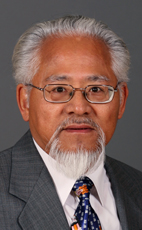
House of Commons photo

Crucial Fact

  • His favourite word was immigration.

Last in Parliament September 2010, as Conservative MP for Dauphin—Swan River—Marquette (Manitoba)

Won his last election, in 2008, with 61% of the vote.

Statements in the House

Consolidated Growers And Processors April 13th, 1999

Mr. Speaker, last Friday agriculture in Canada received good news. Consolidated Growers and Processors, an international company, announced plans to build the world's largest, most sophisticated industrial hemp processing plant to be located in my riding of Dauphin—Swan River. CGP, the Hemp Growers Association, the City of Dauphin, the rural municipality of Dauphin and ARDI deserve credit for putting this project together.

Canadian farmers can be proud to be at the threshold of becoming world leaders in a new global market for hemp products. Hemp is a model crop that is environmentally friendly. Its uses are many: medicine, clothing, perfume, insulation, making automobile parts and food. This is good news for Canadian agriculture.

I ask all members of the House to support this initiative as Canadian farmers prepare to take the first steps to lead the world in industrial hemp.

Supply April 13th, 1999

Madam Speaker, I am pleased to take part in the debate today on the alienation of most of this country or, better put, how Canadians perceive Ottawa.

The Prime Minister's task force was to seek out information from Manitobans on the future of Manitoba. Manitobans know about their future and they also have a vision for their future. What we want from this government and all federal governments is more transparency and accountability.

Manitobans speak daily to their members of parliament. Hopefully their members of parliament echo their concerns in the House. Does the government listen to the concerns that are raised in the House?

Let me do a quick review of some of the concerns that are raised by Manitobans: Bill C-68, the wheat board monopoly, unfair justice appointments, the use of federal spending powers to interfere in areas of provincial jurisdiction, the giveaway of our rail assets to CNR, the rail abandonment issue, little return of $5 billion in fuel tax paid by consumers, waste and mismanagement of Indian affairs, and repayment of the flood compensation given to Manitobans. Most of these issues have been debated in the House over the course of the last two years. If only the government would listen.

Here is what the municipal leaders of Manitoba are saying about regional alienation and how their constituents perceive Ottawa.

Mayor Bill Schneider of the village of Benito said:

They don't worry one way or another. We are too far away. The people of Benito don't have too much say. The power is eastern based. The reality is that the population is in the east. They have the votes, which means that they have the seats.

Mayor Lorne Boguski of the town of Roblin said:

I think the further away you are from Ottawa, the less input one has. The decisions are made without the interests of the people from that region. The solution to reducing alienation would be to have more members of parliament interacting with the municipal leaders on a regular basis, from all parties. This would develop rapport. One would feel that they were becoming part of the total team, rather than feeling isolated as we are today from Ottawa.

I am also dissatisfied that the Minister of Natural Resources, a westerner, is not echoing the needs of farmers.

Mayor Michael Spence of the town of Churchill said:

I applaud the Minister of Foreign Affairs' intervention and assistance in privatizing the rail line in the port of Churchill. This gives Churchill the opportunity to look after its own future. Ottawa is too far away. Currently Churchill has embarked on a tripartite partnership with the Winnipeg Airport Authority and Omnitrax to develop future business for the rail line, the airport and the port of Churchill.

The federal government, when it comes to airports, lacks vision for the future. It can only think of saving money for the present. It bewilders me that the port is not utilized to its potential. The Canadian Wheat Board must ship more grain through the port of Churchill instead of east-west. We are up against the big business of east and west coast terminals.

Reeve George Richardson of the rural municipality of Dauphin said:

They don't know that we exist. It has always been, being in the hinterland, that we are the resource base for the east. That is the real attitude of the rural municipality of Dauphin. The east has had all the power and still does today. The only way to resolve this is to get rid of the Senate as it operates today or make it equal.

Take a look at the present farm aid program and you will see why we feel alienated.

Mayor Wally Yanchycki of the village of Erickson said:

We don't get our fair share. When I fill out my income tax, I know where our money is going; right into the big pockets of Ottawa. I don't think we get our fair share on transfer payments. Being far away doesn't help the feeling that we are alienated from Ottawa. We feel that Ontario and Quebec get preferential treatment over everyone else in this country.

Petitions April 13th, 1999

Mr. Speaker, in the last petition the good people of Dauphin request that the government repeal Bill C-68 and allocate those funds to more positive things, such as women's crisis centres, preventing crime on the streets and so forth.

Petitions April 13th, 1999

Mr. Speaker, in the fifth petition the good people of Dauphin—Swan River believe that the House needs to bring in legislation in accordance with the provisions of the Referendum Act that would require that a binding national referendum be held at the time of the next election to ask voters whether they are in favour of government funding for medically unnecessary abortions.

Petitions April 13th, 1999

Mr. Speaker, in the next petition the good people of Dauphin ask that parliament enact Bill C-225, an act to amend the Marriage (Prohibited Degrees) Act and the Interpretation Act so as to define in statute that a marriage can only be entered into between a single male and a single female.

Petitions April 13th, 1999

Mr. Speaker, in the third petition the good people of Dauphin request the government to support Motion No. M-300 which states that the government should authorize a proclamation to be issued by the governor general under the great seal of Canada amending section 7 of the Canadian Charter of Rights and Freedoms to recognize the fundamental rights of individuals to pursue family life free from undue interference by the state and to recognize the fundamental rights and responsibilities of parents to direct the upbringing of their children. The petitioners urge the legislative assemblies of the provinces to do likewise.

Petitions April 13th, 1999

Mr. Speaker, in the second petition the petitioners request parliament to affirm the duty of parents to responsibly raise their children according to their own conscience and beliefs and to retain section 43 of Canada's Criminal Code as it is currently worded.

Petitions April 13th, 1999

Mr. Speaker, I have the honour to present six petitions to the House on behalf of the good people of Dauphin—Swan River.

The first petition calls on the government to mandate the Canadian Wheat Board to start shipping grain to the port of Churchill and not just toward the east and west coasts as it has done for decades.

Petitions March 17th, 1999

Madam Speaker, in the second petition the petitioners call on parliament to repeal Bill C-68, to redirect the hundreds of millions of tax dollars that are wasted on licensing responsible gun owners and to put those dollars toward having more police on the streets, more crime prevention programs, more suicide prevention programs, more women's crisis centres, an anti-smuggling campaign, as well as fighting organized crime and street gangs.

Petitions March 17th, 1999

Madam Speaker, I am pleased to present two petitions on behalf of the people of Dauphin—Swan River.

The first petition calls on parliament to revisit the issue of hepatitis C compensation to reflect the concerns of the citizens of Canada and to offer a fair, compassionate and humane compensation package to all who received infected blood.