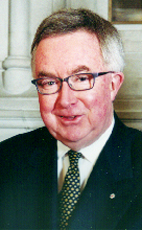
House of Commons photo

Crucial Fact

  • His favourite word was commons.

Last in Parliament May 2004, as Progressive Conservative MP for Calgary Centre (Alberta)

Won his last election, in 2000, with 46% of the vote.

Statements in the House

Supply May 8th, 2001

Madam Speaker, the short answer to that is yes. The deteriorating infrastructure problem is a serious complication. It has been aggravated in recent years because the drive to expenditure reduction has meant that investment which should have gone into infrastructure to keep things up to date has been delayed. We are paying the price for that.

The only thing I would add is that there are other factors here. More people are moving to small communities. There is greater diversity of commercial activity in various communities, as the hon. member would know coming as he does from Red Deer. That has environmental implications. There are changes in the various environmental factors that can affect water, but there is no doubt that infrastructure is one important element of this and has to be addressed.

I would add in closing there needs to be a law on the books that encourages governments to act and not let these issues slip away. That is why we would propose to bring together the provinces and federal government to establish standards and then to enshrine them in a law on which Canadians could count and any government could not ignore.

Supply May 8th, 2001

Madam Speaker, that is a very constructive suggestion. I believe it also falls within the ambit of the motion now before the House.

Supply May 8th, 2001

Madam Speaker, the way I would approach that and the way I have approached it in the past is to work out agreements with the provinces.

The hon. member can shrug, and I understand that, but I have seen both ways work. I have seen agreements reached when the federal government was prepared to go some distance on its own to clean its own hands going into those discussions.

I do not believe we get very far by pretending there are not provincial jurisdictions and riding over them. I think that becomes counterproductive. It gets people's backs up. It makes solutions less possible.

I believe in a phrase used by a former leader of the hon. gentleman's party. I believe in co-operative federalism. I think it is the spirit of the country. That is the kind of federalism that I would like to apply in this instance: getting agreement, forcing agreement by the force of persuasion, by the force of example, and then writing it into law.

Supply May 8th, 2001

Madam Speaker, any fair reading of the motion will realize that it provides plenty of latitude for the kinds of legitimate questions with regard to federal jurisdiction raised by the hon. member. I come from the tradition on the environmental issue of the acid rain treaty. I knew when we were going to the United States to get agreement on the acid rain treaty that we had to have clean hands at home.

There is no doubt that the federal jurisdiction we are talking about is of two kinds. One is a specific jurisdiction under the criminal law power. That is a narrow jurisdiction, but it is there and it is well established. I know the hon. member, as someone who studies these things, recognizes that that jurisdiction is soundly founded and must be protected in the national interest.

The other responsibility is for federal leadership. This is the parliament of the national government. This is the parliament that is able to persuade legislatures everywhere else in the country to assume their responsibility. Can we do that more effectively if our hands are clean and if the conditions are better on reserves and in federal lands? Of course we can. If there is going to be a serious attempt by the national government to try to encourage that kind of action on all fronts, in all the places where jurisdiction or responsibility lies, then obviously we have to exert that kind of leadership.

I welcome the hon. member's interest in these specific issues. I hope he will not confine that interest to those Canadians who live on reserves or those Canadians who live in Valcartier. I hope he will share an equal concern about Canadians across the country who today are more at risk than they have been before because the communities are growing and pressures are growing.

Not just me, but Canadians in general, the people who would have preferred not to be ill or who would have preferred not to have seen fatalities in Walkerton or in North Battleford, need stronger standards.

They count on the hon. member. They count on all of us. This motion provides an opportunity for the federal government, acting within its jurisdiction, to provide the leadership that may change and improve the standard of health and cleanliness of Canadian water.

Supply May 8th, 2001

Madam Speaker, when we speak about clean water, we are speaking about the most basic expectations of our citizens. This is not about some rare disease that may strike strangers in some far off place. This is about what our children drink every day in every part of Canada.

For most of our lives, most of our citizens have believed that our water would be clean, that it would be safe for our kids, for elderly Canadians and safe for all of us. However the water that Canadians drink today is not as safe as it should be. It is not as safe as it could be. That has been demonstrated by two separate tragedies, one last week in North Battleford, Saskatchewan and the other a year ago in Walkerton, Ontario.

For years experts have warned of the need to improve Canada's water safety. As long ago as 1990, as my colleague indicated, the green plan of the then Progressive Conservative government warned of “important gaps in the federal government's environmental legislation, particularly in regard to assuring the safety of drinking water”.

I was part of that government. The minister who launched the green plan was Lucien Bouchard. Ten years later those legislative gaps still exist. The Liberal government has sadly not treated environmental safety as the priority it should have and now the headlines report that Canadians are dying because of drinking water.

There is a broad new fear that environmental health standards have fallen. The fear is real because two things have happened together. First, there are more threats to health. Second, there is less protection for health.

The money that governments spend on protection has been cut and the factors that could contaminate water have grown. What is certain is that the sources of danger will grow as communities become more crowded, as infrastructure crumbles, grows old and is not renewed and as new elements enter the environment. If the threats to citizens grow so too does the responsibility of governments. These are matters which most citizens cannot protect on their own. Society has a clear responsibility which it is the duty of governments to exercise.

Undoubtedly, that issue compels us to ask ourselves, first, which government has to act and which one can take action.

It is a provincial jurisdiction in the first place, but the federal government also has a responsibility, which evolves from its more specific but equally important jurisdiction. As for the municipalities, they are called upon to manage several areas related to water quality and distribution.

If those governments co-operate and work hand in hand, we will have adequate water quality and be able to maintain it. However, if the various levels of government fight between themselves over matters of jurisdiction, the quality of our water will be affected and our children will suffer from it. Still more deaths will make headlines in the news media.

So let us be clear with regard to jurisdictions. Let us be as clear as we would wish our water to be. The first jurisdiction in that area belongs to provinces, but the federal government, under its criminal law power, is responsible for health protection and public security at the national level.

At present, there are only guidelines and these vary from province to province. In concrete terms, it means that the life of your children might be more at risk if they drink water in your province than that of children living in another province. We need to set common standards. We must ensure they are respected and we must do so by respecting both the rights of the provinces concerning their jurisdictions and the rights of the citizens concerning their health. This is the objective of this motion.

We must start by recognizing that there are too many deaths, that the guidelines are too weak and that this is a shared responsibility. Thus, the different levels of government must work together at establishing standards and ways to ensure these rights are being respected. Only then will these weak guidelines transform into standards that the citizens can rely on. Where the jurisdiction is provincial, the means to ensure the respect of these standards may be provincial in nature.

No one is more sensitive to constitutional issues than I. I have spent a major part of my life trying to find ways for the different levels of government of working together in a spirit of mutual respect.

Because of these efforts, we have been able, for example, to launch the Francophonie. We have invited the provinces to participate fully in negotiations toward a free trade agreement. We have entered into an agreement on acid rain, as well as other environmental initiatives. Even through all these processes, we have firmly respected provincial jurisdictions, as well as the interests of the citizens of this country.

Today, when the issue is the quality of the water that our children are drinking, are we going to hide behind the veil of jurisdictions or are we going to try to find solutions to allow governments to co-operate for the well-being of our children?

The motion respects the federal partnership. It allows enforcement. It increases protection at a time when citizens feel protection is gradually falling away. It forces the federal government, entirely within its limited jurisdiction, to stop hiding and to start leading. It gives society a chance to send a strong signal through an enforceable commitment to clean water, an enforceable commitment supported on the floor of the House of Commons of Canada.

I very much hope that Canadians who are concerned about the issue will take this opportunity to move forward on the motion and move Canada toward a situation where there will be no more deaths at North Battleford, no more deaths in Ontario and no more risk of death from the thing that Canadians should be able to count on above all else, which is the safety and the cleanliness of our drinking water.

Supply May 8th, 2001

Madam Speaker, I begin by congratulating my colleague from Fundy—Royal, not only for introducing the motion but also for the leadership he has shown on the environmental issue throughout his time in the House of Commons, working obviously as these recent questions have indicated, with other concerned members of the House of Commons of all parties.

In the interest of urgency on the bill, I would like to move an amendment to the bill. I move:

That the motion be amended by inserting the word “immediately” after the word “act”.

That would simply allow us to move forward more quickly.

Business Development Bank Of Canada May 7th, 2001

Mr. Speaker, my question for the Deputy Prime Minister is about the company known as 161341 Canada Incorporated, the company in which the Prime Minister held a one-third interest.

The certified copy of the registered deed of sale shows that on July 27, 1988, 161341 Canada Incorporated paid Consolidated Bathurst the sum of $1 for 21 parcels of land. Those are the golf course lands.

Could the Deputy Prime Minister confirm that the price the Prime Minister's company paid was $1?

Business Development Bank Of Canada May 7th, 2001

Mr. Speaker, I have a question for the Minister of Industry. Why is the Business Development Bank suddenly so concerned about the role of Jean Carle in the Grand-Mère file that it now claims the document which proves his involvement is a forgery?

Will the minister tell the House whether the bank employees who have allegedly sworn affidavits to that effect did so voluntarily, and will he advise why this new alleged forgery is not going to the RCMP?

Business Development Bank Of Canada May 2nd, 2001

That says nothing at all, Mr. Speaker. It is evasion as usual.

The Business Development Bank has refused to disclose the identity of the person at the BDC who signed the request asking the RCMP to investigate the alleged forgery of the BDC loan application. I wonder if it was the same person who gave instructions to request the destruction of documents.

Will the Prime Minister table in the House the request to the RCMP to investigate the forgery, as well as any supporting documents the BDC provided to substantiate this request?

Business Development Bank Of Canada May 2nd, 2001

Mr. Speaker, this question is about the Duhaime loan application.

Yvon Duhaime confirmed that he owed $154,160. He confirmed that about one-quarter of that was owed to his father-in-law. He will not reveal to whom the other $107,000 was owed. The National Post has one version of that document. The Business Development Bank claims to have another version. One of them is forged.

Will the Prime Minister guarantee that both versions will be examined equally to determine which is the forgery, and that the investigation will reveal the names of every entity to which money was owed?