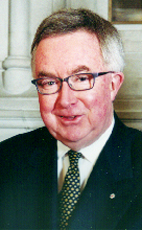
House of Commons photo

Crucial Fact

  • His favourite word was commons.

Last in Parliament May 2004, as Progressive Conservative MP for Calgary Centre (Alberta)

Won his last election, in 2000, with 46% of the vote.

Statements in the House

Prime Minister March 30th, 2001

Mr. Speaker, the side deal on Grand-Mère, signed on the Prime Minister's behalf, refers explicitly to the costs of any inquiry by parliament or any other body. It explicitly obliges the Prime Minister's personal company to pay any costs of such an inquiry incurred by Michaud company that ultimately bought the shares.

The Prime Minister has a financial interest in avoiding any inquiry. If his government can stop an inquiry it saves the Prime Minister's personal money. Does that not in itself constitute a new and serious conflict of interest?

Prime Minister March 29th, 2001

Mr. Speaker, the document is as silent on that issue as the government has been in answer to legitimate questions from all four parties in the House.

In the Vander Zalm case Mr. Justice Ted Hughes' finding of a conflict of interest was based on his judgment that Mr. Vander Zalm “had retained an interest in the financial well-being of his company”. Does the Deputy Prime Minister believe that to be an adequate basis for a finding of conflict of interest?

Prime Minister March 29th, 2001

Mr. Speaker, I have for the Deputy Prime Minister some straightforward questions about the handwritten document the Prime Minister claims to be a bill of sale.

Will the Deputy Prime Minister tell us: Did both parties sign that document at the same time? In what town or city and province was that note signed, and were there any witnesses?

Prime Minister March 28th, 2001

Mr. Speaker, they cannot shout the House of Commons down. The Prime Minister told the House that the value of the shares did not matter because it was just a debt that the Prime Minister wanted to collect.

The documents released yesterday show clearly that the Prime Minister lost money on the final sale of these shares, so he had a financial interest and he had that interest when he called the bank to arrange a share for the auberge. Was one reason that he interfered with the bank to protect his own interest from—

Prime Minister March 28th, 2001

Mr. Speaker, why was it not done in 1993? The Prime Minister told the House that the value of the shares—

Prime Minister March 28th, 2001

Mr. Speaker, the Prime Minister claims there was a bona fide sale to a Jonas Prince company in 1993. If so, why was it necessary to sign a side agreement six years later which stipulates that neither J&AC Consultants Inc. nor any other third party will have any right of ownership or interest in the shares upon transfer of the shares from Akimbo to Michaud in 1999?

Why the side agreement? Was it because at least one party to this affair believed that J&AC Consultants Inc. had an interest in those shares between—

Summit Of The Americas March 27th, 2001

Mr. Speaker, I assumed the hon. member had read our economic policies since he and his government adopted so many of them.

His second question is almost too easy, but I will accept the invitation. On the question of the economic summit in Toronto, my recollection, and I stand to be corrected but I think it is correct, is that there was no interest expressed by the premier of Ontario, the host province, in being present.

I think I can fairly say on behalf of my colleagues in the then government that had there been an interest we would have found some way to reflect the presence of the host province. We are a federation. The world knows we are a federation. Let us not try to pretend that we are not. Let us reflect the reality of Canada abroad.

Let me come to la Francophonie. Let me say in passing that there would never have been an association of la Francophonie had Canada continued to follow the rigid anti-provincial policies followed by the Trudeau government. It was only because a Progressive Conservative government was able to find a way to accommodate the legitimate interests of Quebec.

It also found a way to accommodate the legitimate interests of New Brunswick and the other provinces with a francophone population so we were even more successful with the issue of the francophone community.

It was welcomed by the world because other francophone countries were very apprehensive that with the absence of Canada too much would be run by France. Under the rigid rules of the Liberal government preceding ours, that was impossible. Under our more open attitude toward Canada and its reality, we achieved la Francophonie.

Did the premier of Quebec take part? He chaired some of the sessions. Did the Minister of Intergovernmental Affairs take part? He chaired some of the sessions.

Now it is not fair to compare la Francophonie with the summit of the Americas. It is a question from the hon. member and I am responding to that. However, it certainly would have been possible in this context, had the government had the will, to have found a place and a voice for the premier of Quebec. The government did not because it did not want to. The repercussions are clear.

Already in the national assembly of Quebec, legislation is being prepared to get in the way of giving effect to agreements that Canada might sign exercising our undisputed competence in international trade. It is cutting off our nose to spite our face. It is dangerous and divisive in Canada. It should stop.

Summit Of The Americas March 27th, 2001

Mr. Speaker, there is no doubt that there would be changes in the way we should approach some of these issues and there are lessons we can learn. I agree with the leader of the New Democratic Party with respect to her concern about the application in any larger hemispheric agreement of the chapter 11 provisions in the NAFTA. Not only would it be counterproductive, but we would resist it. It would be a non-starter. It would not happen.

If I have a great regret about the free trade agreement into which we entered, it was that we did not do enough in a companion way with that agreement to deal with groups in Canada who were disadvantaged. There is no question that whenever one takes major initiatives, initiatives that literally change history, there will be people who are helped and there will be people who are hurt. There were people who were hurt by the free trade agreement. We had undertaken as a government that we would be more active in social policies and policies related to education than we were. In hindsight, that was a mistake and we have to take account of that in future agreements into which Canada might enter.

There is a very difficult question that deserves serious debate in the House and it is about the degree to which we try to impose internationally standards to which we adhere at home. My own view would be that on human rights issues we have to impose internationally the high standard we try to respect at home, partly because if we do not, no one else in the world will and those issues will fall off the table.

However, on some other questions, including some environmental issues and others, we have to recognize that countries in states of development different from ours have a set of circumstances different from ours and they must be taken into account.

If the question is whether there are there aspects of those negotiations that we might have changed with the benefit of hindsight, of course there are. If the question is whether it was right to take those initiatives, the answer is of course it was right to take those initiatives. We have to get ahead of the future, not be at its mercy.

Summit Of The Americas March 27th, 2001

Mr. Speaker, I think that kind of support by the Government of Canada, whether the sum is right, is appropriate. There is no question that in many issues of public debate access to groups and to interests that have legitimate things to say is limited, and there have to be ways to overcome that.

Certainly if we can charge corporations $500,000 for a speaking opportunity at a conference, it is not out of line for the Government of Canada to provide a lesser amount for groups who have things to say and would not otherwise be heard.

Summit Of The Americas March 27th, 2001

Mr. Speaker, the activities of the Progressive Conservative government, of which I was a part, brought us the free trade agreement which was primarily a coalition between western Canadians and Quebecers. The agreement would not have occurred had we not been able to appeal to the nationalist pride of Quebec and turn it into a pride in Canada, instead of responding so negatively and in such a critical fashion to every expression of pride by the province of Quebec.

Let me come to the direct question asked by my hon. friend. She asks if the premier of Quebec will not have the same opportunities. He will not, according to the advertising of the member's own government. The member's own government offered to business leaders who could pony up $500,000 not just an opportunity to ride in an elevator with a head of state, but a speaking opportunity. The premier of Quebec, the host province, does not have that opportunity.

The real issue here is whether it is possible in a system like ours to take account of the real interests of provincial governments. We proved in the free trade agreement that it is not only possible but essential. We do not make progress without it. Would it have been possible for the Government of Canada to find a place and a voice for the premier of the host province of Quebec if it had wanted to? Of course it would have been possible, if it had wanted to. The point is it did not.

The government seeks agreement in the hemisphere but seeks a fight at home. So long as it seeks that fight at home it puts at risk Canada's opportunity to give effect to whatever agreements it might sign exercising the undisputed federal responsibility for international trade.