I apologize, Mr. Speaker. I got carried away. I have nothing further to add.

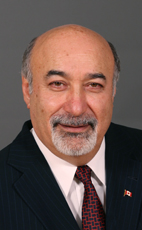 House of Commons photo
Lost his last election, in 2011, with 32% of the vote.
Softwood Lumber Products Export Charge Act, 2006 September 26th, 2006
I apologize, Mr. Speaker. I got carried away. I have nothing further to add.
Softwood Lumber Products Export Charge Act, 2006 September 26th, 2006
Mr. Speaker, the Americans can keep fighting because they are fighting with the money of Canadians, and it is a never-ending story. Maybe what we should do is turn the tap off on the oil and electricity going south. We are showing weakness here. We were near the end of this arrangement.
The parliamentary secretary referred to the witnesses, and I see my good friend, who sat on the committee, laughing and I know why. We know what the witnesses told us. Today they are singing a different tune. Why? Because the government took them behind the doors and said, “Listen, shape up. It's my way or the highway”. That is why they are flexing their muscles with the small players in the industry. It is saying that they should cooperate or the government will levy a 19% tax.
You guys should be ashamed of yourselves. Instead of helping these guys, you are going to levy a higher tax if--
Softwood Lumber Products Export Charge Act, 2006 September 26th, 2006
Mr. Speaker, I am pleased to participate in this debate for many reasons, aside from the fact that the deal is a bad deal. I will explain why I and the Liberal Party believe it is a bad deal.
There is an historical side to this. I cannot help but open with a comment because of the closing comment that was just made by the member from the NDP saying that it was the only party that stood for this. That is absolute rubbish. That is wrong and unfair, and I will explain why.
I had the honour, if I may say, to chair the subcommittee on international trade, trade disputes and investments for Canada under the Standing Committee on Foreign Affairs and International Development. We put together a report. The most in-depth issue we covered was that of the softwood lumber dispute. We heard witness after witness.
What is odd is that the New Democratic Party is trying to portray to the nation that nobody cared. Mr. Speaker, you know very well that we were close to making this deal work.
I will outline the witnesses who came before the committee. We had people from the Canadian Lumber Trade Alliance, the Free Trade Lumber Council, the Québec Forest Industry Council and the Department of International Trade. We heard from Mr. Grenier as an individual and people from Cassels Brocks & Blackwell as a firm specializing in international trade. We had people from the University of Ottawa. We heard from Mr. Donald McRae, Professor of Business and Trade Law, and from people with the B.C. Lumber Trade Council, Canfor Corporation, West Fraser Timber Co. Ltd., Weyerhaeuser, and the list goes on.
Those individuals, on behalf of their companies, said that they appreciated the support that the then Liberal government was providing but that they needed more financial support to see this through until the end. They knew they were right and that the ruling would be in their favour. In the committee report, which was brushed aside, was the recommendation that the government would provide the needed support that the industry was asking for.
What happened? The NDP forced a premature election and everything went down the drain. That is my comment on the NDP. My colleague from British Columbia knows very well that we worked together.
Why is this deal a bad deal? Recently I just happened to read an article that states:
“Non-profit bodies to manage softwood proceeds”, U.S. says.
It goes on to say that over half a billion Canadian dollars will go to various non-profit organizations for housing, et cetera.
I would not mind having that half a billion dollars here in Canada for people who need affordable housing, for seniors or for students to pay for post-secondary education. We do not know where the other half a billion dollars will go.
It says in this article that a couple of weeks ago several Washington trade lawyers told the Toronto Star that they were worried that the nature of the agreement would allow President Bush and his administration to direct the money to districts where republican politicians are in trouble in this fall's election. Where will the other half a billion dollars go? We do not know and that is Canadian money.
We know, through the dispute mechanism, that tariffs were lowered. When people say that this is a good deal and Canadians want it, that is hogwash. Canadians do not want it.
Not only is the government muzzling the industry, but it states here that--and I always tend to put my statements forward not because of what I say but because of what others say in bringing the facts forward--“Ottawa”, meaning the new Conservative government, “plans to tax holdouts”. In other words, if people do not agree with the government, this is what it will do to them. It says:
The federal government plans to levy a 19 per cent special tax on lumber companies that withhold their cooperation with the newly signed softwood lumber deal with the United States.
I am dumbfounded. I have never heard of this before. The government is saying that if a company does not agree it will be punished worse than it was being punished by the Americans. That does not make sense.
We are supposedly trying to resolve this issue for which we have been in the right ruling after ruling. This is the importance the Americans put on this issue. We have a picture here. Delegates at the signing of the softwood lumber deal in Ottawa yesterday included the Minister of International Trade and the Minister of Industry. Canada sent two senior ministers. The Americans were kind enough to send their trade representative. What an honour. Why did Canada not send its trade representative? That is the importance the Americans put on this issue.
What is wrong with this deal? The deal sends a wrong signal. It sets a precedent. In putting together the report that I showed the House, we also put a report together on emerging markets. Part of the discussion within that report was how Canada could protect Canadian companies and investors that do business with the international community. We need to ensure that the mechanism is there so that when Canadians go abroad their investments and efforts are protected.
Surely we would think that a nation such as the United States of America living in the 21st century would adhere to rules and regulations. This is all we asked for, nothing more and nothing less.
Some people said that this half a billion dollars would go to support the unfortunate incident of the Katrina disaster. I remember the day, and I know you were there as well, Mr. Speaker, when we went out and in just over an hour and half during the noon hour we raised I believe about $120,000 that would go to the Red Cross relief for the Katrina disaster. Canadians know how to show our brotherly love and our support for our neighbours to the south. In times of need, no matter where it is around the world, we have been there and I am confident we will continue to be there.
Therefore, I do not buy the argument that the Americans fouled up with trailers sitting in parks somewhere in the United States. If that country blundered and wasted over $1.5 billion that it cannot allocate for, that is their problem.
What this softwood lumber deal is saying is that the Americans have stolen $5.4 billion from Canadians. The courts have now ruled in Canada's favour but the Americans will only give Canada $4 billion of that money back. I thought we lived in a civil society that was governed by rules and regulations. I thought the NAFTA deal was there to ensure it was a free, transparent and equal trade process. The deal we have before us, where Canadians in the industry have been muzzled, it is not a free, transparent and equal trade process.
I have another concern about the Minister of International Trade and the Department of International Trade. We know very well that in the last Parliament, when our party put forth a motion to create the Department of International Trade, the Conservatives voted against it. That party did not want a Department of International Trade to exist.
Nevertheless, after the deal was signed with the trade commissioner from the United States, the minister appeared on television with Mr. Newman in a segment called Politics. When Mr. Newman asked the trade minister how this would unravel, he had some very ambiguous responses. He could not really give him an answer. However, of all the answers he could give, and the one that stuck in my mind, was, “How are we in Canada going to get our money back?” He could answer that. He mumbled and jumbled about EDC, about borrowing from here and getting from money there.
On behalf of each and every Canadian, because these are Canadian dollars, I want to ensure, as soon as possible, that the $4 billion cheque is handed over because I am suspicious that money will not be there. The government will borrow through different government organizations, EDC, insurance, et cetera and Canadians will never know if that money was indeed returned. I challenge the new government, as it wishes to be called, to show Canadians that the cheque has arrived in Canada. I am willing to bet a dime for a dollar, and I am not a betting man, that the money will never arrive in Canada.
It is a sad day in terms of our trade partnership with the United States. What members have talked about in the report is the abuse that is to unfold. We get elected to this honourable House because we are supposedly forward looking people. We can be creative. We can bring ideas. We can look to the future. We all bring respective experience, applied in this chamber, so we can fine tune our system and create a better environment for our citizenry. That is why this deal sends the wrong signal for the future. If the government can do that today with the lumber industry, then who says to every Canadian that it will not do it tomorrow and anything else?
One of the members on the committee at that time was quite upset and rebutted in a way that she was, in essence, to some degree criticized. Today we can say that was unfortunate because she was right. All members on the committee said that we had to take a tough position. When our men and women are needed in the theatre in Afghanistan, we say that Canadians can do it. Of course we can do it, and we have showed our toughness there. We will continue to show our toughness. Why can we not show our toughness in this instance? We have a product that is in demand. We managed to invest in our mills and make them modern, effective and efficient and put out a product that is very competitive. Why should we then be paying the price for it? I do not think that is right.
I will review some of the comments in the report. Mr. Potter, who came before the committee, said:
What we now have is the U.S. administration saying that because you are a privileged NAFTA partner, you will be treated less well than if you were Korea. If you were Korea and did it under their domestic tribunals and won, you'd get your money back. But because you're a privileged NAFTA partner the U.S. is going to keep your money, and not only keep it but give it to your competitors, by the way. That hardly seems very principled
This is not coming from members of Parliament where people could say we are being biased and political and trying to rally the troops. This is from witnesses from the industry. We were simply hearing testimony. Another witness said:
If the U.S. parties succeed in obtaining even part of these deposits, the U.S. will have a great incentive to launch new litigation, because even if it loses a case, it will be rewarded twice—once by the investigation itself, which is a costly and time-consuming impediment to Canadian lumber exporters, and then by the illegal distribution of duty deposits, which actually belong to us, the competitors in Canada.
This is testimony. This is quoting the professionals in the industry.
I come from a community in the greater city of Toronto, Scarborough. It does not have a lumber industry, but does it affect me? Yes it does. It affects me in the businesses that run in my community, but it does not affect me as it affects other communities across our country, in British Columbia, Ontario, Quebec and in other provinces.
It affects me as an individual, as a Canadian, and I speak on behalf of my constituents and I believe I speak on behalf of all Canadians. My rights are impeded upon. We have an American partner and we have a deal. The Americans have decided, in the middle of the game, to change the rules to suit them. Yet again they come back and say that they know they are wrong, that all the rulings have been in our favour but that does not matter.
It typifies what has happened in the United States in the last several years. It is either “my way or the highway”. No wonder there seems to be such an anger on the international scene. They go to the United Nations and bring forward a resolution. They force the mechanism to seek compliance and enforcement of a resolution. They are right in doing so, but the question is, what has happened to so many other resolutions in years past on other issues?
There were other resolutions in years past, whether it be on the Cyprus issue, on the Palestinian issue, on so many issues. Why did we not ask for enforcement and compliance on those issues?
The question becomes this. Why are we not asking for enforcement and compliance of the rulings from the trade courts? The courts are there to govern us as a civil society. They are not courts or panels that favour Canadians or favour the Americans. They are independent. They are occupied by professionals who know the industry.
I am not expert on the lumber industry, but I have certainly heard enough testimony from the presentations of so many witnesses to try to understand the industry. One thing I understood over and over again was that we were right. Canadians did not subsidize. Canadians did not cheat. We did not have to cheat. We have a good product, we have a competitive product and we were doing our job as anyone else would.
My concerns are many. First and foremost, it is unfair that this industry has been muzzled. I know we have all followed it closely. We heard reports of backroom get togethers. We heard of muzzling, as I pointed out, and to tax the smaller players in the industry upwards to 19%, which is unheard of. We hear that the money will be spent not here in Canada but in the United States. Maybe the Americans have a problem because they are reaching record deficits and they are scrambling for money. I do not know. Our country over the past 12 to 13 years has put its house in order, has managed to provide surpluses and balanced budgets. Our trade increased, although most recently I was upset because I also heard that our trade surplus was unfortunately dropping. The record deficits in the United States to some degree will affect us as well at some point in time.
Therefore, what is the remedy? In my humble opinion, the remedy was, and should be, that we should have stood firm as a nation, as we have stood firm in many other situations, and said that we were right because the courts ruled in our favour.
The new government came here with a law and order attitude. This is a law and order attitude. It believes in the courts as do I. We all believe in the judiciary. The judiciary and the courts ruled. If the government believes in what it says, it should stand firm with the rulings of the courts and say that it wants all the money back.
My concern is this. I do not believe the Americans will cut a cheque for $4.7-something-billion to Canadians. It will go through different circles. Canadians will lose sight of it eventually. They will not even know what has happened. I heard that on Politics with Mr. Newman. I challenge the minister and ask him to give Canadians a clear accountability of where that money will come from.
National Defence May 10th, 2006
Mr. Speaker, the Minister of National Defence confirmed earlier that he indeed was a registered lobbyist for Stewart & Stevenson, a company that was bidding for the billion dollar trucks contract. As such, the minister was responsible to lobby the defence department and various others through a series of meetings and telephone calls.
Did the minister ever meet with any members of the Canadian Forces, or with DND civilian officials who now work under the authority of the minister, in his capacity as a lobbyist for Stewart & Stevenson?
The Budget May 9th, 2006
Mr. Speaker, my hon. colleague touched upon some very important issues. Earlier on we talked about the homeless and housing. I am not sure, but perhaps he can recall that in Bill C-48, and I believe that was the support we gave to the NDP, there was money for affordable housing. I think the amount was $1.6 billion. There was also money with respect to students which we were about to implement. I believe there was money for transit systems.
Would the member elaborate on what happened to that money? Why did it not come to fruition? Why did the money not get to where we it was supposed to go?
The Budget May 9th, 2006
Mr. Speaker, I listened very carefully to the member for Abbotsford who talked about tax relief. If the member were an honest person, he would recall that in budget 2000 the largest tax relief program in Canadian history was rolled out of $100 billion. It was a four year program ending in 2004. In 2006 there would have been an additional $50 billion.
The member talked about EI, which is very significant. I would remind the new member that when the Liberal government took over from the Conservatives in 1993, 12.3% or 12.4% of people were unemployed in Canada. Just as the Conservatives took over, because they are fairly new, it is down to 6.3%.
What am I driving at? The EI rate at the time of the previous Conservative government was $3.05 per $100 of earnings. We reduced it year after year to what it is today at $1.95. What does that mean? It means Canadians were paying less premiums but over three million of them were in secure jobs.
I want to ask the member to really be honest and just call a spade a spade.
The Budget May 9th, 2006
Mr. Speaker, I listened very carefully to the closing remarks of the member for Victoria.
In the last mandate, the New Democratic Party went to Canadians and asked them to lend it their votes. Canadians saw what the party was able to get for them, and if they lent them their votes, the NDP would get more.
The other day, in the same debate, it was mentioned that Bill C-48, the so-called NDP budget of $4.8 billion brought in by the Liberals, was never implemented. The reason it was not implemented was the New Democratic Party at that time, along with the Bloc Québécois, chose prematurely to overthrow the government.
How can the member go to her constituents or to NDP supporters and say that the money promised by the NDP was taken away, money that would have gone to post-secondary education, urban transit, subsidized housing and Kyoto? How can NDP members stand and bash the Liberals? Let them take on the responsibility and answer truthfully to their constituents that they blew the whole deal.
The Budget May 3rd, 2006
Mr. Speaker, before I ask my question I want to quote something on page 15 of the budget speech under the heading “Economic and Fiscal Update”:
--Canadians have reached a level of accomplishment few other countries can rival.
I want to point out that the Conservatives keep saying that they have only been in government 100 days. The budget further goes on to state:
Looking at our current situation, Canadians have many reasons to be confident. Unemployment is at a 30-year low, we have low inflation and strong consumer confidence, and corporate profits are at record levels.
How can the Conservatives stand and say that they have accomplished it when bureaucrats privately joke behind their backs that this is the first balanced budget by a Tory government since Robert Borden was prime minister in 1912?
We made record achievements in this country. If the Conservatives were honest with Canadians, they would acknowledge the results. She says, “you guys didn't implement it”. She knows very well why we did not implement it. It was because the Conservative Party, with the same old NDP Party, which should rename itself, and the Bloc Québécois were in cahoots and prematurely brought down the government. The member cannot fool Canadians.
You guys say, “We say what we are going to do and follow through”. The Minister of Justice is here. In their pamphlets the Conservative candidates said they would cancel the gun registry right away and take the money and put it into health care for wait time reductions. They said they would immediately repeal same sex marriage. Will you then immediately bring in legislation for same sex marriage as we had before? Will you cancel the gun registry immediately as you promised in your pamphlets? With regard to health care, for which there was only one line, you are only going to implement--
Mr. Speaker, as I said then, I say now, to put it to rest. I clearly heard that it was directed at me, personally. I ask that the response be to me, personally, not to the party as a whole. The member is just simply fooling himself by responding the way he did. His amateurish response is unethical and unacceptable.
Federal Accountability Act April 27th, 2006
I will not argue with you, Mr. Speaker.