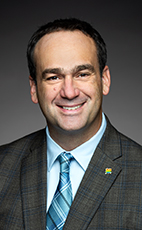
Mr. Speaker, it is an honour to rise today in the House to talk about this very important topic. I want to start my remarks by expressing my sympathy for Constable Catherine Campbell. This was a heinous tragedy and a crime that was committed on her. It is fair to say that the nation feels for her family and what they have had to endure since her tragic death.
I also want to take the opportunity to talk about military personnel writ large. I have the opportunity to serve the constituents of Kingston and the Islands, where we have a military base. I have been surrounded by military personnel my whole life and have had the opportunity to engage with them from time to time. However, it was not until I became a member of the Standing Committee on National Defence that I really gained an appreciation of why our military personnel, throughout the world, have the incredible reputation they do. Those who have had the opportunity to engage with our military in various parts of the world will have seen that they deserve and command a certain level of respect from others they engage with.
Quite often, we tend to think that it is the politicians and policies we make and have made throughout the years that have given Canada this great reputation of being peacekeepers and peace builders throughout the world, but it is in fact our military folks who have been instrumental in extending the Canadian way to others and imparting upon people what it means to be Canadian and the values we stand for. It is our military personnel who really give us the distinction of what we have come to be so proud of, which is peacekeeping abilities. Politicians will come and go, but it is our military personnel who last throughout generations in various parts of the world who truly give Canada the amazing name it has.
The motion we are debating today is very timely, and I am glad to be able to speak to it. We have the opportunity to speak specifically to where we have come as a government on the veterans file, where we were before that and what we plan to see in the future. I would preface my comments by saying that there is, is my opinion, never enough we can do for our veterans. Our veterans have given us the incredible quality of life we have come to enjoy and the ability to sit in this House and have these debates. It is because of them and their willingness to go to other parts of the world and give us this incredible opportunity that we are here today and have the amazing quality of life that we do.
I should say that I will be splitting my time today with the member for Winnipeg North.
I would like to talk about where we were with our veterans over 10 years under the Conservatives, what they were able to do to the Veterans Affairs system writ large and how we saw diminishing services and support for veterans throughout the years.
The reality is that over 10 years, the Conservatives looked at the Veterans Affairs department as a place to cut costs in an effort to balance budgets, which they failed to do in almost every single year. Some examples of that are killing the lifetime pension for veterans and closing nine Veterans Affairs offices throughout the country. In fact, the Auditor General found that the previous Conservative government failed veterans, noting that the percentage of returned soldiers with mental health issues had actually increased sixfold between 2002 and 2014.
The Conservatives slashed 900 jobs, despite pleas from managers in various departments in Veterans Affairs not to do that because of the impacts it would have on delivering services to veterans. The Conservatives clawed back nearly $1 billion from Veterans Affairs, generally speaking. In fact the courts ordered the Conservative government to pay $887 million to veterans. The court had to order the previous Conservative government to pay veterans.
We come to where we are today and what we are trying to do. Of course, when we look at the record of the previous 10 years, the failure of a decade, we could call it, under the Conservative government as it related to veterans, it is not something that we are just going to flip a switch on and be able to bring back all the services immediately, especially when we talk about the money that was stripped from the department and the employees who were fired or terminated from the department. Not only has this government worked to re-establish the services that existed 10 years ago, it has surpassed those services in many regards.
The service our veterans have provided to our nation, as I said earlier, is invaluable, and this government understands that. There have been no costs spared in rewarding their service and providing our veterans with the quality of life they deserve. Let us talk about some of those things.
On the accomplishments in the budget of 2016, this government invested $5.7 billion to provide veterans with better financial security by increasing income replacement from 75% to 90% of a veteran's pre-release salary and increasing the annual maximum pain and suffering compensation.
We re-opened offices that were closed in Corner Brook, Newfoundland; Brandon, Manitoba; Sydney, Nova Scotia; Kelowna, B.C.; Saskatoon, Saskatchewan; Charlottetown, P.E.I.; Thunder Bay, Ontario; Windsor, Ontario; and Prince George, B.C. Not only did we re-open all nine offices, we opened another in Surrey, B.C., which expanded outreach into the north. Veterans Affairs staff are now able to travel to the territories and northern communities monthly to meet with veterans and their families.
A little closer to home, in eastern Ontario, of the nine offices that were re-opened, two are in Ontario: Thunder Bay and Windsor. We have seen that the re-opened office in Thunder Bay has brought up to seven additional front-line staff to the province to improve access for veterans. The Thunder Bay office serves approximately 1,700 veterans and enables approximately 70 veterans who work with case managers to meet with them in person.
With respect to the 900 staff who were terminated from Veterans Affairs, 460 new staff have been brought on. This government has a commitment to make sure that we can move from the 40:1 ratio of veterans to caseworkers to 25:1. A ratio of 40:1 is where the previous government left us, which is 40 veterans for every caseworker. We have made significant progress. I believe we are at around 30 veterans per caseworker now and are moving towards that 25:1 ratio.
On pensions for life, we committed to bring back pensions for life to make things simpler and to make services simpler, and that is exactly what has been done. Veterans whose service and sacrifice result in illness or injury now get a monthly tax-free pension for life of up to $1,150. Veterans who were greatly injured, which has had an impact on their quality of life, can receive an additional $1,500 a month tax-free for life. Veterans whose injuries prevent them from finding gainful work will now get the income replacement benefit, providing 90% of a veteran's pre-release salary monthly, indexed annually. In addition to that, we have provided various other services for our veterans.
What I am trying to say is that despite the political gaming with this particular issue, and it is an extremely unfortunate one, this government has been absolutely committed to veterans. It has not only been restoring what the previous Conservative government removed from veterans but has been going above and beyond that. I am extremely proud of this government's reputation on the veterans file, and I look forward to continuing to work on this.
As I said earlier, there will never be enough we can do for veterans, but we must always strive to do more and better for those who gave us the incredible quality of life we have.