
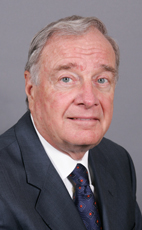
House of Commons photo

Crucial Fact

  • His favourite word was tax.

Last in Parliament September 2008, as Liberal MP for LaSalle—Émard (Québec)

Won his last election, in 2006, with 48% of the vote.

Statements in the House

The Budget February 19th, 1997

Mr. Speaker, it is expected that when an hon. member rises in this House the premise of their question will reflect the policies of their party.

The Reform Party seems to have forgotten this fundamental piece of legislative responsibility. Therefore let me simply say that since we have taken office, as the Prime Minister has said, there have been over 790,000 jobs created in the private sector.

Is that enough jobs? Of course it is not. Are we worried about job creation? Do we want to see more young Canadians go back to work? Absolutely.

However, let us understand what the alternative was. In 1993 in Penticton the leader of the Reform Party said that if they were elected and their economic plan, their scorch and burn policies, were put into effect, that at the end of three years there would be fewer jobs in Canada than there were in 1993.

We are 800,000 jobs ahead of the Reform Party.

The Budget February 19th, 1997

Mr. Speaker, what was done in yesterday's budget was to very clearly outline a comprehensive jobs program.

First of all, we started out with the absolute necessity of cleaning up the nation's finances. Our interest rates have gone from two and a quarter percentage points higher than the United States' to where they are now, two and a quarter to a half percentage points lower than the United States'.

This is as a result of the actions of this government. That is why people are now saying that Canada will have the strongest job creation record of any of the G-7 countries.

Second, we put in place a short term program, infrastructure, roads, sewer mains and highways in order to create instantaneous jobs. More money went into the tourism sector because it is a massive creator of jobs.

The Prime Minister's missions abroad have led to the highest level of exports in this country's history. We have put in place a long term job program, helping students finance their education, a very large research and development program for Canadian universities.

This government has put in place a comprehensive job program and it is paying off.

The Budget February 19th, 1997

That is right, I tabled it myself. I submit that the hon. member should ask the Table for the three pages I mentioned.

The Budget February 19th, 1997

Mr. Speaker, it was done long before the Bloc's report was tabled. I could quote, for example, from previous budgets, measures like the abolition of the lifetime $100,000 capital gains exemption, the broadening of

the minimum replacement tax base or the elimination of the tax advantages offered by the use of trusts.

As I said the last time, the list goes on-

The Budget February 19th, 1997

Quite the contrary, Mr. Speaker. In yesterday's budget, we presented highly targeted tax breaks amounting to more than $2 billion over a three year period specifically for persons with disabilities as well as substantial breaks for students or parents who want to save for their children's education. There is also the child tax benefit.

The vast majority of measures contained in yesterday's budget were precisely tax measures, tax breaks designed to help Canadians.

The Budget February 19th, 1997

Mr. Speaker, there have been in certain areas increases in taxes, increases in tax revenues. The Reform Party has opposed these. The Reform Party has gone on the web and said "these are the tax increases brought in by the federal government that we oppose".

The Reform Party opposed the elimination of the tax advantages for family trusts. It opposed the elimination of the preferential rate for large corporations. It opposed the measures that were taken to combat the underground economy. It opposed the elimination of the $100,000 lifetime capital gains tax exemption.

These are the tax increases Reformers opposed because they hurt their friends. Heaven help them if they had to help poor or middle income Canadians.

The Budget February 19th, 1997

Mr. Speaker, there is no doubt that over the course of this government's administration our revenues have gone up. Absolutely. They have gone up because we have had a stronger economy. Economic growth brings higher revenues.

If we want to fight the deficit surely to heaven it is better fight the deficit by having a stronger economy than by adopting the kind of scorched earth policies Reform would advocate which would absolutely destroy the economy.

The fact of the matter is that overwhelmingly the majority of increases in this government's revenues has come from increased economic activity primarily in the corporate sector because it is making more profits and as a result of those profits we are getting more revenue.

The Budget February 19th, 1997

Mr. Speaker, the information in my reply comes from Government of Quebec statistics. If the hon. member would care to look at sales tax revenues in 1990, 1991 and 1992, he will see that Quebec lost no more than 5 per cent of its revenues at the start.

He will also see that, in subsequent years, Quebec made money. These figures are public.

The Budget February 19th, 1997

Mr. Speaker, if the member would look back at the speech I made with the announcement, he will see that I set out the formula for compensation to the Atlantic provinces, Manitoba and Saskatchewan.

At the same time, I explained why Quebec, Ontario, British Columbia and Alberta would not be receiving compensation. They did not lose over 5 per cent of sales tax revenues. The reason is quite clear.

We are prepared to compensate a province if losses are involved. The hon. member will understand that, if no losses are involved, there will be no compensation. Quebec has all the information. We gave them not only our figures, but the provinces' as well.

I am prepared to sit down with the hon. member, as we did with the officials of the Quebec ministry of finance, to explain exactly how the formula works.

The Budget February 19th, 1997

Mr. Speaker, I am sure that the leader of the third party, as the aspiring leader of the fifth party, would like to put his own numbers before Canadians so they can make the same judgment.

We have stated that contributions to the Canada pension plan are not a tax. They are an investment in Canadians' retirement savings.

One thing is very clear. The agreement the federal government has come to with the Government of Alberta, and I notice that the hon. member has not got the courage-Mr. Speaker, I am sure he does-the hon. member will go to Alberta and will campaign against Ralph Klein because Ralph Klein signed the deal.

I am sure he will go into Ontario and will campaign against Mike Harris because Mike Harris signed the deal. I am also sure he will explain to Canadians why his alternative will cost $500 more than the federal government's changes to the CPP.