Mr. Speaker, first of all, when taking a look at the pensions of members of Parliament it will be recognized that the government has opted for one course while the Reform Party advocated a doubling of MPs' salaries. The fact is-

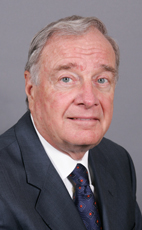 House of Commons photo
Won his last election, in 2006, with 48% of the vote.
Pensions February 17th, 1997
Mr. Speaker, first of all, when taking a look at the pensions of members of Parliament it will be recognized that the government has opted for one course while the Reform Party advocated a doubling of MPs' salaries. The fact is-
Pensions February 17th, 1997
Mr. Speaker, I think what I would like to do is answer the question raised in the preamble.
If we take a look at the essential ingredient of a successful economy, we will see that it is confidence. It is confidence that health care is going to be there for the workers. It is confidence that old age pensions are going to be there for the workers. It is confidence by which the government is able to pursue a steady course, not simply the scorch and burn policies advocated by Reform and not simply ignoring the question as advocated by the
previous Conservative government and now by the NDP; but policies that give Canadians the confidence to know that basic government programs will be there for them.
That is what we have done with the Canada pension plan. The hon. member ought to understand that.
Canada Pension Plan February 17th, 1997
Mr. Speaker, it is quite the opposite. There are going to be thousands of jobs created as a result of the confidence Canadians are going to have now that the Canada pension plan will be there for them. Not only that, but when the new investment fund is set up under independent management and is able to operate and invest in the enterprises of Canadians, it will be a very large player in creating jobs within this country.
The hon. member has said that we have preferred one generation to another. Is the hon. member saying that we should have cut the old age pensions currently? Is he saying that we should deindex the old age pensions? Is he saying we should engage in discriminatory action against senior Canadians? Let me tell this House that we will not do it.
Canada Pension Plan February 17th, 1997
Mr. Speaker, just because the Reform Party wants to destroy the Canada pension plan is no reason for the Reform Party to continue to misinterpret what Canada pension plan premiums are.
The fact is that workers compensation premiums are taxed. There are other forms of taxes at the provincial level, health levies and those kinds of things.
The hon. member, who is normally a fair person, knows full well that the Canada pension plan premiums are akin to contributions to private pension plans. They are an investment in the retirement of Canadians and should not be characterized in any other way.
It is really not incumbent upon the hon. member to scare Canadians or to mislead them. What he should be doing is explaining it to them. If he has a difference of opinion let him have it, but let us not misinterpret what is going on here.
Canada Pension Plan February 17th, 1997
Mr. Speaker, if the government had not taken the action that was taken, the premiums would have risen not to 9.9 per cent and then been stable, but they would have gone to 14 per cent. As a result of our action, the premiums are down substantially.
I will tell you what question we will be asking throughout the election campaign. Hon. members opposite have stood up and they have said that the increase from 5.8 per cent to 9.9 per cent is a tax grab. If the Reform Party put into effect what it has talked about, which is its super RRSP coupled with some kind of funding for the Canada pension plan, the premiums would have been substantially higher. Why do Reformers not tell Canadians that what they want to do is a massive tax grab but they do not have the guts to give Canadians the calculations.
Canada Pension Plan February 17th, 1997
Mr. Speaker, the government has stated on a number of occasions that if over the course of the last decade the previous federal government and provincial governments had taken the bull by the horns the way this government has done, then there would not have been a need for reform.
Let us understand what the hon. member is saying. He is not only saying the federal government is wrong, he is saying that his pal Ralph Klein is wrong, that his pal Mike Harris is wrong. He is saying that the eight out of ten provinces that had the courage to do what other provincial governments did not and the federal government which had the courage to do what other federal governments had to do were wrong. Well, we were not wrong. We were right. We saved the Canada pension plan.
Canada Pension Plan February 17th, 1997
Mr. Speaker, the position of members of the Reform Party as far as the Canada pension plan is concerned is very clear. They want to blow it up. They want to see it destroyed. Under those circumstances it is perhaps understandable that the leader of the Reform Party deliberately misinterprets what has been done. Let me simply set him straight.
Number one, this is not a tax grab; in fact, it is not a tax. Contributions to the Canada pension plan are akin to the contributions to a private pension plan. They are an investment in the future retirement needs of Canadians.
If the member wants to know what a tax grab is, then perhaps he ought to look at what the premier of British Columbia suggested, which was to increase the premiums but provide no value. That would have been a tax grab. What we have done here is we have increased the premiums and we have given value.
If the leader of the Reform Party does not want to accept my word for it, perhaps he is prepared to go into the election in Alberta and tell Grant Mitchell and Ralph Klein that what they have participated in is a tax grab. Let him tell Ralph Klein that he is overtaxing Albertans.
Poverty February 17th, 1997
In that case, Mr. Speaker, the answer is very easy. There are no campaign goodies on our side, only excellent government.
Poverty February 17th, 1997
We will let him ask the question.
Poverty February 17th, 1997
Mr. Speaker, what is the question?