
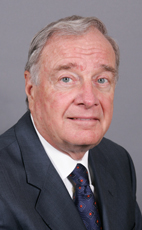
House of Commons photo

Crucial Fact

  • His favourite word was tax.

Last in Parliament September 2008, as Liberal MP for LaSalle—Émard (Québec)

Won his last election, in 2006, with 48% of the vote.

Statements in the House

Goods And Services Tax April 30th, 1996

Mr. Speaker, the member likes to cite quotations. May I just cite Mike Harris on June 14, 1994: "If I want something that works, and I will tell you this, if we had one value added tax, one base, one bureaucracy to collect it, the manufacturers and the businesses in Ontario would save over $1 billion by being able to deduct these costs that you cannot deduct today on the sales tax". Mike Harris said: "It has been one of the areas of major competitive disadvantage that Ontario manufacturers have and Ontario businesses have".

I will close by simply saying this is what Mike Harris said. He said to stop the rhetoric. He said to stop the politics. He said to stop the finger pointing and get on with harmonization. Mike Harris was right then and the government is right now.

Goods And Services Tax April 30th, 1996

Mr. Speaker, the other day in an answer to a question from this member, because of the unfortunate time restrictions placed on some of my answers, I was unable to complete my answer.

The member claims to belong to a populist party. The Consumers Association of Canada supports what the government has done. Does the Reform Party? The Federation of Canadian Municipalities supports what the government has done. Does the Reform Party?

The Tourism Industry Association of Canada supports what the government has done. The Canadian Health Care Association, the Canadian School Boards Association, national voluntary associations and the Canadian people support the government. Why can the Reform Party not get with it?

Deputy Prime Minister April 30th, 1996

Mr. Speaker, two kinds of questions occur in the House.

Very rarely, a member of the opposition will stand up and ask for a point of information, genuinely seeking an answer. There are other types of questions in which members of the opposition engage in political rhetoric, normally with a long preamble. They are not seeking information but seeking to make a point.

We are used to the second kind of question. Normally when the member asks that kind of question, explicit or implicit in the preamble is the fact that the opposition wants to attack the government on a point of substance.

Does the Reform Party support what the government is doing in terms of harmonization or not? Does the Reform Party still believe as it said it did in the finance committee report: "We commend the government in its attempt to harmonize the tax with the provinces".

Does the Reform Party still believe that it is simply unacceptable that Canada remain the only country in the world with 10 different sales tax regimes? Where does it stand? Is Reform for harmonization or against it?

Taxation April 25th, 1996

Mr. Speaker, I am certainly prepared to make available to the hon. member the studies that will show what happens when one reduces the cost to business.

Jim Moore of the Canadian Exporters Association, one of the experts in the field, said: "Obviously it could [create jobs] when you are competing at a level where a 1 per cent difference on a product can make the difference between a sale and a non-sale". He is basically saying it will increase our exports.

The Canadian Federation of Independent Business and the Canadian Manufacturers Association say harmonization will enhance competitiveness for manufacturers and exporters as well as create a simpler and more efficient tax system.

The bottom line from the CMA is: "The net result of these changes will be more jobs and an overall increase in investment and business activity".

Canada Pension Plan April 25th, 1996

Mr. Speaker, the chief actuary has already stated that because previous governments going back a decade did not take proper action on the CPP, by the year 2030 if nothing is done, the premiums might well have to rise to 14 per cent or 15 per cent. It is precisely to avoid that tremendous burden which would be placed on payrolls that this government has taken early action. While there will be an increase in such premiums, it will not be of the kind projected by the chief actuary.

On the earlier point, I apologize to the hon. member for comparing our policies to his, but every time we do it we look so good it is very hard to resist.

Canada Pension Plan April 25th, 1996

Mr. Speaker, two alternative options are being presented to Canadians in terms of the Canada pension plan.

There is that put forward by the members of the Reform Party which is to effectively abolish the Canada pension plan and turn it into a super RRSP. That would result in pensions for the wealthiest in the country and no pensions for the poor. We categorically rejected that option.

At the present time a federal-provincial commission is travelling across the country examining ways in which the Canada pension plan can be kept whole.

The Canada pension plan obviously requires modification. However it is not in danger despite the cataclysmic declarations of the Reform Party. Yes, there may well be increases in premiums and there may well be changes in benefits. However, the fact is that this government, and I also believe all of the provincial governments and the territories can assure young Canadians that the Canada pension plan will be there for them.

Goods And Services Tax April 25th, 1996

Mr. Speaker, never has a more cruel blow been imposed on Maude Barlow than to be cited by a Reformer.

Rather than go on, I will read the list of support at another time. Allow me to take the hon. member through the work we went through before coming to this solution.

When we were in opposition we looked at a series of alternatives. There are a number of people here who supported a business transfer tax. I myself publicly supported a personal expenditure tax. Once we came into office the finance committee was set up and it looked at a multitude of alternatives.

At the same time, the House may remember we made an offer to the provinces that would lower the rate and impose a flat tax which was rejected. There were public debates with the province of Ontario as to whether it would vacate the field or we would vacate the field.

This government has left no stone unturned in its seeking of a better alternative to what we have come up with. In the end we came up with the alternative that we felt was the best thing for the Canadian people, public policy and job creation. We are proud of what we have done.

Goods And Services Tax April 25th, 1996

Mr. Speaker, the statements I made the other day stand. The statements made by the Prime Minister today stand. The statements made by the Deputy Prime Minister stand.

The government speaks with one voice. The issue is how many voices does the Reform Party speak with?

Let us talk about the substance of the issue. While the Reform Party plays its little games, the Canadian people are out there speaking. Who supports what the government has done? The Canadian Manufacturers' Association, the Retail Council of Canada, the Consumers' Association of Canada, the Canadian Institute of Chartered Accountants, the Canadian Automobile Dealers Association, and more to come in the supplementary.

Goods And Services Tax April 25th, 1996

Mr. Speaker, the hon. member does not, unfortunately, understand how the equalization system works. It depends on fiscal capacity, not the taxes collected by a province, but its fiscal capacity.

So, right at the beginning, there will be a slight drop in equalization payments to the Atlantic provinces. Eventually, with the growth of economic activity and with job creation, there will be another drop. This is good for the Atlantic economy. The hon. member is, unfortunately, in error.

I would like to quote Mr. Landry, the Quebec Minister of Finance. From a strictly taxation point of view, speaking of the harmonization with the Atlantic provinces, Mr. Landry said: "This is good news, because more provinces will have a VAT in future".

Goods And Services Tax April 25th, 1996

Mr. Speaker, we have had numerous discussions with the ministers of finance in the other provinces concerning harmonization of the sales taxes. We have made offers, not only to the three provinces who accepted, but also to Prince Edward Island, Manitoba and Saskatchewan. We have held discussions with the other provinces to explain the reasons why the formula applied to this or that one.

We used exactly the same approach as when we passed on to Quebec $120 million for the Atlantic groundfish strategy. We used exactly the same approach when we passed on to Quebec $75 million after elimination of the freight subsidy. The federal government accepted its responsibilities for a very great structural change.