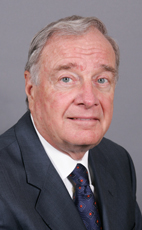
House of Commons photo

Crucial Fact

  • His favourite word was tax.

Last in Parliament September 2008, as Liberal MP for LaSalle—Émard (Québec)

Won his last election, in 2006, with 48% of the vote.

Statements in the House

Goods And Services Tax April 24th, 1996

Mr. Speaker, it is very clear that over a four year period, and indeed that is the basis of the transition agreement with Atlantic Canada, the increased economic activity that would be generated, the number of jobs that would be generated as a result of getting away from the tremendous burden that retail sales tax places upon the provinces, would benefit consumers.

Also, the fact is that the rate will be lower in Atlantic Canada. It would be lower in other parts of Canada. Consumer prices will be lower. This is a win-win situation for business, for employers and for consumers.

Goods And Services Tax April 24th, 1996

Mr. Speaker, I am delighted to answer this question, especially coming from the chairperson of the economic policy committee of our caucus.

There is no doubt that Ontario as a major exporter and as a major manufacturer would benefit enormously from sales tax harmonization. It means increased competitiveness. It means lower costs. It means less administration for both business and for government.

For the people of Ontario it would mean lower prices, as the embedded retail sales taxes within prices under the Ontario system at the present time would disappear. The fact is that sales tax harmonization would benefit Canada, and Ontario, the heartland of Confederation, would benefit enormously.

Goods And Services Tax April 24th, 1996

Mr. Speaker, I would like to pick up on an odious reference from the member's preamble to his other question, the use of the word "bribe" in reference to one section of the country.

Yesterday the premier of Alberta said he felt Alberta is entitled to a reduction in the federal sales tax rate as it applies to his province. That is a point of view that may well be expressed in honest debate. No one in that government has referred to bribes or other odious terms used.

I quote the Minister of Finance for Alberta: "We are Canadians from one end of the country to the other. The fact is that Canadians living in Alberta will probably pay more to Confederation during this time and certainly during the 1970s than Canadians living in say Saskatchewan or in Newfoundland. I do not believe this government", the Conservative Government of Alberta,"is a believer in cheque book federalism. Canada is much more than that".

I certainly hope there is never a merger between the Reform Party and the Tories. If that were the case, there would be a fundamental lack of decency in the Reform Party that would disappear from the right wing of the spectrum.

Taxation April 23rd, 1996

Mr. Speaker, the calculation is made province by province depending on the particular circumstances. As an example, New Brunswick Minister of Finance Mr. Blanchard estimated that an average family of four in New Brunswick would save between $225 and $250 per year.

Similar numbers could be given for the provinces of Nova Scotia and Newfoundland.

In addition, consumers will benefit enormously because they will no longer have the cascading effect of embedded taxes built in which are the real hidden taxes consumers will no longer have to pay because business will be getting the input credits. In fact, consumers will be the great beneficiaries of all of this.

Another thing which is very important to note is that this is going to increase jobs in Atlantic Canada. The fact is that consumers buy because they have jobs. This is the best structural thing we could have brought to the maritimes.

Taxation April 23rd, 1996

Mr. Speaker, when the Reform Party said that it supported harmonization in its response to the finance minister, were Reformers saying that Brian Mulroney was right?

The fact is that at the time the Tories did it we talked about it. We were in the middle of a depression. They brought in a tax that was not harmonized and no sufficient attempt was made to do so.

We have brought in fundamental tax reform in Atlantic Canada, something that is going to give Atlantic Canadians a far greater chance to export and to create jobs. We have set in place a process that is going to allow other provinces to come in. We are in the process of changing the nature of fiscal federalism for the benefit of this country. The Reform Party ought to deal with the substance of it.

Taxation April 23rd, 1996

Mr. Speaker, I dealt with that part of the member's question in my remarks this morning. I said that we were right to criticize the GST. The timing was wrong, it caused duplication and tremendous costs were imposed on business.

I also said in my speech this morning that we were mistaken in believing we could bring in a new tax immediately that would not cause a distortion to the economy. In fact we went through two and one-half years of very hard work. The House of Commons finance committee heard over 500 witnesses and considered 700 briefs. We

looked at a series of over 20 alternatives before coming down with this which is by far the best public policy.

The hon. member can continue along this vein as long as he wants but what is painfully evident is the lack of substance in the Reform Party's questions. The issue is that the Reform Party has stated that it supports harmonization. Does the Reform Party want to deal with the substance of the issue or in fact deal with what Canadians want?

Goods And Services Tax April 23rd, 1996

Mr. Speaker, first of all, the tax will not be disguised, it will show on the bill. Second, in the negotiations with the Atlantic provinces, agreement was reached on a mechanism for changing the tax, if a change in the tax was wanted. This means that it will be even harder to raise it. It will require a consensus among the provinces.

I have one other point to make. The hon. member believes that, instead of an integrated federal-provincial tax, instead of implementing in the Maritimes a tax system similar to what there is in Quebec, he is saying there should be a totally different tax, that Quebec should be pushed aside.

I can tell you that, at the meeting of finance ministers, Quebec asked us to really respect their desire to have a tax that can be harmonized with the Quebec sales tax in order to have a uniform tax, for that will be to Quebec's benefit. The hon. member ought to ask his head office if that is what is wanted.

Goods And Services Tax April 23rd, 1996

Mr. Speaker, it is obvious that the hon. member does not understand the plan. It is perfectly visible. The tax will be on the bill when the purchaser's bill is rung up. It is visible. There is no intention whatsoever of hiding anything at all. I trust that the hon. member now understands.

Goods And Services Tax April 23rd, 1996

Not at all, Mr. Speaker. First, costs are being shared between the federal government and the governments of Nova Scotia, New Brunswick and Newfoundland. In other words, the costs are shared more or less equally for four years. The adjustment payments will stop at the end of the four years.

Clearly there is a structural change. We are sharing the costs of these changes, because all of Canada will benefit when we create more jobs in the Maritimes, which will certainly be the outcome.

Second, the idea of centralization is perfectly ridiculous. The federal and provincial governments are joining together to reduce the burden on the taxpayers in these provinces and to reduce administrative costs.

Representatives of Canada's accountants' association have said this streamlining will save taxpayers $100 million. They have said that Canadian firms could save as much as $700 million, if we could do the same thing. This is a lot of money, and I think it is worth it.

Now, with the basic point the member is making is that taxpayers in the other provinces should not help in the case of structural change, for example, he is in fact denying the principle of equalization payments, which benefit Quebec enormously.

Goods And Services Tax April 23rd, 1996

Not at all, Mr. Speaker. What we did was arrange a formula to compensate provinces wishing to harmonize their sales tax but facing a loss in revenues, that is, the four Atlantic provinces. The offer was made to Saskatchewan and Manitoba as well. Other provinces, like Quebec in 1990, suffered no loss. This is true as well for Ontario, Alberta and British Columbia.

It is in fact a well established practice in Canada, when a region undergoes a major restructuring or faces some hardship, as in the case of the payments to western farmers in the 1990s, for the federal government to provide assistance, because Canada is built on the principle of regions helping each other. This is in fact what we have done here.