
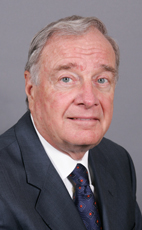
House of Commons photo

Crucial Fact

  • His favourite word was tax.

Last in Parliament September 2008, as Liberal MP for LaSalle—Émard (Québec)

Won his last election, in 2006, with 48% of the vote.

Statements in the House

Economy June 22nd, 1995

Mr. Speaker, we have made it very clear that it is our intention to eliminate the deficit. We have also made it very clear that it is our intention to put the country back into good economic shape. That means putting Canadians to work, it means preserving our social programs, and it means giving the country hope.

It is not the intention on this side of the House to bring in the kinds of scorch and burn policies the Reform Party would advocate. It is not the intention of this party to destroy the Canadian economy and the hopes of so many young. It is the intention of this party to do what Canadians want, and that is to make Canada live up to its potential. That means that we will take on anybody in the world.

Economy June 22nd, 1995

Mr. Speaker, the member's statement does not coincide with the facts.

At the time we took office unemployment was at 11.5 per cent. It is now at 9.5 per cent. At the time we took office there were 433,000 fewer Canadians working than are working today. At the time we took office growth was anemic. The fact is that we have just come off one of the best years we have seen in a decade. In fact the OECD stated only yesterday that again this year Canada would lead all the G-7 nations.

The fact is that we have had a very good record, which is due to the policies of the government. We intend to continue those policies.

Job Creation June 14th, 1995

Mr. Speaker, hope may be found in the infrastructure program the government has set up. Hope may be found in the job creation programs of the Minister of Human Resources Development. Hope may be found in the programs of the Minister of Fisheries and Oceans and of the Minister of Agriculture. Hope may be found in the high tech policies of the Minister of Industry. Hope may be found in the policy of this government, which reversed the policies of the previous government in order to give Canada a real future.

Job Creation June 14th, 1995

Mr. Speaker, yesterday I said the economy had clearly slowed down, I did not say that the slowdown would last the entire year. In the opinion of most economists, it is a pause, and we should see a recovery in the third and fourth quarters.

Having said that, as I repeated yesterday, I point out that over 220,000 jobs were created in the private sector, for example, in the past year-a fairly substantial number.

Canada Social Transfer June 14th, 1995

On the contrary, Mr. Speaker. Everything we have done, everything we have said, whether it was regarding single window service, the fund for entrepreneurs or community initiatives, has addressed the requests and wishes of local communities.

Not only are we in the process of decentralizing, but we are doing it because that is what the regions have requested.

Let us be very clear what the member said in the preamble to his statement. He said that he, on behalf of his party, was against national standards in the CHST. The most important national standards in the CHST are the principles of the Canada Health Act. This government stands behind the Canada Health Act and so do the people of Quebec. He had better learn that.

Canada Social Transfer June 14th, 1995

Mr. Speaker, the hon. member has contradicted himself in his own question. What we are in the process of doing with the Canada social transfer is, first of all, keeping the fiscal burden under control, which will enable the federal government to continue transferring money for social programs to the provinces.

Second, what we are trying to do is give the provinces the flexibility they need to adapt their own programs to the needs of the people. I must say that I find it utterly absurd that a Bloc Quebecois member is actually criticizing the federal government for having given more power and flexibility to the provinces.

Canada Social Transfer June 14th, 1995

Mr. Speaker, the member says he has a little difficulty understanding French, a little difficulty understanding Latin. My Latin is not too good either.

Let me say it again in English. The Leader of the Opposition says his colleague has no difficulty understanding math. He now says I have got the wrong person.

Since the government took office, transfers to the provinces have increased. Transfers to the provinces have not been cut for this year and in fact are going up.

Ultimately there will be a cut but that is no excuse for provincial action. The fact is any province, including the province of Quebec, has as much money to work with today as it did when we took office. Let us be very clear about that.

As far as social programs are concerned, a mechanism has been put in place that stops their continuous erosion all the way down to zero. There have been reductions but we have set in place a mechanism and any province that wants to sit down with us or the minister of HRD and is prepared to look at national values, that mechanism is in place.

There is a pre-condition to all of that. That is the goodwill and the understanding that this is one country and that this country wants to build, not destroy.

Canada Social Transfer June 14th, 1995

I must tell you that the hon. member's figures are wrong. I cannot answer a question based on an invalid premise.

Canada Social Transfer June 14th, 1995

Mr. Speaker, the hon. member's premise is totally wrong. First of all, the provinces, including Quebec, started to cut well before the federal government tabled its budget.

Second, for this year and next year, not only does the budget not prescribe any cuts but it actually increases federal transfers.

Canada Social Transfer June 14th, 1995

Mr. Speaker, the Prime Minister was very clear last week, as was the minister of HRD, as I was, that the cash contributions of the federal government are steadily declining, according to a schedule that was established a long time ago.

With this particular measure we have put the federal government in a position where it will be able to flat line those cash contributions over a period of time while maintaining the federal government's contribution to the very important social programs of the country.

[Translation]