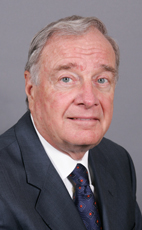
House of Commons photo

Crucial Fact

  • His favourite word was tax.

Last in Parliament September 2008, as Liberal MP for LaSalle—Émard (Québec)

Won his last election, in 2006, with 48% of the vote.

Statements in the House

Taxation October 19th, 1994

Mr. Speaker, in the last budget, we closed the $100,000 capital gains loophole. That was the biggest tax break. We closed a great many corporate tax loopholes. We will certainly follow through in the next budget. Until then, the hon. member and his colleagues can make suggestions. Instead of making partisan speeches and praying to heaven, why do they not act as responsible members of Parliament and join the committee to really improve the lot of Canadians?

Taxation October 19th, 1994

Mr. Speaker, all the hon. member just did, really, as I did yesterday, was to read the public accounts. Now we know that he can read. We now ask him to take a closer look, to make choices and to tell us what he thinks should be done. We also asked the member many times to give us his suggestions about family trusts. We asked him to participate fully in the debate, but all we hear are political speeches, not constructive suggestions!

Social Program Review October 17th, 1994

Mr. Speaker, this morning we set out a basic framework as to how we feel the Canadian economy can deal with what is its single greatest problem which is the failure to create jobs in sufficient numbers to substantially reduce the unemployment rate.

We basically said that the focus must be on productivity and we set out the key elements of how we would generate that productivity. We also stated in there that as far as we are concerned-I am now repeating the words of the Minister of Human Resources Development-the best social policy is a good job.

I must say that complementing certainly that framework are the tremendous efforts by the minister to basically make it possible for Canadians to develop the skills and the talents they need to face up to a very different world. It is very clear that the government has its act together and Canadians are going to benefit from it.

Economic Policy October 17th, 1994

Mr. Speaker, it is precisely because the previous government kept setting targets too far down the way of no great significance and then kept missing them that we as a government decided that we would set up very clear milestones-that is what Canadians asked us to do in the consultations last year-within a relatively short time period so that we would keep everybody's focus on that and then we would hit our targets.

It is very important for the credibility of government that we do not set out a multitude of targets but that the government focuses on one issue and that it does what it says, and that is what we are going to do.

Economic Policy October 17th, 1994

Mr. Speaker, I am not sure if lilac is the right colour; perhaps the opposition critic is looking at it through rose coloured glasses. That actually came from the Deputy Prime Minister, not bad.

The position I took in committee this morning is entirely consistent and in fact finds its birthplace within the red book. In the red book we said unequivocally that we were going to reduce the deficit to 3 per cent of GDP by 1996-97 and that our ultimate goal was to balance the books, to eliminate the deficit. That is the position we took in the red book. That is the position I took this morning in the purple book.

Our goal is to set milestones so that Canadians can judge what the government is doing. We are not going to set targets out there. We are going to hit our 3 per cent target. Canadians better understand that and the Leader of the Opposition better understand that as well.

Economic Policy October 17th, 1994

Mr. Speaker, our commitment during the campaign, which was stated in the red book and that the hon. member should read again, is very clear. We said that the GST would have to be replaced with a taxation system which would be fairer for consumers, harmonized with the provinces and set up in the shortest possible timeframe. However it is far more important to do it well than to do it before a set deadline.

Economic Policy October 17th, 1994

Mr. Speaker, I must say that our discussions on Friday in Toronto were quite fruitful. Several provinces supported our proposal. I could add that two other proposals are

on the table, one from Ontario and one from Manitoba. Quebec has been very constructive.

Indeed, far from rejecting our proposal offhand, Quebec said there were some problems, but that something could perhaps be worked out based on our proposal. Everything went very well. It might be that the headquarters in Quebec City are more constructive than the branch plant here.

Economic Policy October 17th, 1994

Mr. Speaker, I am not the only one who gets excited.

It is incredible to watch members of the opposition at work. They say we must cut, yet every time we talk about an area they say: "You can't cut that". They have never made one suggestion as to an area where we should cut. They have never brought forward anything constructive. They sit there and they make huge rhetorical speeches about the future of the world. Never once are they prepared to get down to work and make this country work. That is the problem with the opposition.

Economic Policy October 17th, 1994

Mr. Speaker, let me quote the Leader of the Opposition, who asked this question on June 20: Does the Minister of Finance intend to table a supplementary budget in the fall to reduce government spending by at least $3 billion?

Mr. Speaker, I find it very hard to understand why the Leader of the Opposition wants us to make cuts, while his finance critic refuses to accept the fact that we have to improve government finance.

Economic Policy October 17th, 1994

Mr. Speaker, I must correct the Leader of the Opposition. When we look at job creation, we have now outstripped the level of job creation we had before the recession. We did it. Second, when we take a careful look at the diagnosis, when we consider what the Minister of Human Resources Development is doing, we are in fact implementing the OECD's analysis. Is that wrong? Are France, Germany and the OECD countries wrong or is the Leader of the Opposition the only one who is right? I do not think so, Mr. Speaker.