I'm sorry, Mr. Speaker, you can clap too. I take it back, Mr. Speaker. I withdraw.

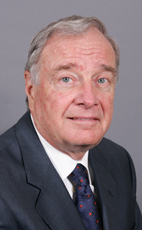 House of Commons photo
Won his last election, in 2006, with 48% of the vote.
Taxation May 3rd, 1994
I'm sorry, Mr. Speaker, you can clap too. I take it back, Mr. Speaker. I withdraw.
Taxation May 3rd, 1994
I do not blame members for clapping. They do not have much chance.
Taxation May 3rd, 1994
Mr. Speaker, the leader of the Reform Party is absolutely right when he says-
Child Support Payments May 3rd, 1994
Mr. Speaker, the hon. member has to understand that the court just handed down its decision late this morning. We have received a copy of the decision, but have only had the chance to glance at it. We will now have discussions with the Minister of National Revenue, the Minister of Justice and certainly officials from our respective departments.
After that, we will be in a position to provide you with the answer you are looking for, but as I just said, our biggest concern is financial support for children and tax fairness.
Child Support Payments May 3rd, 1994
Mr. Speaker, this is a matter of great interest to us. As the hon. member must know, in the budget tabled on February 22, reference was made to the federal-provincial family law committee which is expected to report to us on a number of issues relating to children and family and indeed more specifically, on the one raised by the court in the decision rendered today.
Our biggest concern, I must say, is first and foremost financial support for children and second, tax fairness. I can assure you that we will take into consideration the court's decision as well as the report of the federal-provincial family law committee.
Regional Economic Development May 2nd, 1994
Mr. Speaker, it is necessary to really understand the objectives and purpose of the Federal Office of Regional Development for Quebec.
As I announced three weeks ago and as the Minister of Human Resources Development announced regarding the Western Diversification Fund in the west, we in the Federal Office really intend to emphasize small and medium-sized business.
In Quebec, we who are really the heirs of the Quiet Revolution and the entrepreneurial revolution know very well that Quebec's economic future is in our hands, in our small and medium-sized businesses, and as the federal government, we intend to encourage this dynamism; Mr. Speaker, I can assure you that there is no conflict of interest between the Minister of Finance, the minister responsible for the Federal Office and Quebec entrepreneurs.
Supply April 28th, 1994
Mr. Speaker, I said in my remarks, as did the parliamentary secretary, that in the program set out by the minister of agriculture, we have been very specific as to the actions we intend to take.
Yes, there are areas where we have said we are going to consult because we think it is an essential part of the democratic process that we go out and that we talk. Surely the members of the Reform Party would agree that you go out and talk to Canadians, talk to those who are involved.
I cannot believe the Bloc Quebecois members do not share the same view that what government must do is consult with the stakeholder before coming down with the final program. We have nailed our colours to the mast. We have said what we are going to do.
The final remark I would make in response to the critic's remarks is with regard to what he said about GATT. I watched the evolution of that negotiation. When this government came into power we were dealt a very late hand. A previous government had not faced up to the tremendous demands that were out there; a previous government had not owned up to the Canadian people about what it had said, and a previous government had misplayed its hand very badly in Geneva. Nonetheless, having been dealt that hand, we were able to snatch tremendous victory from the jaws of defeat because of the negotiating skills of the government.
The net result of GATT which could have turned out so badly for Canadian agriculture is that in fact it has turned out to be a tremendous victory. It has turned out to be a tremendous victory because as a government we knew exactly what we wanted. Our negotiators went over to Europe, sat down at the the table and did not leave the table until they got it. I am sure that in the private moments of his home the opposition critic knows that.
Supply April 28th, 1994
Mr. Speaker, the fact is that I dealt quite extensively in my remarks with exactly the points that were raised by the opposition critic.
Our position on the trade war is very clear in terms of our absolute preparedness to go to the wall to protect the Canadian farmer. Indeed the agriculture minister has made that very clear. We are right and we are going to win and let there be no doubt about that.
I dealt with research and development extensively in my remarks. We believe that if you look at the development, the evolution of Canadian agriculture over the years, it is in fact because we have invested heavily in research and development, have developed new hybrid forms of grain, as an example, in the area from which the member comes that we have been so successful in world markets.
We have stated very clearly that the agri-food industry is an essential part of the growing Canadian economy. It is one that is worthy of support in world markets.
The minister is now on a tour of the Asian markets which are crucial to the future of Canadian agriculture.
We have also said that the department of agriculture, as indeed other government departments, will be cutting back on the heavy cost of administration that we have inherited in order to have more money to put into programs to support Canadian farmers.
That is part and parcel of the philosophy of the government in terms of agriculture, in terms of defence, in terms of industry. We believe that the huge government apparatus ought to be scaled back so that scarce resources can be put on the front line where the battles are being waged.
Yes, I did talk very enthusiastically about the minister of agriculture, about the work he is in the process of doing. It is an essential pillar of the economic philosophy of the government, that Canadian agriculture not simply survive but that it grow. That is because as the parliamentary secretary said, we see in Canadian agriculture not only problems as do the opposition, but tremendous, tremendous opportunity.
Supply April 28th, 1994
Mr. Speaker, I am certainly the first to admit that I am not personally known as an expert on agriculture, except that I should tell my hon. colleague that I am a farmer.
I have a farm where I raise beef in the riding of Brome-Missisquoi; it is one of the most beautiful parts of Quebec and I invite him to come and visit my farm and really see what it is to work the land.
I also invite the agriculture critic of the Bloc Quebecois. I can talk to him as to a Quebec farmer and I can certainly tell him that, for me, as a Quebec farmer, not only the provincial government is important, the federal government is important too.
They ask when we will confront the Americans. It has been done. I was in Washington two days ago. I met the Treasury Secretary there, I raised the issue of the debate that we are having here and I can assure the House that we will hold our ground in these discussions with the Americans and we will win because we are right.
Supply April 28th, 1994
Mr. Speaker, I am suitably admonished. It is just that I am so enthusiastic about the work the minister of agriculture does that I sometimes get carried away.
In any event, this is one area, that is to say agri-food research, in which the government is very keen to see us place even more emphasis. Therefore, Agriculture and Agri-Food Canada will give a very high priority to innovative research and to collaboration with private research partners.
In our agenda for creating opportunity we have endorsed the idea of providing matching funds for research proposed jointly by the public and the private sectors. My colleague is looking at a variety of options, collaboration with the private sector and the public sector, including a plan to work with industry for additional co-operative investment funding.
As for trade, which the critic discussed, from the day we took office it has been our top priority. The focus of our government's platform has been economic renewal, growth and jobs. A number of the initiatives so far have been aimed at encouraging small business, stimulating innovation in research and development, providing stability for the future and in particular, restoring confidence and stability in the agri-food sector.
In pursuing these goals we have set out two priorities: concluding the trade deals and getting absolutely the most out of new trade opportunities. That again is what the parliamentary secretary referred to. Let us not only look at the problems but let us look at change as something that will provide a very dynamic agricultural sector with the opportunity to develop new products and create new opportunities.
We hit the ground running by negotiating a successful GATT agreement that will bring fairness and predictability to international trade which Canada is so dependent on.
On January 1 we saw the introduction of the North American free trade agreement which will provide an even greater opportunity for our industry in North America. A more secure trading environment will over time provide better stability for our farm families and for our agri-food entrepreneurs. Our challenge now is to take the utmost advantage of the opportunities presented by these agreements.
We already have a commitment from industry to work toward the goal of exporting $20 billion in agri-food products by the year 2000. That is a considerable leap from the $13.7 billion we are now realizing. I am confident, as are the Department of Agriculture and Agri-Food and the government, that we can do it if we all work together. I would ask the opposition to join us in that great effort.
The Department of Agriculture and Agri-Food is reordering its priorities to increase support for export initiatives. We have placed agri-food specialists in selected embassies abroad to provide better service for our exporters. The first ones are in place in Mexico, Japan, South Korea and Taiwan. The response we have had to their work has been very good.
To further consolidate our trade efforts in Mexico, we will soon open a Canada business centre in Mexico City to promote our exports and to offer trade related services to our new NAFTA partners.
Canadian farmers are very supportive of this focus on trade. They want to earn their incomes from the marketplace, not from the high subsidy levels that have prevailed over the past few. years. They repeatedly tell us that they do not want subsidies, that they just want a decent price from the market.
The producers continue to need some protection from the vagaries of the market and from external disasters. Our platform promised to review all existing support programs to develop farm income stabilization programs based on the concept of the whole farm, a user friendly safety net based on income from the whole farm.
We see farm income security as a consequence of the marketplace more than as a result of government support programs.
Development of the new whole farm income support program has been a key part of our plan to create security for farm families. We launched in Winnipeg at the beginning of February a consultative process on refurbishing Canadian farm safety net programs which will draw on the expertise of farm leaders from across the country, as well as federal and provincial government officials.
What emerged from that Winnipeg meeting was a strong consensus to make a whole farm program available to all commodities. There was also agreement that some sort of additional support or companion programs would be needed to deal with specific regional or commodity problems as they arise. This will be part of our overall approach to safety nets.
We have already taken a few big steps toward safety net reform. The first was establishing a national safety nets committee made up of government and industry representatives.
The membership of the committee was established to ensure that the agri-food industry had input in the policy and program activities that will lead to the establishment of a renewed safety net regime. The membership is charged with ensuring that the input of all interested producers is brought to the table for consideration. They are to ensure that the deliberations and the conclusions of the committee are disseminated around the country.
We need to develop a program that is GATT consistent, market neutral, financially sound, affordable and effective. We need to ensure that taxpayers' money is spent in the most efficient way: to improve the industry's ability to adapt and to compete while not distorting trade. We would like to be ready to begin its implementation in 1995.
While not strictly a safety net issue, the question of interest free cash advances must be considered when we are thinking about safety nets, because there is only one source of funds for agricultural programs. As the Minister of Agriculture and Agri-Food recently told several farm groups, our government is quite prepared to move on our campaign promise to improve these programs but first he wants to get the opinions of all major farm groups.
It is important to note that the budget of the Department of Agriculture and Agri-Food for all income support and safety net programs is currently about $850 million. Historically interest free cash advances have cost us $50 million to $75 million. If $75 million is used for cash advances it means that much less is available for other things. If we hear a consensus from producers that it is the best way to spend that money, our government will proceed.
The finance critic for the Bloc Quebecois may tell his colleague, the agriculture critic, that he does not think money should be spent on agriculture. However we are going to do it because we believe in Canadian agriculture.
We are asking farm groups to look at the basket of programs we have in place, the new initiatives that may come out of the safety net discussions, and the amount of money available to support these programs, to tell us what is the best way to spend our limited resources, our scarce resources. I know the financial critic for the Bloc will support me in this effort.
Is the commitment to fully interest free cash advances the best use of these funds? Are there ways to make cash advance programs more effective at lower costs? That is the debate we must have in the House.
Another element of security for farm families consists of the programs in place to help farmers manage. There are a number of them. Some are being questioned; others are aimed at helping farmers adapt to changes in farm financial situations which the critic raised in his remarks.
In some cases the provinces have programs similar to our own. We need to assess these programs. We need to ask ourselves what types of programs might be considered companion programs and how they are best going to meet the needs of the future. How can we eliminate duplication among different levels of government? How can we provide straightforward service to farmers? We will be looking at all federal programs in this context.
Tied into the issue of security for farm families and agricultural communities as a whole is the question of rural development. A healthy rural sector is an important part of ensuring a prosperous agriculture industry and vice versa.
The Prime Minister has asked the Minister of Agriculture and Agri-Food to promote and facilitate rural renewal using the resources of Agriculture and Agri-Food Canada. As a result the minister announced that a rural renewal secretariat was being established within his department to provide leadership and co-ordination.
This secretariat is working with other departments, with provincial governments, industry, communities, organizations and grassroots stakeholders to address the challenges facing rural Canada.
The key to this effort is partnership, the co-ordination of the business of government, the vigilance and the political will to ensure that rural people and rural issues get the careful attention they need around the cabinet table and in the conduct of government.
As for supply management, the new GATT agreement will certainly require adjustments on our part, but we must nonetheless recognize that substantial gains were made. We have ensured that tariffs will be reasonably high, applied for a reasonable length of time and combined to clear access rules so as to allow product sectors to get by.
In co-operation with the provinces and the industry, we are developing a supply management system which will be both sustainable and responsive to the new market conditions. A federal-provincial-industrial working group will be holding consultations and developing a strategy to get the most out of the new trading context.
Many agri-food enterprises are small or medium sized businesses. A key part of our platform is directed at helping to unleash the job creation potential in small and medium sized businesses. We will provide one stop shopping for business. We will provide the market development support necessary to succeed in today's global markets. We will continue to cut red tape and unnecessary regulation.
Change is now the order of the day. This Parliament must also work in co-operation toward ensuring the prosperity of our agri-food industry.
Our government has not been twiddling its thumbs, whatever the opposition says. I call upon its common sense and spirit of co-operation to bring about positive change within the industry. All Canadians will benefit from this.
I believe the farmers and business people of Canada recognize the contribution the agri-food sector brings to the Canadian economy. We all look forward to making the most of what I know will be a better future for all Canadians.
In conclusion, that is why we on this side of the House welcome this debate. This House is a dramatically changed House from the previous one. On our side, as was evident in the intervention of my colleague, there is tremendous interest and expertise in agricultural matters. There is a very strong rural influence running through the Liberal caucus.
As I look across the House, the Reform Party brings with it a great deal of knowledge and understanding of western agriculture. The agriculture critic for the Bloc Quebecois is an acknowledged expert in the area, as indeed is its finance critic an eminent and renowned economist in that sector.
There is an opportunity in the House to marry the tremendous knowledge, desire and enthusiasm for Canadian agriculture existing in the government with the sincerity of the opposition parties. It is for that reason we are delighted to participate in the debate today.