
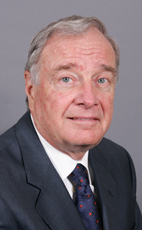
House of Commons photo

Crucial Fact

  • His favourite word was tax.

Last in Parliament September 2008, as Liberal MP for LaSalle—Émard (Québec)

Won his last election, in 2006, with 48% of the vote.

Statements in the House

Supply April 28th, 1994

Mr. Speaker, on behalf of my colleagues, the minister, the hon. Ralph Goodale, and the parliamentary secretary, Mr. Lyle Vanclief, it is with pleasure that I open the debate on the opposition motion relating to a vital sector of the Canadian economy, that is to say agriculture and the agri-food industry.

I would like to start by commenting briefly the wording of this motion that I find absolutely ridiculous. I must tell you that I was stunned-I could not believe my eyes-when I read this motion. Just think, our colleagues opposite are asking that this House denounce the government's lack of action in the agricultural sector. The government's lack of action, nothing less.

Ironically enough, while we are fed such cliches, while we are criticized for our alleged inaction, my colleague, the minister of agriculture, happens to be abroad on a mission to promote agricultural trade.

In fact, that is why I am replacing the hon. minister here today. As we speak the minister of agriculture is leading a trade mission in the Asia-Pacific region. This region is an economic zone undergoing phenomenal growth, one that looks like a promising export market for our agri-food products and know how.

The minister is accompanied by a delegation of 15 leaders of the Canadian agri-food industry representing most areas in that industry. After stopping off in Japan and Korea, they are now in China and from there are headed for Hong Kong.

As recently as last Monday, the minister of agriculture left Korea with a signed contract to sell wheat to Korea as well as interesting prospects for the sale of pork meat and animal feed. If that is called lack of action, there is something wrong with the definition of the word. As a matter of fact, I am convinced that not only the Bloc Quebecois critic for agriculture but also my hon. colleague the critic for finance, a prominent agricultural economist, will approve of the objectivity and capacity to promote agriculture in the Canadian economy.

How can one dare talk about government lack of action when this government has been praised by the industry for reacting both quickly and firmly to the American decision to renegotiate customs duties on wheat under article XXVIII of GATT? Our government made it clear that we do not want a trade war with the United States. We would rather negotiate. But we will go to war if we have to. As the hon. minister indicated, no deal will be made with the Americans unless this deal benefits the Canadian agri-food industry as a whole as far as grain products, processing and supply managed commodities are concerned. Canada will not give in on one point to get more on another. We refuse to play one group or region off against another.

Inertia my eye. This government takes great pride in the exceptional work that our Minister of Agriculture and Agri-Food has been doing since taking office in November. I would congratulate my colleague, the parliamentary secretary to the minister, for his intervention five minutes ago when he talked about the positive things that we as a government and as a country are bringing to this, one of the most important sectors of our economy.

In the last five months the Minister of Agriculture and Agri-Food has travelled widely in an effort to meet all of the pertinent players around the world, in Canada and in Quebec. He has met with industry associations and stakeholders. He has met with provincial and municipal governments as well as American, Mexican and now Asia-Pacific agriculture and trade officials.

These meetings were held in a spirit of co-operation and consultation which has been the hallmark of this government's approach to making Canada's agri-food industry one of the strongest in the world.

The Canadian agri-food industry is a major employer. It is a major exporter. It accounts for 8 per cent of Canada's GDP and 15 per cent of our jobs, three-quarters of which are found beyond the farm gate. In fact, it represents work for more than 1.5 million Canadians on the farm, in processing plants and in the food distribution chain. It also provides Canadians with safe, nutritious food at reasonable prices. Agri-food exports are a

significant source of income for Canada. In 1992 exports were worth $13.7 billion.

Our platform, the famous red book, says that our sector has unique opportunities for growth and places great emphasis on security for Canadian farm families. It recognizes that Canadian farmers want that security to be built on the development of solid domestic and international markets, on staying at the forefront of innovation, on stewardship of our natural resources and in the confidence consumers have in the safety and the quality of our food.

I would like to take some time to review the work that we have done to live up to our commitments, to follow up perhaps on the intervention of the parliamentary secretary some minutes ago.

I would like to begin by reaffirming as a government our commitment to research and to innovation. This is an area where our government feels that the Department of Agriculture and Agri-Food can work closely with other government departments to build a framework that will make it easy for firms in the agriculture sector to bring products successfully to the marketplace.

Successful agriculture is a knowledge industry. Studies have shown that the return on investment in some key areas of agri-food research can exceed 50 per cent. This is one area where Ralph Goodale is very keen to see government continue to emphasize-

Regional Development April 22nd, 1994

Mr. Speaker, the Legault, Grysole and

Associates study undoubtedly concluded that the project needed certain changes. That is the purpose of the study and we intend to make these changes.

If you want to talk about jobs, I would ask you to listen to the President of the Treasury Board, who just told us that we invested $300 million in a project that will create 90,000 jobs in Canada.

Regional Development April 22nd, 1994

Mr. Speaker, we are talking about a project that was supported not only by the long-standing local authorities and the former government but also by the Bloc member for Trois-Rivières, Mr. Yves Rocheleau.

It must be said that, although there is some dissension within the Bloc Quebecois, the project is supported by all the local authorities. There is also a study which raised some very valid questions, and the government intends to answer these questions. This study is only one of many. It must be said that when local communities have the desire and the capacity to support a project, I think it is worthwhile for both the Canadian and the Quebec governments to follow suit.

Social Program Reform April 22nd, 1994

Mr. Speaker, what we said and what we discussed last January with the finance ministers, is that there will be no cuts, there will be no freeze in transfers to provinces for a period of two years, precisely to give the Minister of Human Resources Development time to discuss and negotiate the necessary reforms with his counterparts.

The situation is very clear: We have decided on a moratorium to have a period of discussion and negotiation. In fact, this exercise has already been launched by the Minister of Human Resources Development.

The Economy April 20th, 1994

Mr. Speaker, the hon. member asked the same question yesterday. I will give him the same answer.

The fact is that in the red book, in the budget and in statements in the House the Prime Minister and I have made it very clear that the cuts have been made in the budget which are required to get us to 3 per cent of the GDP within three years. At the same time we have said a major review of every single program is being carried on by the Minister responsible for Public Service Renewal.

The Prime Minister has said it; I have said it; and you can keep asking us. I would really suggest to the hon. member that he come up with some new questions. Ask Canadians for some new questions. I think your research well is running dry.

The Economy April 20th, 1994

Mr. Speaker, the questioner being a businessman himself understands that what makes markets are obviously differences of opinion.

The fact is the analyst in the Deutsche Bank has expressed an opinion. I had breakfast with the president of the Deutsche Bank not long after that report and it certainly was not his. He wanted to give you his best.

The fact is the majority of investment houses in the United States recommend a holding of Canadian bonds at 3 to 4 per cent. That is what makes markets and that is why we are very confident.

The member should have read the whole report because the Deutsche Bank talked about provincial deficits and about the very uncertain political situation in Quebec. Let me tell you, once the political situation in Quebec is cleared up with a victory to the provincial Liberals the Deutsche Bank will change its mind.

Transfer Payments April 20th, 1994

Mr. Speaker, let me simply read what I said. I will do this in English because it is part of the speech that was given in English.

-then we took a look at the absolute necessity of renewing fiscal federalism.

The provinces agree with that. The minister of finance for Quebec agrees with that.

-it is now crucial that we begin to take a look at what all levels of government do, not with some political aim in mind, but in terms of its affordability and efficiency.

The Government of Quebec agrees with that, as do all of the provinces who want to solve our problems. Then I went on to say that we have discussed that with the provinces.

-they have two years in which to complete with us this process. At the end of that two years we will be taking massive amounts of money out of the federal-provincial structure, hopefully not at their expense nor at ours, but as a result of the more efficient programs between the two levels of government.

That is what the provincial finance ministers want. It is what the provincial governments want. It is what the federal government wants. It is what Canadians want. It is what we are going to deliver.

Transfer Payments April 20th, 1994

Mr. Speaker, we fully agree that we should not dump our problems on others. That is why we first settled the issue of equalization that has been of enormous benefit to Quebec and six other provinces. That is why we agreed with finance ministers, including the Quebec minister of finance, to impose a moratorium on social security reform. That is why, as I said in my speech, we clearly stated in the budget the objectives agreed on by the finance ministers in January.

Government Expenditures April 19th, 1994

Mr. Speaker, the statements I made and the statements of the Prime Minister flow directly from the budget document. We said that the cuts that were made in the budget were sufficient to bring us to the 3 per cent of GDP.

As well the budget talked about the large reform that was going to be carried on by the Minister for Public Service Renewal looking at it program by program.

That is the position of the government. It is very important to understand that it has not only been set out on countless occasions by the Prime Minister and by myself, it was also set out in the budget, and it is a position that we set out in the red book.

In other words what we said before the election we are carrying through after the election.

Unemployment Insurance Reform April 19th, 1994

In the context of the social security reform undertaken by my colleague, I will certainly do so. However, I will not be the only one; other ministers are willing to go too. Nevertheless, as I have already said, I can tell you unequivocally that I am quite prepared to go and meet your constituents this summer.