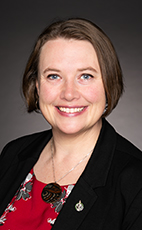
House of Commons photo

Crucial Fact

  • Her favourite word was veterans.

Last in Parliament April 2025, as NDP MP for North Island—Powell River (B.C.)

Won her last election, in 2021, with 40% of the vote.

Statements in the House

Pharmacare Act May 30th, 2024

Mr. Speaker, I have to start by saying remembering our humanity in this place is really important. I, too, wish a very happy birthday to the member's father. I think it is a beautiful thing to have these opportunities. We are away from them far too long.

Through you, Mr. Speaker, I just want to remind everybody in this House that, in fact, Tommy Douglas was very clear. His first step was going to be medicare, and the second step of his vision was pharmacare. I stand here as a proud New Democrat, feeling that I am carrying a legacy forward in a profound way. I will always be proud of that.

I do not know if the member knows this, but, in my province, the B.C. NDP are making sure that all contraceptives will be covered, knowing that is an important right. When this program is in place, it will actually free up resources so that the province can reallocate funds to a different place. I just hope the member understands that and is looking forward to what his province will receive based on this allocation.

Pharmacare Act May 30th, 2024

Mr. Speaker, early in my career as a politician, I was in a meeting with two young people who had type 1 diabetes. They came from two different provinces, so it was very interesting to hear the story of those young people and their parents. What stuck with me was that one young person lived in one province and had an important, often life-saving device, and the other young person from a different province did not have it. The reason they did not have it is that it was costing them a significant amount of money every month. The dad had been hurt on the job; he was now living on very minimal income, and they had to take the device away from their child. Could the member talk about how this would really create that important factor of universality so that all young people who have type 1 diabetes get exactly the same appropriate care across Canada?

Parliament of Canada Act May 30th, 2024

Madam Speaker, I am grateful to have the opportunity to speak to Bill C-377. First of all, I want to acknowledge the member for Bruce—Grey—Owen Sound. We have worked on a few things together. I have a deep amount of respect for him and the work that he does in this place, so I am very pleased to be able to speak to this piece of legislation.

I think it is a very interesting one, particularly in the context of the work that I have done on PROC, a committee that was overseeing a study on foreign interference. As we were going through that process, what we heard again and again was that the members of the committee were not vetted and did not have the clearance to access information that would really make the process for us a lot more logical, a lot less partisan and more focused on the important issues we were dealing with, so this bill, Bill C-377, really would allow for parliamentarians to be vetted and to go through that process. However, it is really important to underline the fact that this would not give them that clearance unless they were to go through that process. It would mean that parliamentarians would be able to apply, to go through all the interviews and to have things checked out to make sure they could be trusted to have secret information that the government may not necessarily want them to see, or they may simply not have the appropriate clearance, which would block that pathway for parliamentarians. Therefore, whether a parliamentarian would actually get that clearance is based on their history and on their capacity to get that. This bill, Bill C-377, addresses that and allows for parliamentarians to get that done.

I think where this is really important, and Canadians need to think about this, is that we see a lot of drama sometimes in this place, which is largely based on hearsay. I know, as a parliamentarian, one challenge I have had with respect to the work put before me, especially around the foreign interference file, was that I was trying to understand what was happening without all the information. I understand that some of that information could not necessarily be shared. I think it is really important that Canadians understand that our relationship with other countries really matters. When we have information shared with us because of our partnerships with other countries, we must have a very clear process, and that needs to be protected because if it is not, it will lessen the trust other countries have in us and their ability to share information with us. Therefore, we need to assess all those things.

Even if we are able, at committee, to have all the members of the committee vetted, if somebody from a particular party cannot get that vetting, then if we were to have somebody sit in their place who is vetted, that would mean the committee could actually do some of that work, and there is a transparency at least to members of Parliament. When we talk about foreign interference, we know that is part of the challenge we have been facing. People who have been specifically targeted do not have the clearance and do not have a clear process in this place that allows them to know they are being targeted, which is horrible. I know, as an MP having gone through that process, I have been very concerned about who is being targeted, how we would know if we were being targeted and what that would look like.

The other part of this, and why I will be supporting this bill, Bill C-377, is that we know Parliament and government are already slow places. Things move far too slowly, and it really builds a sense of frustration sometimes for Canadians. Therefore, if we have a process whereby MPs and senators, who are either appointed or elected to their positions, could go out and do the appropriate tasks, could do the thorough assessment and could have that secret clearance, then they would be able to know information and would be able to clearly explain the process, but not the details. I think we have to be very aware of that. Parliamentarians would know things that they would not be able to tell, but they would be able to say that they saw it, that they know what is happening, and they would have information that might allay or grow people's fears.

In this day and age, where we see such a vast, changing reality, and I think of last weekend when I was at the NATO Parliamentary Association where we talked about the development of AI, what that means for military action and what it means to have that information sent out to all people in the world and to have our constituents included in that, we need to assess those things and understand them.

The world is becoming trickier. It is trickier for parliamentarians in our particular roles, and it is trickier for Canadians. When we look at this, we have to look at what is disinformation and what, in terms of trust, is being broken or poisoned by disinformation for everyday Canadians. It is a lot to try to understand all the different things that are happening, and it is hard sometimes to know what information is thorough, which is researched, and what is actually from bad actors selling disinformation specifically because they want to attack our democracy. This is not the only tool, and we could talk a long time about the other tools that we need, but this tool would allow parliamentarians to come together.

Right now, we do have NSICOP, which is one committee where all the people in it are cleared, and they have access to information. That is a good process. I have no problem with it, but we need to have that expanded to this degree. I think this bill, Bill C-377, really does a good job of talking about how we could do that. It would not fix all the problems, but it would certainly address some of them.

One thing I learned really clearly in the work I was doing around foreign interference is that particular communities are vulnerable to misinformation. I was particularly passionate because what I understood as I went through that process is that rural and remote communities are one of those areas that are more vulnerable to disinformation. The reason they are more vulnerable is that often their local media has been shut down as they do not have enough money to keep going, which means when information comes out that they may need to know, local radio stations or local newspapers may or may not be there to actually report it, and it does mean that there are particular challenges. We heard very clearly that some ethnic media was also having particular challenges.

When we look at this as a whole of building trust, we want to build trust with Canadians and build trust with our institutions of government. When we look at having parliamentarians be more aware, more accountable and have tools to do that work, these things all have to come together. I appreciate that it is one part, and we need to definitely see more.

As we move through this new world that we are facing, we have to look at how to educate everyday Canadians more about security measures, about what they look like and about why we have to follow them so that people understand where we should push and where we should not push. I think that is really important because those relationships, internationally, and that information can make us extremely vulnerable.

I also think we need to look at education. I know that some countries are doing a phenomenal job and are starting to invest more resources into educating kids from a very young age about how disinformation is spread and about the capacity of a green screen to make things that are not real look real. Some places have colleges and universities with courses in any kind of training, from becoming a scientist, to a carpenter, to a welder, to a business person, and they actually have components where they educate people about what is happening in the world, about how to decipher misinformation and about how to develop that critical thinking process, which is so important.

I look forward to supporting this bill, Bill C-377. I look forward to it going to committee to make sure it does all the things we want it to do. I also hope to see more work in this place around educating everyday Canadians as we go into a technology world that is changing so rapidly.

Business of Supply May 30th, 2024

Madam Speaker, I concur that I have an element of confusion about what the Conservatives' intent really is here and how they measure people's needs. That being said, I know that climate change is having a huge impact on British Columbia. In my riding, what I have been hearing repeatedly from the tourism industry is that a lot of people are withdrawing their trips because they are afraid of forest fires. As we all know, part of British Columbia has already been on fire. People are scared they would be risking their life. That has really changed. I am actually supportive of carbon pricing, but I think it is one small step in moving toward climate safety, and we are far from that.

I am just wondering whether the member has heard anything from the tourism industry in her riding. What next steps should we be taking, and we should be taking a great deal more, to combat the climate crisis?

Foreign Hostage Takers Accountability Act May 29th, 2024

Madam Speaker, I appreciate the opportunity to be here to talk about Bill C-353.

There are a lot of moments in this place when I think about the specific challenge that we have as legislators. When we look at the human condition and what is happening in the world around us, we have to find a way to create legislation that will hopefully help and be supportive.

I will be supporting this piece of legislation to get it to committee, but I do have some concerns about it. What we need to do, of course, is the important work in committee to make sure that those concerns are addressed. Hopefully, we can see folks work together to make this the best possible bill.

This makes me think of my many years working with the newcomer community in the work that I did before being elected. I remember sitting with people who were facing the terror of having a loved one taken, not knowing what was happening to them and wondering every day whether that would be the day when they hear something that lets them know their loved one is safe. I think most of us cannot imagine what that reality would look like.

I think about the responsibility that someone who becomes an elected member of Parliament has when those things happen. We often have to sit powerless with our constituents and watch things unfold knowing that we are doing everything we can, and we still do not know what the outcome will be.

When I was reading through this particular bill, it really reminded me of a now dear friend from my riding. Her name is Jan. Hers is a completely different circumstance, but it resonates with me given the similarity.

I remember her chasing me down in a change room. One of the fun things about being a politician that I do not think people always hear about is that when we become public figures, sometimes we have the most interesting conversations in the oddest places. Jan's granddaughter was stolen. She was in another country and they were trying everything they could to get her home. It was terrifying for that family, because they did not know if she was safe and she was very young. I remember, in that moment, thinking to myself that if I was a grandmother having this experience, I would also follow somebody into a change room to make a difference for my loved one.

I really appreciate deeply the intention of this bill, but I have some clear questions about providing PR for informants and their dependents. I think we really need to address the issue of exploitation and how we can keep these people safe in those circumstances. It is so important that when people are in a vulnerable state, when they are afraid and when they are stressed by political interference, unlike anything most Canadians ever experience, we keep them as safe as possible.

We need to be talking about sufficient supports for the families of victims. We need to make sure that when they are going through some of these vulnerable times, the supports are there. We may think they are there, but I can promise that a lot of the supports are not. People are left to wrestle with profound agony and pain, and the supports are not there to help them move forward.

We have to look at some of these important things. Which incentive programs would the minister create? Should hostage-taking and arbitrary detention be put together? There are some questions that I definitely have as we go through this process, and I look forward to having meaningful conversations and making sure that we have experts. Again and again in this place, one of the things that I am really grateful for as an MP is that we do not have to be experts. We can have experts come in, walk us through these really challenging things and provide feedback that helps us make really good decisions.

It makes me think of the work that I do in my riding, because one of the things I have been provided with is expertise from my own riding on particular issues. I learn so much from constituents as they guide me with their expertise. In these particular issues that are very complex and far-reaching, we need to make sure that there are no unintended consequences. What we do not want to see, of course, is legislation put in place, some serious unintended consequences happening, and then our being behind the ball trying to get that dealt with.

I think we are all very apprised of what is happening in Israel and in Palestine. There is a lot of agony and pain. It does remind me of my dear friend Mary, who fled Germany during the time of the Holocaust, how she survived and that so many of her family members did not. She told me that she did not believe in God anymore but that she still prayed for peace every day. When I look at the piece of legislation before us, I just think about her intention, what she did to help herself go through such a hard crisis, to lose so much.

I think we all have to remember that when we cannot find solutions that are peaceful, the price is far too high. Part of this, of course, is knowing that there are people who have been taken hostage and that someone is waiting again and again for when they are released, to hear their name. I was reading some articles about some people who have had their loved ones taken in Gaza as hostages. Every time people are released, they are holding their breath, hoping that their loved one's name is on the list. When we look at these things, I think we have to remember that we must do all we can to create peace and that we must do all we can to find safety for all people, and that we should pray for peace unceasingly.

I think the bill needs a bit of work. It needs a little bit of study. I think the experts will be very helpful. We know that there are some good recommendations from the New Democrats that date back to a foreign affairs study in 2018. The report was called “Strengthening the Canadian Consular Service Today and for the Future”. It sought to prove instances of hostage-taking that have not been fully incorporated in the bill. We might be able to look at some of those things and hear from the experts.

Things like creating a mechanism to track the extent to which consular services meet service standards and meaningfully improving communications with families are absolutely key; we need to make sure that families are kept up to date as much as possible. This is the most terrifying period of their lives, most likely, and keeping them informed in a really practical way would make a big difference.

As for the decriminalization of private payment of ransom, I think of the people whom I love the most, and if I had a dollar to pay for their lives, I think I would do it. We need to really bring this back to the humanity.

I will be supporting the bill. New Democrats will be supporting the bill. We will hope to see some really good and strong work in committee to make it a stronger bill, to make sure that there are no unintended consequences that would have a poor impact on people who are facing these realities.

I just want to send my love out to everyone who has ever had this experience or is living through it right now. We have to remember, in all of the work that we do, that humanity is at the core of it. It is hard sometimes, when we are divided, to find our common humanity. I think it is important that we remember how human, how vulnerable and how scared people are, and not silence people but bring together the places where we can be human.

Privilege May 9th, 2024

Mr. Speaker, the reality is that Canada is being targeted, and the government is not doing the things it needs to do to be transparent about it.

One of the things that all of us should be concerned about is the fact that so many members learned about that foreign interference through the media. That is not the way anyone should learn that he or she is being targeted.

Could the member talk a little about solutions? With respect to the foreign registry, there is a lot of concern from ethnic communities that feel they are going to be specifically targeted, and they want safety. What are the solutions moving forward? What does the government actually need to take action on?

Stopping Internet Sexual Exploitation Act May 7th, 2024

Mr. Speaker, I am here today to speak to Bill C-270, which is an act to amend the Criminal Code around pornographic material.

We all, in the House, agree that we do not want to see children treated in a way that is sexualized. Children deserve to be children as long as possible. We know that, far too often, without consent, young people are exposed to predators who take advantage of their vulnerability.

I think it is important. I look forward to seeing the bill go to committee, where we can do some of the work. However, we also have to acknowledge some factors that move us into this place of having images online without young people's consent. We want to make sure that people participating in this realm are 18 or older. We need to find ways to address this.

We know that the resources are not there, as well, for enforcement to go after some of these very serious predators. We need to see the resources there, and they need to be supported so that we can move forward and protect young people.

I look forward to hearing those witnesses. We know that, as we move forward with this type of legislation, we have to look at ways that express consent can be given safely. This is something that we should be talking about a lot here, not only the outcome of this behaviour. We see young people being exploited; we see predators using technology to groom young people and mislead them into thinking they are someone else, then young people are sharing content about themselves that they should not be sharing.

When we think about this behaviour, we have to understand that these are predators. The bad people are not easy to see, and whenever it is revealed, we are often shocked by the members of our community who are part of this. I hope this discussion also looks at how we address that.

When we think of preventative measures, a significant part of prevention is looking at how we see sex education through our education fields and in the places where young people can come together and learn factual information. There is a lot of factual information that supports this.

I was looking at the report by Action Canada for Sexual Health and Rights, which talks about the state of sex ed in Canada. I love the hashtag. It says #SexEdSavesLives, and I believe that is absolutely true. If young people are exposed, it is getting harder and harder for people who love them to try to find ways to keep them safe. That is the world we live in, with technology right now, as young people have access to information.

Part of keeping young people safe is allowing them to have the appropriate education for their needs. The report says some things. It says:

In sum, the sex-ed most young people in Canada receive is:

1. Not meeting international standards and best practices nor is it meeting our own 2019 Canadian Guidelines for Sexuality Education;

2. Outdated;

3. Not comprehensive;

4. Not monitored or evaluated to ensure high-quality delivery; and

5. Offered by educators who receive low to no support from provinces and educational systems and whose comfort levels are often low.

This leads to a lack of safety for young people if they do not understand the information that is around them. If a person has issues around sexuality as a young person, or really at any age, and they are fearful and do not know whom to ask, often they go where there are secrets. They do this because they are keeping a secret about their own understanding.

We have to think about that. We have to think about how young people are prepared or not prepared for these things.

As they are exploring, if they do not have a safe adult to go to and learn more from, if they do not have a place of education that teaches them factual information about their bodies and what is happening, then they are left vulnerable. It is really important that we do not leave young people vulnerable.

I had the great pleasure of raising two beautiful sons, and we spent a lot of time talking about things so that they would have an understanding. What I found is that my openness led to their friends coming to ask me questions, and sometimes they were very interesting questions. However, it allowed for that safe adult who was going to talk to them openly about it, who was not going to create a secret or hiding place but be open and up front, and it seemed to help.

I will read again from the report, and the amazing people in the House should not worry. I will make sure to send the link so that they know where the content is coming from. It reads:

...the federal government, as signatory to international human rights treaties, is failing to hold provinces and territories accountable to delivering comprehensive sexuality education in line with human rights obligations. This runs contrary to positions taken by Canada at the UN that support the full implementation of comprehensive sexuality education around the world.

The threat is everywhere. I know it is scary, but a defence mechanism is making sure that people are properly educated, especially young people. I think that, regardless of our opinions on a lot of things in the House, everybody here understands, hopefully, that children are a precious gift and that we want to protect them as long as we possibly can. However, ignoring reality is not protecting them. Not talking about things that are happening for them and their friends is not helping them. It is keeping them less safe. Let us make sure that we educate people who will educate our children, that we are engaged in that process and that we make sure it is one of the beautiful lines of defence that we have created in our children, knowing that they can talk about these things openly.

The other thing that has come up as a concern around the bill, which I hope we address meaningfully in the study that we are doing, is around the safety of sex workers, and this is something that I am very passionate about. We know that there are a lot of people who are of the age of consent, and they are doing this work. It has happened forever. I cannot tell members when it was not happening. We know that sex work continues to be something that is just part of us as a people across the planet. One of the things that worries me is that we have to look at how we are building the defences so that we can protect our children. Part of building defences is making sure that sex work is safe, that people have the ability to talk about what is happening to them and that they are not put into positions where they are made increasingly vulnerable.

I was reading a report that Pivot Legal Society in B.C. sent as a submission to the special rapporteur on violence against women and girls for its report to the UN Human Rights Council on prostitution and violence against women and girls, and it was done in January of this year. One of the things that it talked about was this:

Qualitative research and data from Canada consistently shows that criminalization and policing of clients, under demand legislative models, shape sex workers’ health and safety, and that police-based enforcement heighten the risk of violence, by reducing sex workers’ ability to employ client screening mechanisms and negotiate safer terms of sexual transactions, including condom use for prevention of HIV/STI....

When we think about this, when we look at the legislation that we are making in this place, across this country and in every province and territory, part of what we have to be addressing is how we keep people safe.

When we have sexuality and that part of our human nature secret, repressed and pushed down, it comes out in ways that are dysfunctional, sick and violent, and that worries me. We need to make it safer for people to do what they do, because it takes it out of the shadows and makes it something that we can actually deal with that is out there. The more we repress it, push it aside and pretend it is not happening, the less safe children are and the less safe people are, and it is not okay.

I think of times in my community when I was approached about particular segments of the community that refused to use condoms when they were having sex with sex workers, and desperate people were getting into desperate situations. However, the spreading of STIs and HIV was only increasing, and the health outcomes were terrible.

When we look at this issue, we should make sure that we are keeping children precious, make sure that we are keeping sex workers safe and make sure that education is at the core of it.

Budget Implementation Act, 2024, No. 1 May 7th, 2024

Mr. Speaker, the member has a really important question. I do not think the oil patch needs more support right now. We know for a fact that the industry is making more money than it has in the last 30 years. The cost at the pump is directly linked to profits going to people in those companies and their shareholders. Working people are not getting the benefit.

The government needs to take accountability for that and make sure that the people who are working hard to get the resources get the money, instead of our money, as taxpayers, going to make the lives of the shareholders easier.

Budget Implementation Act, 2024, No. 1 May 7th, 2024

Mr. Speaker, the member and I have a shared passion for the people who have served our country.

I am disappointed to see not very much for veterans. We have definitely seen Persian Gulf veterans coming forward. I know at committee, which I sit on, there have been multiple motions trying to get to that study to showcase the reality and to acknowledge that these veterans are not receiving the amount of resources they need to make due in a way that is respectful. We have to acknowledge their service and the detriment of that service, regardless of whether it was called a war or not.

I hope to get this done quickly. I hope the government will work with us, but I know collectively that we will be pushing this forward because it is about time that the Persian Gulf veterans are treated the right way. My grandfather was a Korean vet, and it took those veterans a long time to get acknowledged as well. Service is service, and we need to acknowledge that sacrifice.

Budget Implementation Act, 2024, No. 1 May 7th, 2024

Mr. Speaker, I have worked with the member for a long time at committee, and I really appreciate her work ethic.

My response is something that I hear a lot from my constituents. Sometimes we see the province doing a lot of work. In B.C. there are a lot of supports being put into place to provide food and housing, but there is not as much with the federal government pitching in as a partner to deal with these big issues, which are the result of underfunding from multiple governments, not only the Liberal government, but also Conservative governments. They are too big to have just started recently and are a cumulative reaction to being underfunded for a long time.

Therefore, I am glad this funding would be here, but we definitely need to see more resources on the ground. It just comes back to our bar of dignity and how low we are going to let people sink below it in our country.